Comparing quantities Easy Worksheets for Ages 3-4
3 filtered results
-
From - To
Welcome to our "Comparing Quantities Easy Worksheets" for ages 3-4! Designed to help young learners develop foundational math skills, these engaging worksheets introduce the concept of comparing quantities in a fun and interactive way. Children will explore more and less through colorful visuals and hands-on activities that stimulate their curiosity. Our resources encourage critical thinking and reinforce essential counting skills while making learning enjoyable. Perfect for parents and educators, these worksheets support early childhood learning at home or in the classroom. Dive into the world of numbers and help your little ones build confidence in their math abilities today!
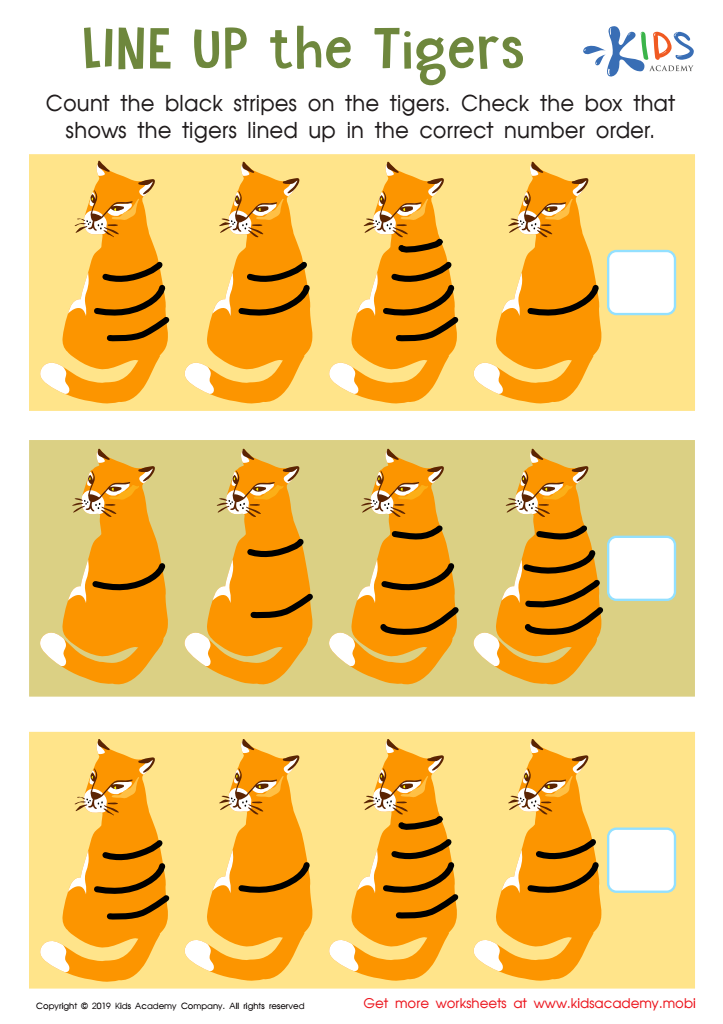
Line up the Tigers Worksheet
 Assign to My Students
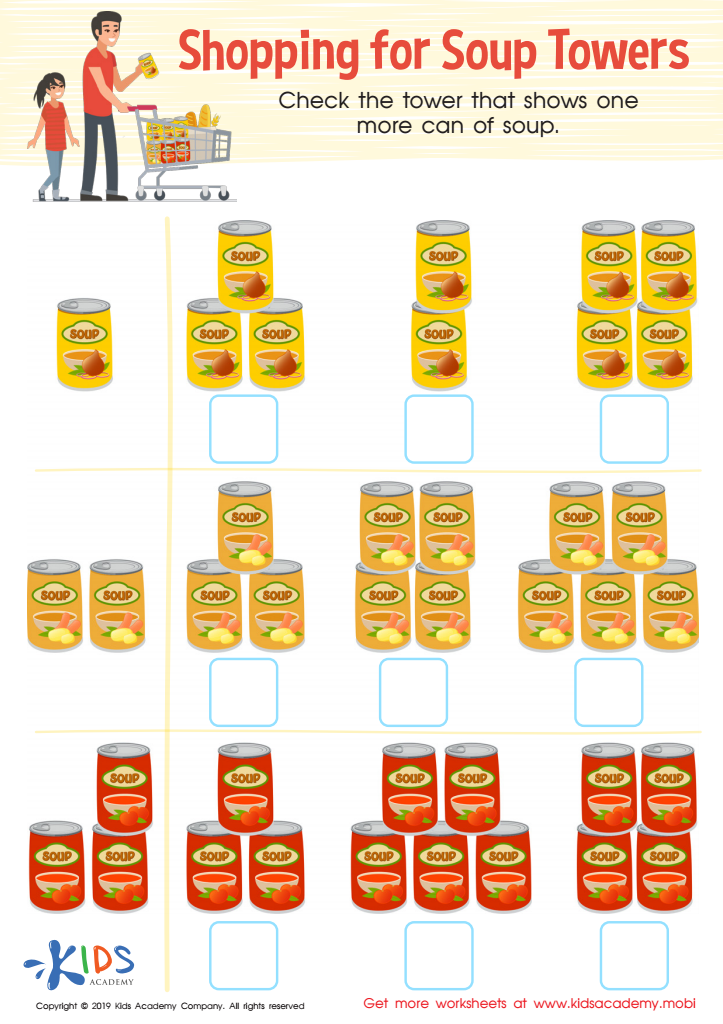
Soup Towers Worksheet
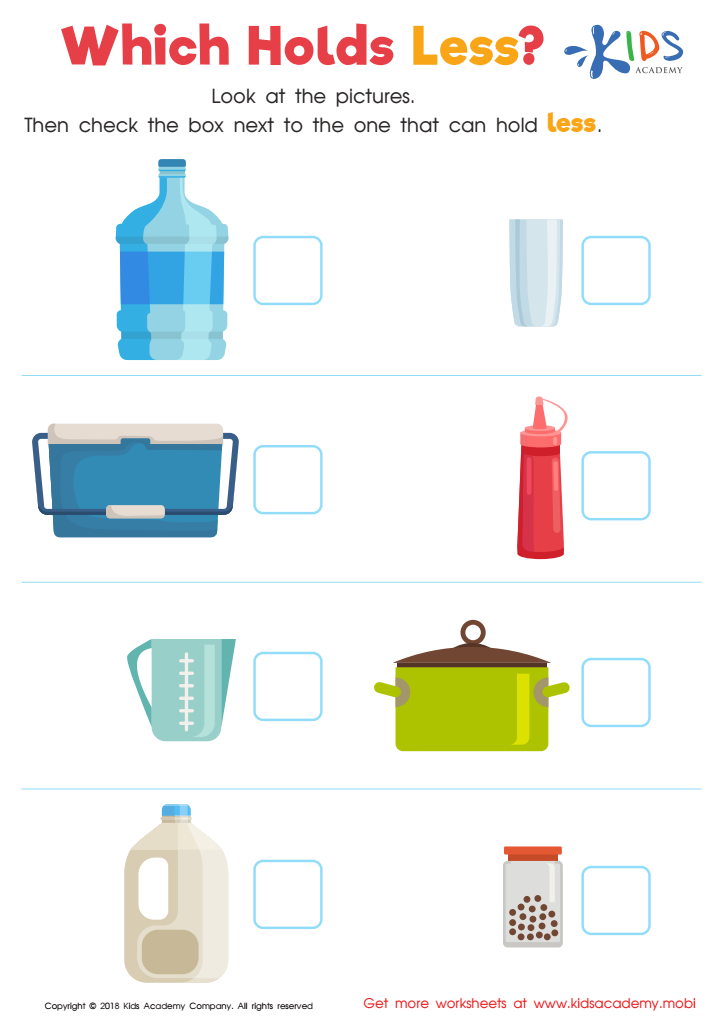
Which Holds Less? Worksheet








Comparing quantities is fundamental for young children aged 3-4, as it lays the groundwork for essential mathematical skills and critical thinking. Teaching kids to compare quantities helps them understand concepts like "more than," "less than," and "equal to." This ability not only builds a foundation for future math learning but also enhances their cognitive development.
Parents and teachers play a vital role in nurturing these skills through everyday activities. For instance, counting snacks, sorting toys, or even comparing the sizes of various objects can make learning interactive and engaging. These experiences stimulate children’s curiosity and problem-solving skills, essential in early childhood development.
Moreover, understanding quantities fosters better language skills. Children learn to express themselves clearly when they articulate their comparisons, enhancing their communication abilities. Furthermore, these activities encourage teamwork and social skills when children engage in group play or collaborative tasks.
Overall, mastering comparison of quantities cultivates a sense of confidence in children as they grasp fundamental concepts, preparing them for future academic success. Hence, it is crucial for parents and teachers to prioritize this skill in early education, ensuring a well-rounded foundation for their cognitive growth.








