Animal recognition Easy Math Worksheets for Ages 3-4
6 filtered results
-
From - To
Discover the perfect blend of fun and learning with our "Animal Recognition Easy Math Worksheets for Ages 3-4". Designed to captivate young minds, these worksheets combine basic math skills with engaging animal themes. Each worksheet fosters critical thinking, pattern recognition, and counting abilities while introducing delightful animals that your child will love. Created by educational experts, these printable worksheets offer a hands-on learning experience that will build a solid foundation for future math success. Spark curiosity and enhance your child's educational journey with our expertly crafted and enjoyable math worksheets. Suitable for preschool and early learners.
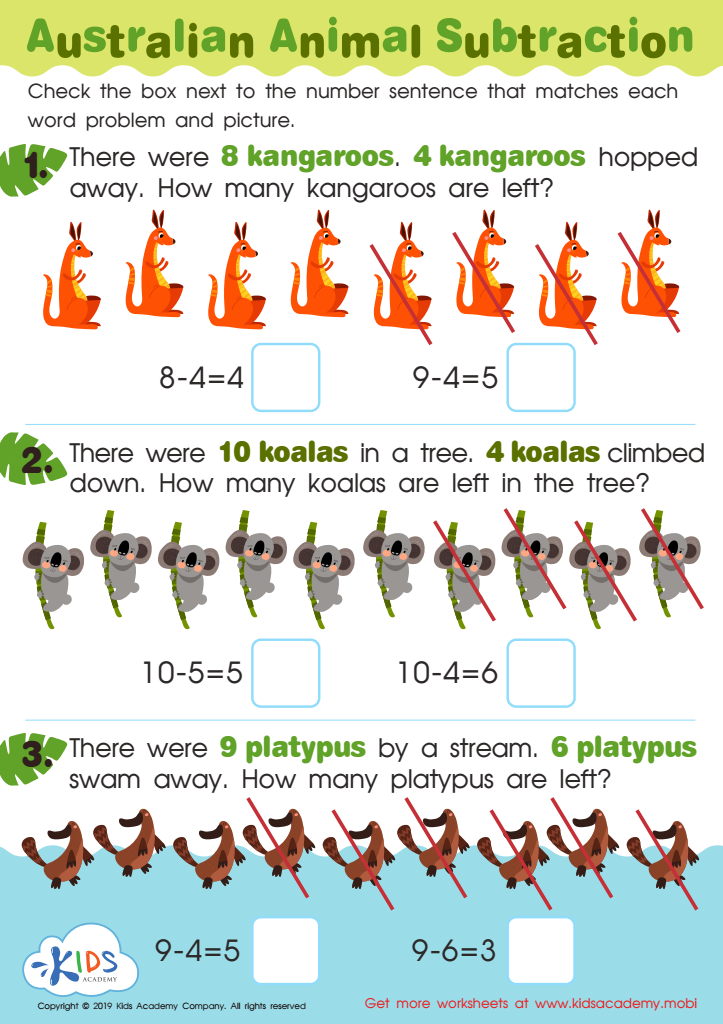
Australian Animal Subtraction Worksheet
 Assign to My Students
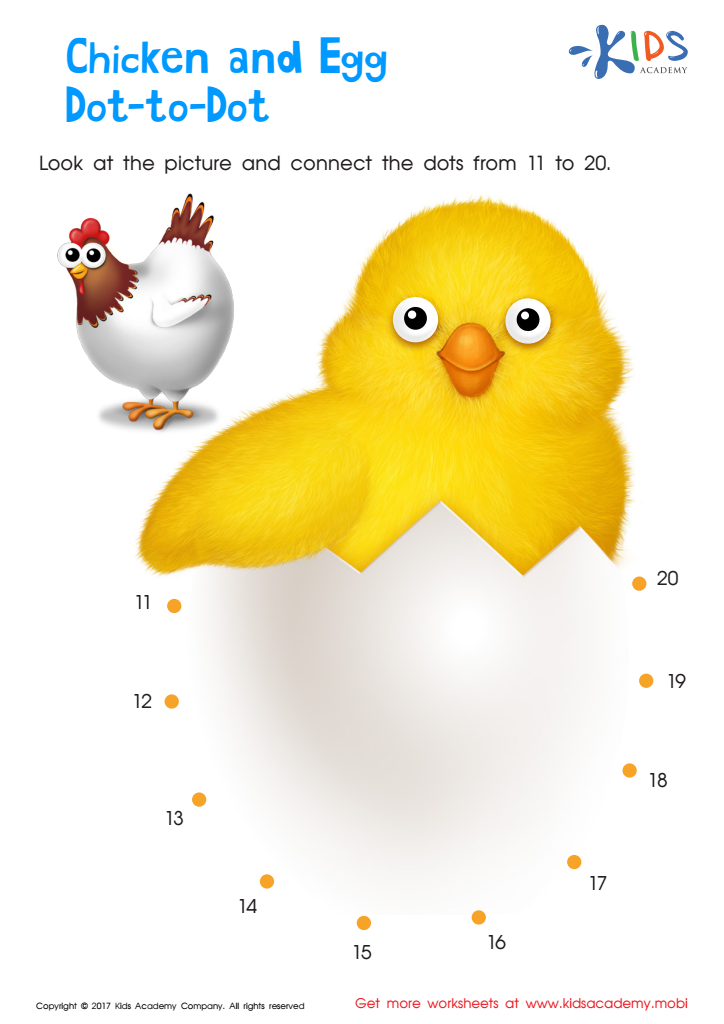
Ordering 11–20: Chicken & Egg Dot–to–dot Worksheet
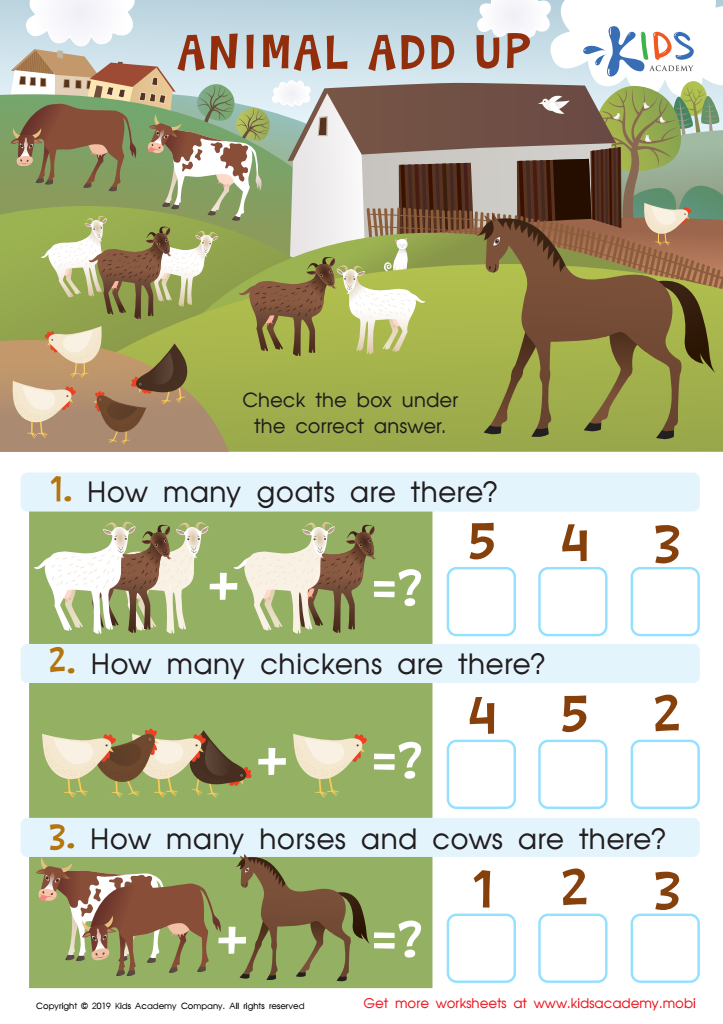
Animal Add Up Worksheet
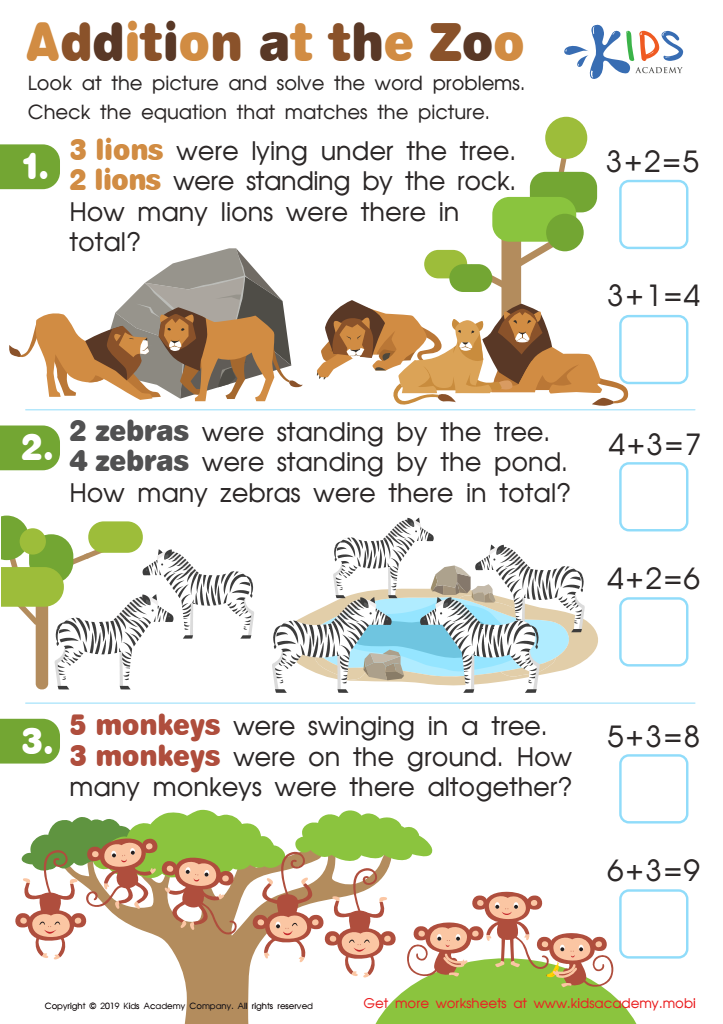
Addition at the Zoo Worksheet
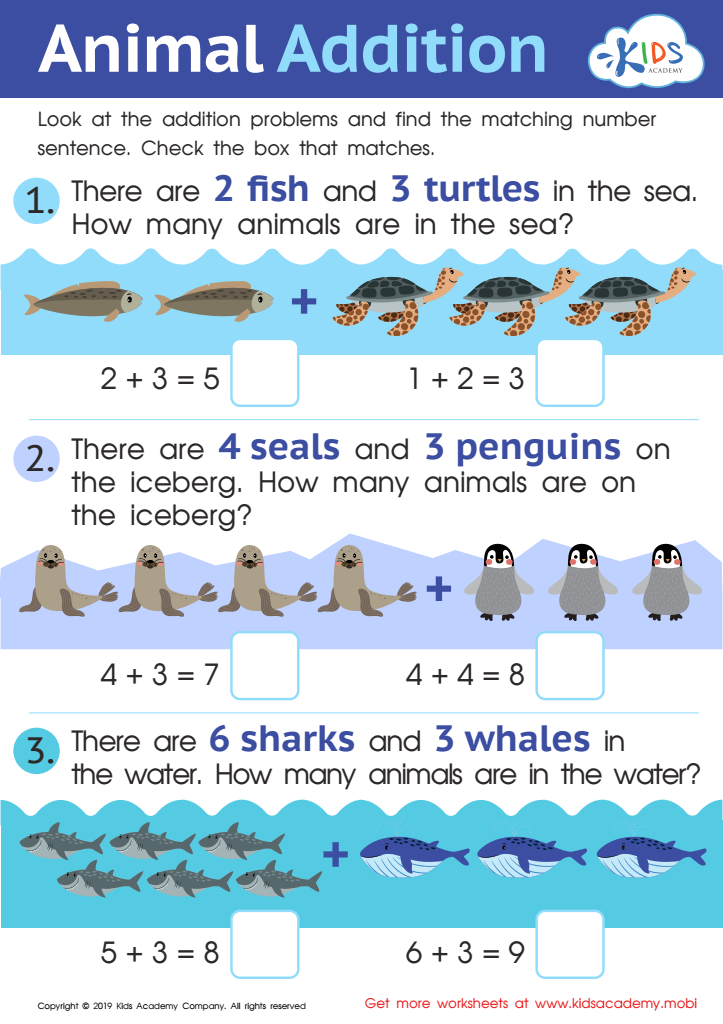
Animal Addition Worksheet
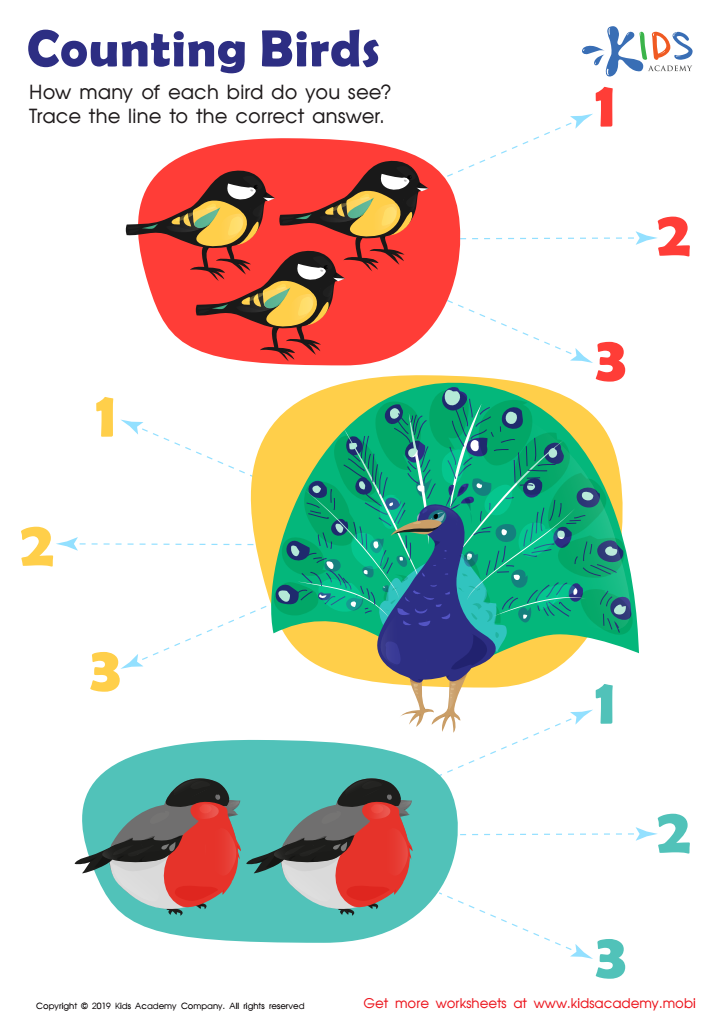
Counting Birds Worksheet







Animal recognition and easy math for children ages 3-4 provide foundational skills critical for cognitive development. At this age, children's brains are rapidly developing, and engaging in activities that combine animal recognition with simple math tasks presents multiple developmental benefits.
Firstly, learning to recognize animals enhances a child's vocabulary and language skills. For instance, naming and identifying different animals while reading a storybook or playing with animal flashcards can improve their linguistic abilities and understanding of the natural world.
Secondly, integrating easy math into these activities builds pre-mathematical skills essential for later academic success. Counting legs on animals, recognizing patterns (like stripes on zebras), and sorting animals by size or type incorporate fundamental math concepts such as counting, comparison, and categorization. These tasks make abstract ideas more concrete and relatable by anchoring them in physical examples.
Moreover, combining these activities can keep young children engaged due to their natural curiosity about animals. It makes learning playful and enjoyable rather than tedious. Socially, this method can promote cooperative play and communication when done in a group setting, boosting social-emotional skills.
Parents and teachers investing in animal recognition and easy math facilitate a playful yet educational context, fostering well-rounded cognitive and language development crucial for future learning adventures.








