Subtraction practice Easy Math Worksheets for Ages 3-4
23 filtered results
-
From - To
Discover fun and engaging subtraction practice worksheets specifically designed for children aged 3-4! Our easy math worksheets introduce young learners to the fundamentals of subtraction through colorful illustrations and age-appropriate activities. These printable resources make learning enjoyable, helping to build a solid foundation in early math skills. Each worksheet features simple exercises that encourage critical thinking and problem-solving as kids practice subtracting within small numbers. Give your little ones the tools they need to develop confidence in math while having fun! Explore our collection today and support your child's early learning journey with effective and interactive subtraction practice materials.
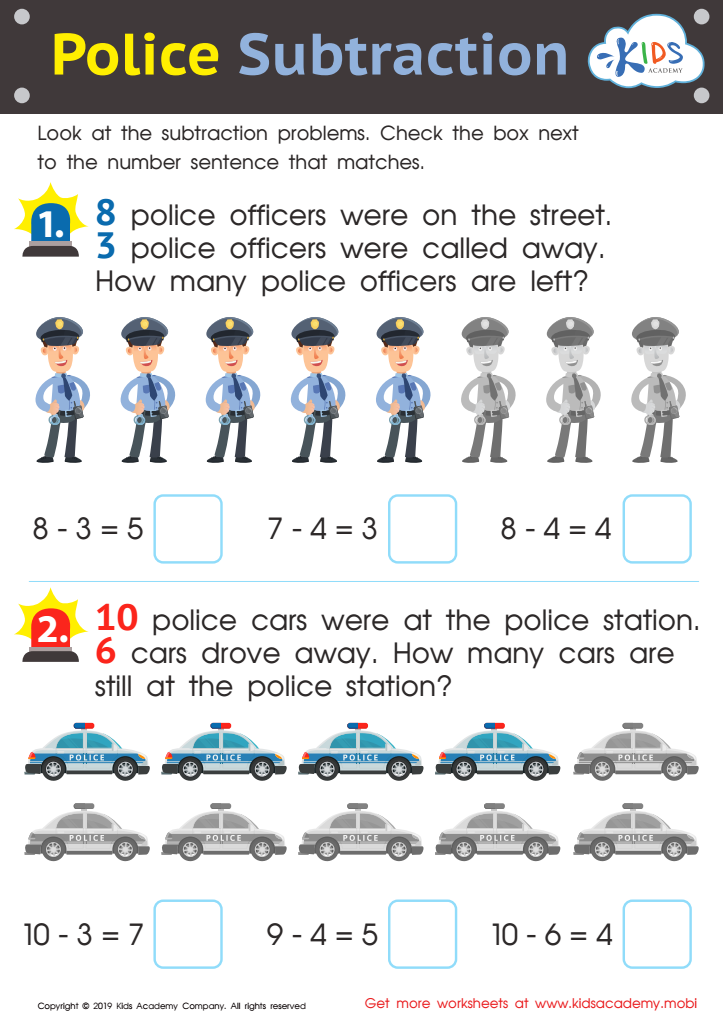
Police Subtraction Worksheet
 Assign to My Students
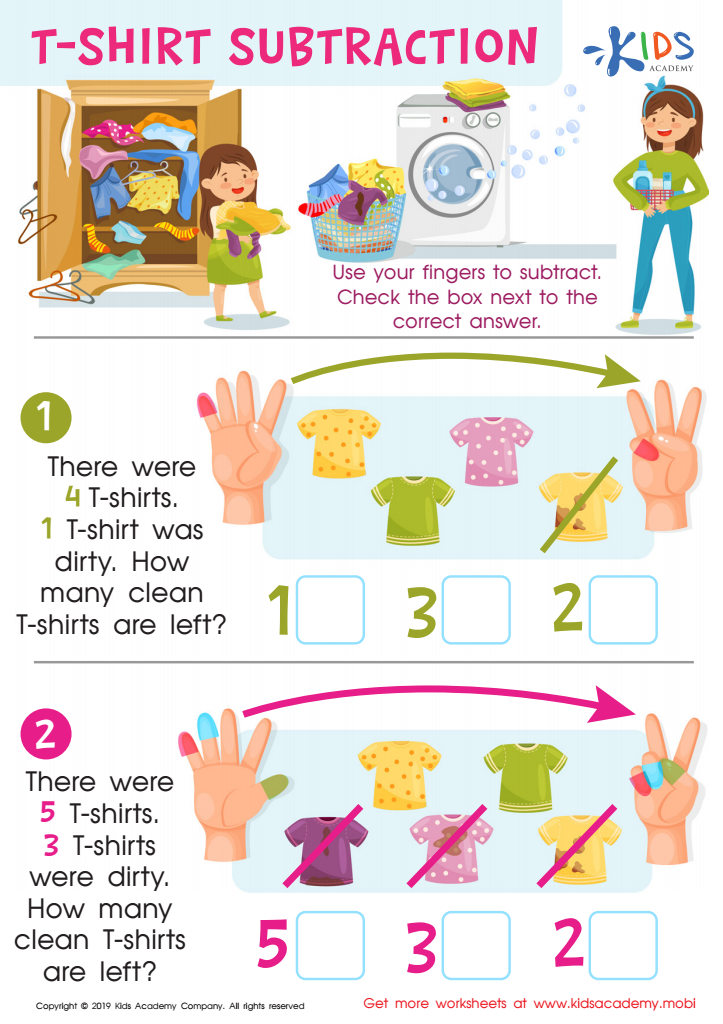
T-shirt Subtraction Worksheet
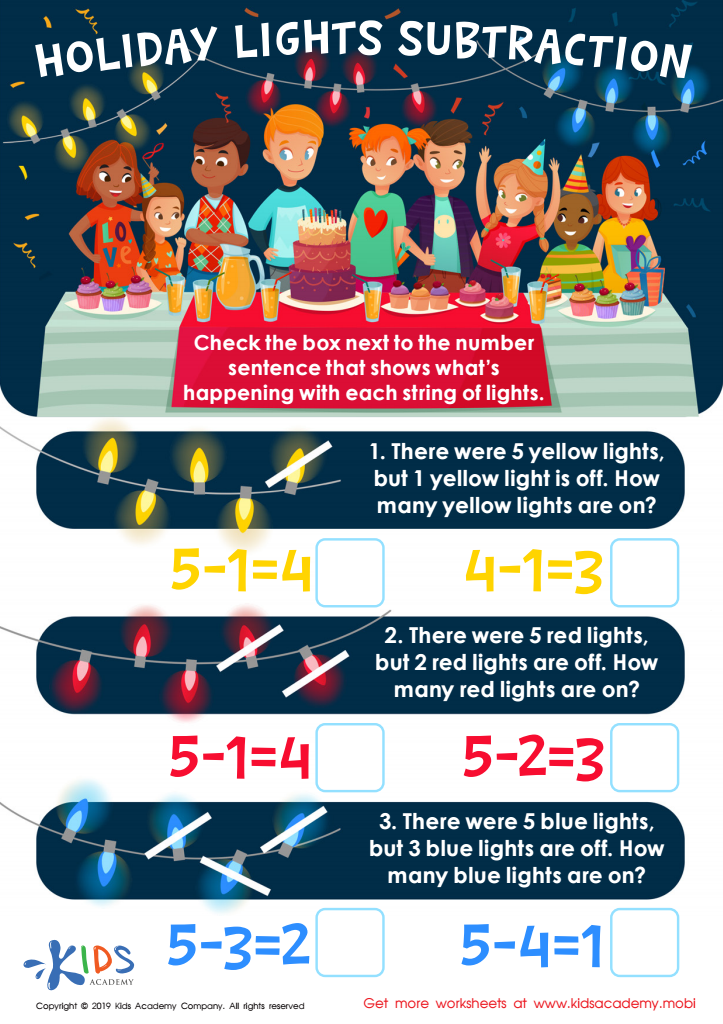
Holiday Lights Subtraction Worksheet

Find 9 Worksheet
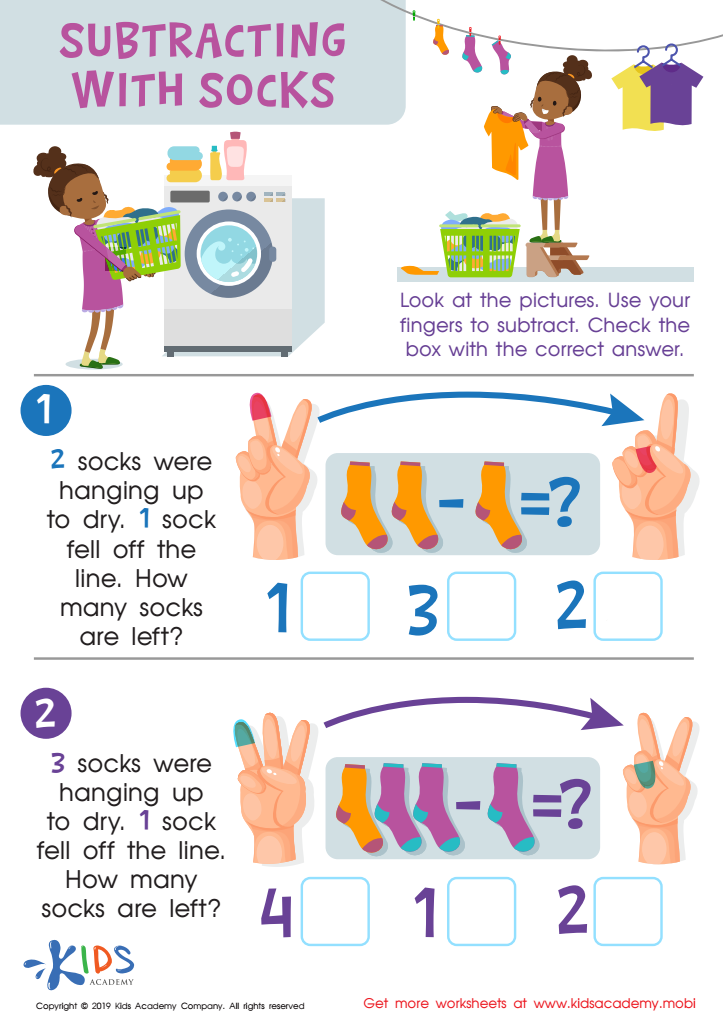
Subtracting Socks Worksheet
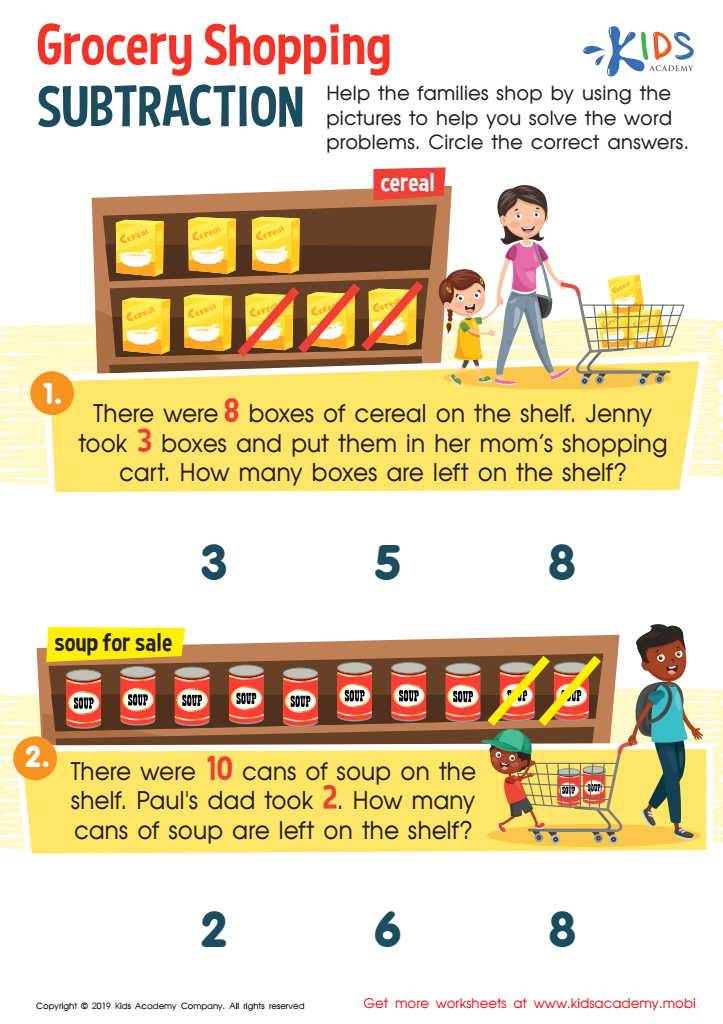
Grocery Shopping Subtraction Worksheet
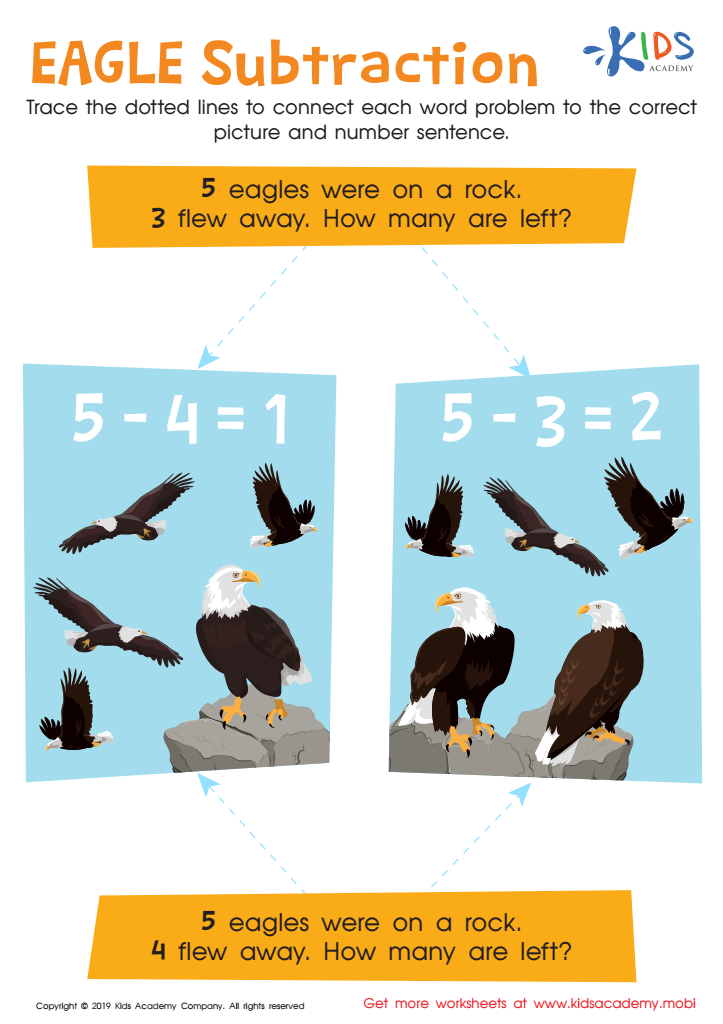
Eagle Subtraction Worksheet
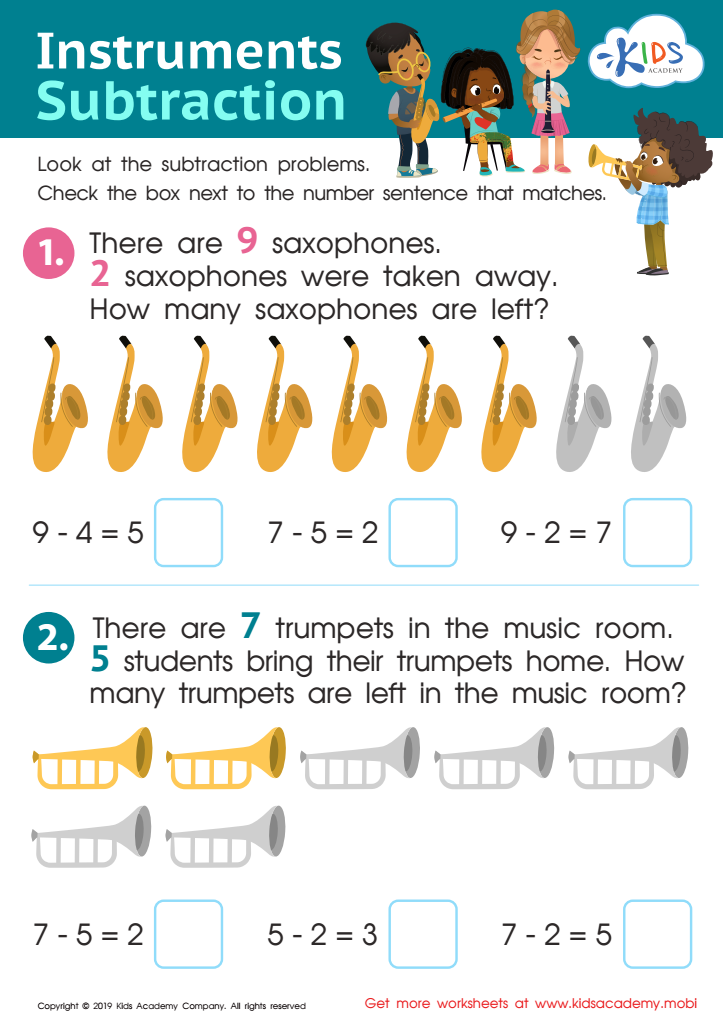
Instrument Subtraction Worksheet
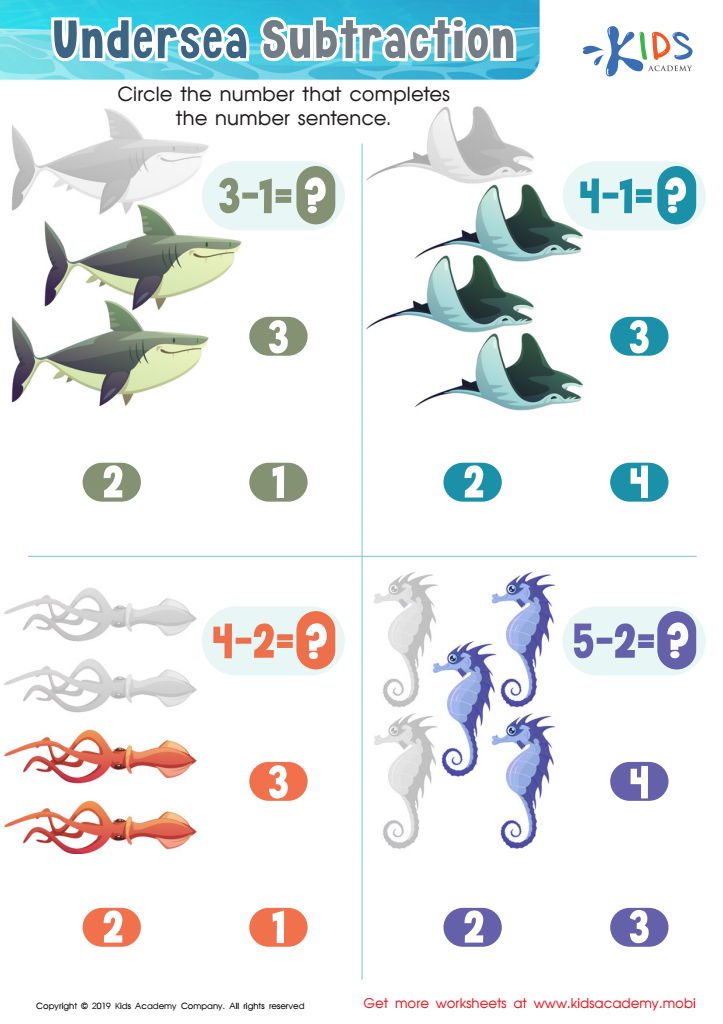
Undersea Subtraction Worksheet
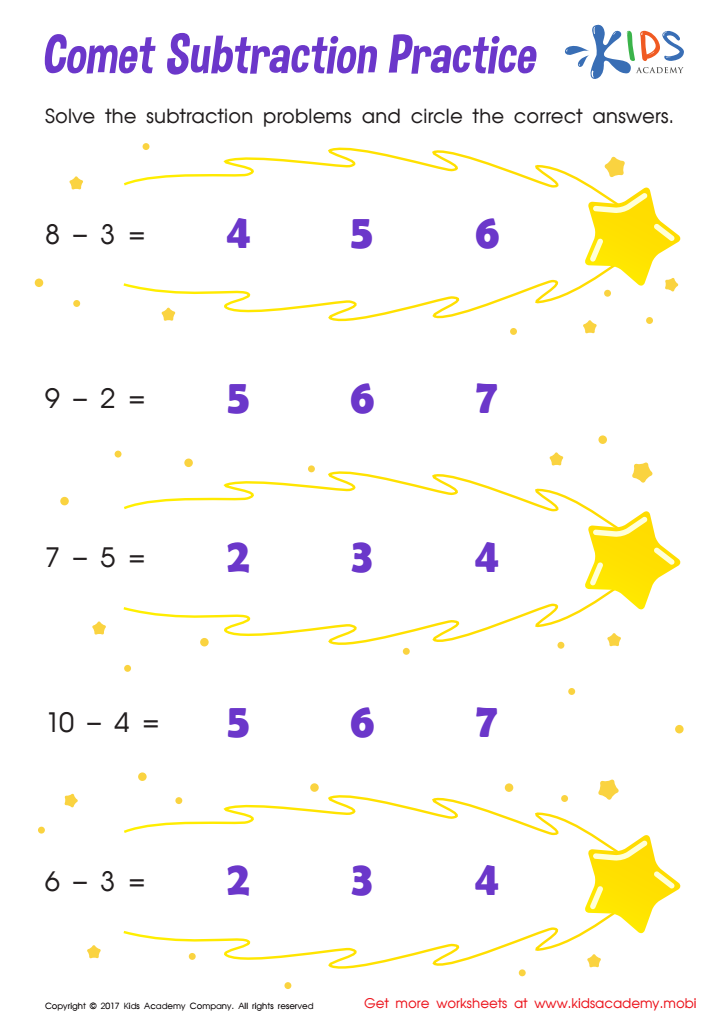
Comet Subtraction Practice Substraction Worksheet
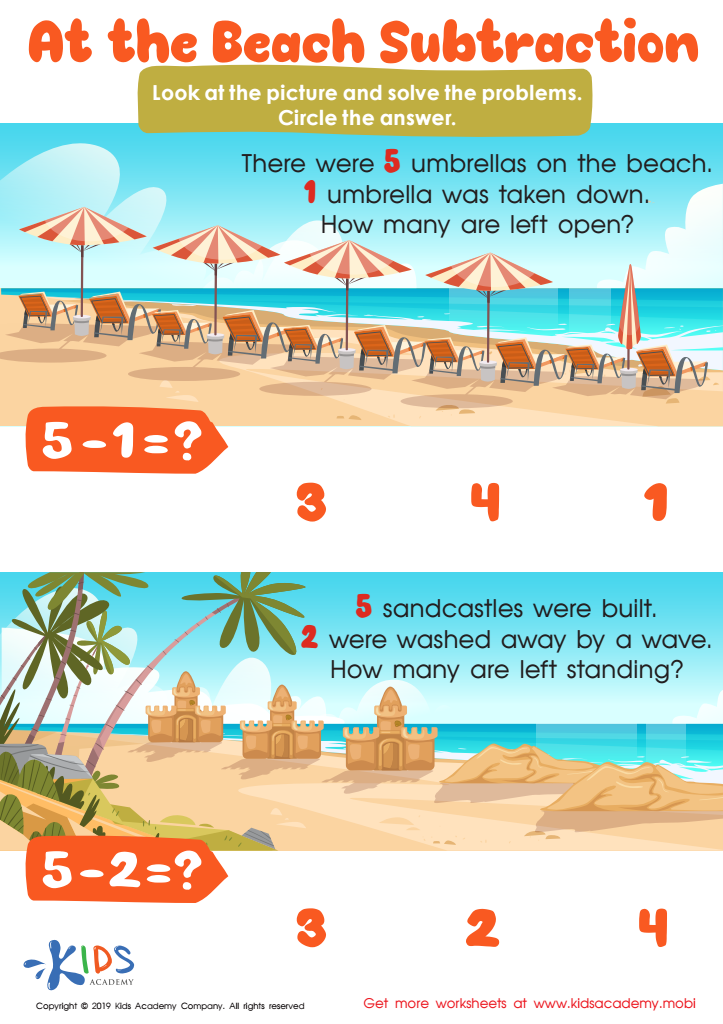
At the Beach Subtraction Worksheet
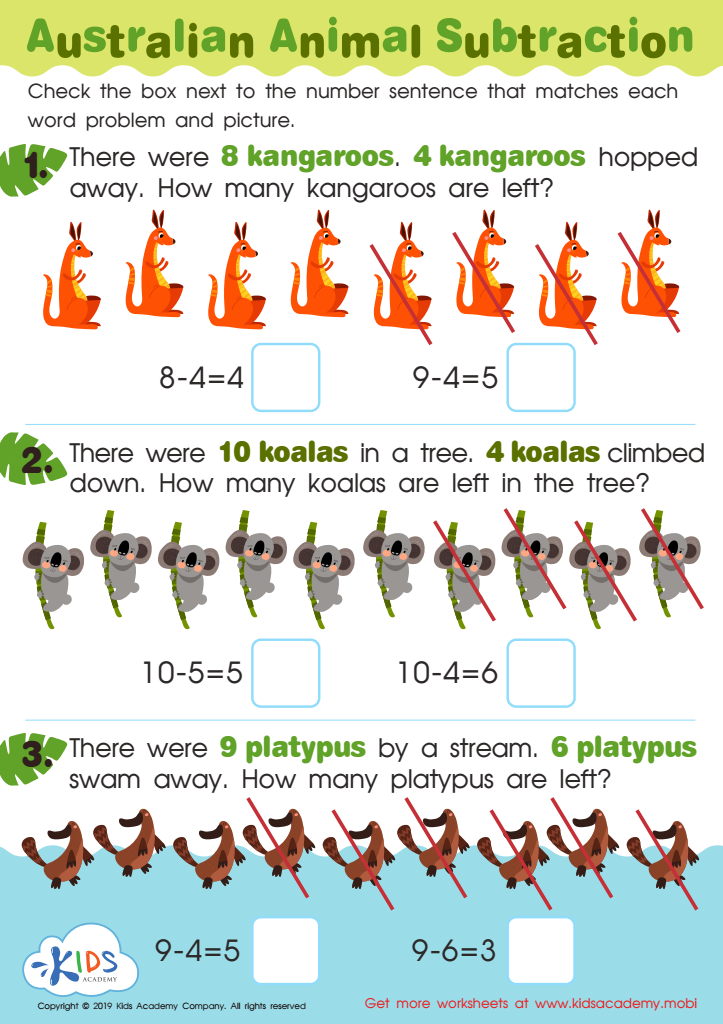
Australian Animal Subtraction Worksheet
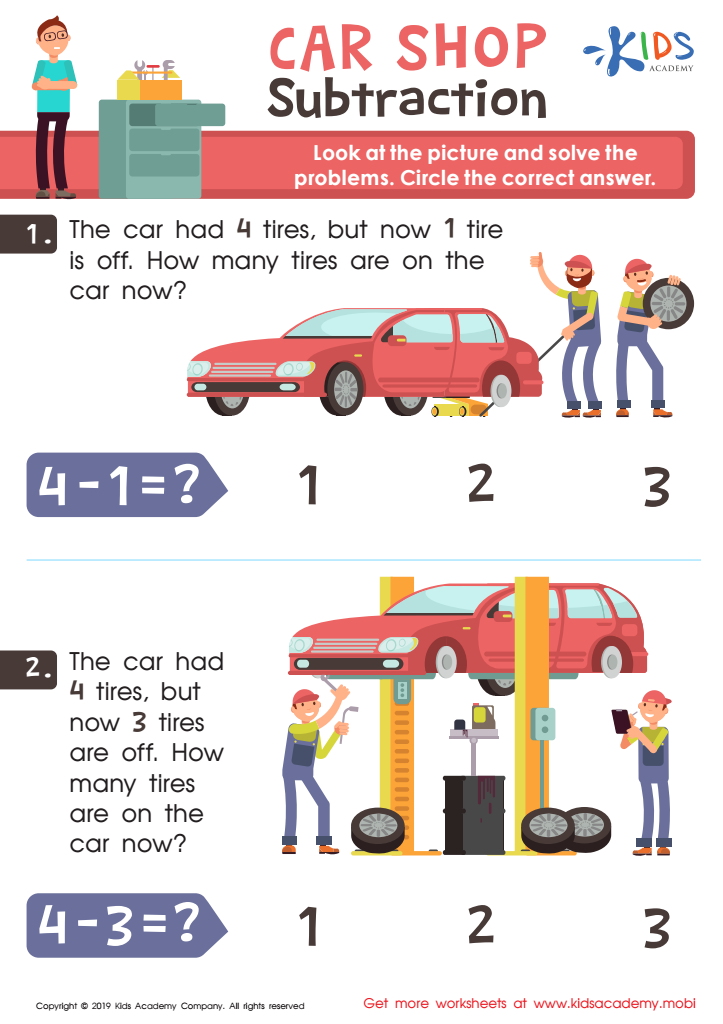
Car Shop Subtraction Worksheet
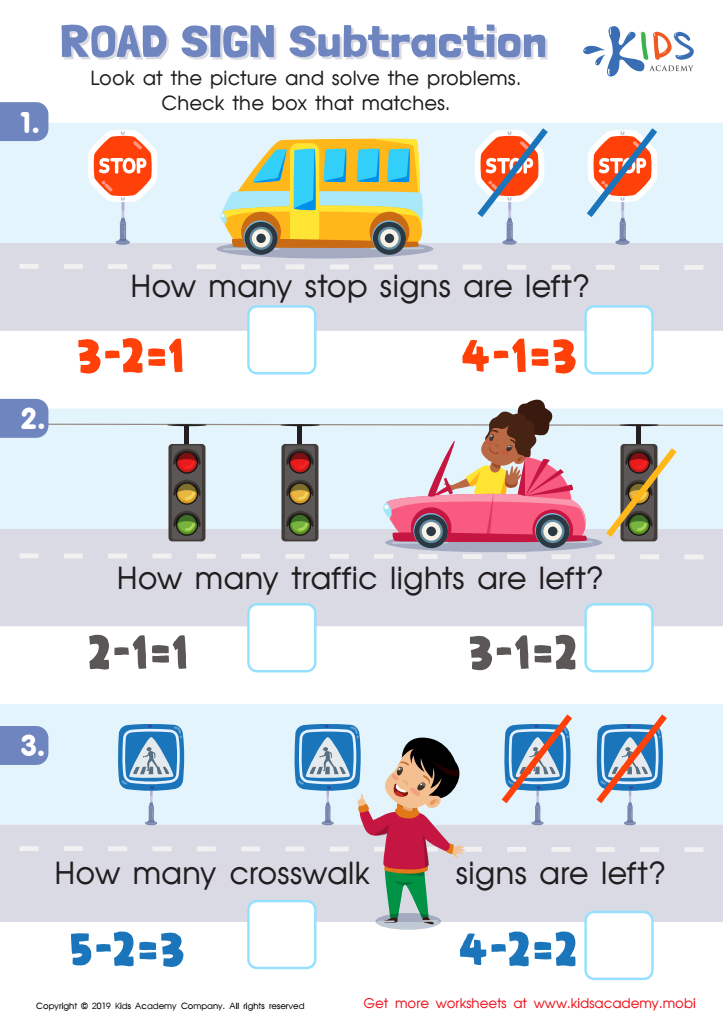
Road Sign Subtraction Worksheet
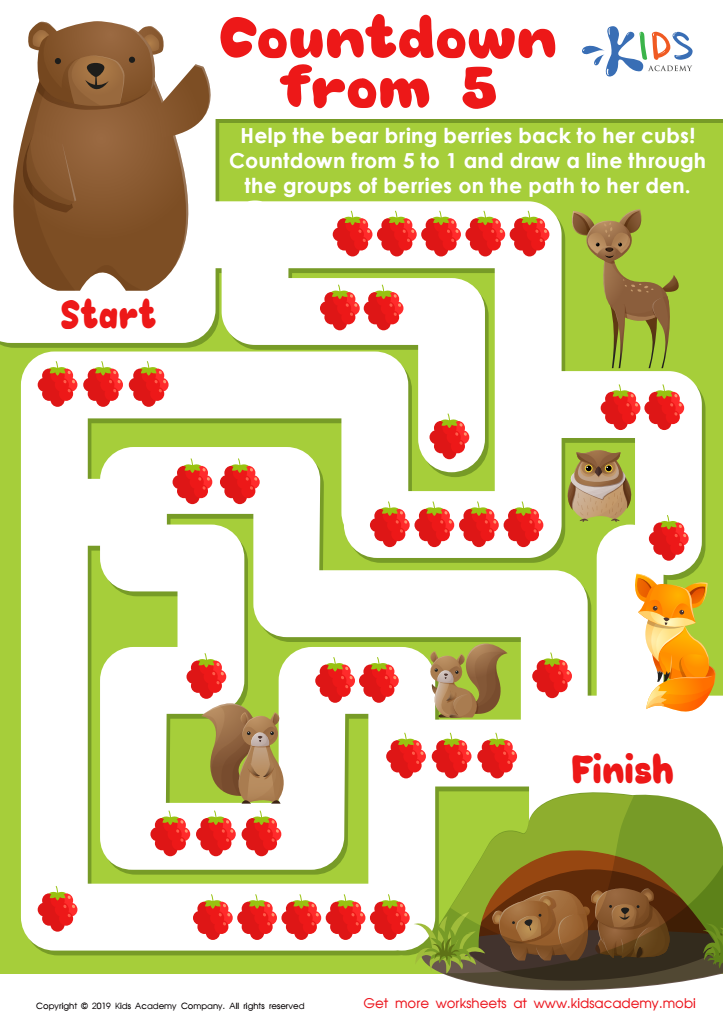
Countdown from 5 Worksheet
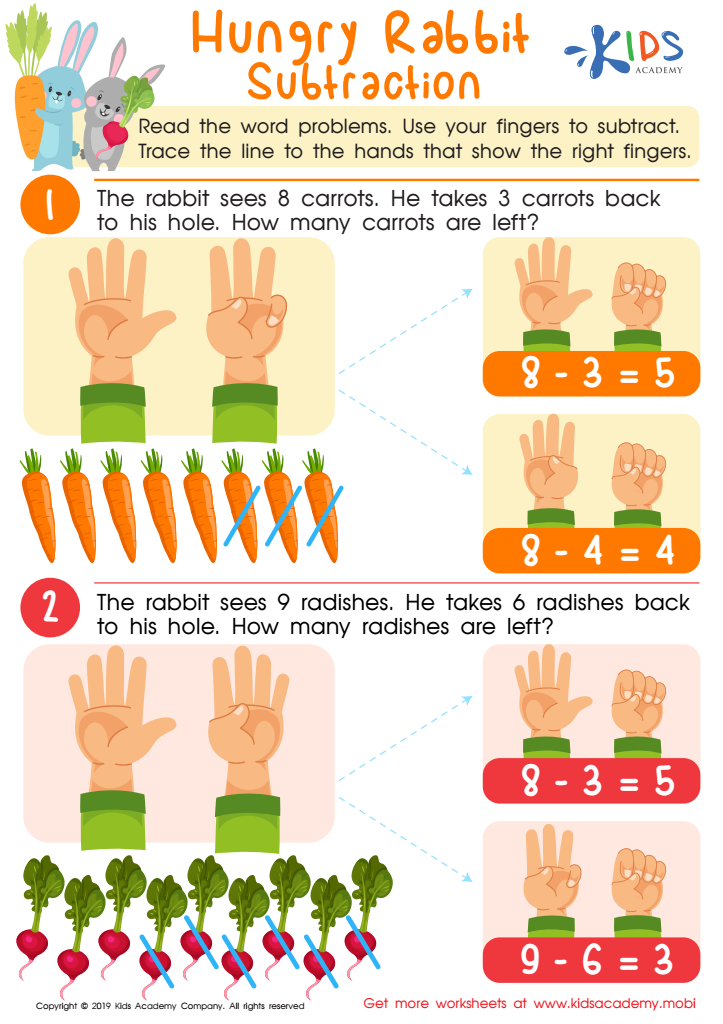
Hungry Rabbit Subtraction Worksheet
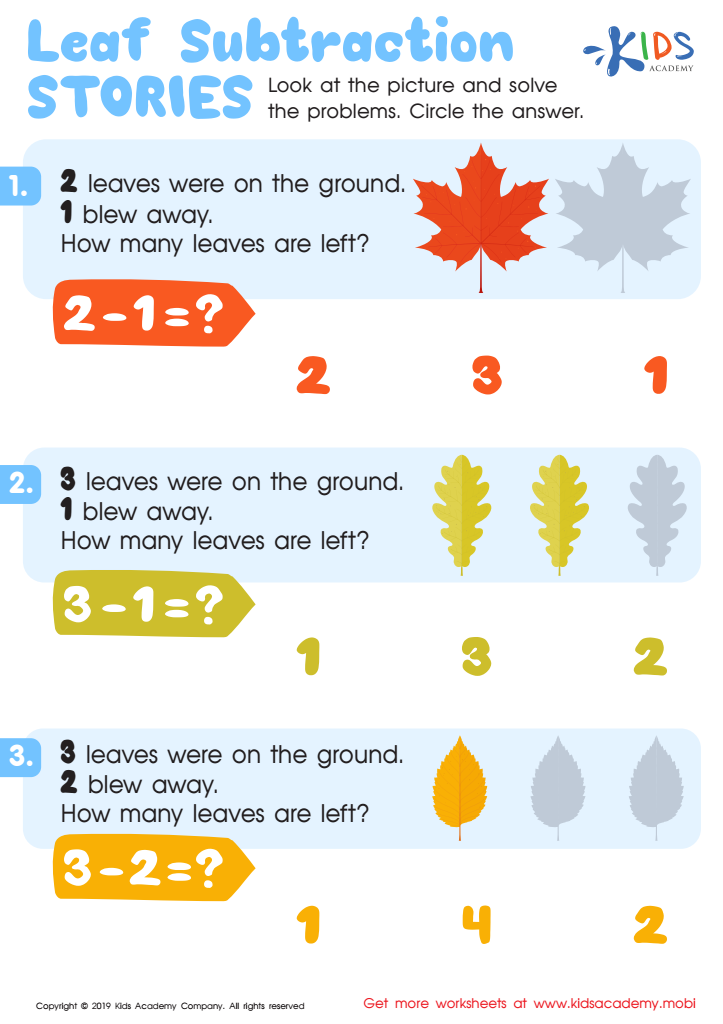
Leaf Subtraction Stories Worksheet
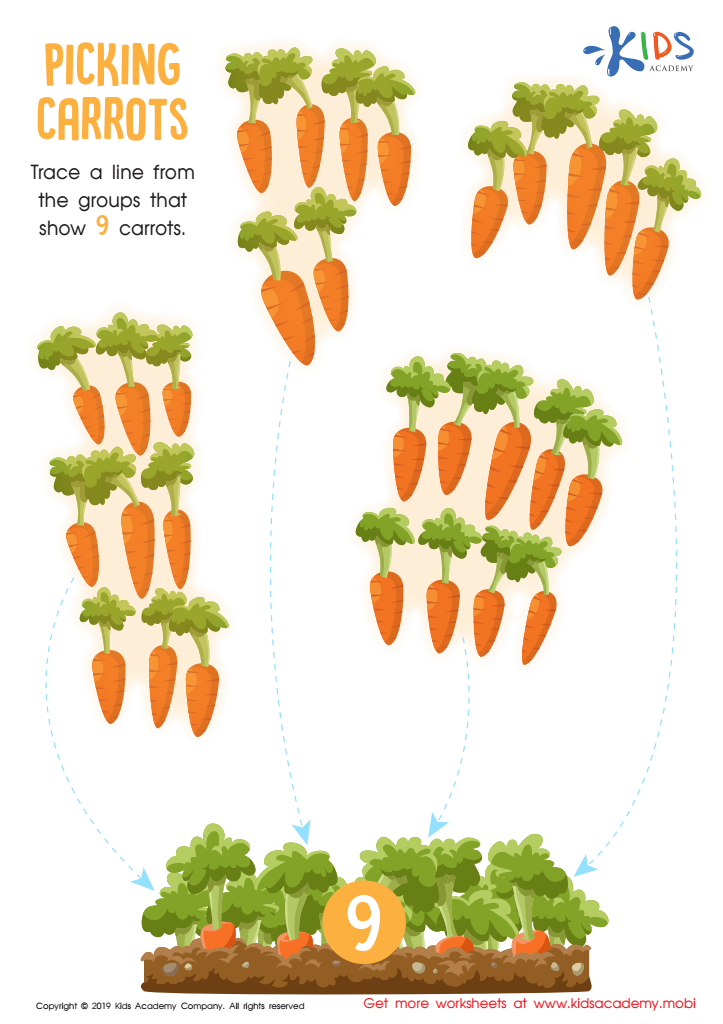
Picking Carrots Worksheet
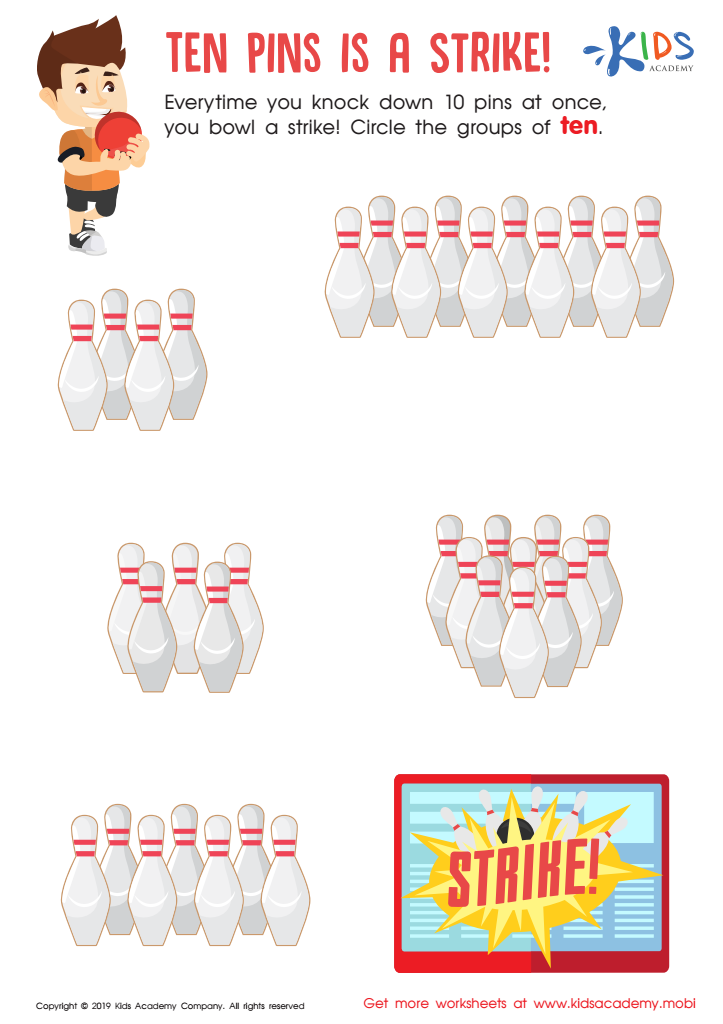
Ten Pins is a Strike Worksheet
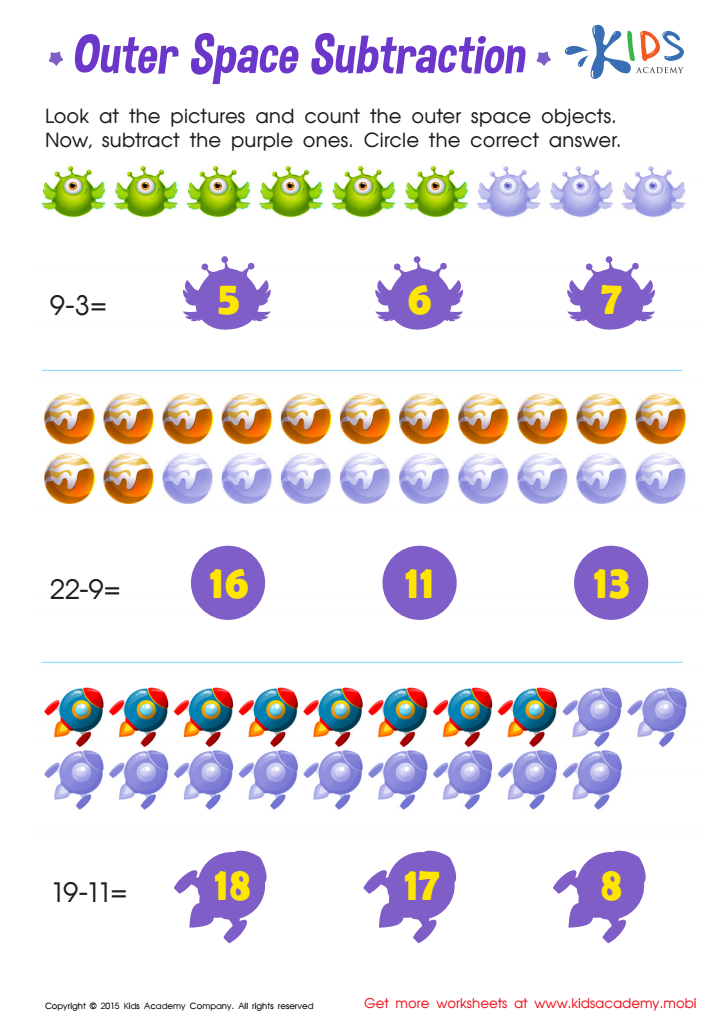
Outer Space Substraction Worksheet
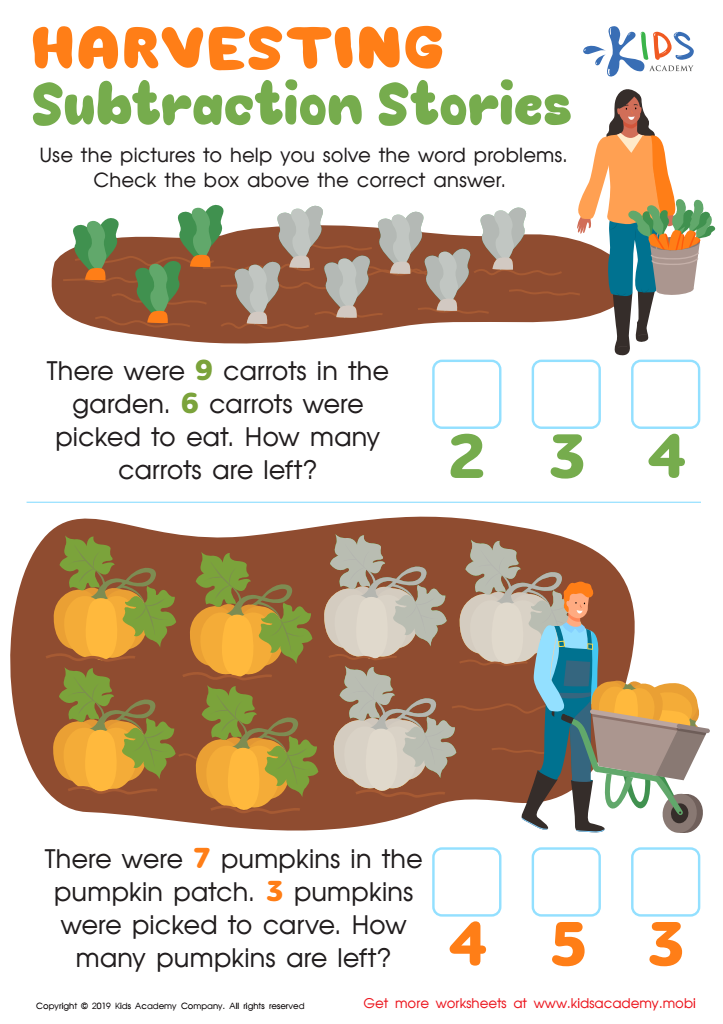
Harvesting Subtraction Stories Worksheet
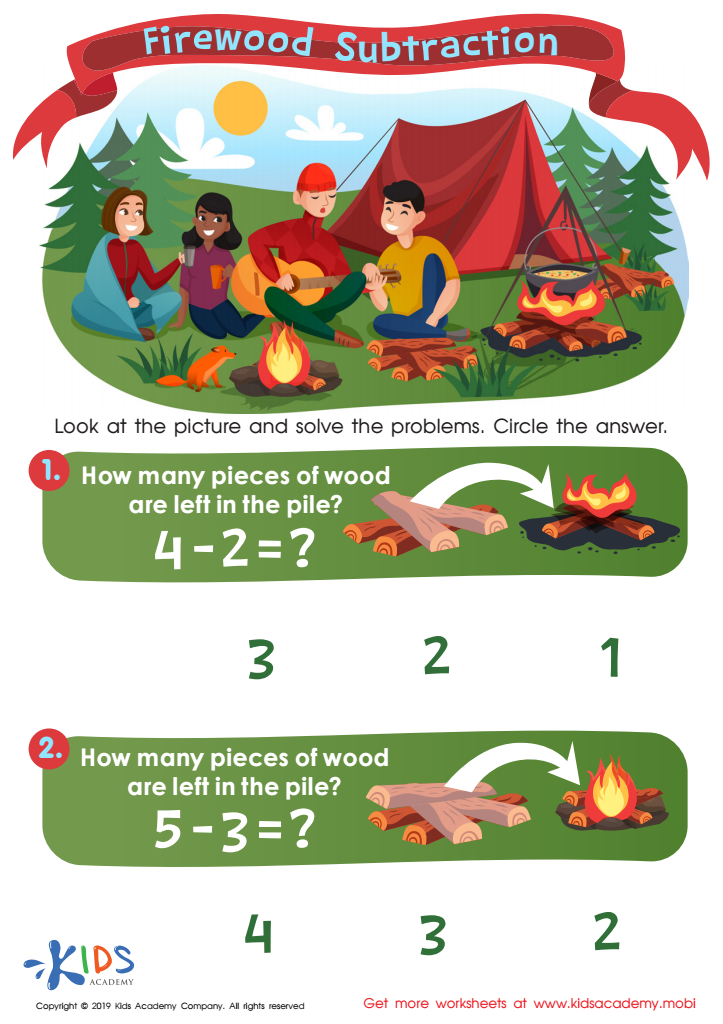
Firewood Subtraction Worksheet
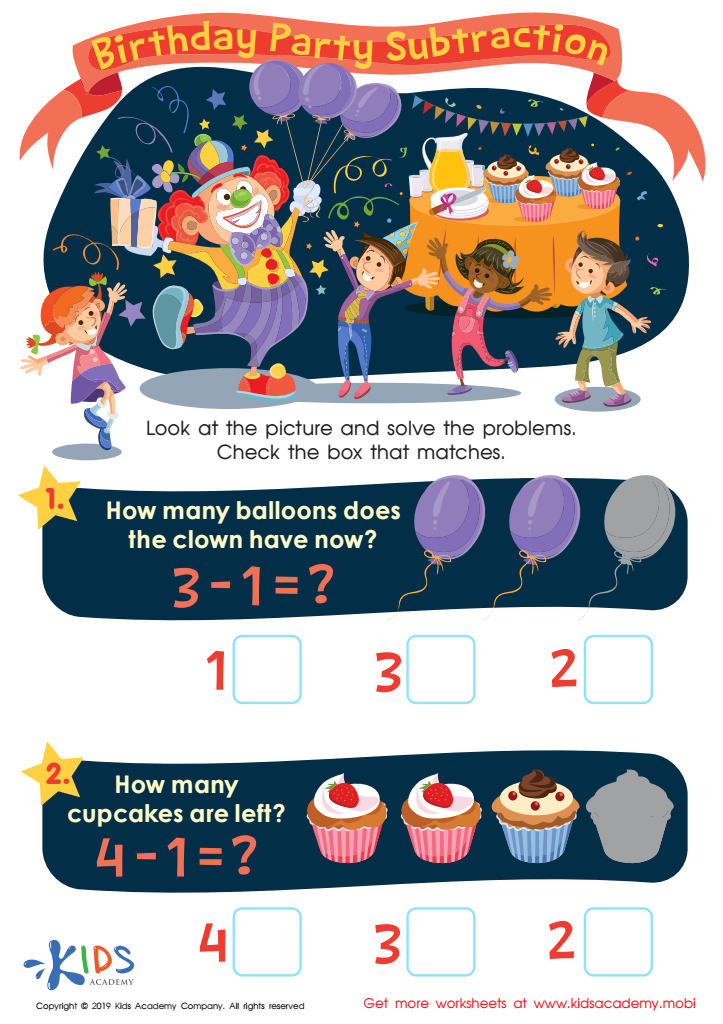
Birthday Party Subtraction Worksheet







Parents and teachers should prioritize subtraction practice for children aged 3-4 as it lays a foundational understanding of mathematics, critical thinking, and problem-solving skills. This early exposure to subtraction not only helps in developing fluency in basic math but also cultivates a sense of number sense, helping children understand the relationship between numbers and quantities.
Working on subtraction at an early age nurtures cognitive development. Activities can often be integrated into daily routines—such as counting snacks, toys, or steps—making learning organic and enjoyable. Engaging with simple subtraction problems encourages children to think logically and boosts their confidence in math. Moreover, these skills are vital as the curriculum in later grades shifts towards more complex mathematical concepts.
Additionally, mastering subtraction enhances fine motor skills and fosters attention to detail as children manipulate objects to visualize problem-solving. Parents and teachers who emphasize early subtraction practices contribute to children's social and emotional development, as sharing and distributing objects require cooperation and communication with peers. Overall, investing time in subtraction practice creates a solid foundation, not just for math success, but for overall academic achievement and reasoning skills in later years.








