Introduce young learners to the world of numbers with our "Addition Skills Easy Worksheets for Ages 3-5" by Kids Academy. These beautifully designed, age-appropriate printable worksheets provide a fun and interactive way for preschoolers to grasp basic addition concepts. With colorful images and simple problems tailored to their developmental stage, children will enjoy learning to count, recognize numbers, and perform basic sums. A perfect tool for parents and teachers aiming to build a strong foundation in math, ensuring a smooth transition to more advanced arithmetic skills. Make math enjoyable and boost early numeracy with our engaging resources!

Check out this FREE "Addition skills" Trial Lesson for age 3-5!

Solve Tricky Number Situations by Drawing (3 numbers) - Part 1

Favorites
With answer key
Interactive
  • 3-5
  • Addition skills
  • Easy
Solving Problems: Number Lines Worksheet

Solving Problems: Number Lines Worksheet

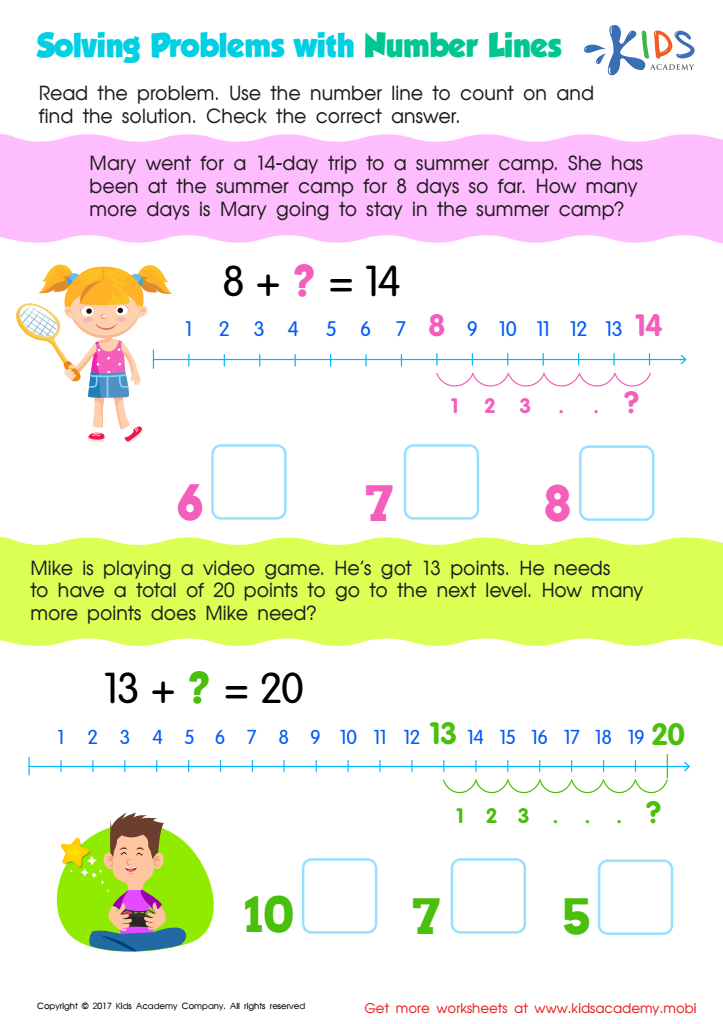
Number lines are fun and help build number sense and reasoning. This worksheet uses them to help students count on to find a solution to an equation. They'll have fun counting with familiar numbers and 10-bases, while also working on algebraic reasoning.
Solving Problems: Number Lines Worksheet
Worksheet
Butterfly Addition Worksheet

Butterfly Addition Worksheet

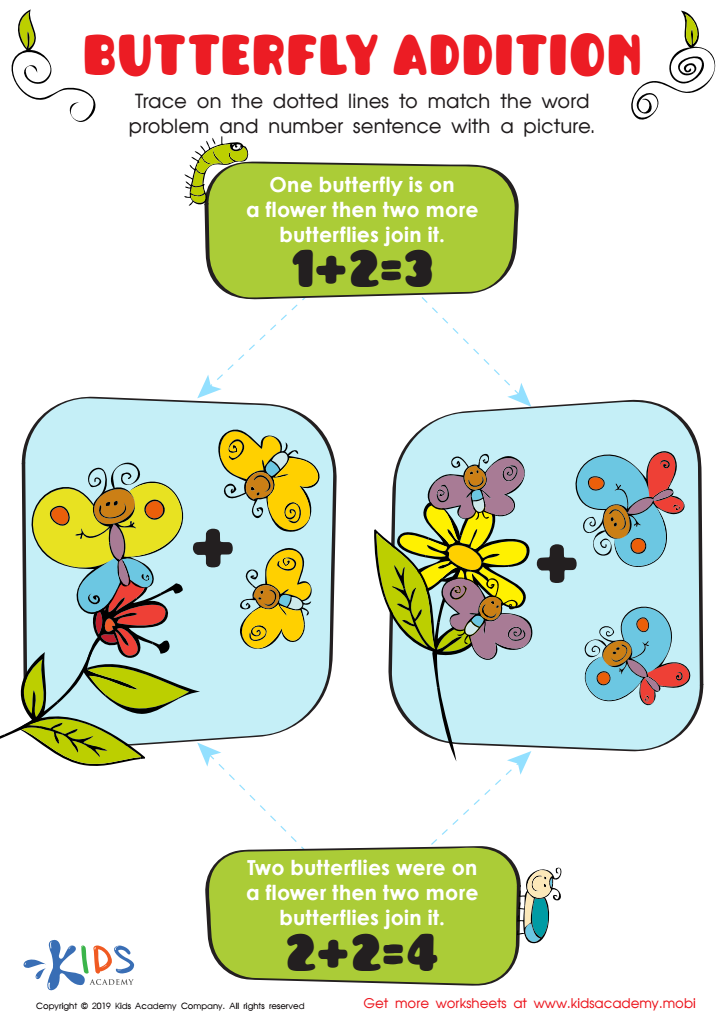
This tracing sheet is great for kids to work on math skills and have fun too. Read the word problems to them, then help them trace the dotted lines to match the problem and number sentence to a picture. Not only is it educational, it's beautiful too - your kids will love learning about butterflies!
Butterfly Addition Worksheet
Worksheet
Counting Coins Worksheet

Counting Coins Worksheet

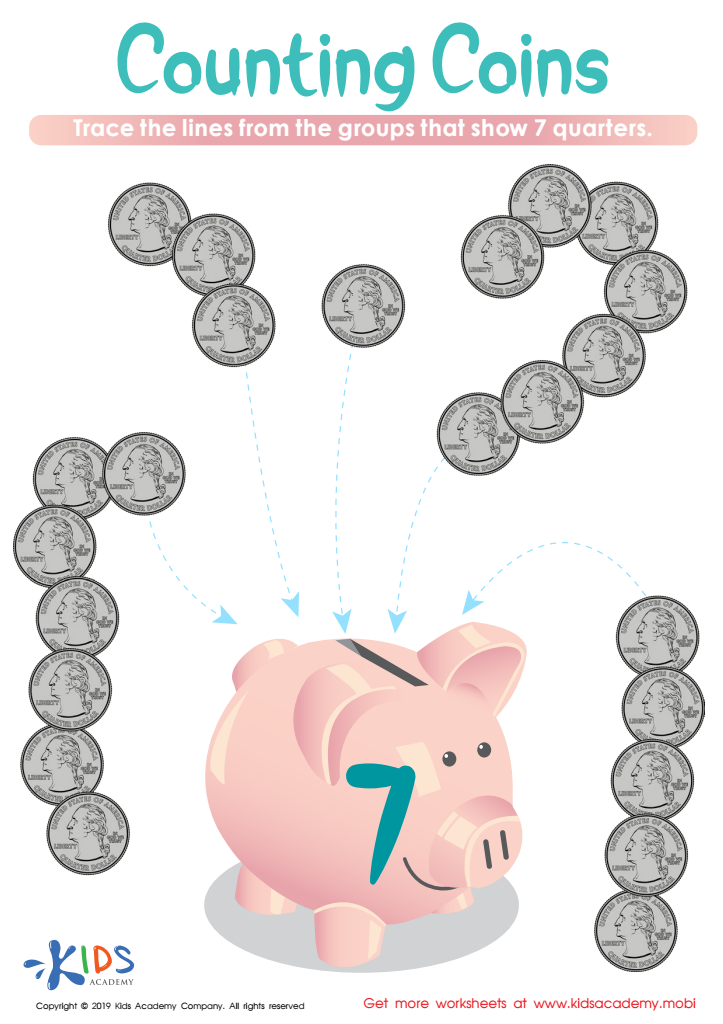
Help your students overcome their fear or aversion of counting and learning numbers with this fun worksheet! It features colorful pictures with four groups of coins. Ask the students to count each group, then trace the lines to the piggy bank. Show them it's easy to count and learn numbers!
Counting Coins Worksheet
Worksheet
Add it Up Worksheet
Add it Up Worksheet

Add it Up Worksheet

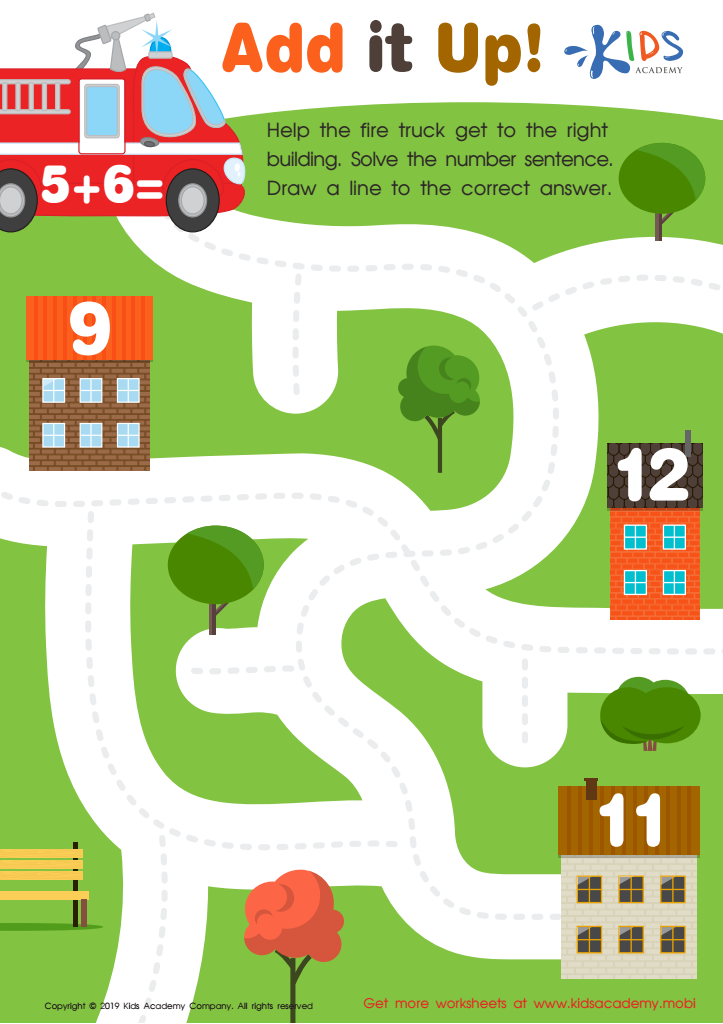
The fire service is the right number to call in case of a fire. Test your children's safety knowledge by asking them other emergency numbers. Have them identify the fire truck in the worksheet and solve the number sentences. Guide them in drawing a line to the right answer.
Add it Up Worksheet
Worksheet
Adding Up with Old MacDonald Worksheet

Adding Up with Old MacDonald Worksheet

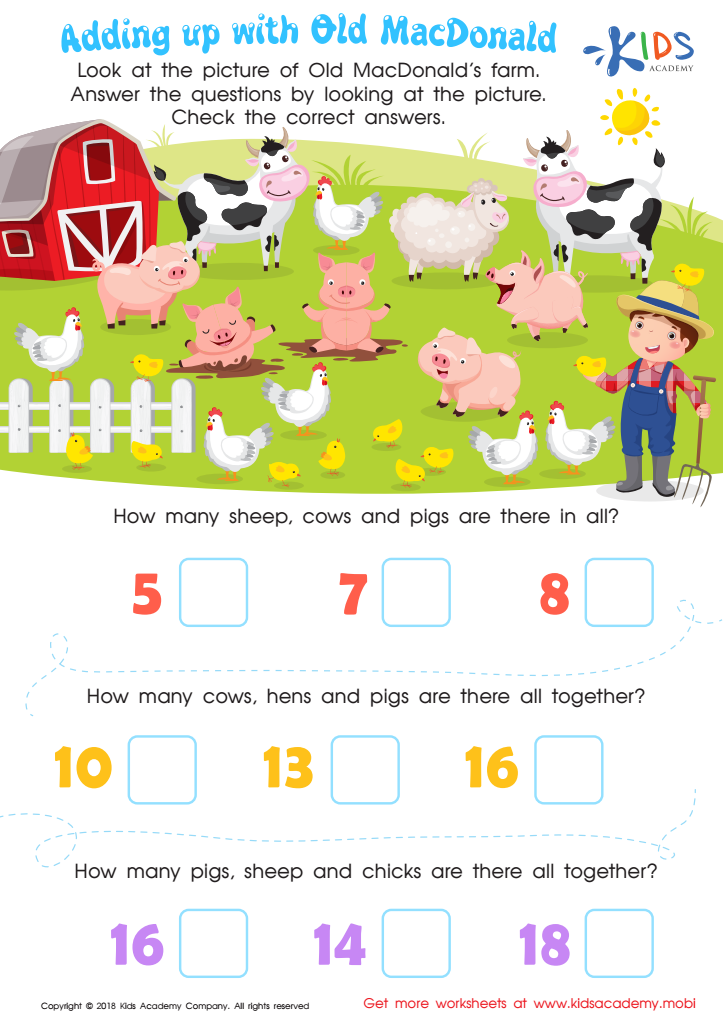
Old MacDonald needs help counting his animals! Give your little math whiz a fun challenge with a free PDF worksheet. They'll love counting the animals and doing basic addition with two or three addends. Who knew math could be so much fun on the farm?
Adding Up with Old MacDonald Worksheet
Worksheet
Make 6 Worksheet
Make 6 Worksheet

Make 6 Worksheet

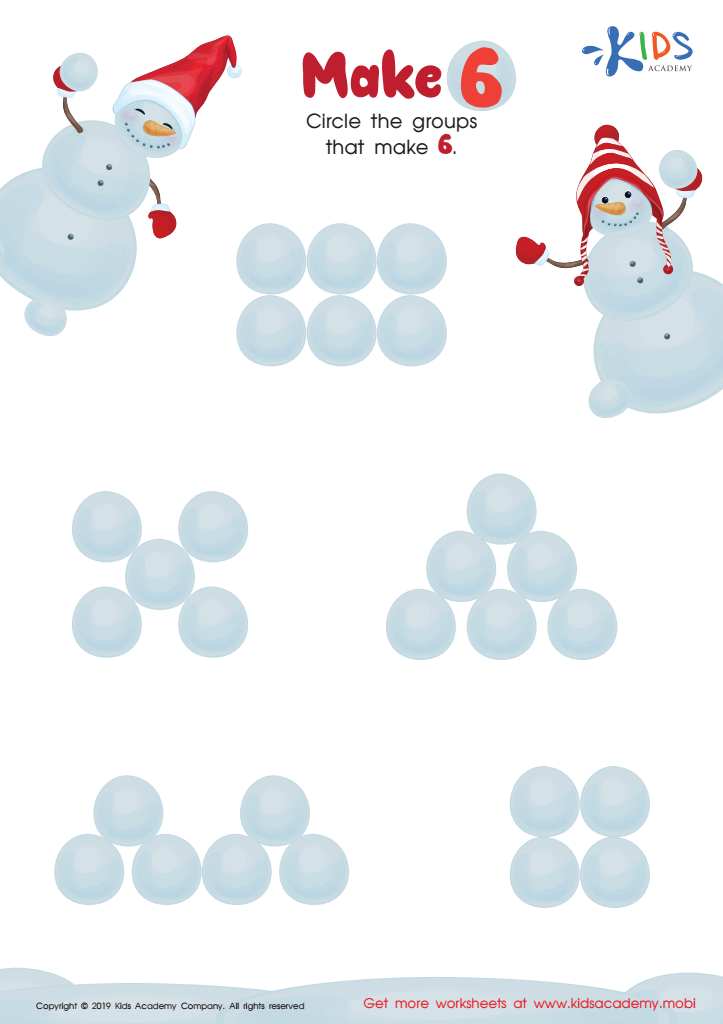
Fun snowball fights are great! With lots of ammo, kids can join their snowman friends and count out groups of six. Through number sense practice, and seeing one-to-one picture representation, your child can strengthen their skills while having a blast. Don't forget to bundle up as they may ask for more!
Make 6 Worksheet
Worksheet


Parents and teachers should prioritize making addition skills easy and enjoyable for children aged 3-5 because it lays the foundation for future math success and everyday problem-solving abilities. At this developmental stage, young minds are highly receptive to new concepts, making it an ideal period to introduce basic math skills. Simple addition helps enhance children's cognitive abilities, including memory, attention, and logical thinking, by involving them in counting and patterns.

Early math proficiency supports a child's confidence and enthusiasm for learning, leading to a positive attitude towards more complex subjects as they progress in school. Additionally, addition skills are integral to daily life skills, such as understanding money, telling time, and measuring objects, which are essential for personal independence.

When parents and teachers present addition in a playful, relaxed manner, with the use of games, songs, or everyday objects, children are more likely to engage willingly and retain information. Making math fun and stress-free at this age cultivates a lifelong interest in learning and an appreciation for numeracy. Overall, focusing on these early math skills ensures that children develop a strong academic base, preparing them for future educational challenges and practical life scenarios.