
Shape identification Easy Worksheets for Ages 3-5
3 filtered results
Difficulty Level
Grade
Age
-
From - To
Subject
Activity
Standards
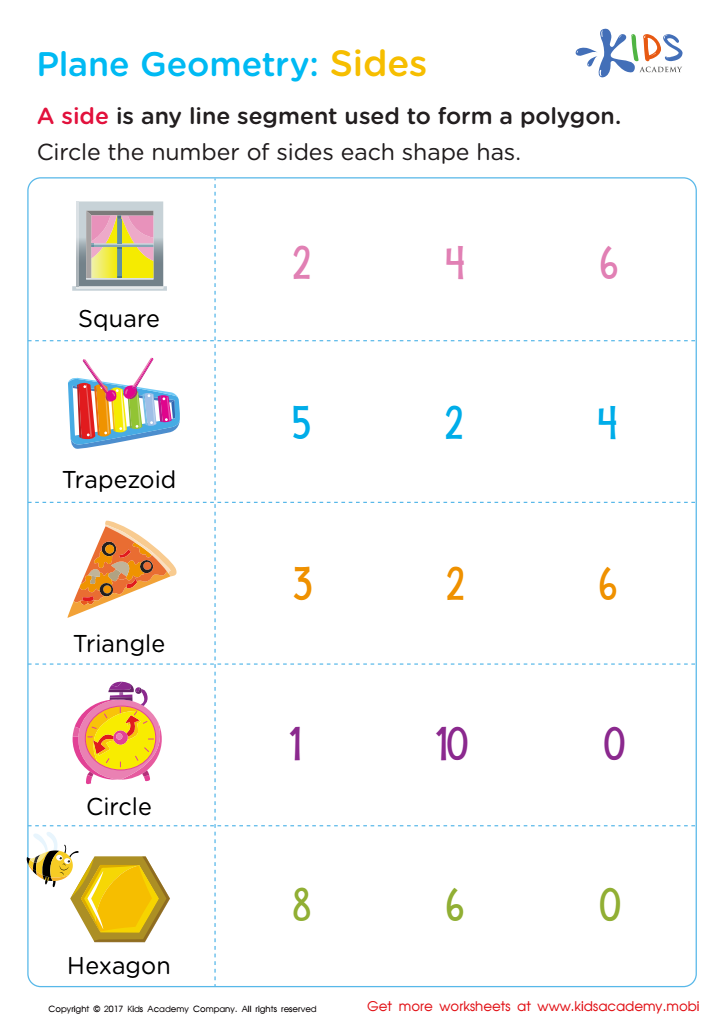
Enhance your child's early learning journey with "Shape Identification Easy Worksheets for Ages 3-5" from Kids Academy. Our engaging and age-appropriate worksheets are specially designed to help toddlers and preschoolers recognize and name basic shapes through fun activities. Each worksheet uses colorful images, tracing exercises, and interactive games to facilitate hands-on learning, which fosters shape recognition, fine motor skills, and cognitive development. Ideal for both classroom settings and at-home practice, these easy-to-follow worksheets ensure a solid foundation in geometry for your little learner. Make learning shapes an enjoyable adventure with Kids Academy!
Favorites
With answer key
Interactive
Number 2 Printable
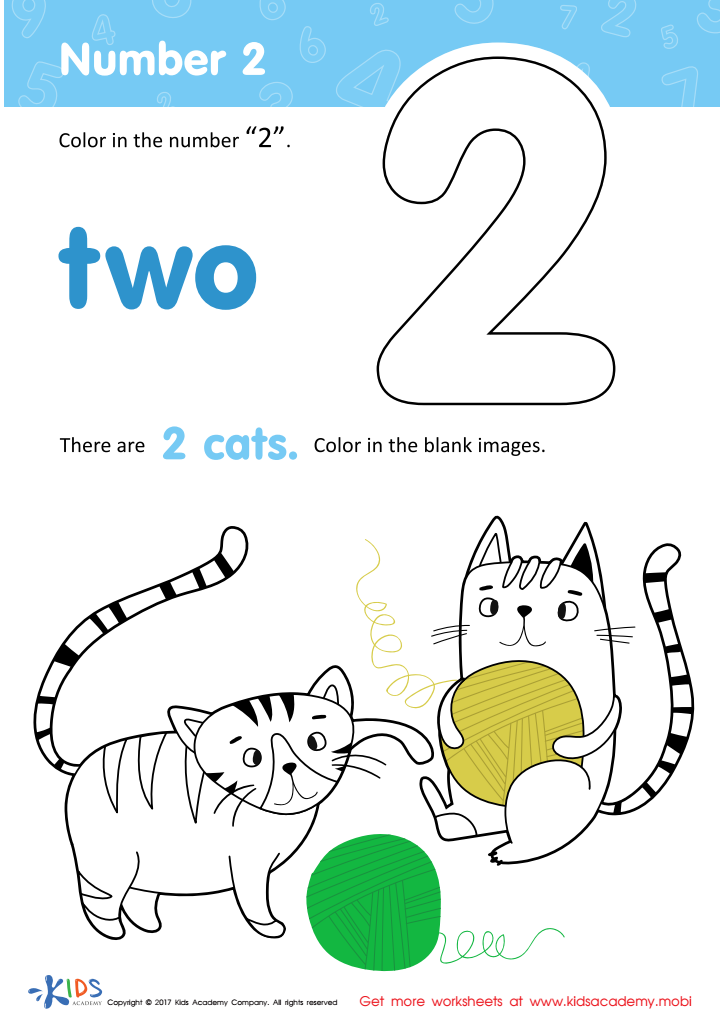
Help your child learn to recognize the number two with these cats and their yarn balls. Print this coloring page – it's great for counting and coloring fun! Your child will develop basic numeracy skills as they visually see numbers in action.
Download (PDF)
 Assign to My Students
Assign to My Students
Number 2 Printable
Worksheet
Bicycle Shapes Worksheet
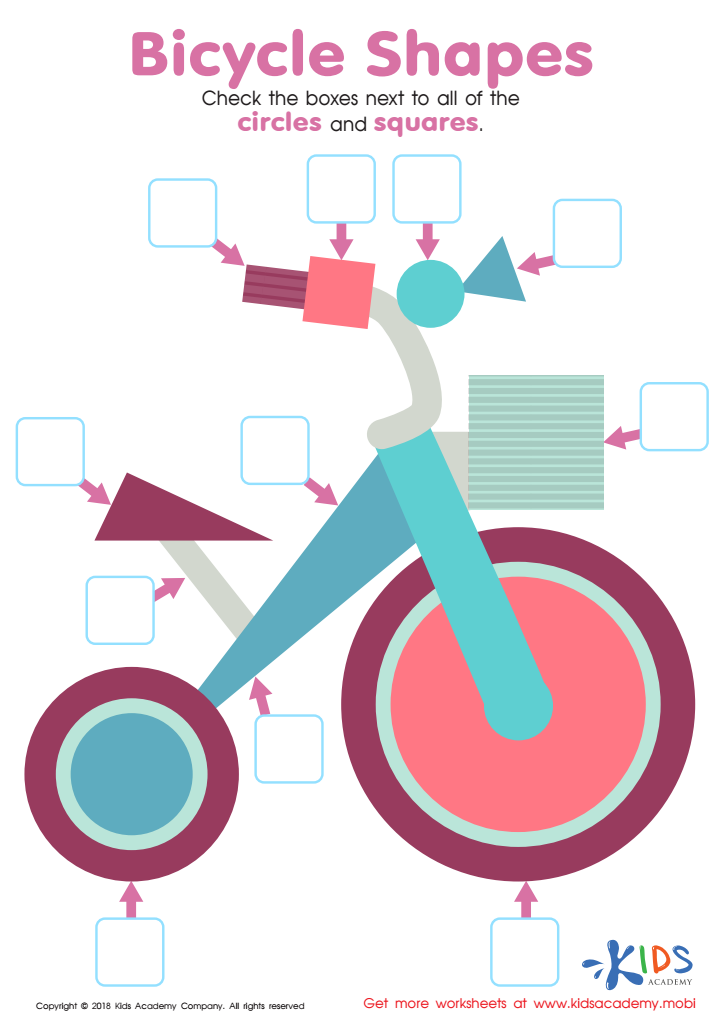
This fun geometry worksheet for preschoolers asks the child to spot hidden shapes (circles, squares) in a colorful bicycle. Each shape varies in size and the child checks the box when it's found. It's a visual way to teach shapes.
Bicycle Shapes Worksheet
Worksheet
Join Kids Academy for Free
Who is primarily going to use this learning content?







Shape identification is an essential skill for young children, particularly those aged 3-5, because it forms the foundation for many critical areas of learning and development. Parents and teachers should care about this for several reasons. Firstly, understanding shapes helps children recognize and categorize the world around them, enhancing their observational and analytical skills. This ability to distinguish between different shapes lays the groundwork for later mathematical learning, including geometry and spatial reasoning.
Moreover, shape identification promotes cognitive development by improving memory and problem-solving abilities. When children sort, classify, and compare different shapes, they engage in activities that build their cognitive scaffolding for more complex concepts in the future. It also supports literacy, as recognizing straight lines, curves, and angles can help with identifying letters and numbers, thus aiding in reading and writing.
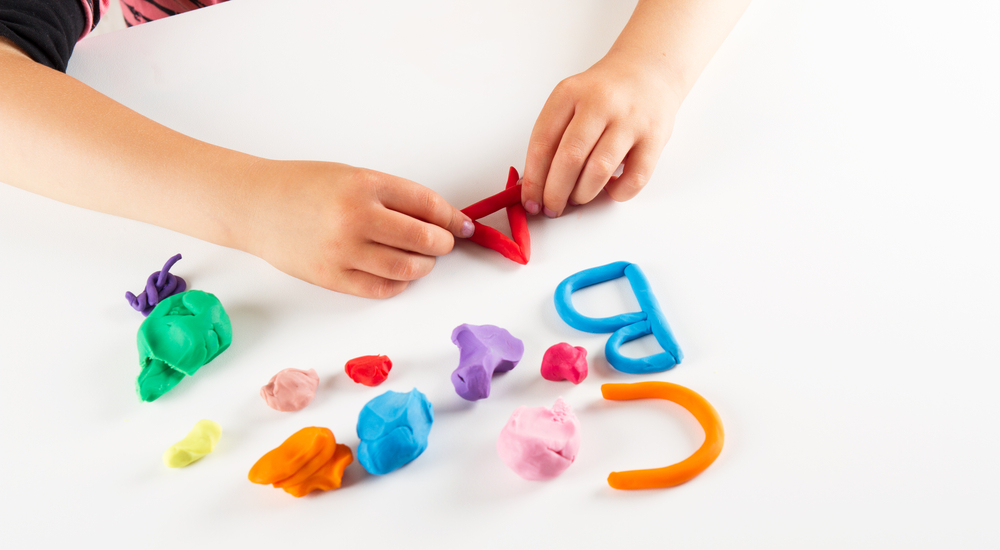
Additionally, early shape recognition encourages fine motor skills and hand-eye coordination, which are crucial for effective communication and other day-to-day activities. Activities like drawing, cutting, and assembling shapes refine these motor skills and prepare children for tasks they will encounter in school and life. Therefore, fostering an environment where children can play with and learn about shapes in a simple yet engaging manner is crucial for their overall development.








