Comprehension skills Easy Worksheets for Ages 3-6
4 filtered results
-
From - To
Help your child develop important reading comprehension skills with our easy worksheets designed for ages 3-6. At Kids Academy, our engaging, fun activities boost understanding of stories and instructions, enhancing early childhood literacy. Perfect for preschool and kindergarten learners, our printable resources include colorful, age-appropriate exercises that make learning enjoyable. Watch your child thrive as they practice sequencing, identifying main ideas, and responding to questions about short passages. Download today to support your little one's journey to becoming a confident, proficient reader. Make learning a delightful adventure with Kids Academy’s comprehension skills worksheets.
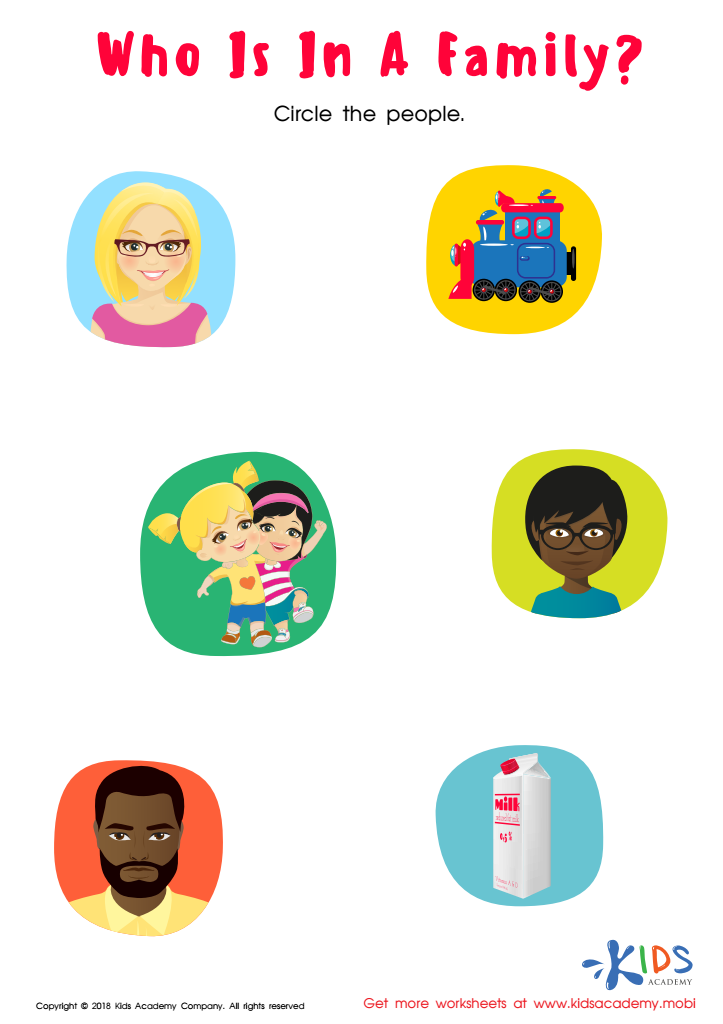
Who Is in a Family? Worksheet
 Assign to My Students
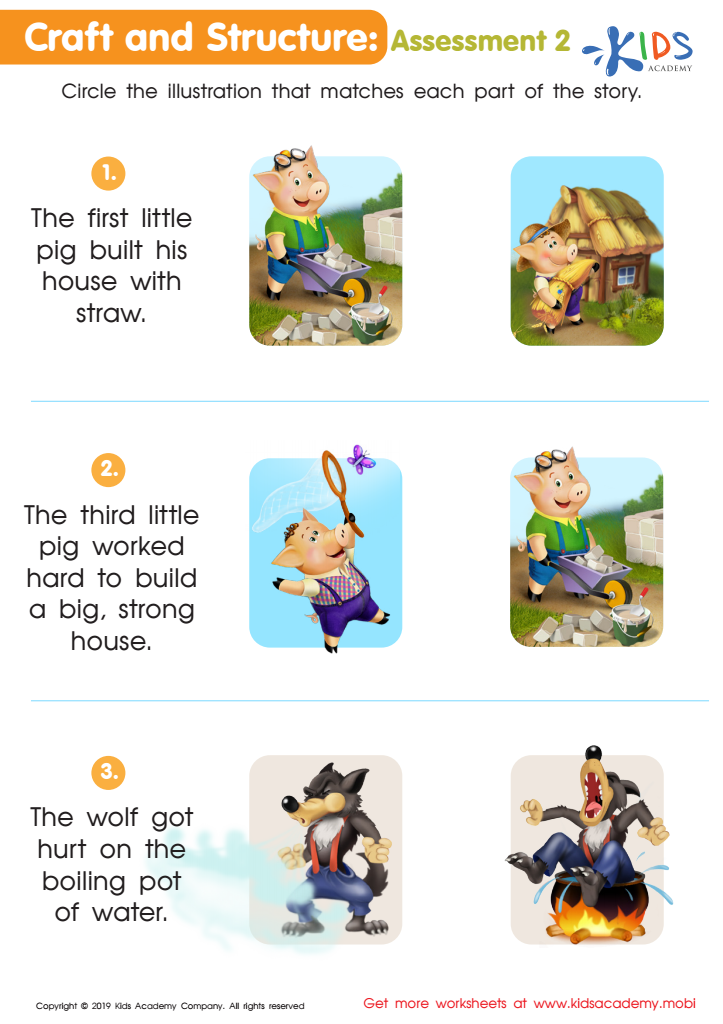
Craft and Structure: Assessment 2 Worksheet 2
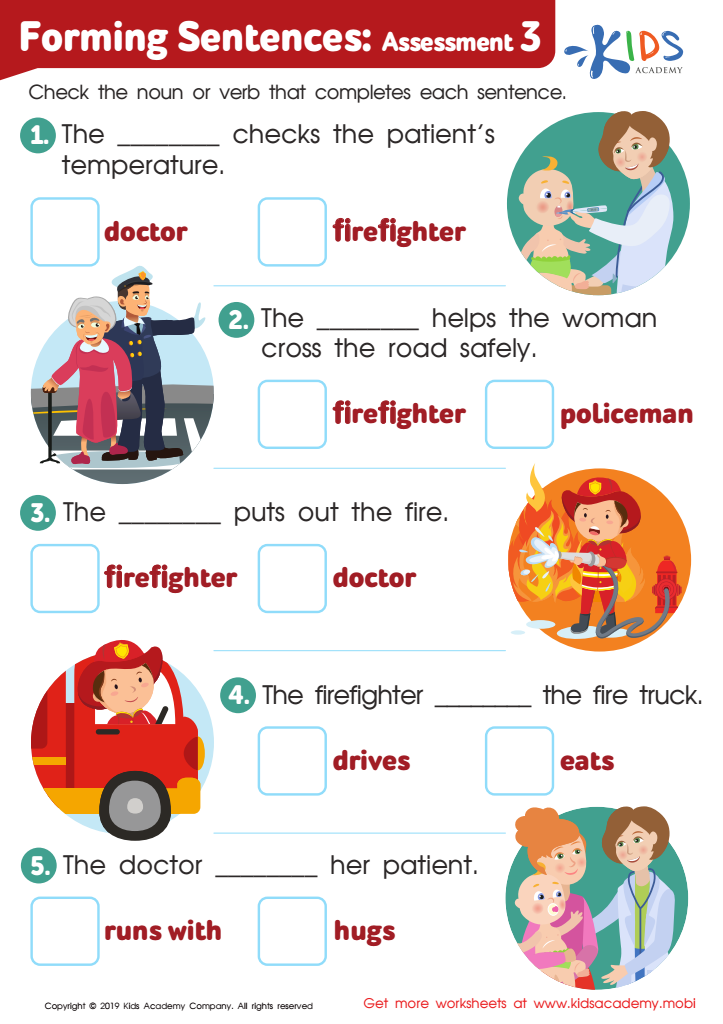
Forming Sentences: Assessment 3 Worksheet
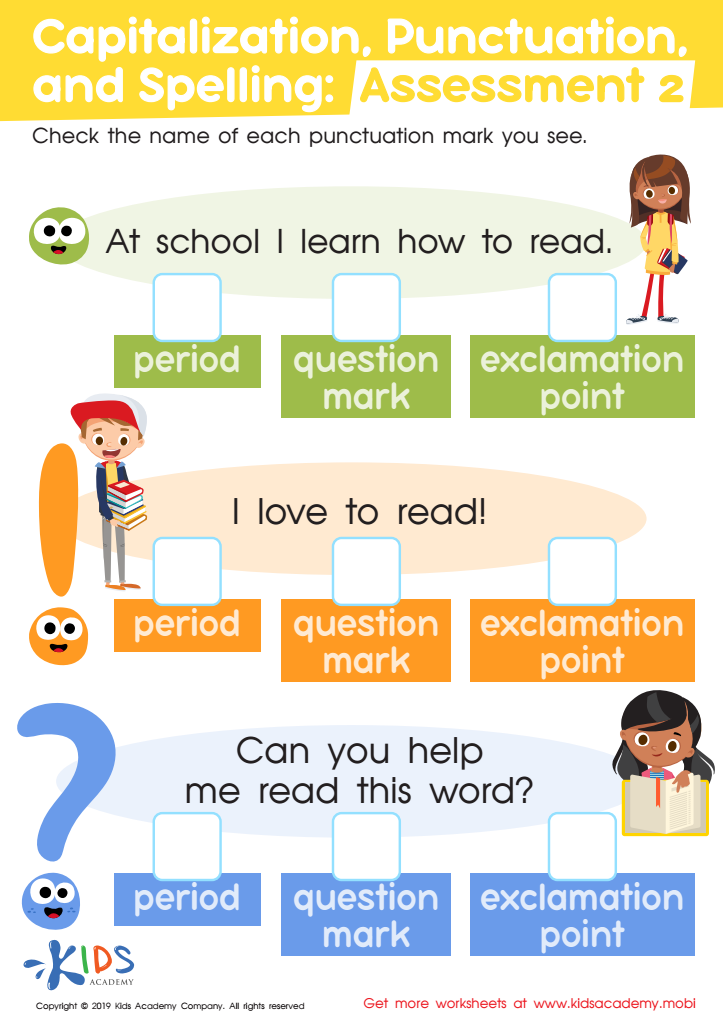
Capitalization. Punctuation. Spelling: Assessment 2 Worksheet








Comprehension skills are crucial for children ages 3-6 as they lay the foundation for future learning and confidence. At this early stage, understanding spoken and written language is pivotal in helping young minds grasp new concepts quickly. By fostering comprehension, parents and teachers encourage active listening, which is essential for following instructions and interacting with peers and adults effectively.
Reading comprehension, even with picture books, delivers cognitive benefits. It helps children connect words to meanings, enhances their vocabulary, and cultivates an interest in reading—an important habit for lifelong learning. During storytime, asking simple questions about the narrative encourages children to think critically and express thoughts, honing their reasoning abilities.
Furthermore, strong comprehension skills contribute to emotional and social development. When children understand stories and discussions, they can empathize with characters, recognize different viewpoints, and manage their feelings better. These skills are equally relevant in real-life situations, enabling kids to navigate social interactions more smoothly.
Addressing comprehension early makes learning new subjects easier as children grow older, setting them up for academic success. Hence, prioritizing these skills not only enriches a child's language abilities but also supports their overall intellectual, social, and emotional growth.








