Subtraction practice Easy Worksheets for Ages 3-6 - Page 2
30 filtered results
-
From - To
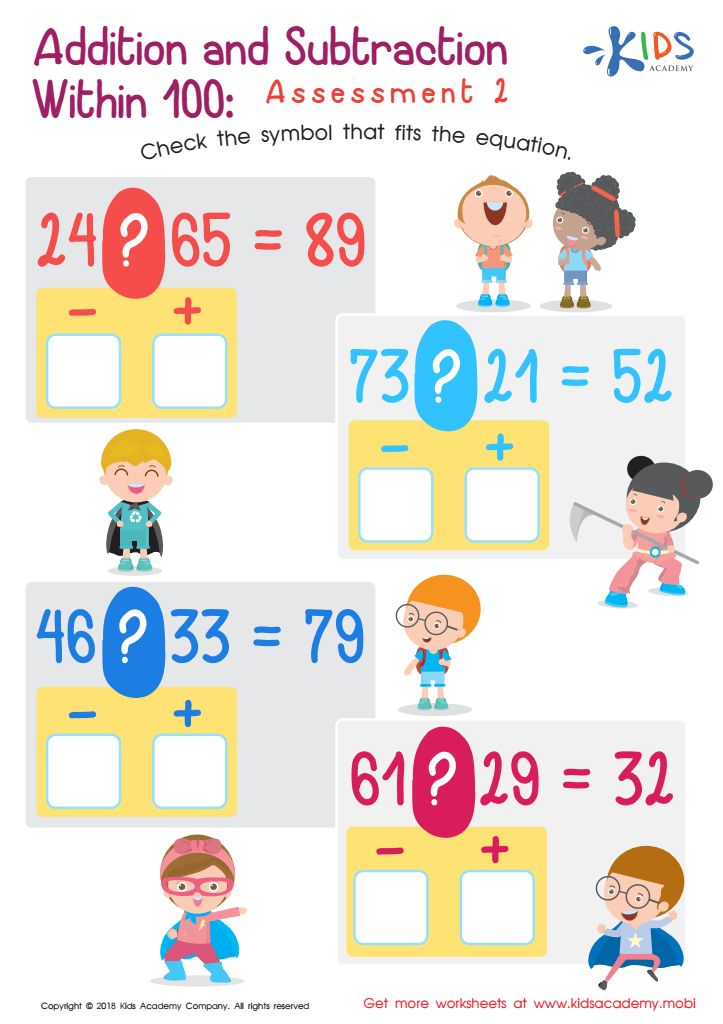
Addition and Subtraction Within 1: Assessment 2 Worksheet
 Assign to My Students
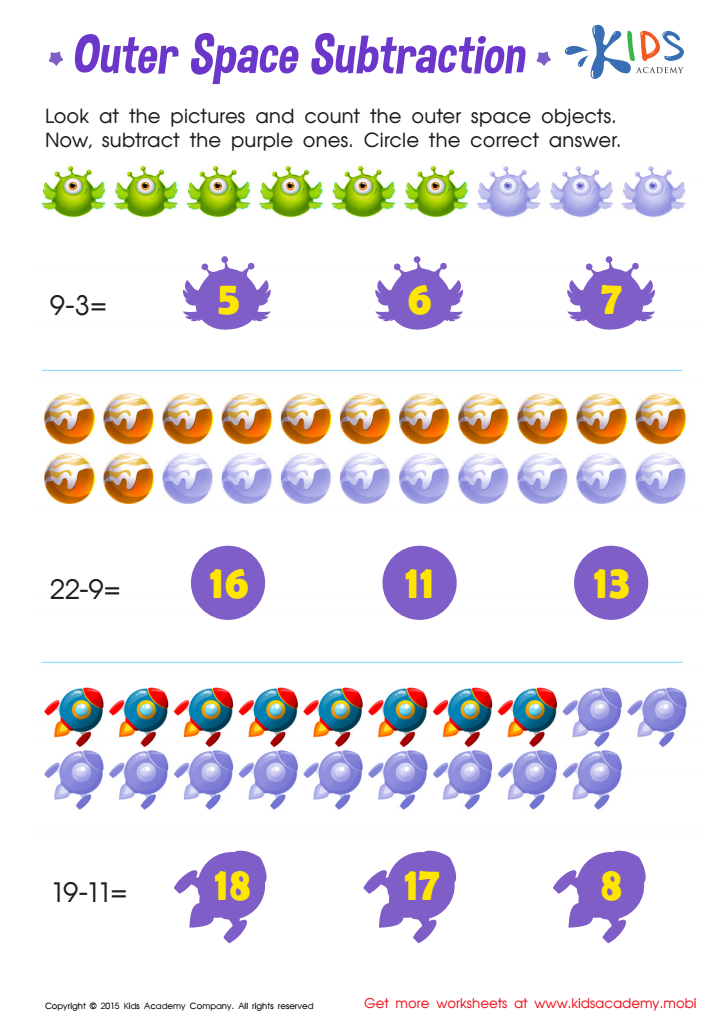
Outer Space Substraction Worksheet
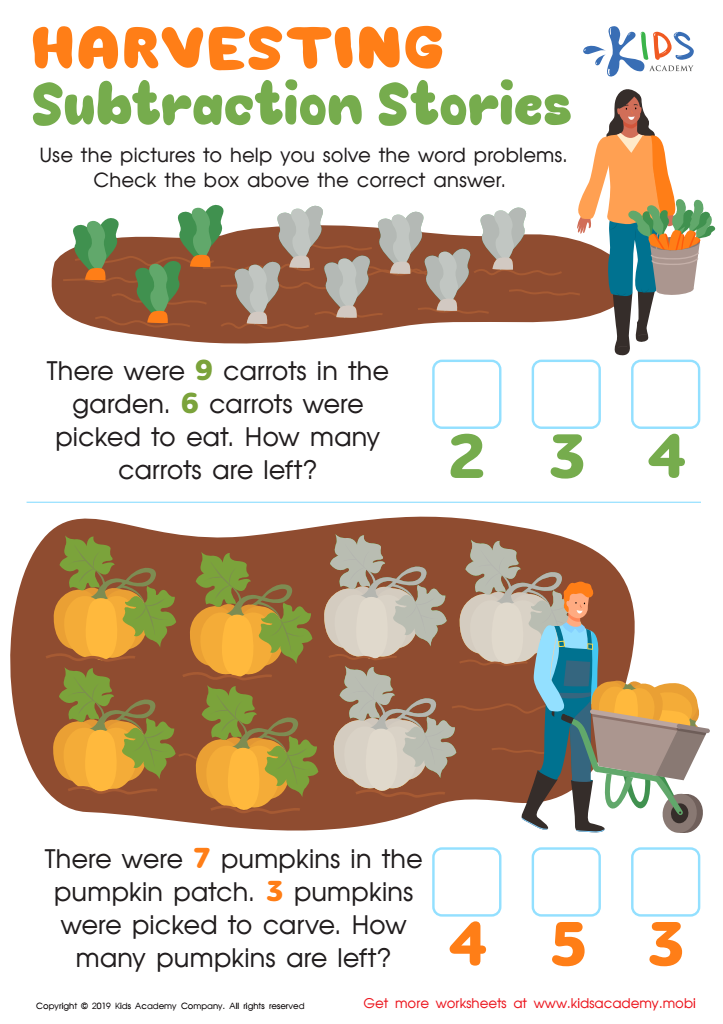
Harvesting Subtraction Stories Worksheet
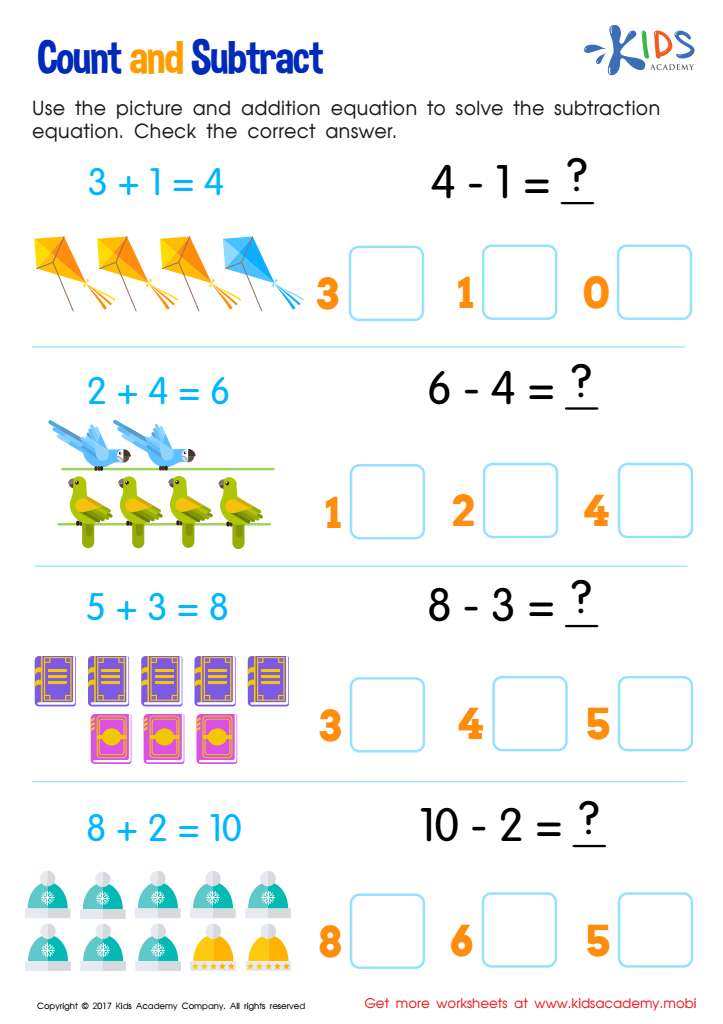
Count and Subtract Worksheet
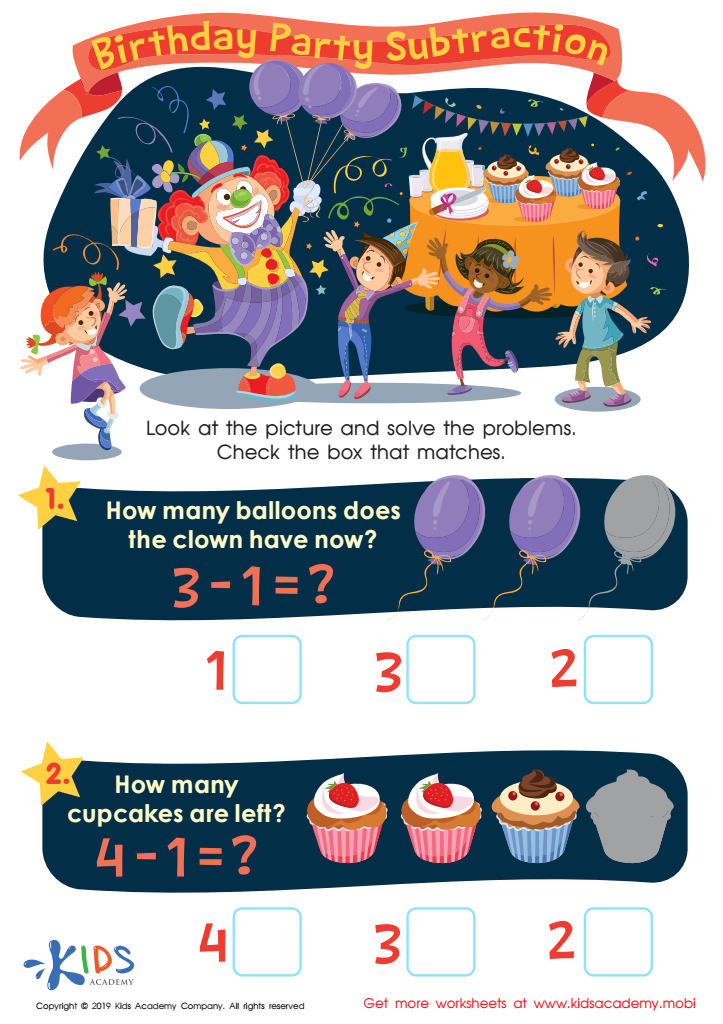
Birthday Party Subtraction Worksheet
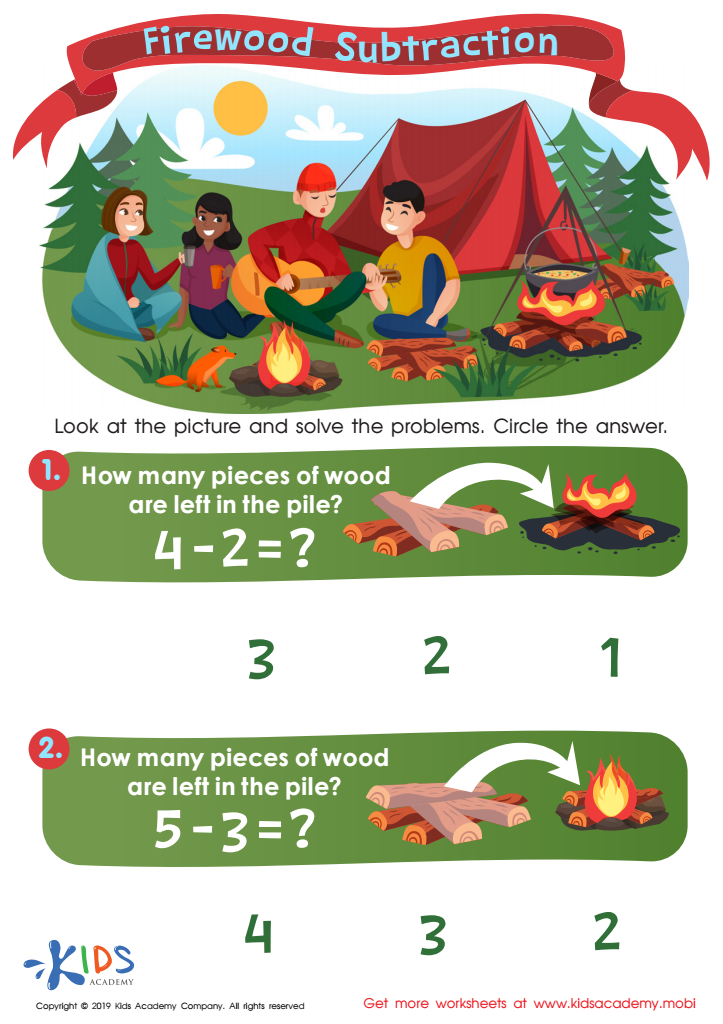
Firewood Subtraction Worksheet







Subtraction practice for children aged 3-6 is vital for several reasons. First, it lays a solid foundation for future mathematical understanding. At this age, children are developing their cognitive skills and learning basic concepts, making it an ideal time to introduce subtraction alongside addition. Mastering these skills enhances their ability to tackle more complex math problems later in school.
Second, subtraction helps with critical thinking and problem-solving. When children engage in simple subtraction activities, they learn to approach problems methodically, improving their analytical abilities. These skills are essential not only in mathematics but also in everyday situations.
Moreover, early subtraction practice supports emotional and social development. As children learn to solve subtraction problems, they experience both successes and setbacks. This process fosters resilience and encourages them to persevere through challenges, which is applicable in many aspects of life.
Additionally, engaging in subtraction activities can be a fun and interactive experience, promoting positive relationships between parents, teachers, and children. By incorporating playful games and relatable examples into learning, adults can create an enjoyable environment that motivates children to build confidence in their math skills. Hence, promoting subtraction practice is crucial to ensuring a well-rounded educational foundation.








