Easy Addition & Subtraction Worksheets for Ages 3-6 - Page 5
99 filtered results
-
From - To
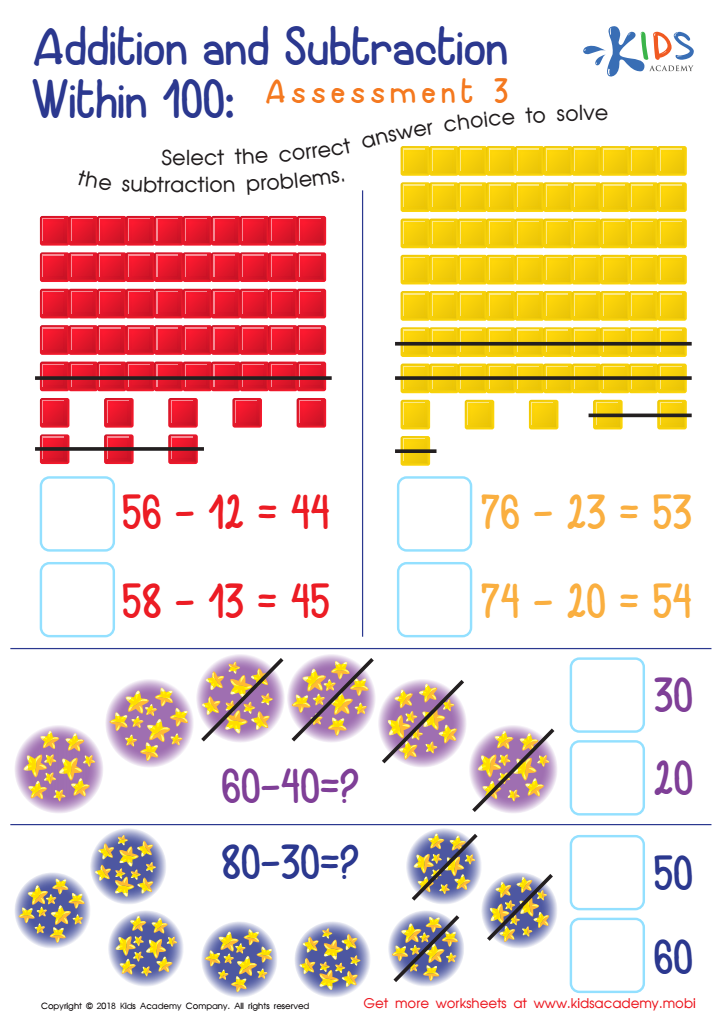
Addition and Subtraction Within 1: Assessment 3 Worksheet
 Assign to My Students
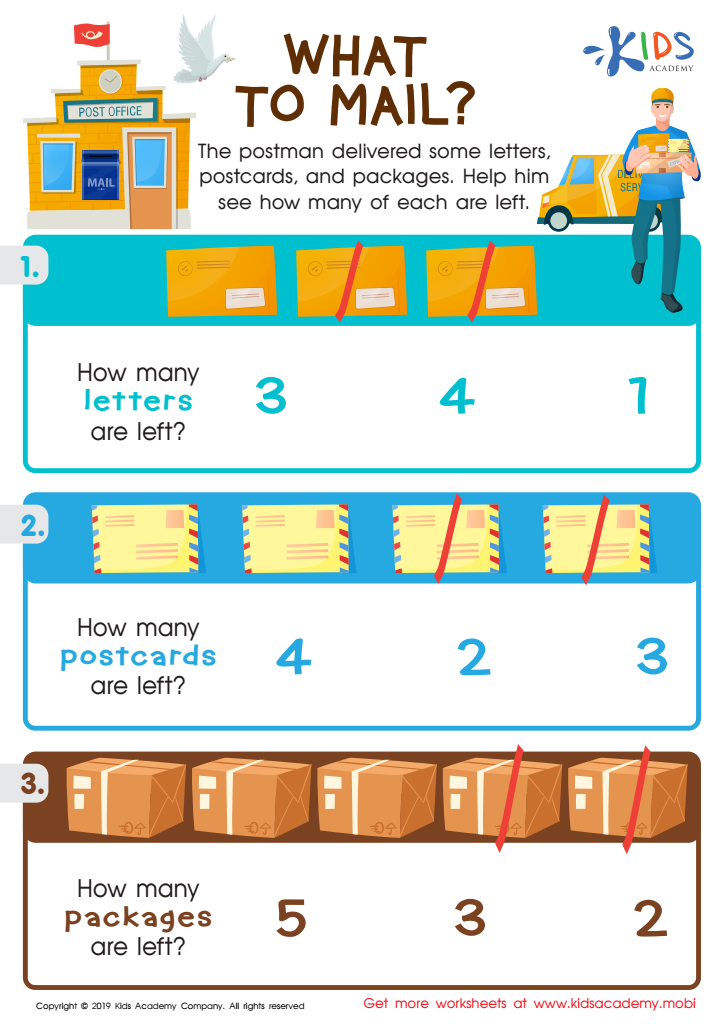
What to Mail? Worksheet
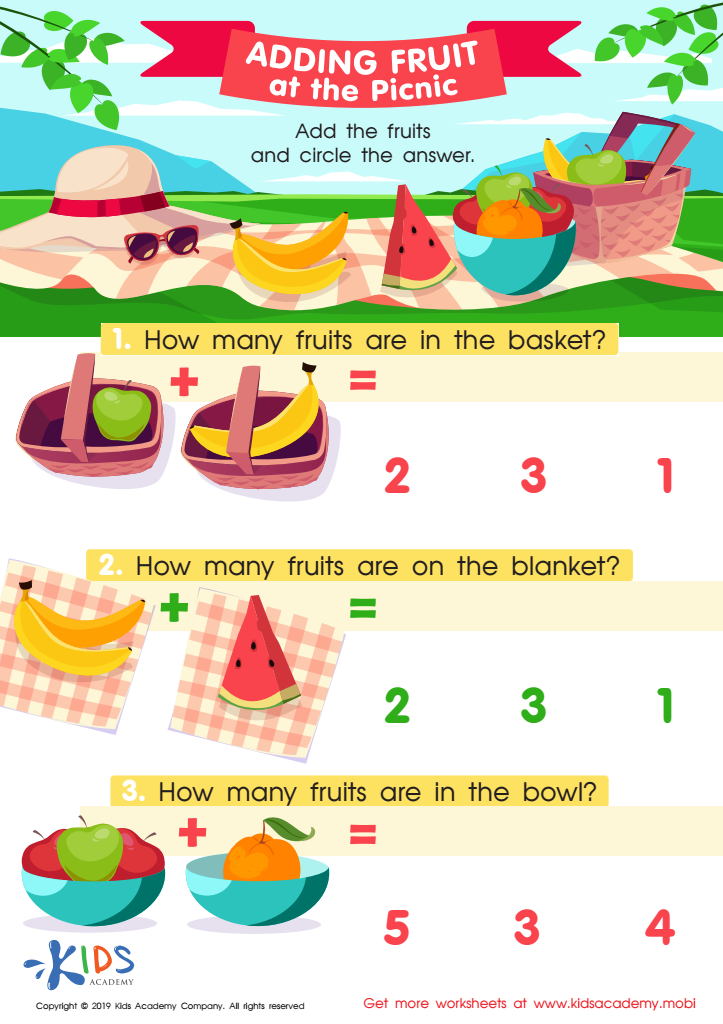
Adding Fruit at the Picnic Worksheet








Parents and teachers should prioritize Easy Addition & Subtraction for children aged 3-6 because these foundational math skills are crucial building blocks for future learning. During these formative years, young children have a remarkable capacity for absorbing new information, and early math experiences can lay the groundwork for cognitive development and academic success. By introducing simple addition and subtraction, adults can stimulate children's numerical thinking and problem-solving abilities, which are essential for complex math topics encountered later in school.
Furthermore, mastering these skills boosts children's confidence and fosters a positive attitude towards mathematics, making them more likely to engage with and enjoy math-related activities. Easy addition and subtraction exercises also enhance logical reasoning, critical thinking, and fine motor skills when using manipulatives like counting blocks or beads.
Engaging preschoolers in fun, interactive, and hands-on activities helps them understand abstract concepts concretely. For example, counting apples during snack time or subtracting cookies can transform everyday moments into valuable learning opportunities. When caregivers emphasize early math skills, they equip children with tools fundamentally essential for life's practical aspects, supporting academic growth and fostering curiosity and resilience. Encouraging such skills early on ultimately sets the stage for lifelong learning and intellectual development.