Alphabet Recognition Easy English for Beginners Worksheets for Ages 3-7
6 filtered results
-
From - To
Discover our engaging "Alphabet Recognition Easy English for Beginners Worksheets" designed specifically for children aged 3-7. Perfect for young learners, these worksheets facilitate the development of essential literacy skills through playful and interactive activities. Each worksheet focuses on letter identification and phonics, enhancing familiarity with the alphabet while promoting early reading readiness. Kids will enjoy colorful illustrations and engaging exercises that capture their attention and keep them motivated. Our resources are ideal for both classroom and home settings, making learning fun and effective. Start your child's language journey today and watch them build a strong foundation in English with confidence!
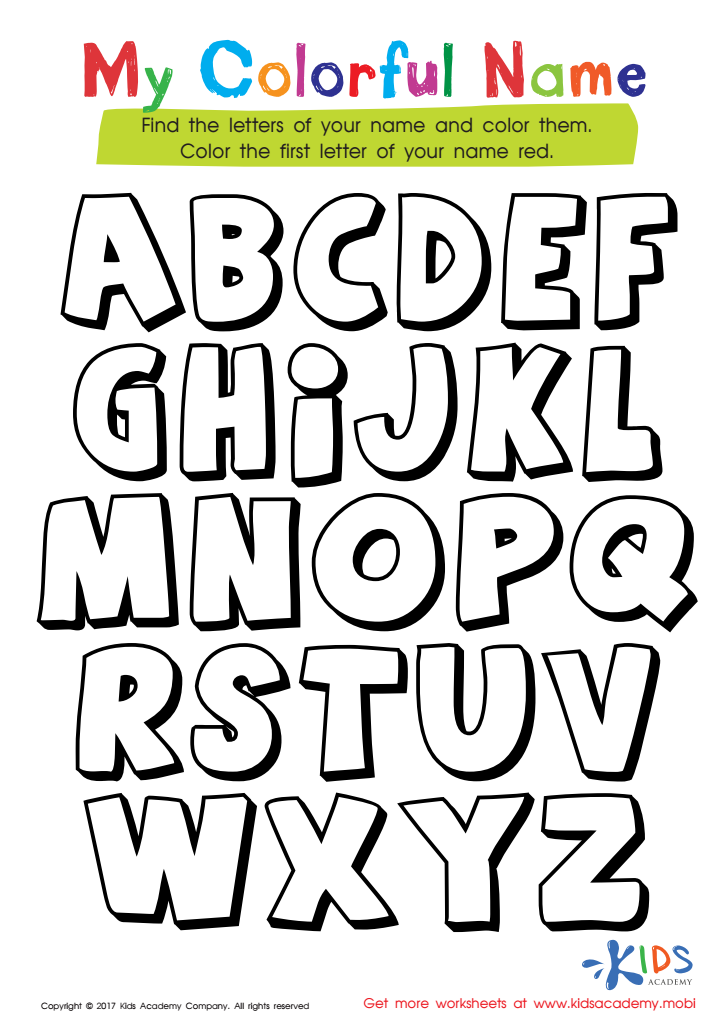
My Colorful Name Worksheet
 Assign to My Students
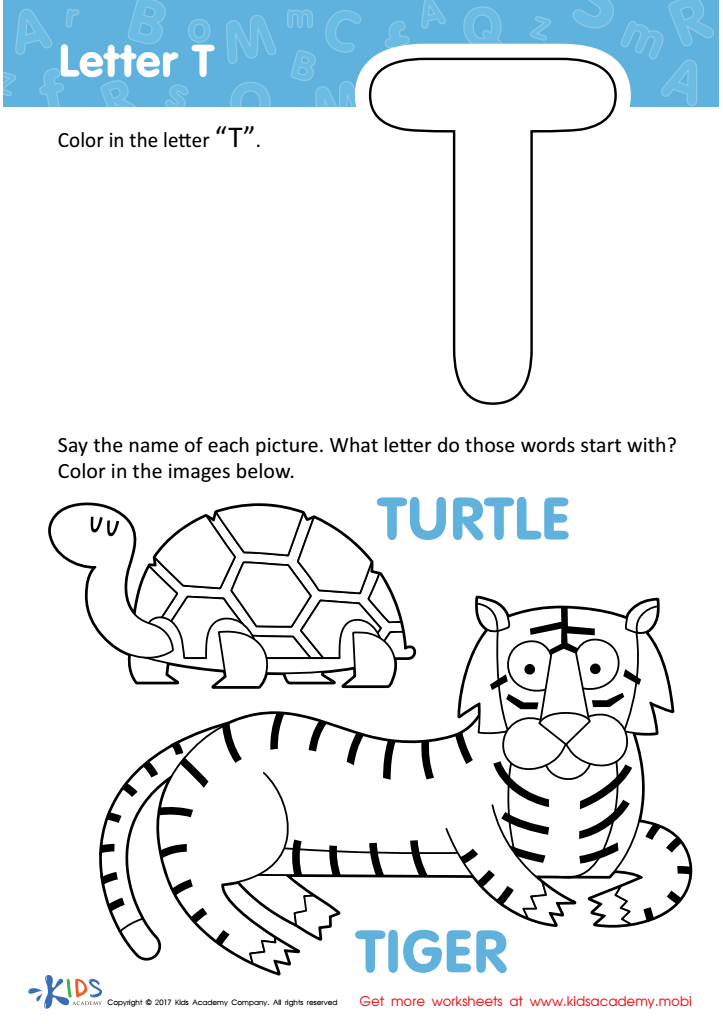
Letter T Coloring Sheet
Assign to My Students
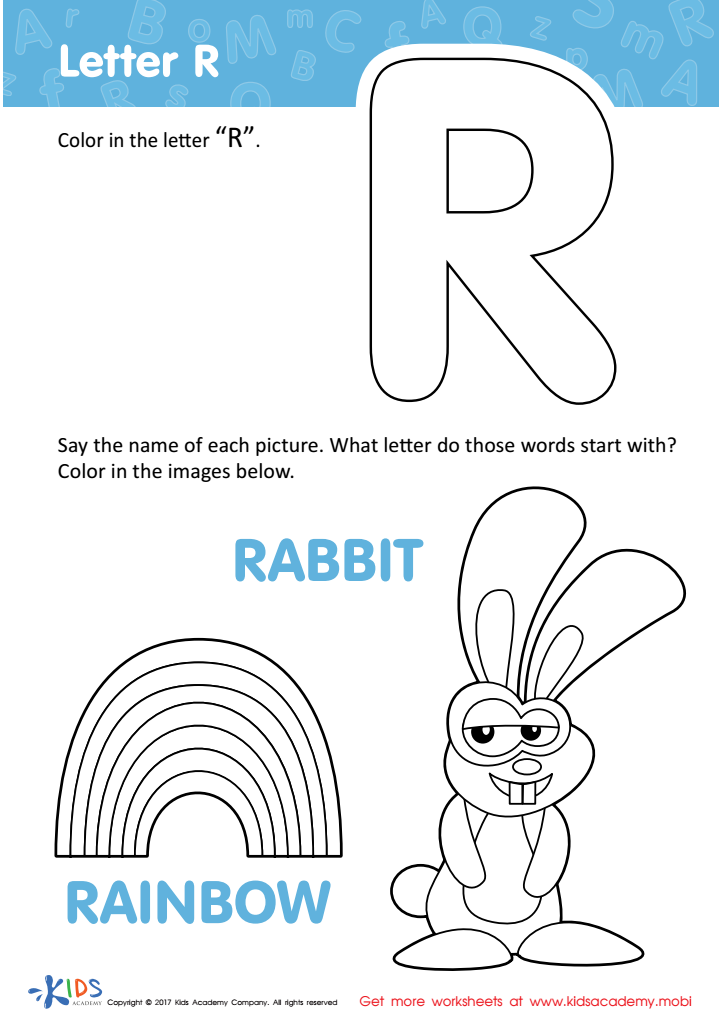
Letter R Coloring Sheet
Assign to My Students
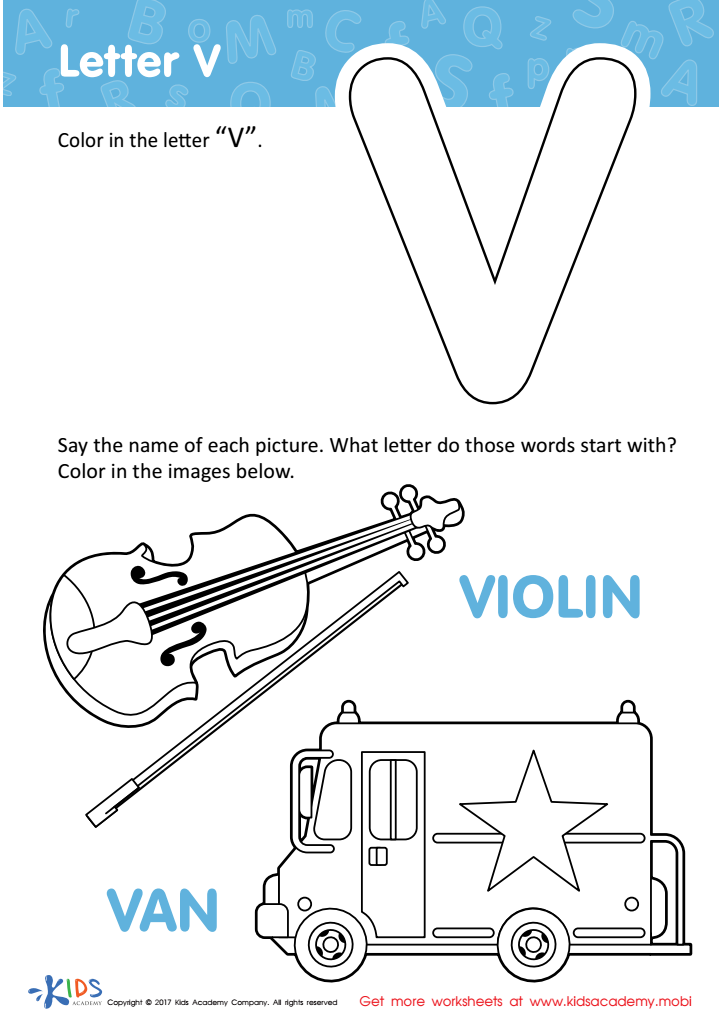
Letter V Coloring Sheet
Assign to My Students
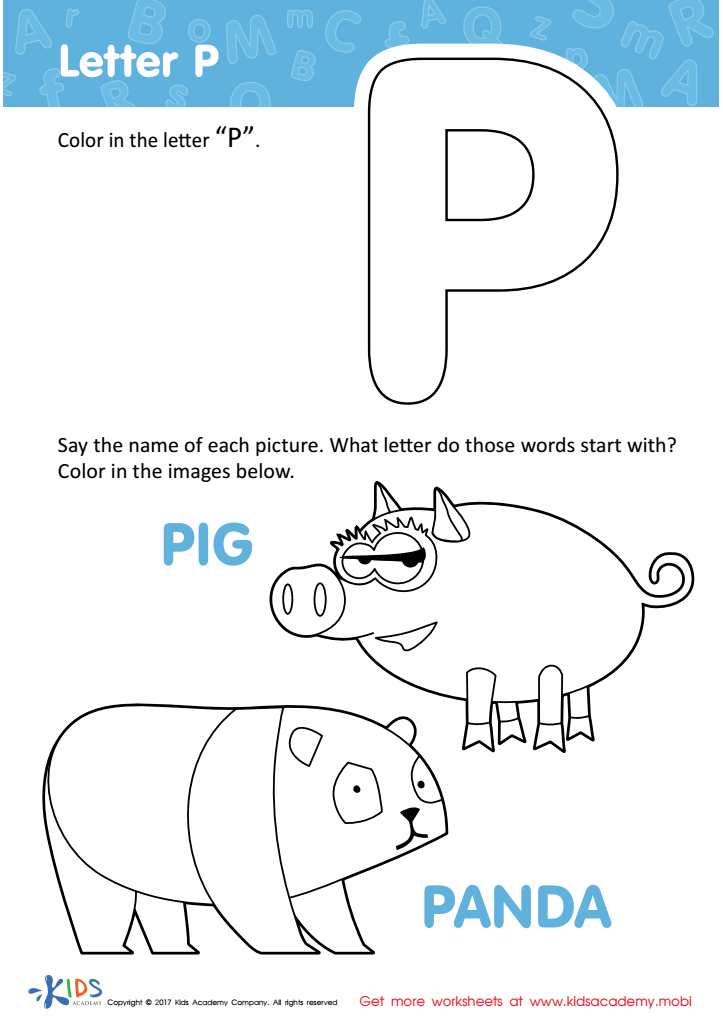
Letter P Coloring Sheet
Assign to My Students
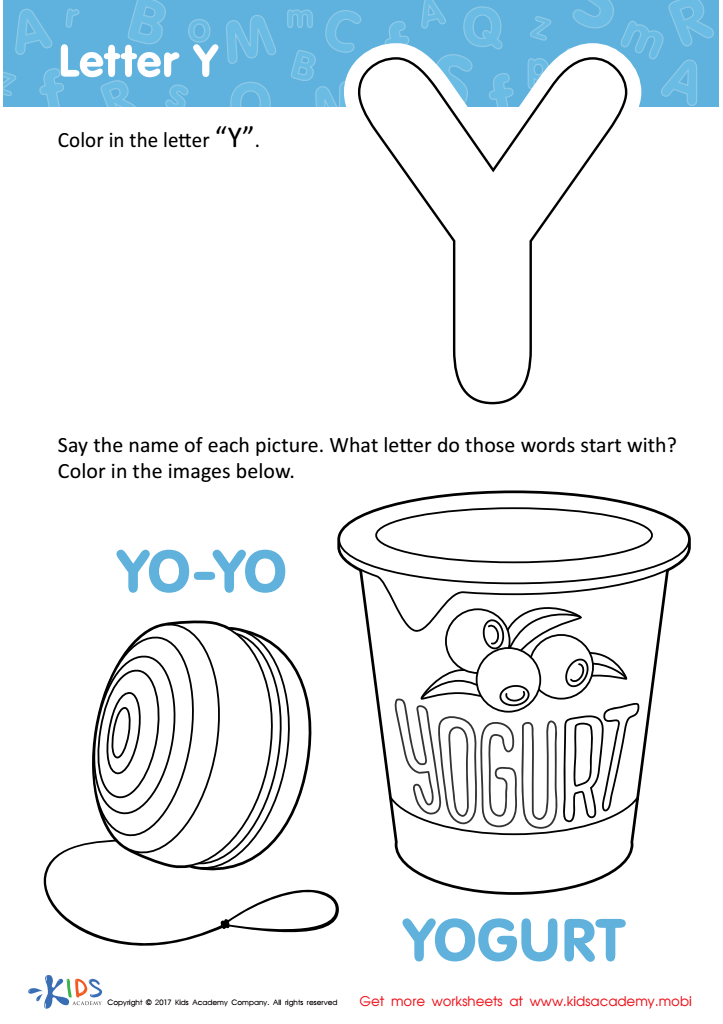
Letter Y Coloring Sheet
Assign to My Students




Alphabet recognition is a fundamental skill that lays the groundwork for early literacy development in children aged 3-7. Parents and teachers should care about this for several reasons. Firstly, recognizing letters is crucial for reading and writing, enabling children to connect sounds to letters, forming the backbone of phonics — an essential reading strategy. Early mastery of the alphabet can lead to more confidence in literacy, encouraging a lifelong love of reading.
Furthermore, engaging children in activities that promote alphabet recognition cultivates cognitive skills such as memory and attention. Fun and interactive methods, like songs, games, and storytelling, not only make learning enjoyable but also foster social and emotional development through cooperative play and teamwork.
Additionally, children who can recognize and articulate the alphabet are better prepared for academic success, laying a strong foundation for subjects involving written communication, critical thinking, and comprehension. As educators and caregivers, it’s our responsibility to equip young learners with these fundamental skills, enabling them to thrive in an increasingly literate world. By prioritizing alphabet recognition, parents and teachers can empower children to explore language, communicate effectively, and build a strong foundation for their education.