Fraction comparison Easy Worksheets for Ages 3-7
3 filtered results
-
From - To
Welcome to our engaging collection of "Fraction Comparison Easy Worksheets" specially designed for children aged 3-7! Our printable resources make learning about fractions fun and straightforward. Each worksheet introduces essential skills, allowing young learners to compare fractions using visuals and simple concepts. Kids will enjoy interactive exercises that enhance their understanding of greater than, less than, and equal to, building a solid foundation for future math skills. Perfect for parents and educators alike, these worksheets promote hands-on learning experiences that encourage critical thinking and problem-solving. Start exploring with your little ones today and watch them gain confidence in their math abilities!
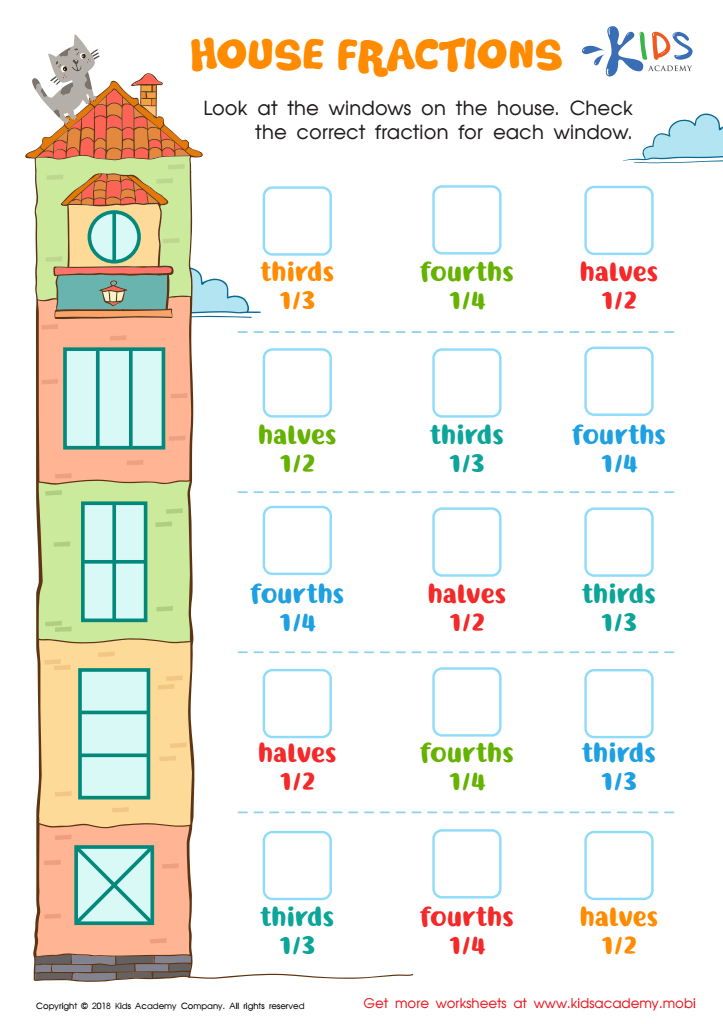
House Fractions Worksheet
 Assign to My Students
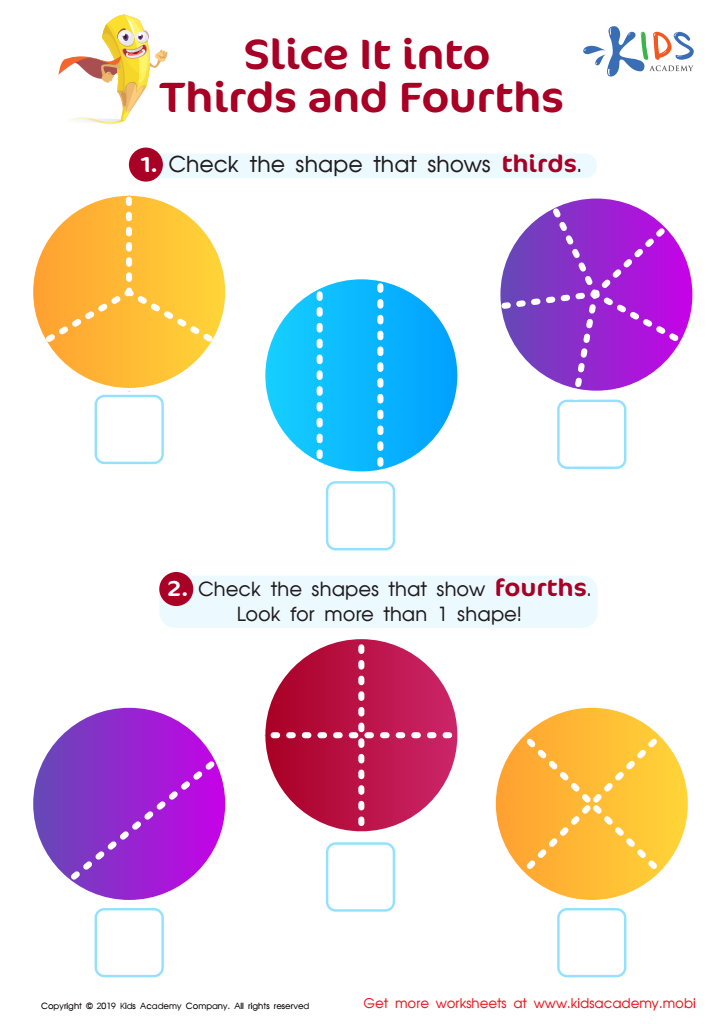
Slice in Thirds Fourths Worksheet
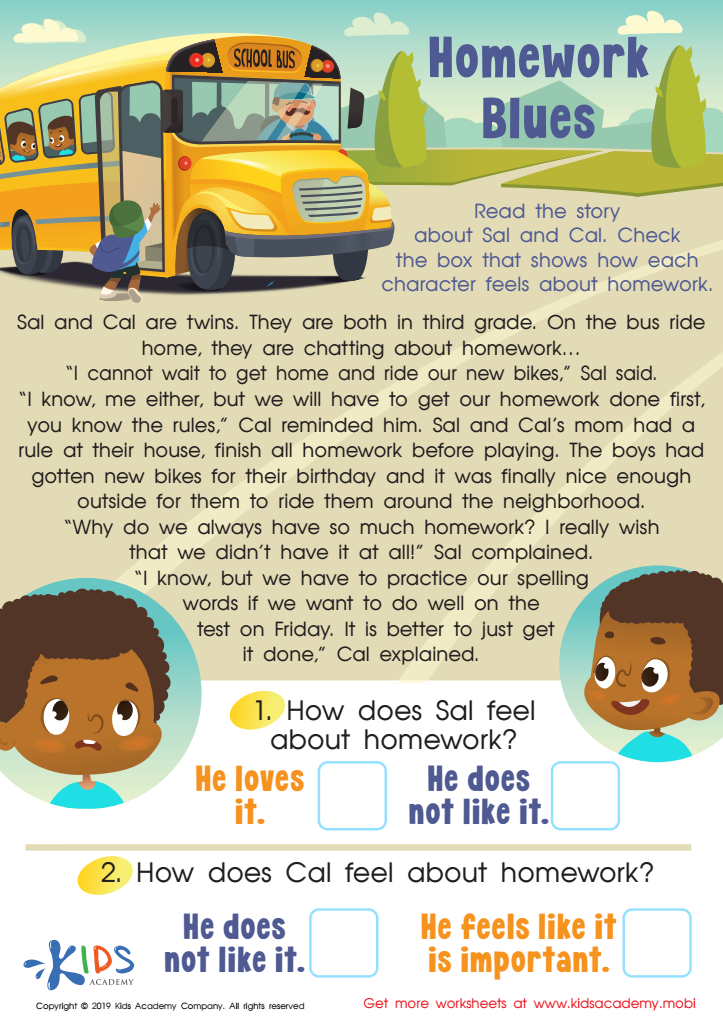
Homework Blues Worksheet







Fraction comparison is an essential skill for children ages 3-7, as it lays the groundwork for more advanced math concepts later on. Teaching young children about fractions helps them develop a strong numeracy foundation, promoting critical thinking and problem-solving skills. Understanding fractions aids in enhancing their ability to compare quantities, which is fundamental not only in math but also in everyday scenarios, such as sharing food, measuring ingredients, or understanding proportions.
Parents and teachers should prioritize fraction comparison because it fosters a sense of confidence in learners, setting the stage for a positive relationship with mathematics. Engaging children with visual aids like pie charts, number lines, and small objects can make learning about fractions interactive and fun, which maintains their interest and encourages exploration. By incorporating games or practical activities that involve comparing fractions, educators can address diverse learning styles while preparing students for future math challenges, including decimal and percentage comparisons.
Ultimately, investing time and effort into fractional understanding promotes overall cognitive development and empowers children with essential life skills, equipping them to face complex mathematical concepts as they progress in their education.








