Grammar practice Easy Worksheets for Ages 3-7
4 filtered results
-
From - To
Introducing our "Grammar Practice Easy Worksheets for Ages 3-7" – the perfect resource for young learners to build a strong foundation in grammar skills. Designed to make learning fun, these printable worksheets include engaging activities and colorful illustrations that captivate children's attention while teaching essential grammar concepts like nouns, verbs, adjectives, and more. Ideal for use at home or in the classroom, these worksheets aim to develop early literacy skills and boost confidence in young readers and writers. Help your child master grammar basics early on and set them on the path to academic success with our easy and enjoyable worksheets.
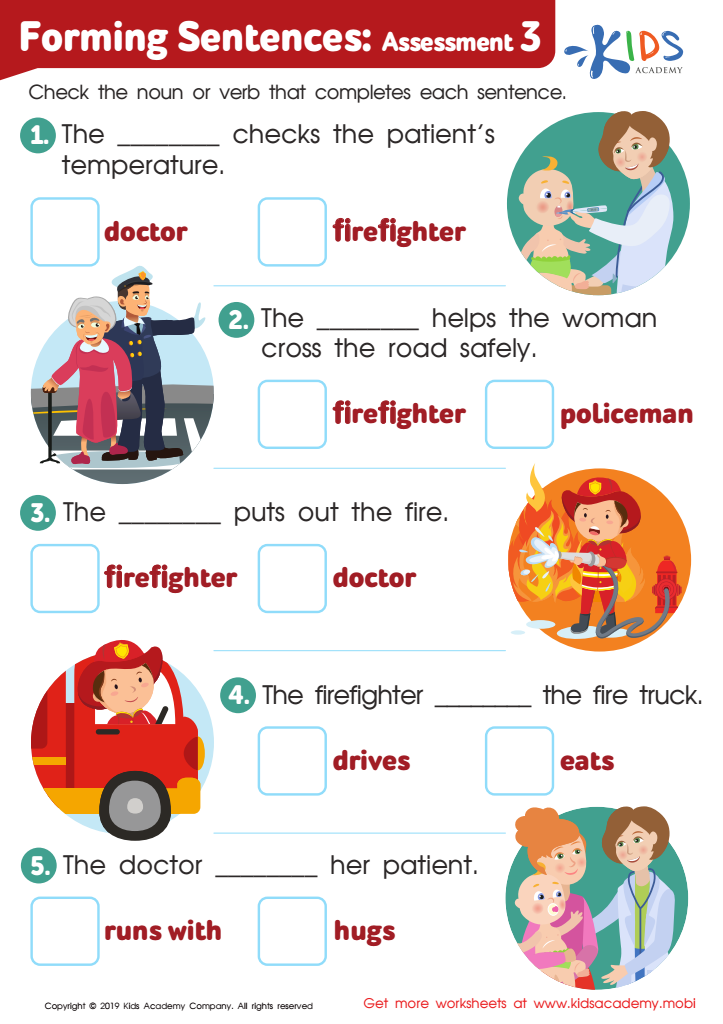
Forming Sentences: Assessment 3 Worksheet
 Assign to My Students
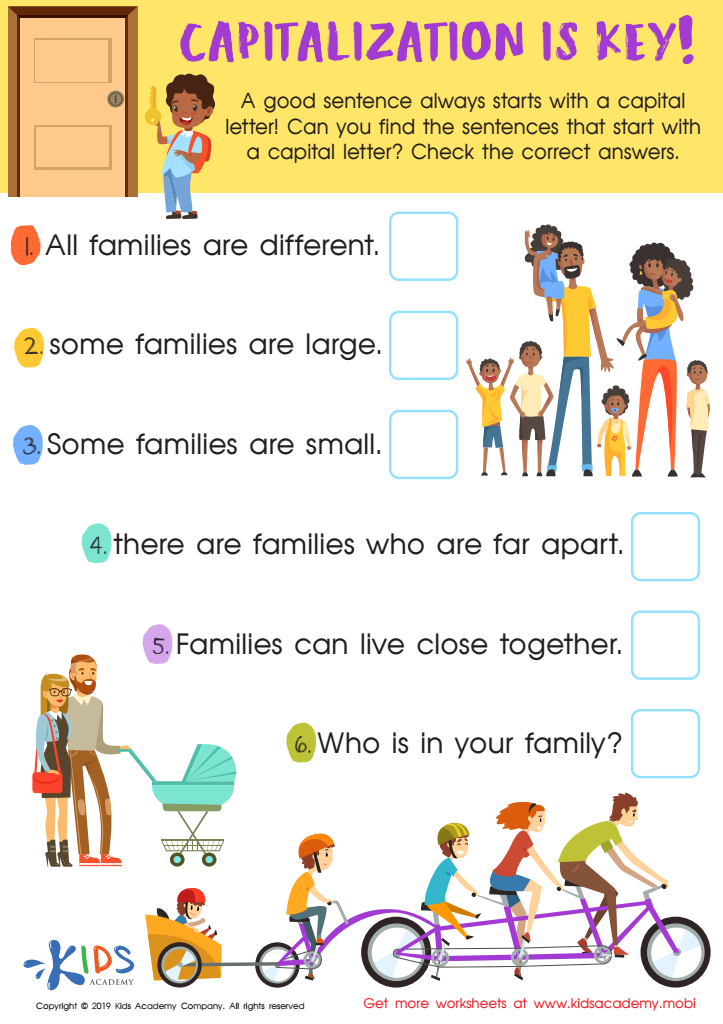
Capitalization Key Worksheet
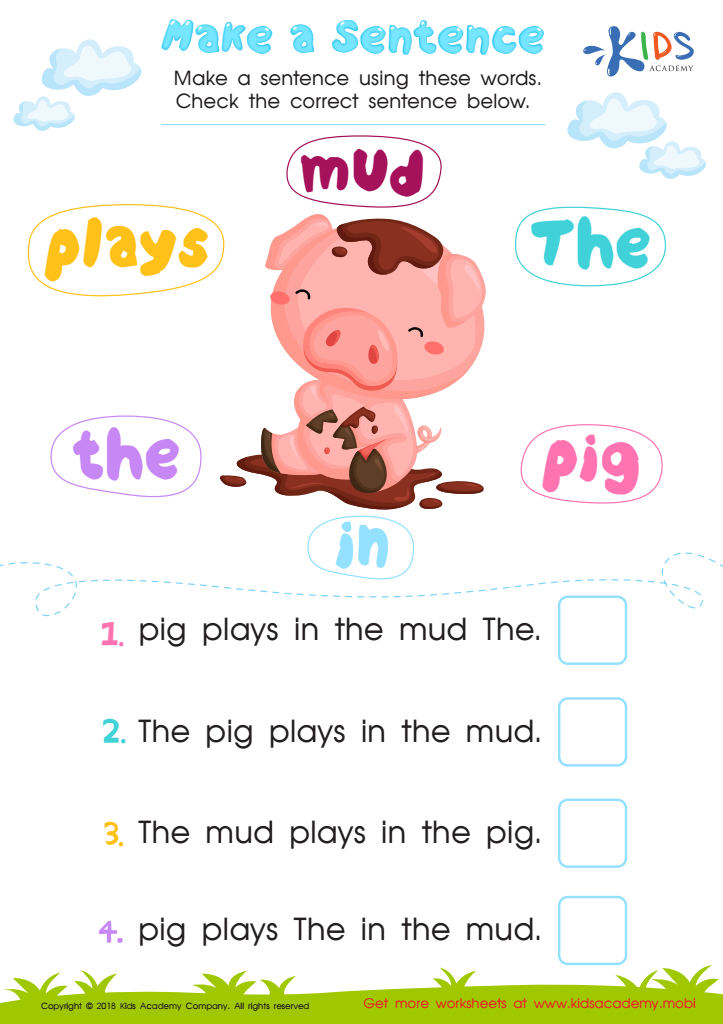
Assessment: Make a Sentence Worksheet
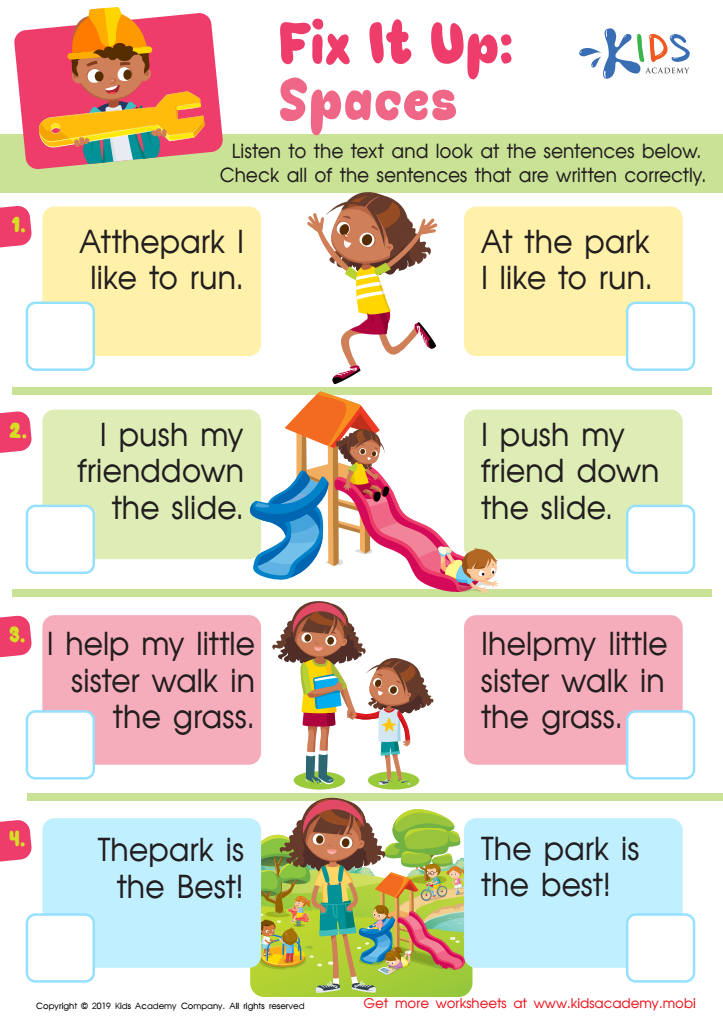
Fix Spaces Worksheet








Grammar practice for young children is essential as it lays the foundation for effective communication, critical thinking, and academic success. For ages 3-7, their brains are particularly receptive to learning language and grammar skills. Consistent practice helps them understand sentence structure, proper word usage, and punctuation. This early exposure allows them to more easily grasp complex language concepts later in their education.
By engaging in grammar practice, young children develop stronger speaking and listening skills. They learn to articulate their thoughts clearly and understand others better, which is crucial for both social interactions and classroom participation. This communication skill set also supports emotional development as children can express their emotions and needs more effectively.
For parents, incorporating fun and interactive grammar activities at home, like storytelling or simple word games, can reinforce what is taught in school, fostering a cohesive learning environment. Teachers benefit by integrating grammar exercises in a playful, engaging manner, which holds children's attention and promotes a positive attitude toward learning.
Overall, early grammar practice isn't just about memorizing rules; it's about developing lifelong skills that enable children to thrive academically and socially. When parents and teachers prioritize these practices, they set the stage for children to become confident and effective communicators.








