Identifying shapes Easy Worksheets for Ages 3-7
3 filtered results
-
From - To
Discover our engaging "Identifying Shapes Easy Worksheets" designed specifically for children ages 3-7! These fun, printable worksheets help young learners recognize and differentiate various shapes through lively activities and colorful illustrations. With a range of exercises, including tracing, coloring, and matching, children will develop essential shape recognition skills while enjoying hands-on learning. Perfect for home or classroom use, our worksheets foster creativity and critical thinking, providing a solid foundation in early mathematics. Enhance your child’s educational journey and make learning shapes enjoyable with our user-friendly resources tailored to young minds! Start exploring the world of shapes today!
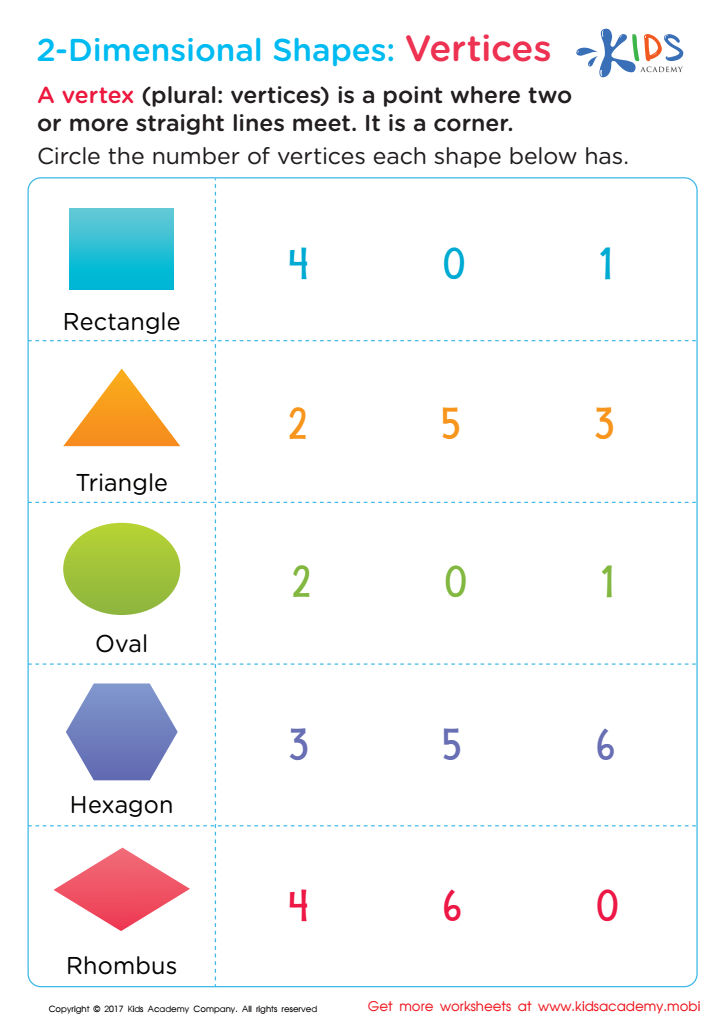
Two–Dimensional Shapes: Vertices Printable
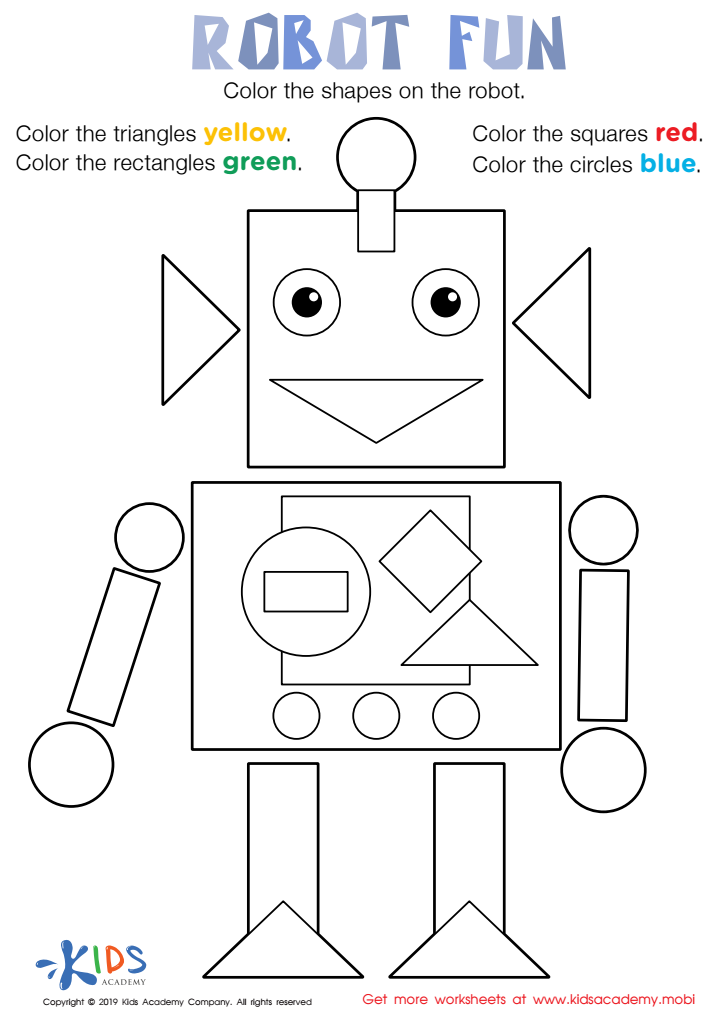
Robot Fun Worksheet
 Assign to My Students
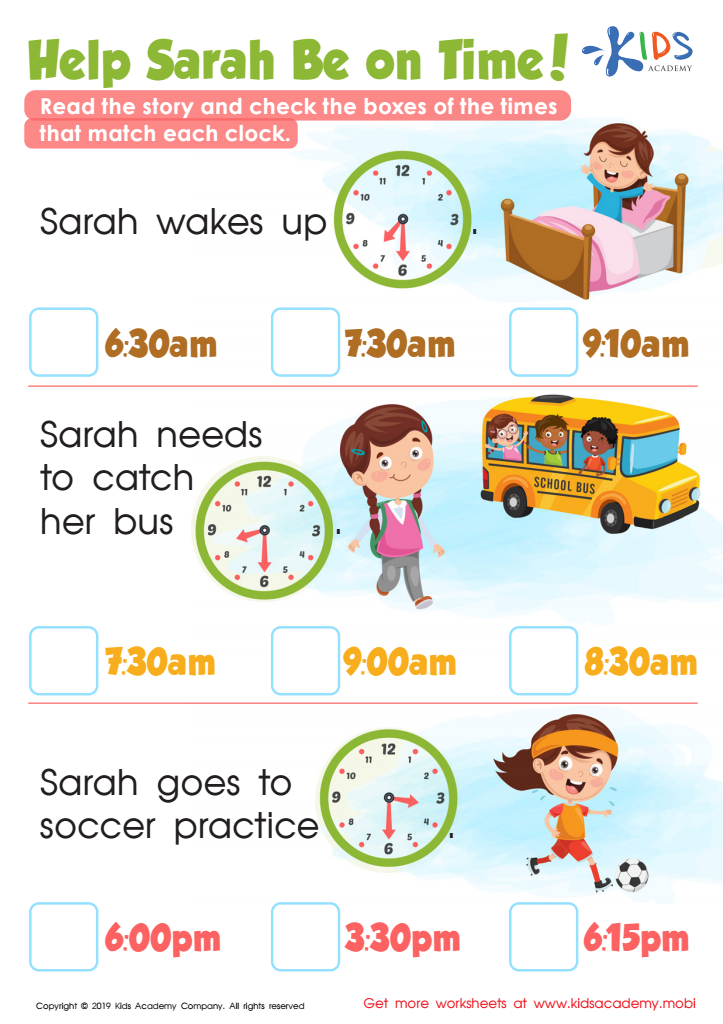
Help Sarah Be on Time! Worksheet








Identifying shapes is a fundamental building block in early childhood education, particularly for children aged 3-7. During this critical developmental stage, children are highly receptive to learning through exploration and play. Recognizing shapes helps them understand the world around them, enhancing their spatial awareness and cognitive skills.
Parents and teachers should care about this aspect of learning because it lays the groundwork for more complex mathematical concepts later on. When children learn to identify shapes, they improve their problem-solving abilities and critical thinking skills. Additionally, understanding shapes aids in the development of fine motor skills as they engage in activities such as drawing, cutting, and constructing.
Moreover, identifying shapes can be an enjoyable and interactive way to encourage creativity. For example, integrating shape recognition with games, art, and nature promotes active learning, capturing the children's interest. This engagement not only sparks curiosity but also fosters social skills when children collaborate during shape-related activities.
Ultimately, embracing shape recognition enriches children's vocabulary, enhances their observational skills, and prepares them for future educational success. By prioritizing shape identification, parents and teachers ensure children develop foundational skills that contribute to their overall learning journey.








