Understanding life cycles Easy Worksheets for Ages 3-7
4 filtered results
-
From - To
Explore our engaging "Understanding Life Cycles Easy Worksheets" designed for children ages 3-7! These worksheets enhance early learning by introducing young minds to the fascinating concepts of life cycles in a fun and interactive way. With vibrant visuals and simple activities, kids will discover the transformations of plants, animals, and insects, fostering curiosity and observation skills. Our resources are perfect for homeschooling or classroom settings, encouraging hands-on learning through coloring, matching, and drawing exercises. Help your little learners grasp essential biological concepts while developing fine motor skills. Make learning about life cycles enjoyable and accessible today!
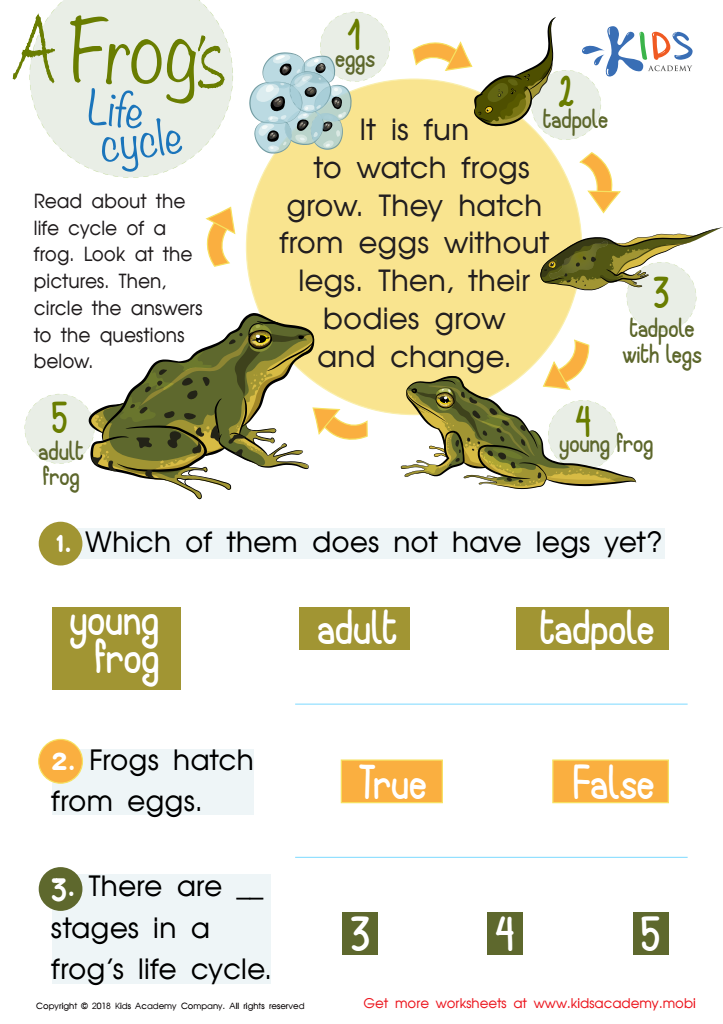
A Frog’s Life Cycle Worksheet
 Assign to My Students
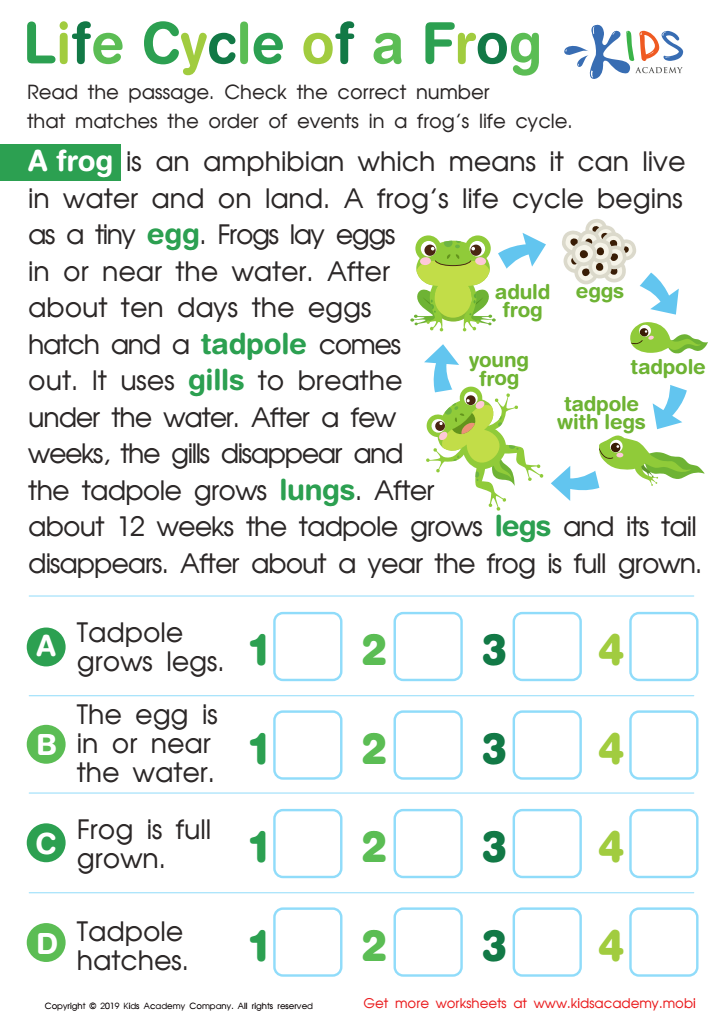
Life Cycle of a Frog Worksheet
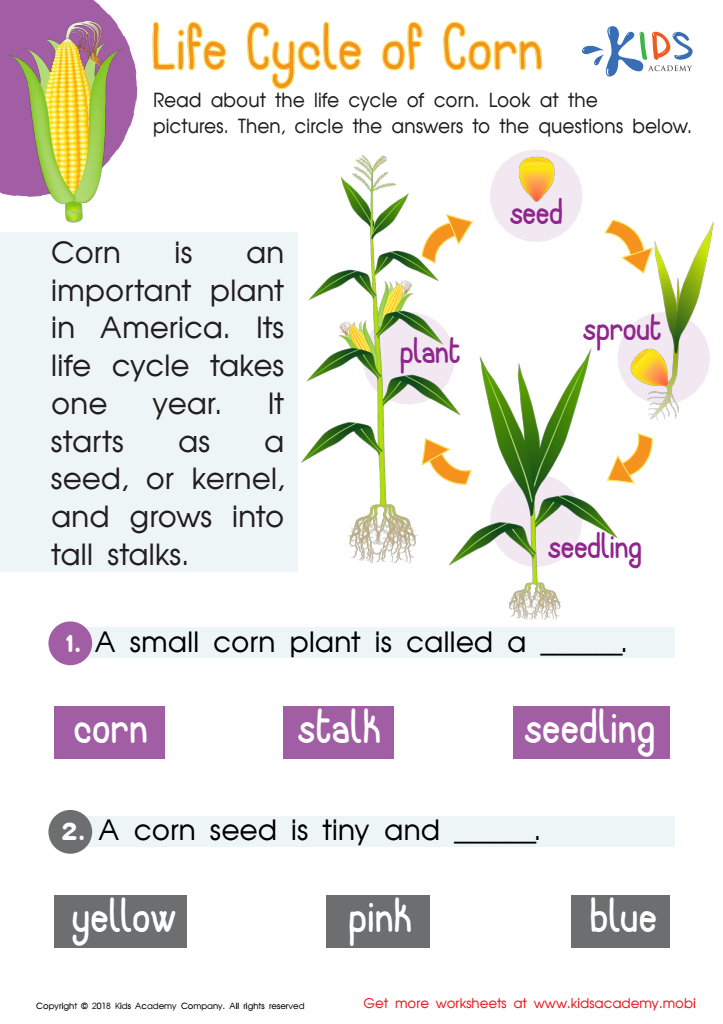
Life Cycle of Corn Worksheet
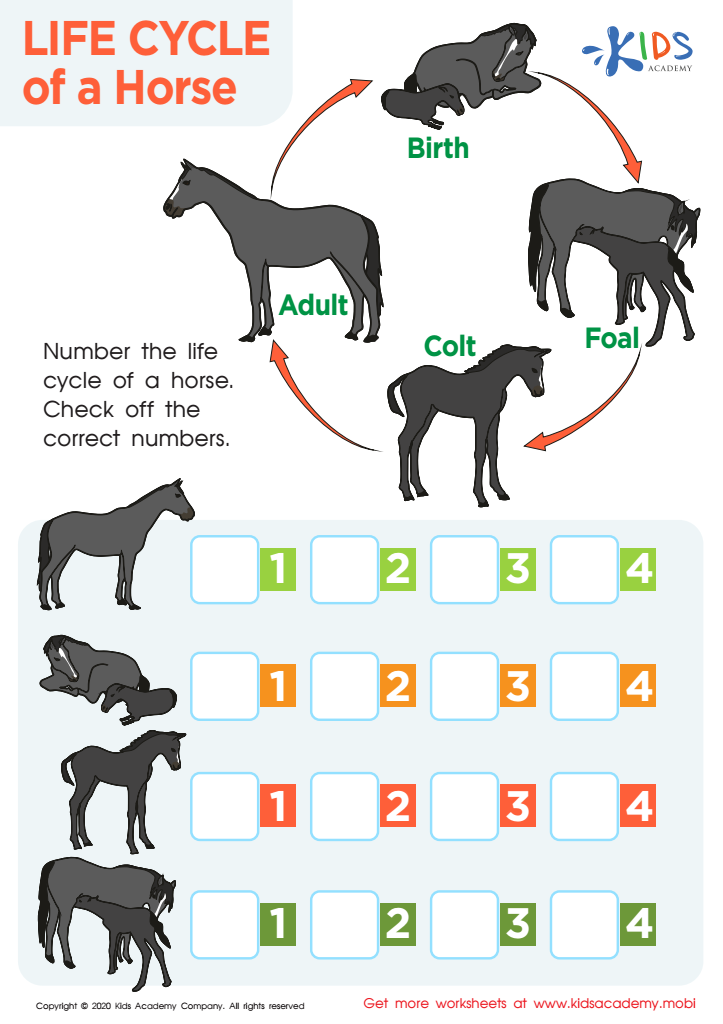
Life Cycle of a Horse Worksheet






Understanding life cycles is essential for children aged 3-7 as it provides them with a foundation for grasping the natural world. At this age, children are inherently curious about their environment. By learning about life cycles—such as those of plants, animals, and insects—they develop an appreciation for the growth and changes occurring around them. This knowledge nurtures their sense of wonder and encourages outdoor exploration.
For parents and teachers, fostering an understanding of life cycles promotes critical thinking and sequential reasoning. When children observe how a seed transforms into a plant or a caterpillar into a butterfly, they learn about cause and effect, a key aspect of cognitive development. Additionally, these concepts help frame discussions about topics like change, patience, and the importance of nurturing living things.
Engaging with life cycles also delivers emotional and social benefits. It teaches compassion and responsibility, especially when tending to plants or observing animals. As children engage in these experiences, they build relationships, learn to share tasks, and develop a sense of accomplishment.
Ultimately, introducing young learners to life cycles cultivates a knowledge base that intertwines science with values, contributing to well-rounded, informed individuals.








