Shape Recognition Easy Fractions of Shapes Worksheets for Ages 3-7
5 filtered results
-
From - To
Discover engaging "Shape Recognition Easy Fractions of Shapes Worksheets" tailored for ages 3-7 at Kids Academy! These fun and educational printables help young learners recognize basic shapes and understand simple fractions through colorful and attractive activities. Each worksheet is designed to develop essential math skills and boost cognitive ability in a playful, interactive way. Perfect for home or classroom use, our worksheets provide a strong foundation for early math success. Enhance shape recognition and foster a love for learning with our expertly crafted resources. Download now and embark on a journey of math discovery today!
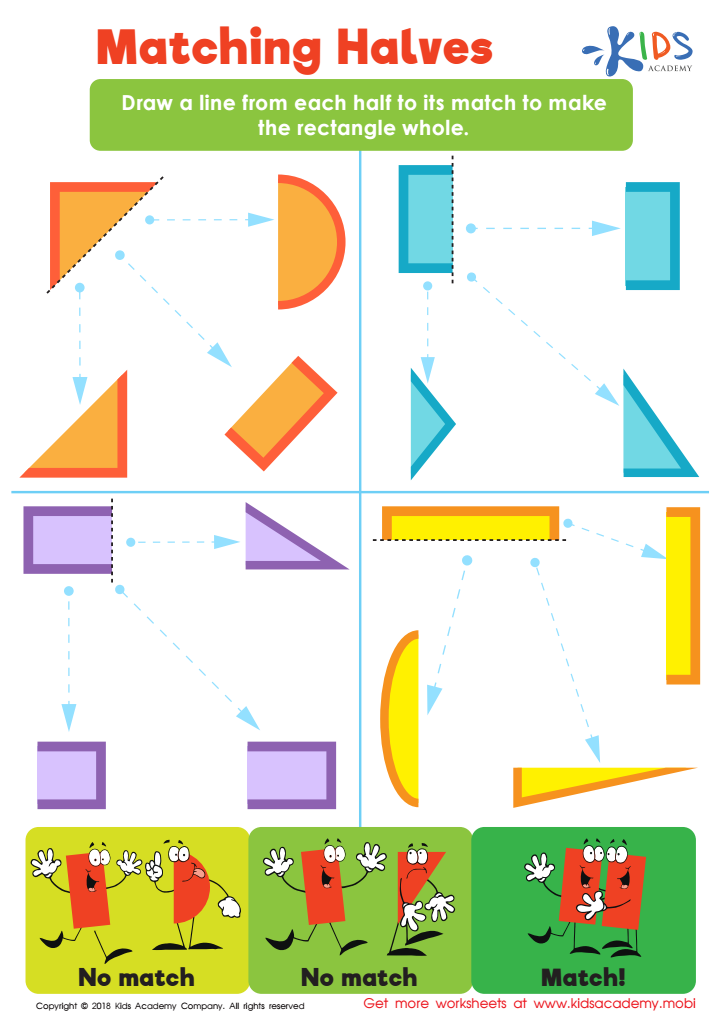
Matching Halves Worksheet
 Assign to My Students
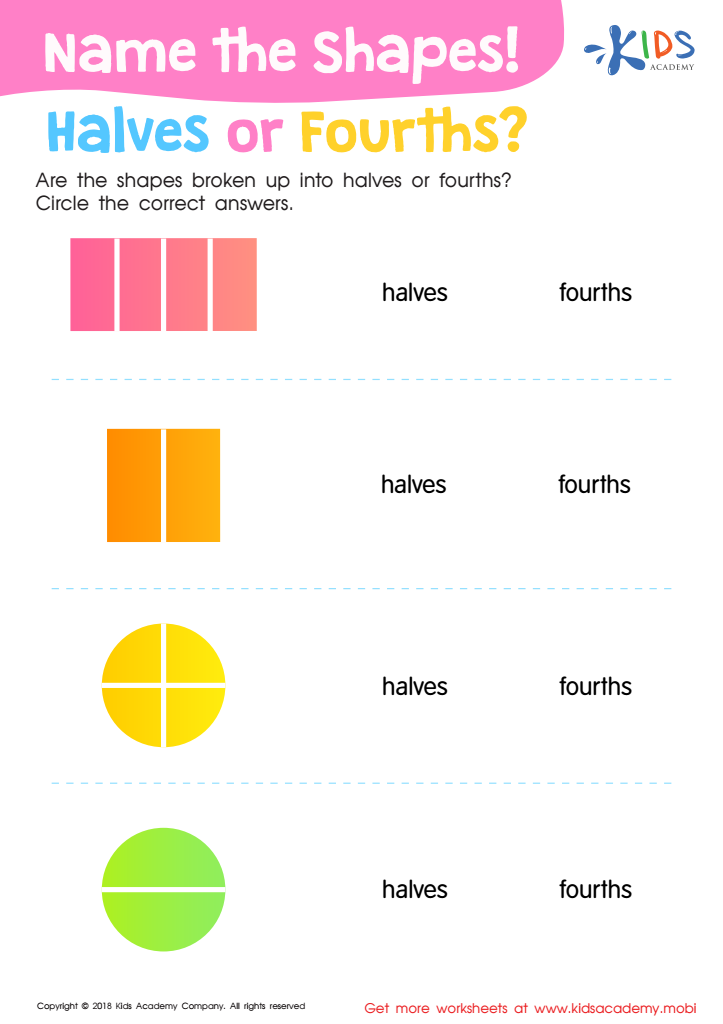
Name the Shapes Halves or Fourths? Worksheet
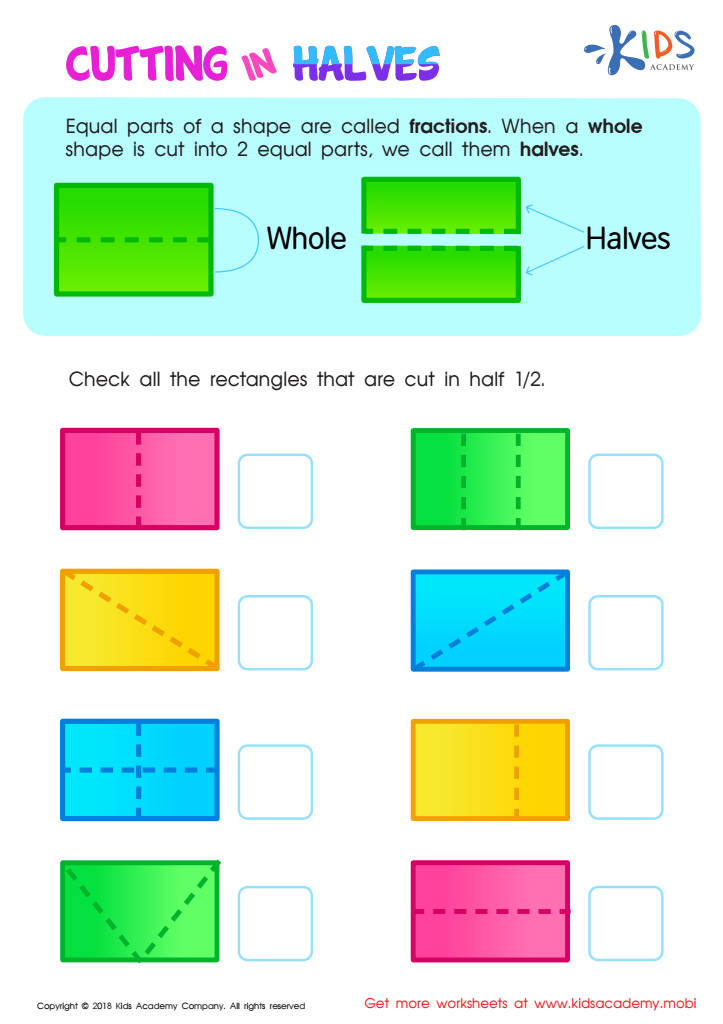
Cutting in Halves Worksheet
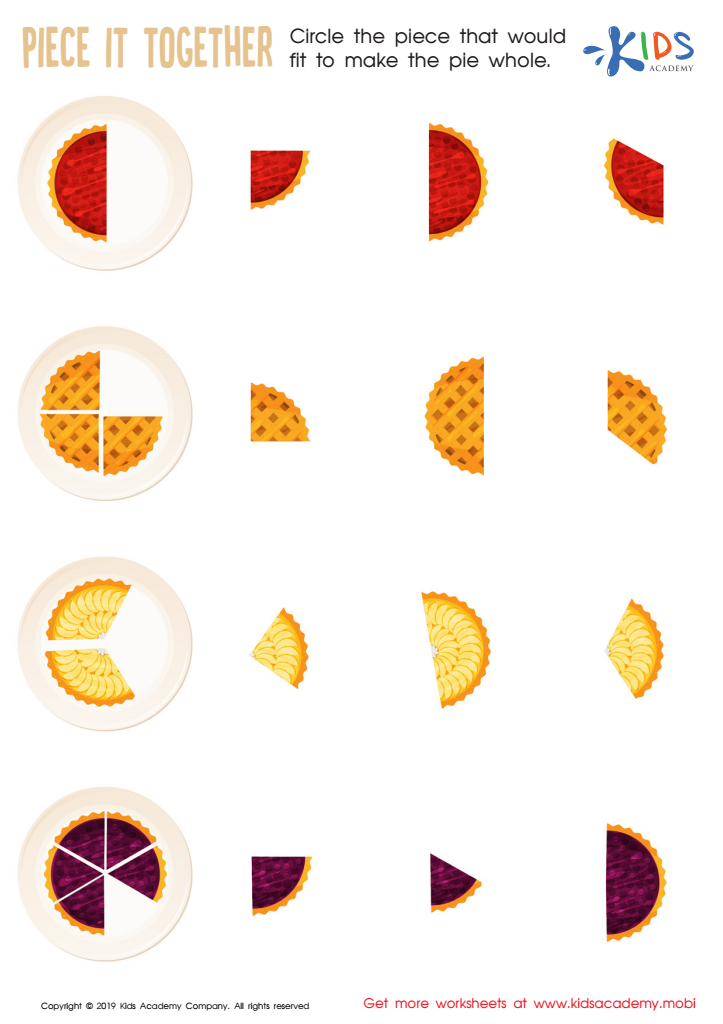
Piece it together Worksheet
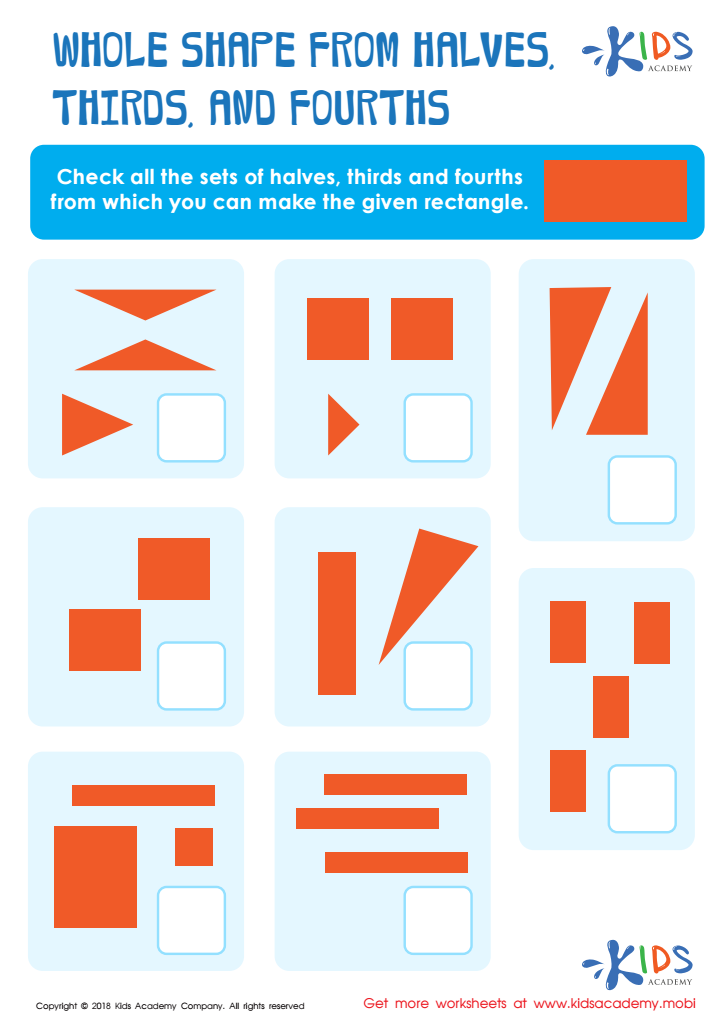
Whole Shape from Halves, Thirds and Fourths Worksheet








Shape recognition and understanding fractions of shapes are foundational skills for children aged 3-7. These concepts are critical for several reasons:
-
Cognitive Development: Shape recognition supports cognitive development by enhancing visual-spatial skills and pattern recognition. Understanding shapes helps children categorize and compare objects, leading to better problem-solving abilities.
-
Mathematical Foundations: Early exposure to fractions through shapes builds fundamental math skills. When children learn to identify halves, thirds, or quarters of a shape, they develop an intuitive understanding of division, parts of a whole, and the concept of equality, which are essential for future arithmetic and complex mathematics.
-
Language Skills: Learning the names and properties of shapes enhances vocabulary and language development. Describing shapes and their fractions aids in using precise language, fostering better communication skills.
-
Manual Dexterity: Activities involving shapes often require coloring, cutting, or drawing, which improve fine motor skills. Handling physical objects also helps in developing manual dexterity.
-
Problem Solving: Exposure to shape puzzles and fraction-based games encourages logical thinking and boosts problem-solving capabilities. It teaches children to recognize patterns, leading to improved analytical skills.
-
Creativity and Art: Recognizing and manipulating shapes fosters creativity. Children start to see shapes in their environment and use this understanding in art and craft activities.
Shape recognition and fraction appreciation at an early age lay down critical pathways for lifelong learning and intellectual growth.