Number Recognition Easy Numbers Worksheets for Ages 3-7 - Page 4
75 filtered results
-
From - To
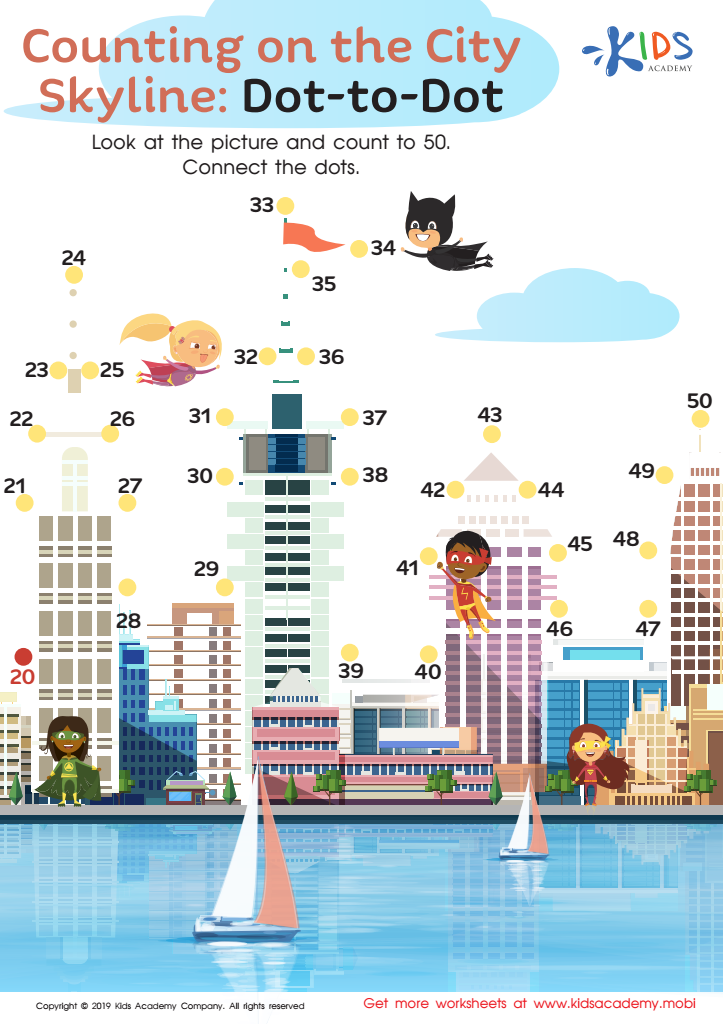
Counting on the City Skyline: Dot-to-Dot Worksheet
 Assign to My Students
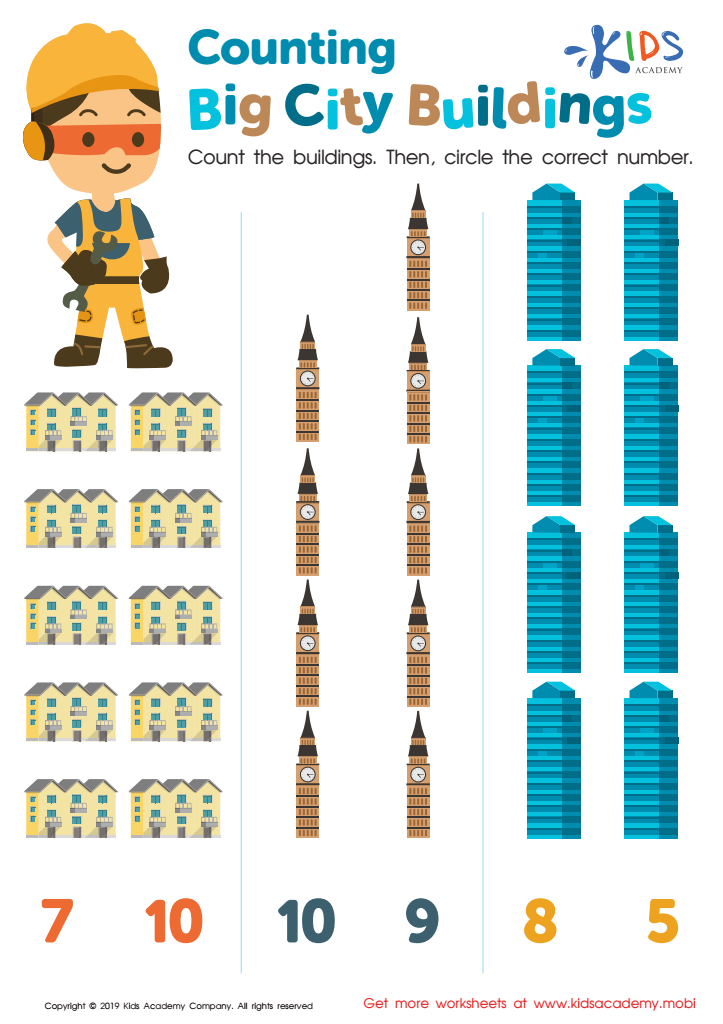
Counting Big City Buildings Worksheet
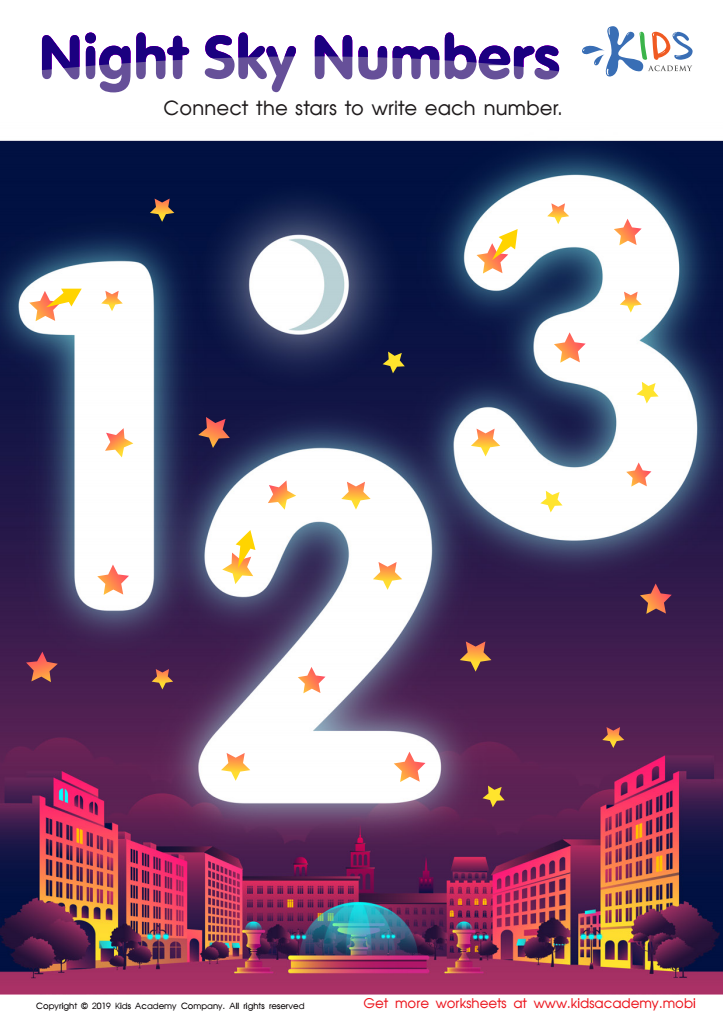
Night Sky Numbers Worksheet








Number recognition is a cornerstone for early mathematical development in children aged 3-7. This skill allows children to identify and understand numbers, which is foundational for more complex math concepts they will encounter later. When parents and teachers prioritize number recognition, they set the stage for a strong mathematical education and help foster intellectual development.
Firstly, number recognition boosts cognitive development. It encourages children to notice patterns, make comparisons, and understand relationships between quantities, which are critical thinking skills they will use in various subjects. Secondly, strong number recognition skills boost confidence and foster a positive attitude toward math. If children recognize numbers early, they are more likely to enjoy and excel in mathematics later.
Additionally, mastering number recognition helps with practical, daily activities. Whether it’s counting objects, reading a clock, or understanding simple arithmetic, these early skills provide children with the tools to navigate their environment more independently. For teachers, an early focus on number recognition can make classroom management easier, as students are better prepared to engage in structured activities and academic tasks.
In summary, prioritizing number recognition in the preschool and early primary years equips children with essential cognitive skills, confidence in mathematics, and practical abilities for everyday life. This foundational skill sets the stage for academic success and lifelong learning.








