Understanding Sequences Easy Numbers Worksheets for Ages 3-7
3 filtered results
-
From - To
"Understanding Sequences Easy Numbers Worksheets for Ages 3-7" offer a fun way for young learners to grasp number sequences. Tailored for preschoolers and early elementary students, these engaging worksheets lay a foundation for essential math skills. Activities include identifying, continuing, and creating sequences with colorful illustrations to keep kids interested. Ideal for parents and educators, these printables support both classroom learning and at-home practice. Help children develop their counting abilities, logical thinking, and pattern recognition with these age-appropriate, easy-to-follow exercises. Boost your child’s confidence in math while making learning enjoyable and interactive!
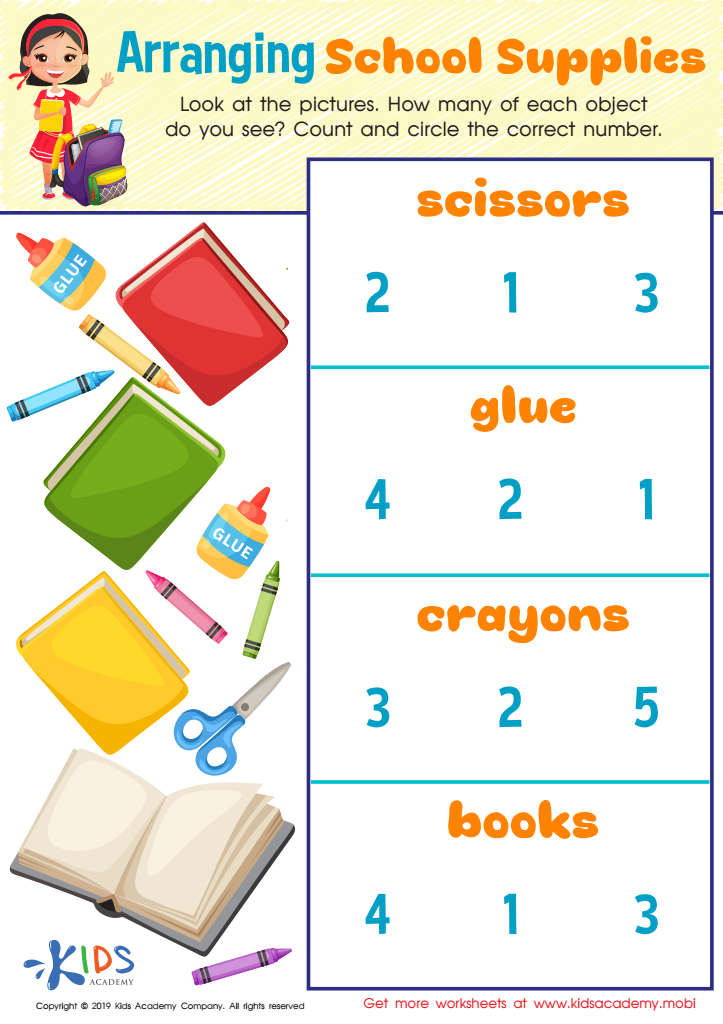
Arranging School Supplies Worksheet
 Assign to My Students
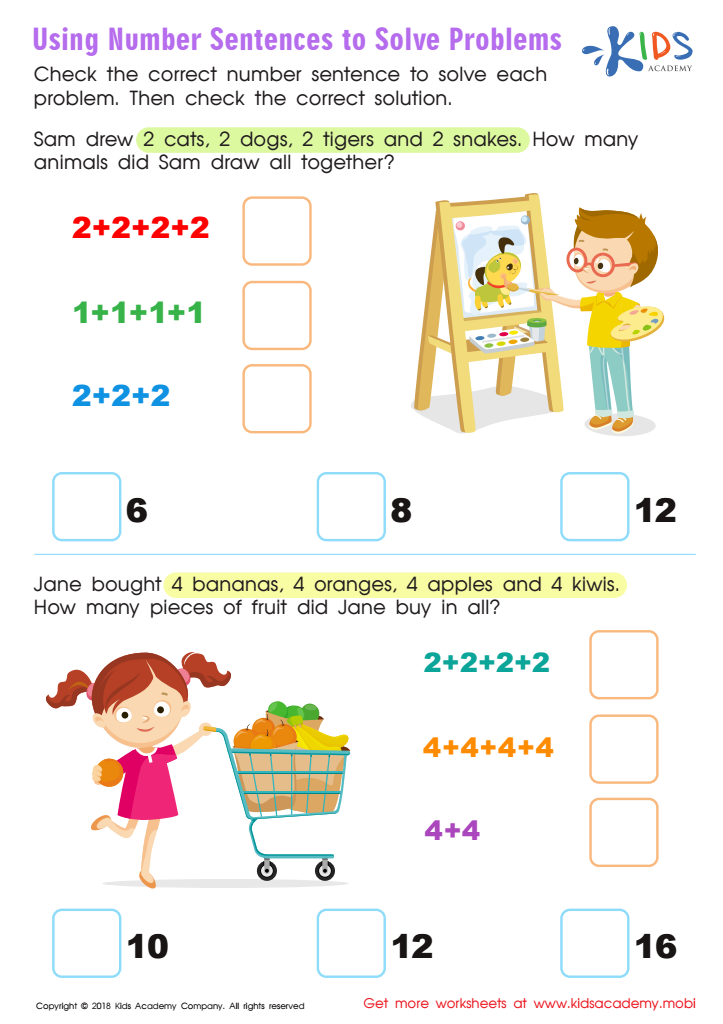
Using Number Sentences to Solve Problems Worksheet
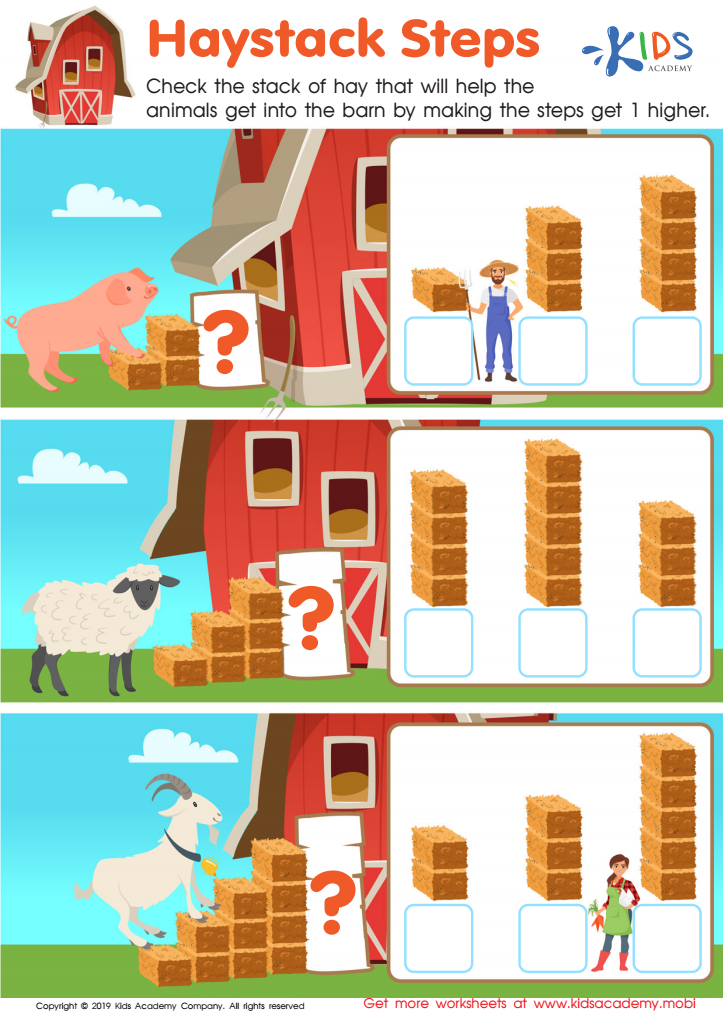
Haystack Steps Worksheet








Understanding sequences and number patterns is crucial for young children, ages 3-7, as it lays the foundational skills for future mathematical learning and critical thinking. Introducing children to sequences helps them identify order, predict outcomes, and recognize relationships between numbers, which are vital skills in arithmetic and problem-solving.
For parents and teachers, fostering this understanding in early childhood paves the way for children to develop strong numeracy abilities. Recognizing simple patterns, such as counting by 2s or identifying the next number in a sequence, boosts cognitive development and enhances memory skills. These activities also improve attention to detail and concentration, crucial attributes across all areas of learning, not just mathematics.
Additionally, mastering basic sequences helps children gain confidence. Early successes in recognizing and predicting patterns encourage a positive attitude towards tackling more complex mathematical concepts in later grades. Furthermore, practical activities like rhymes, songs, and hands-on games make learning sequences engaging and promote social interaction through cooperative play.
In essence, parents and teachers who invest time and effort in teaching sequences to young children are not only fostering immediate academic skills but are also nurturing a love for learning and enhancing their overall cognitive development, providing children with the best start in their educational journey.








