Critical Thinking Easy Science Worksheets for Ages 3-7
3 filtered results
Difficulty Level
Grade
Age
-
From - To
Subject
Activity
Standards
Unlock the brilliant minds of young learners with our "Critical Thinking Easy Science Worksheets" for ages 3-7. Designed to captivate early thinkers, these engaging worksheets foster curiosity through fun and interactive science activities. Each worksheet is crafted to develop essential critical thinking skills, allowing children to explore, question, and understand scientific concepts in an easy-to-grasp manner. From identifying patterns to predicting outcomes, our resources lay a strong foundation for lifelong learning and inquiry. Inspire today’s young learners with our unique, educational tools and watch their confidence and intellect soar. Perfect for home or classroom use!
Favorites
With answer key
Interactive
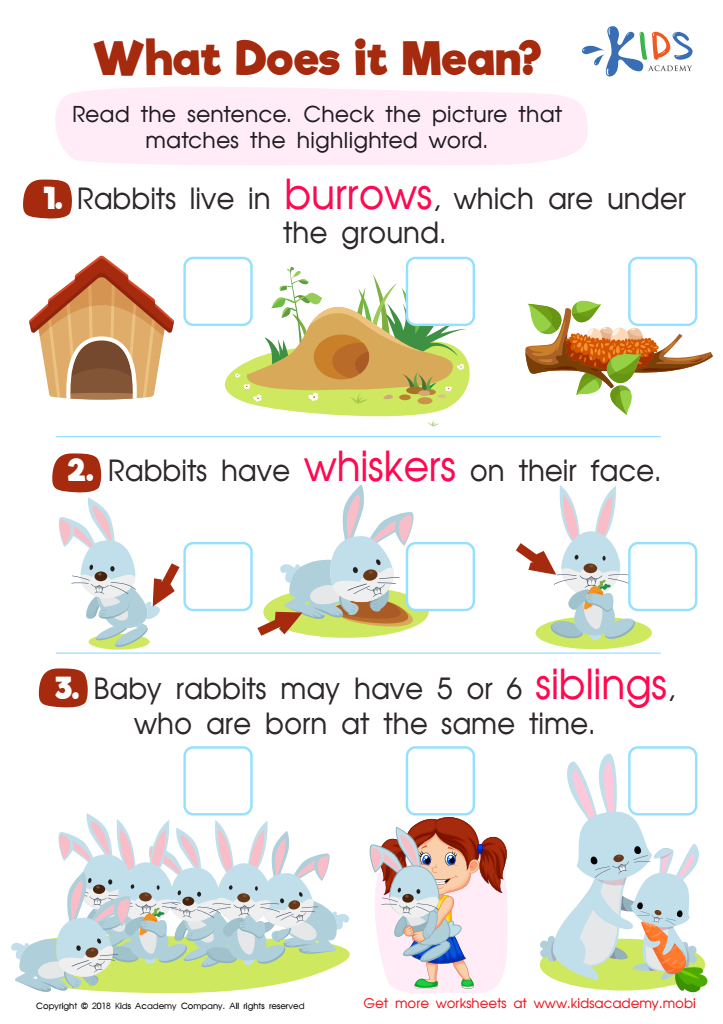
What Does It Mean? Worksheet
Teach your child to use context clues with this engaging Kids Academy worksheet. Read the sentences and find the pink-highlighted word. Use the other words in the sentence to figure out the meaning, then check the box next to the picture that represents it.
 Assign to My Students
What Does It Mean? Worksheet
Worksheet
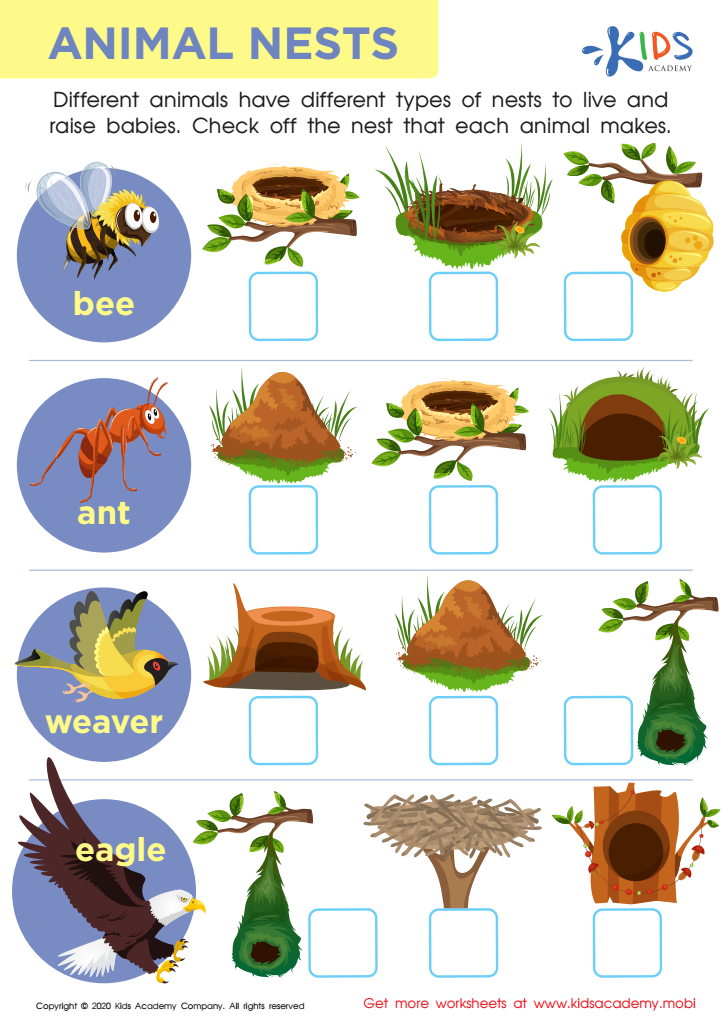
Animal Nests Worksheet
Animals need homes to sleep and stay safe. Look at the animal on the left and examine the nests and hives to the right. Check off the correct one for each animal to complete the worksheet! From birds to bees, it's a great way to show different types of homes animals make!
Animal Nests Worksheet
Worksheet
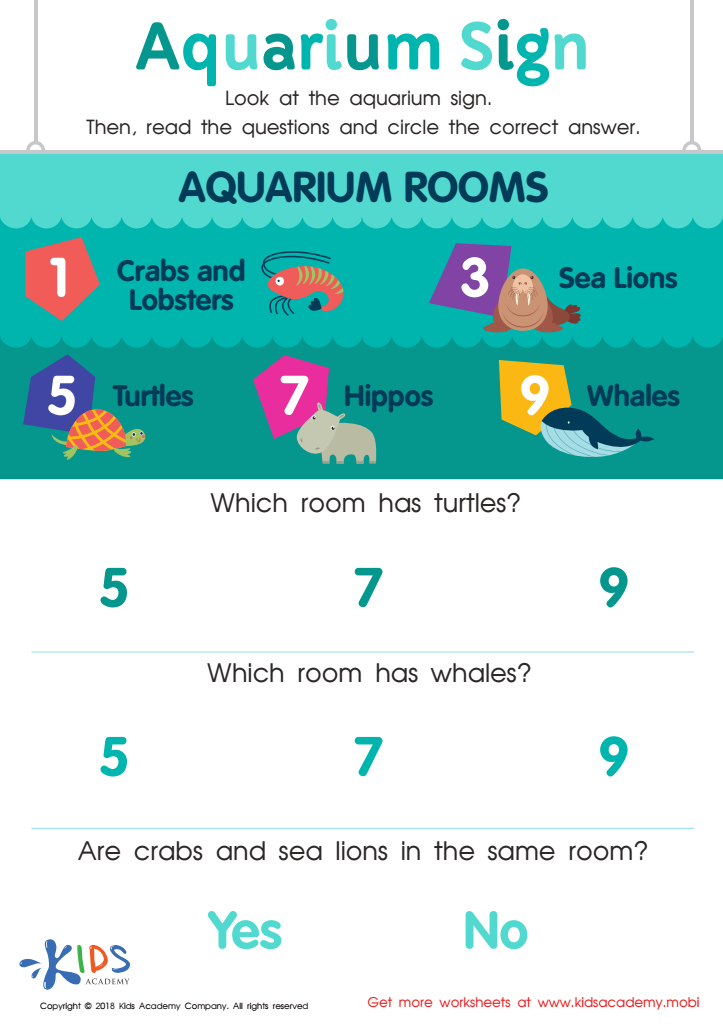
Assessment: Aquarium Sign Worksheet
Take your kids to an aquarium and marvel at the sea creatures! Help them identify the animals they see, and ask them which one is their favorite. Look at the aquarium sign and point to each creature. Ask your kids the questions and help them circle the right answer.
Assessment: Aquarium Sign Worksheet
Worksheet
Join Kids Academy for Free
Who is primarily going to use this learning content?








Critical thinking skills are essential for children aged 3-7, and integrating these into easy science activities can significantly benefit their early development. At this formative stage, children are naturally curious and eager to explore the world around them. Critical thinking through simple science experiments and observations helps harness this curiosity in productive ways.
Exposing young children to critical thinking in science fosters cognitive skills such as problem-solving, reasoning, and analytical thinking. They begin to ask questions like "How?" and "Why?", which encourages deeper understanding rather than mere memorization. For instance, observing a plant growing from a seed and discussing the process helps them understand cause and effect, nurturing scientific thinking from an early age.
Moreover, these skills are not confined to science alone; they translate into other areas like mathematics, literacy, and social interactions. Critical thinking enhances their ability to analyze situations, make predictions, and develop informed decisions. These are lifelong skills that serve as a foundation for academic success and everyday life.
For teachers and parents, incorporating easy science activities into routines cultivates an engaging and stimulating learning environment. It encourages a love for learning, making education a joyful and inquisitive experience. Ultimately, this prepares children not just for school, but for successful, thoughtful, and informed lives.