Understanding life cycles Easy Plants and Animals Worksheets for Ages 3-7
3 filtered results
-
From - To
Explore our "Understanding Life Cycles: Easy Plants and Animals Worksheets for Ages 3-7" designed to engage young learners in foundational science concepts. These printable worksheets introduce children to the fascinating life cycles of various plants and animals, making learning fun and accessible. Each worksheet features vibrant illustrations and simple activities tailored for preschool and early elementary students. Whether it’s learning about the metamorphosis of a butterfly or the growth of a tree, these resources encourage curiosity and foster comprehension. Perfect for home or classroom use, these worksheets help cultivate a love for science and the natural world while developing critical thinking skills.
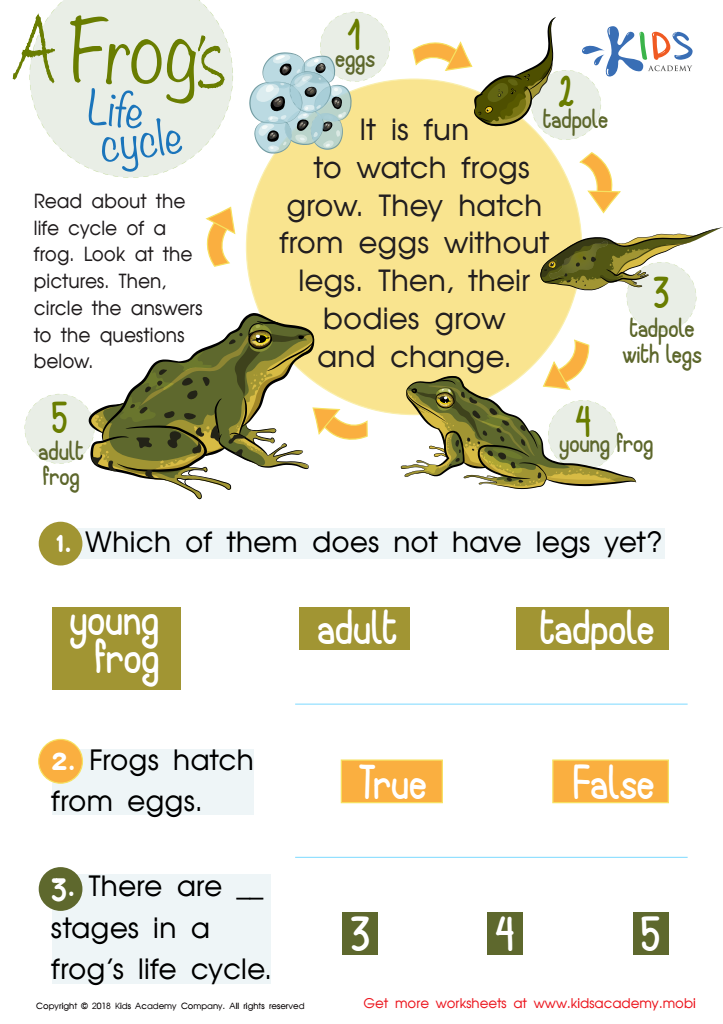
A Frog’s Life Cycle Worksheet
 Assign to My Students











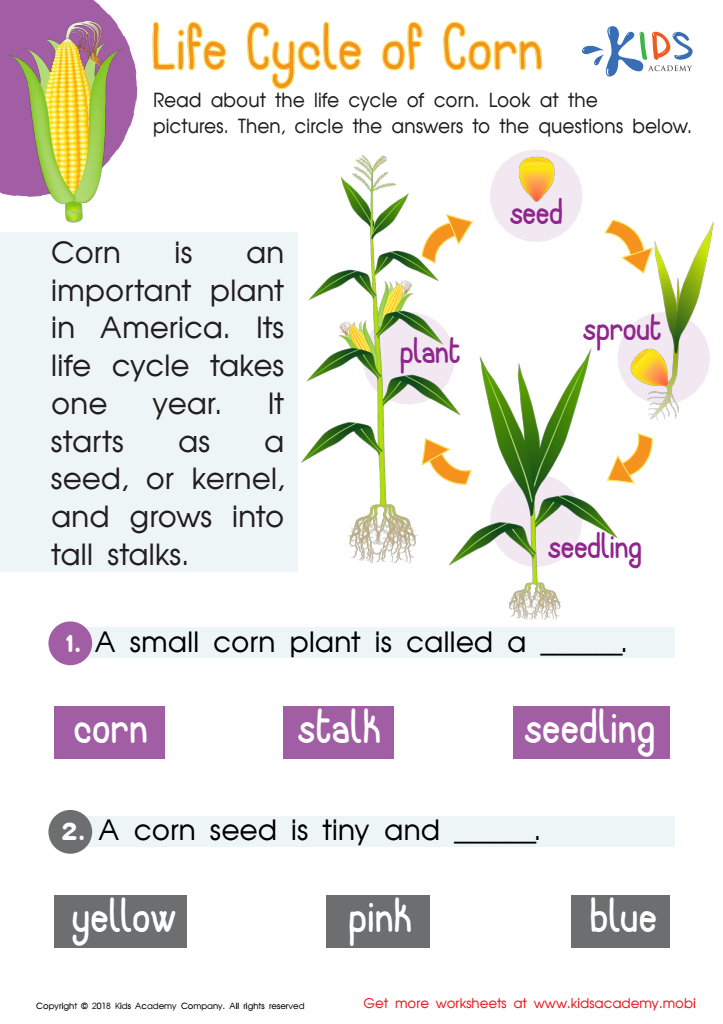
Life Cycle of Corn Worksheet
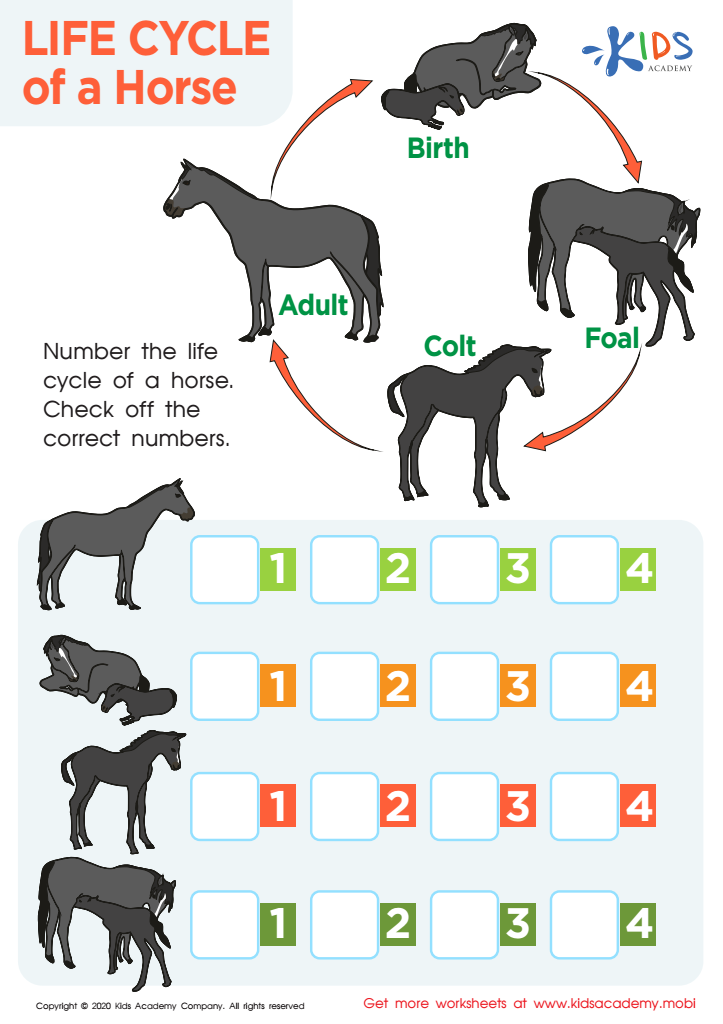
Life Cycle of a Horse Worksheet








Understanding life cycles of plants and animals is crucial for children aged 3-7, as it lays the foundation for their comprehension of the natural world. At this age, children are naturally curious, and studying life cycles engages this curiosity in meaningful ways. By learning about the stages of growth and development, children discover the interconnectedness of living things and the environment, fostering a sense of respect and responsibility for nature.
Moreover, understanding life cycles enhances critical thinking and observation skills. Children can observe changes in plants, like seeds sprouting and flowers blooming, or witness animals like butterflies transforming through metamorphosis. These experiences not only promote scientific inquiry but can also lead to discussions about concepts such as change, growth, and adaptation.
In addition, integrating life cycle lessons into the curriculum supports various developmental domains, including cognitive, social, and emotional growth. Children learn patience as they care for living things, feel empathy towards animals, and understand the importance of biodiversity. For parents and teachers, fostering this knowledge is vital to helping children grasp essential life concepts, thus encouraging lifelong environmental stewardship and a love for inquiry-driven learning.