Addition Practice Easy Worksheets for Ages 3-8 - Page 2
27 filtered results
-
From - To
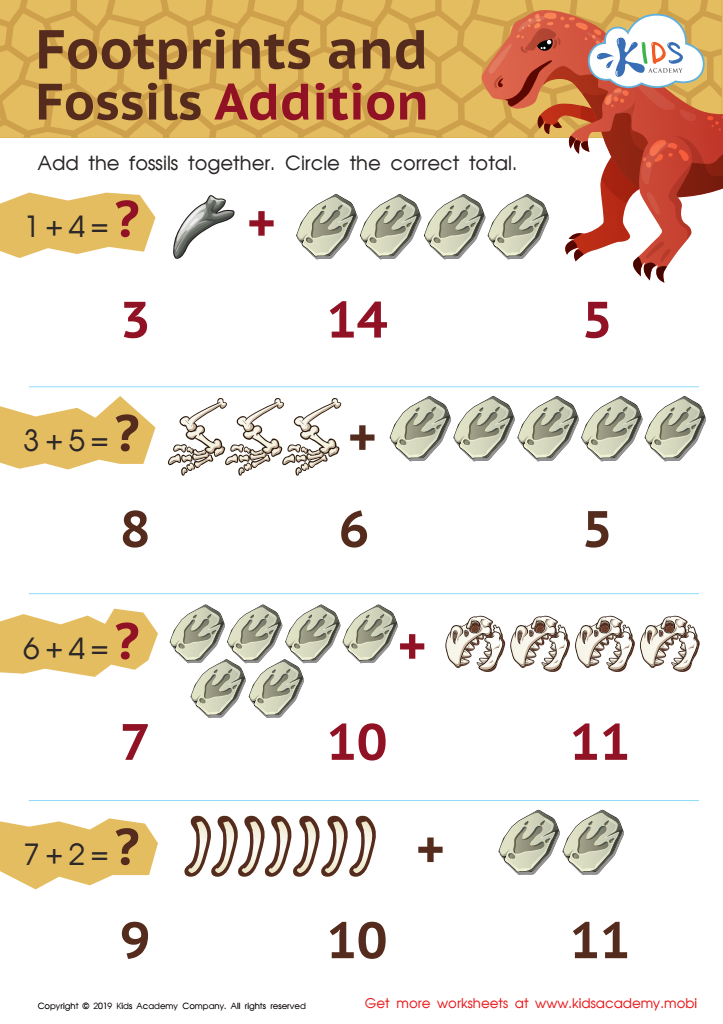
Footprints and Fossils Addition Worksheet
 Assign to My Students
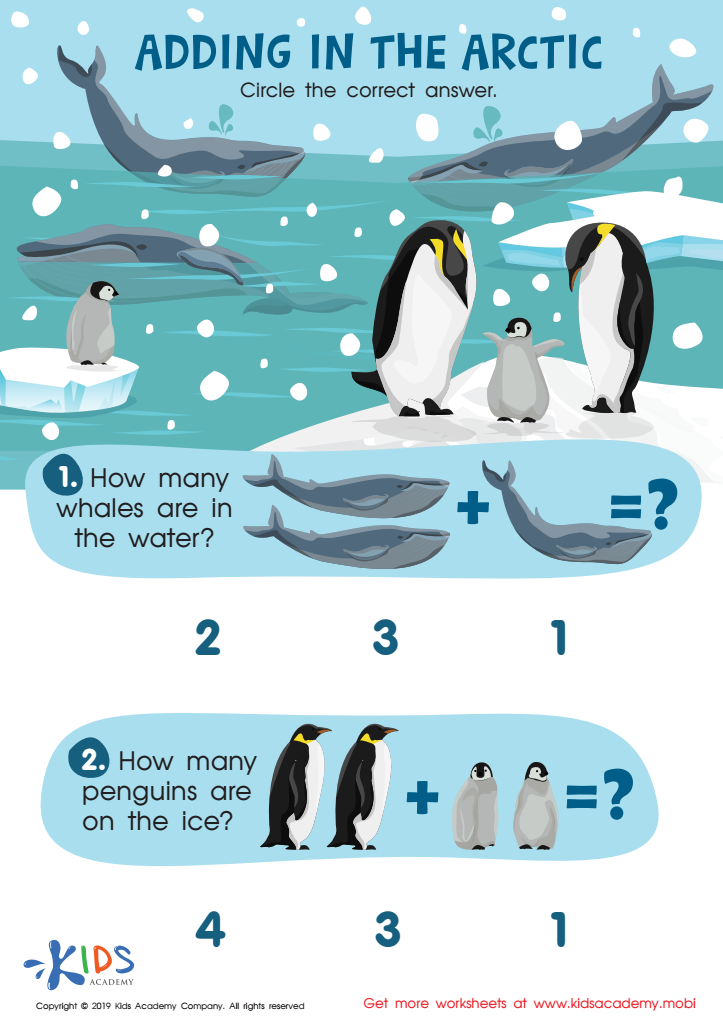
Adding in the Arctic Worksheet
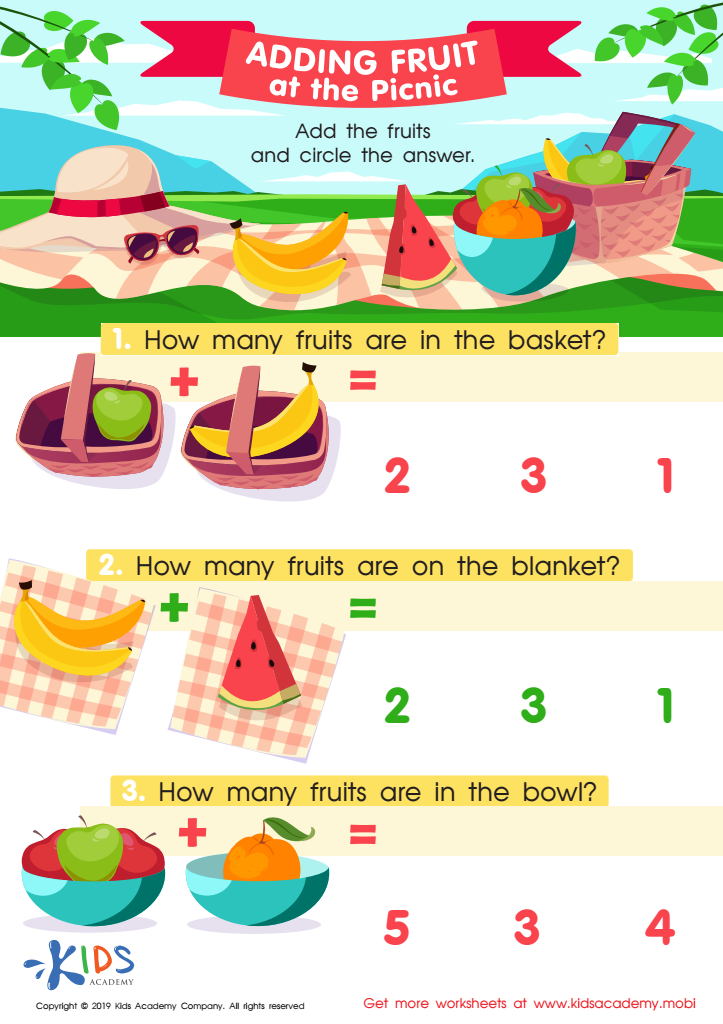
Adding Fruit at the Picnic Worksheet








Ensuring that children between the ages of 3 and 8 engage in addition practice is crucial for their early cognitive and academic development. At this formative stage, mastering basic arithmetic skills sets the foundation for all future mathematical learning. Early addition activities provide young learners with the essential building blocks for understanding numbers, which boosts their confidence and enthusiasm for math as they progress in their education.
Engaging in regular addition practice enhances a child's number sense, the intuitive understanding of numbers and their relationships. This helps them grasp more complex mathematical concepts later on, such as subtraction, multiplication, and division. Early mastery leads to greater ease when tackling these advanced topics.
Furthermore, the problem-solving and critical-thinking skills developed through addition activities are not limited to mathematics. These skills are transferrable to other areas of their lives, fostering overall cognitive development.
Additionally, early success and positive experiences in math can counteract the common math anxiety. Encouraging consistent practice in a supportive and enjoyable environment helps cultivate a positive attitude towards learning. This attitude benefits children in their academic journey and sparks a lifelong appreciation for mathematics. For these reasons, integrating addition practice into the lives of young children is a step forward in their holistic development and educational success.








