Improving vocabulary Easy Worksheets for Ages 3-8
3 filtered results
-
From - To
Unlock your child’s potential with our "Improving Vocabulary Easy Worksheets" designed for ages 3 to 8. These colorful and engaging worksheets provide interactive lessons that help young learners expand their word knowledge in a fun way. With various activities, including matching words to images, fill-in-the-blanks, and word searches, children will cultivate essential vocabulary skills necessary for effective communication. Our user-friendly worksheets support parents and educators in fostering a love for learning, making vocabulary building a delightful experience. Enhance your child's educational journey by giving them the tools they need to express themselves confidently and accurately. Start exploring today!
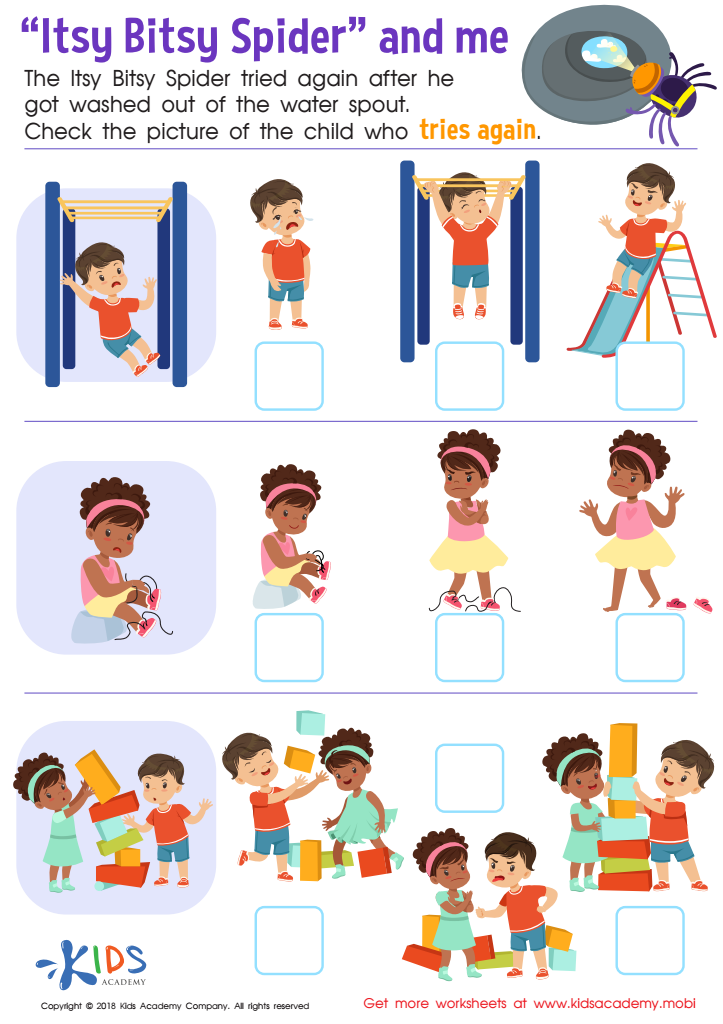
Itsy Bitsy Spider and Me Worksheet
 Assign to My Students
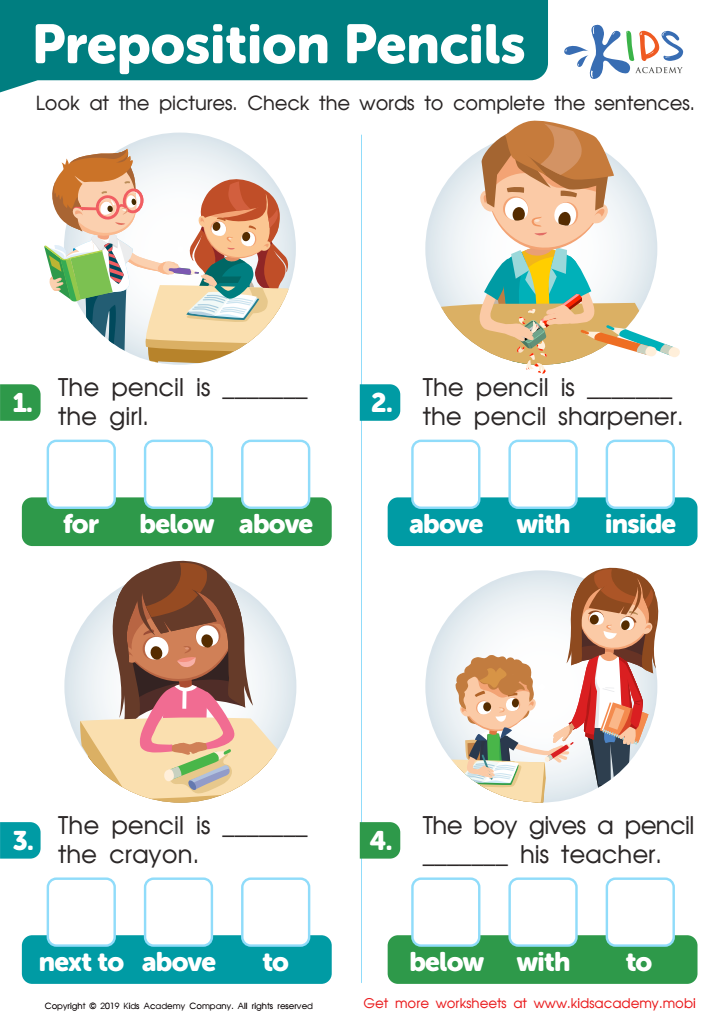
Preposition Pencils Worksheet
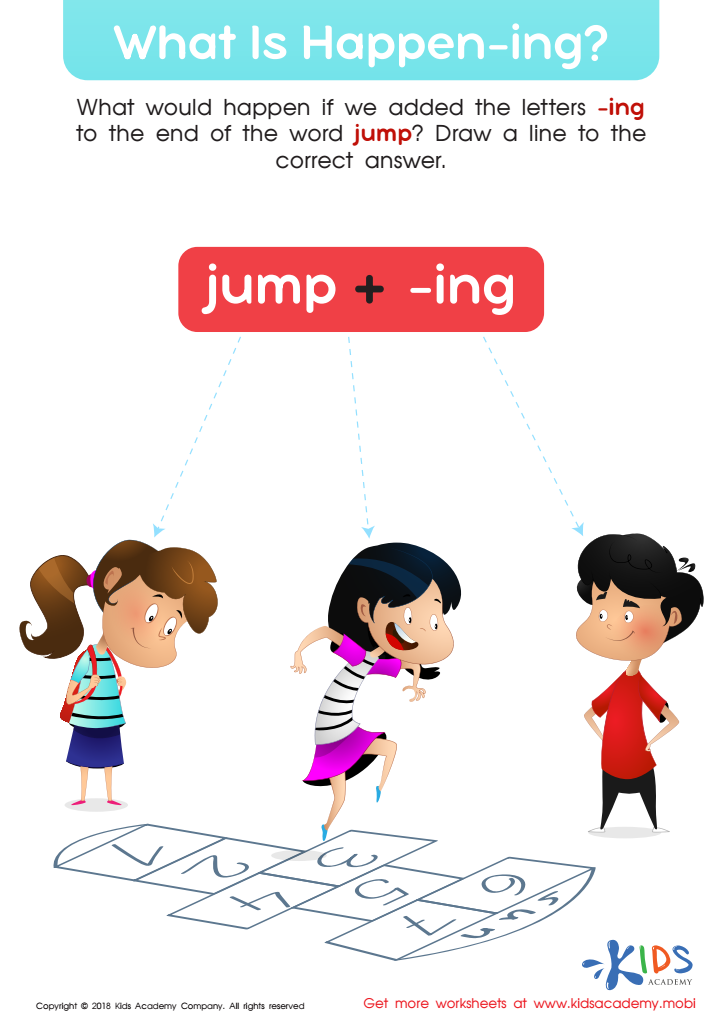
What Is Happen-Ing? Worksheet



.jpg)
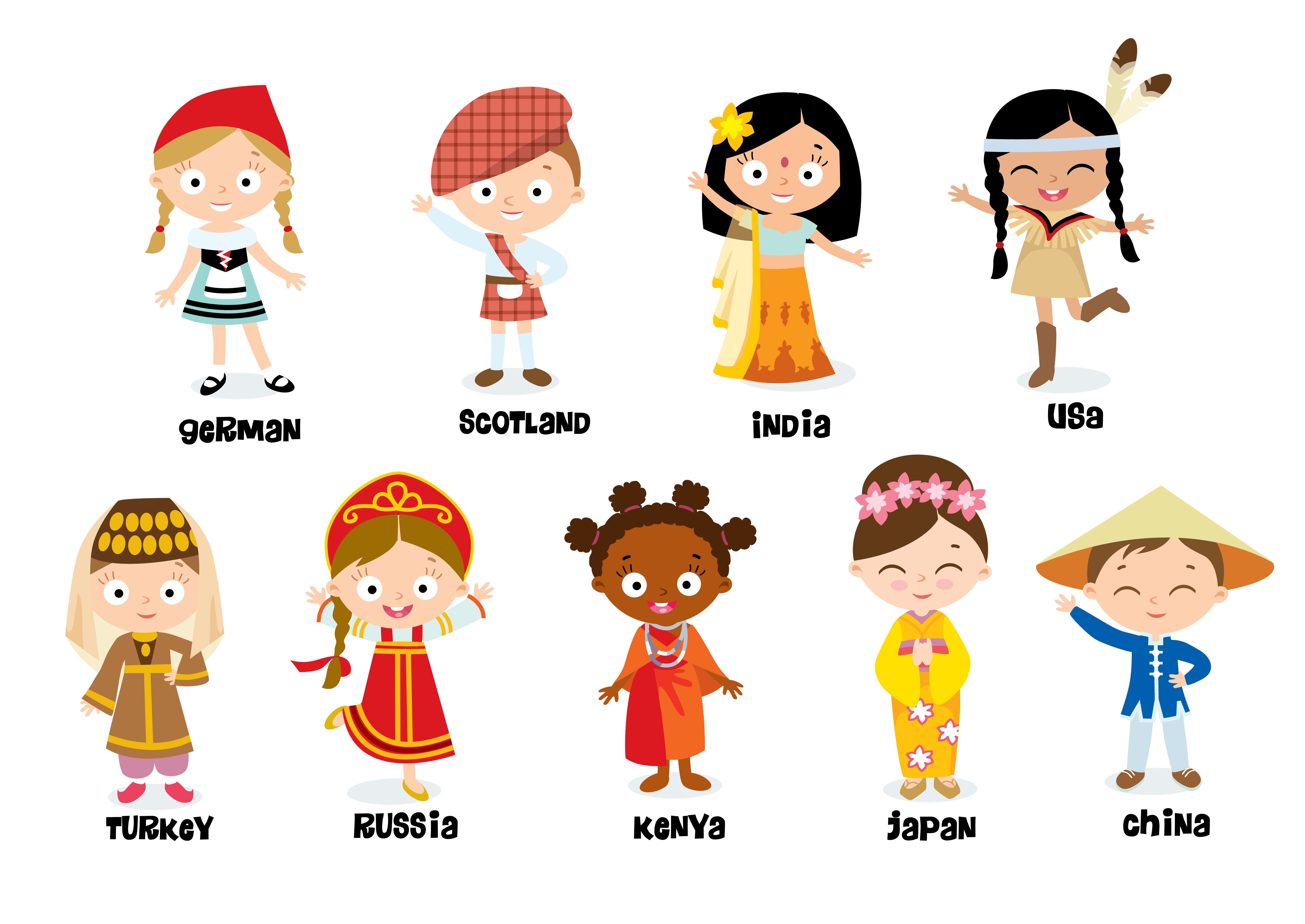
.jpg)


Improving vocabulary in children aged 3-8 is crucial for their overall development and future success. At this formative stage, children are rapidly acquiring language skills, and a rich vocabulary is foundational for effective communication. Expanding vocabulary helps enhance reading comprehension, enabling children to understand stories and instructions better. When children encounter new words, they also learn to express their thoughts, feelings, and ideas more clearly, which is vital for social interactions and building relationships.
Parents and teachers play a key role in this vocabulary expansion. Engaging children in conversations, reading together, and introducing new words in context can spark curiosity and promote a love for language. Interactive activities like word games and storytelling not only make learning fun but also reinforce word meanings and usage. Additionally, a strong vocabulary contributes to academic success, as it underpins reading and writing skills that are essential in later grades.
In a world where communication skills are increasingly important, investing time and effort to improve vocabulary in young children can provide them with the confidence and tools they need to navigate their educational and social environments effectively. Ultimately, a well-developed vocabulary sets the stage for lifelong learning and personal expression.








