
Understanding quantity Easy Worksheets for Ages 3-8
3 filtered results
Difficulty Level
Grade
Age
-
From - To
Subject
Activity
Standards
Discover our "Understanding Quantity Easy Worksheets" designed for children ages 3-8! These engaging resources help young learners grasp fundamental math concepts through fun activities tailored to their development stage. Our colorful worksheets introduce quantities, counting, and comparison in a playful manner, making math enjoyable for kids. Each worksheet features interactive exercises that promote hands-on learning, fostering critical thinking and problem-solving skills. Perfect for parents and educators alike, these convenient printables support early math skills at home or in the classroom. Give your child the building blocks for future math success with these easy-to-understand worksheets!
Favorites
With answer key
Interactive
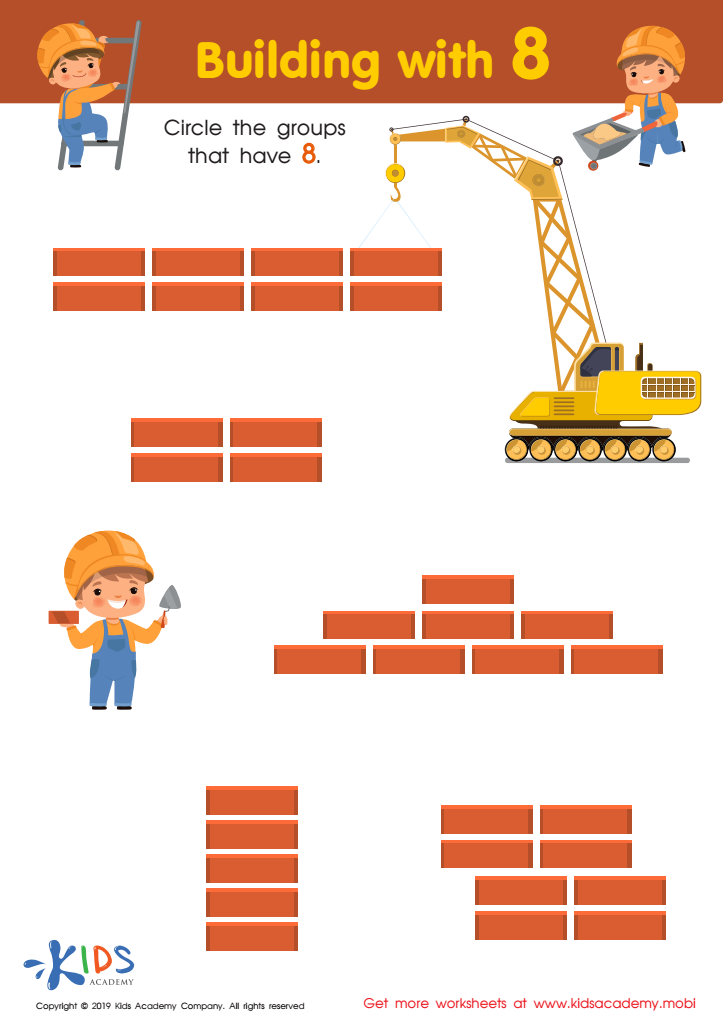
Building with 8 Worksheet
Your child can learn more with this simple exercise! Get them counting and help them circle the groups of 8 bricks. It's a great addition to their post-school lessons, supporting their counting skills. Plus, it's a fun way to learn!
 Assign to My Students
Building with 8 Worksheet
Worksheet
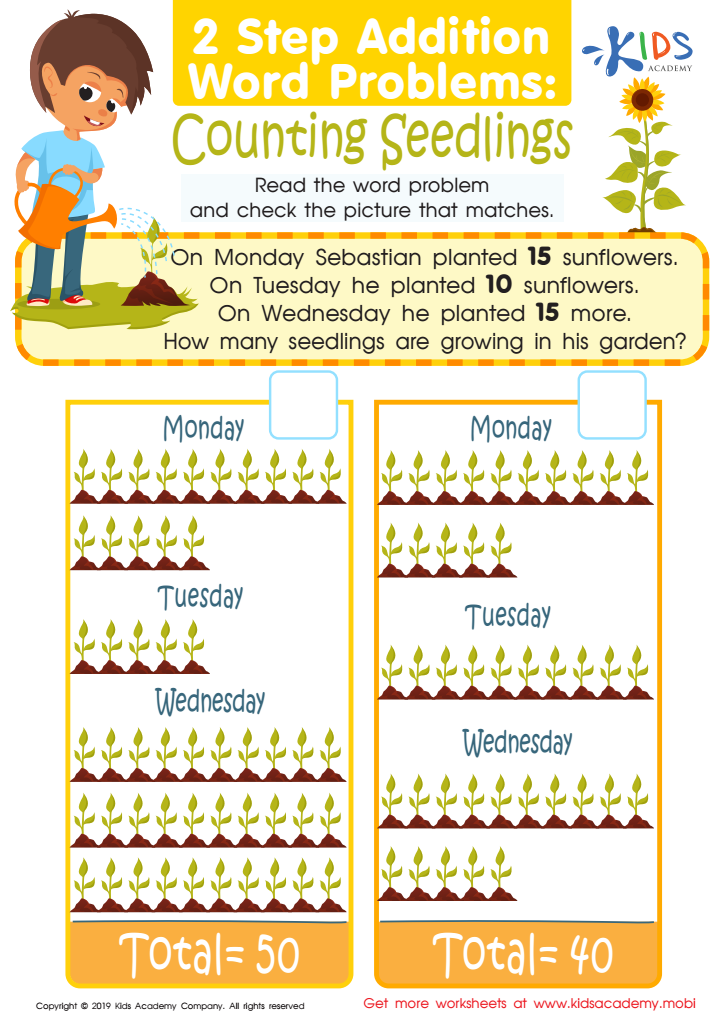
Counting Seedlings Worksheet
Understanding math word problems is key. Multiple steps can prove challenging - this free worksheet provides one-to-one picture representation to help kids solve multi-step addition word problems. Strengthen addition skills by choosing the matching picture to the answer.
Counting Seedlings Worksheet
Worksheet
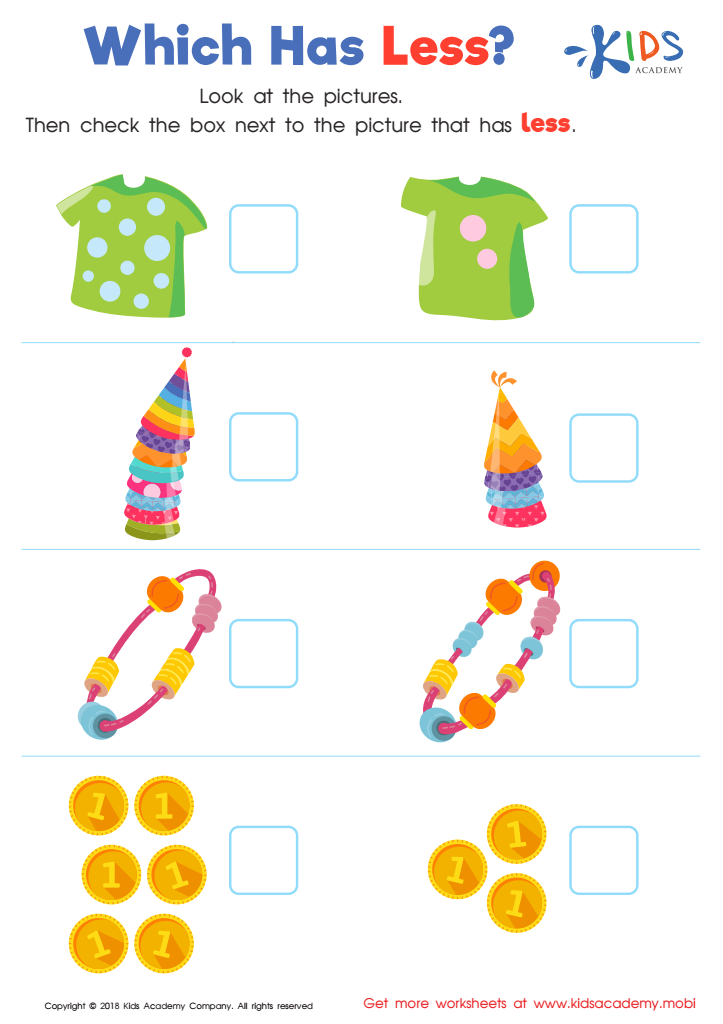
Which Has Less? Worksheet
Kids can develop their number sense by comparing and contrasting objects to identify which has less. This worksheet helps them practice: it's bright and colorful, featuring familiar objects and pictures to count, strengthening basic counting skills. It's the perfect warm-up for comparing and contrasting larger numbers.
Which Has Less? Worksheet
Worksheet
Join Kids Academy for Free
Who is primarily going to use this learning content?







Understanding quantity is fundamental for young children, ages 3-8, as it forms the foundation for their mathematical reasoning and everyday decision-making. Parents and teachers play a crucial role in fostering this comprehension, as early experiences can significantly impact a child’s confidence and interest in math.
By grasping the concept of quantity, children begin to develop critical skills such as counting, comparing, and measuring. These early math abilities are essential not just for academic success but also for practical life situations, like sharing fairly with friends or understanding time and money. Engaging with quantities can also enhance cognitive skills, promote problem-solving abilities, and encourage logical thinking.
Furthermore, learning about quantities can be integrated into playful activities, making the process enjoyable and relatable. For instance, counting objects during playtime or measuring ingredients in cooking can create a fun learning atmosphere that fosters curiosity. When children experience positive interactions with numbers, they are more likely to develop a lifelong affinity for math.
Overall, nurturing a child’s understanding of quantity helps build a strong foundation mental mathematics which is vital for their overall development and future learning. Thus, parents and teachers should prioritize this early understanding to set them on a path for success.








