Shape Recognition Easy Fractions of Shapes Worksheets for Ages 3-8
5 filtered results
-
From - To
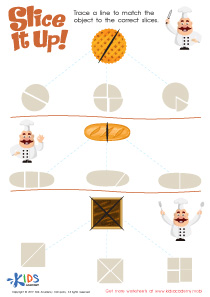
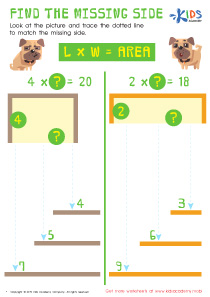
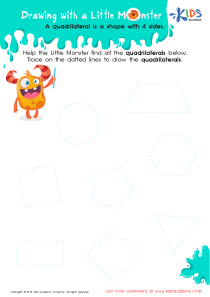
Introducing our "Shape Recognition Easy Fractions of Shapes Worksheets," designed specifically for children ages 3-8. These engaging worksheets blend foundational math skills with fun shape recognition activities, helping young learners grasp the concept of fractions in an interactive way. Through colorful illustrations and age-appropriate exercises, children will identify shapes and understand how to divide them into equal parts. Perfect for teachers and parents, these worksheets foster creativity, critical thinking, and early math skills. Make learning enjoyable as your child discovers the world of shapes and fractions through hands-on practice and visual learning. Start shaping young minds today!
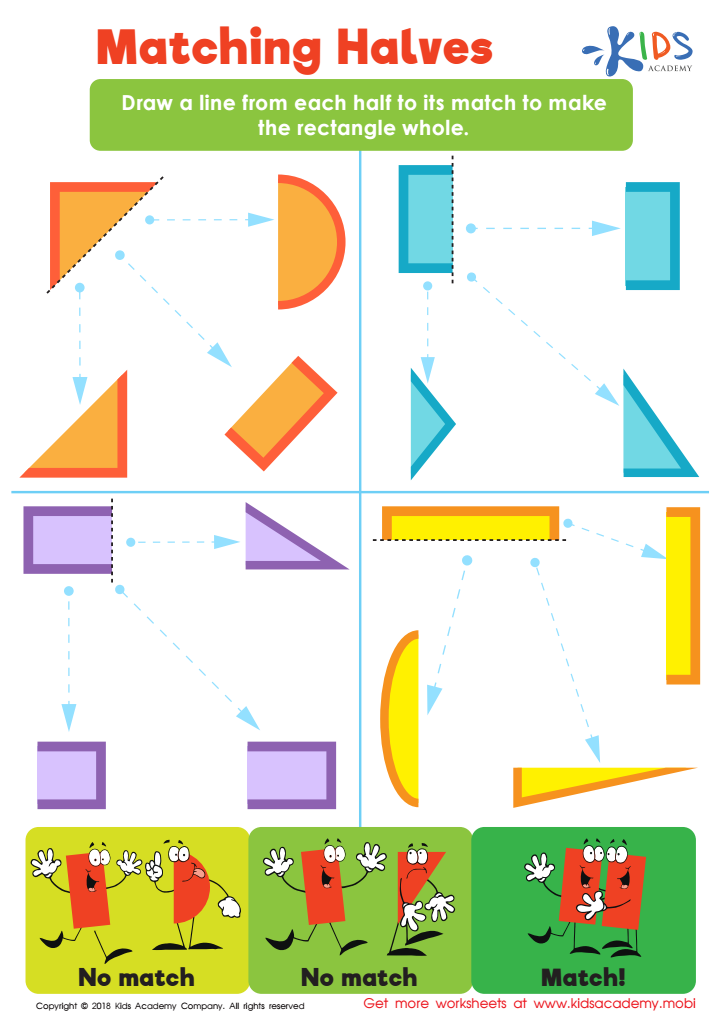
Matching Halves Worksheet
 Assign to My Students
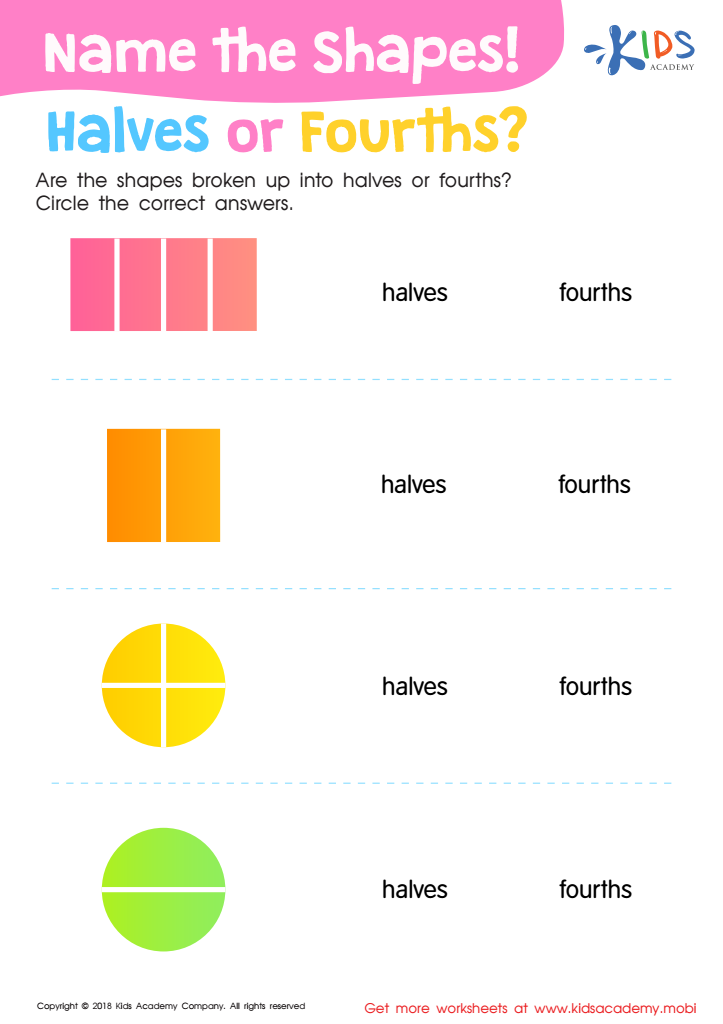
Name the Shapes Halves or Fourths? Worksheet
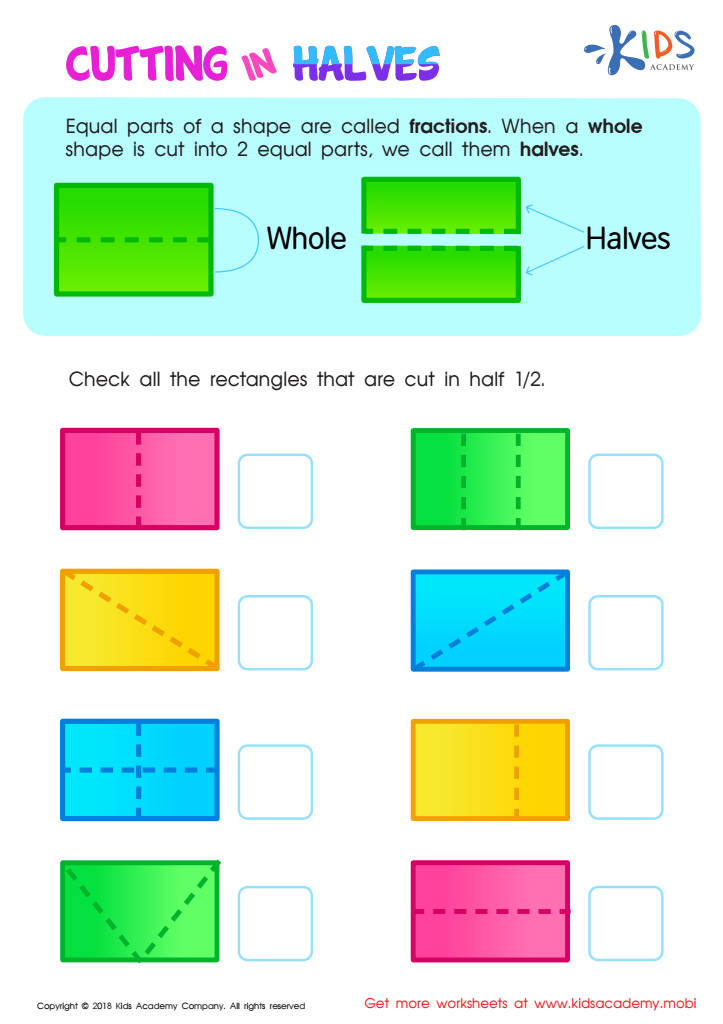
Cutting in Halves Worksheet
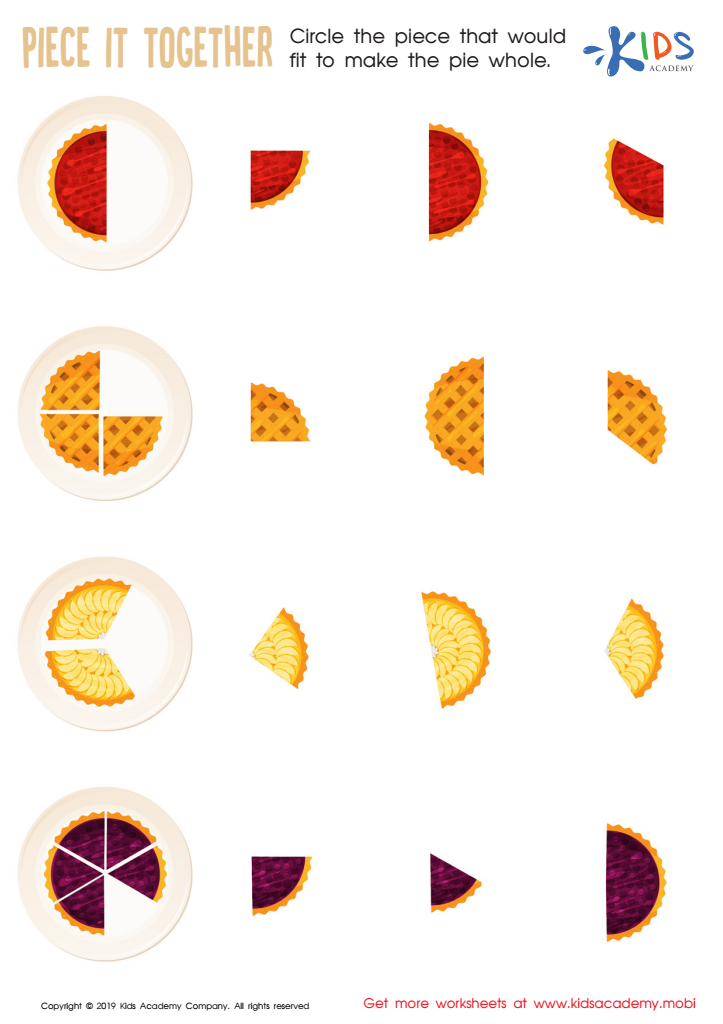
Piece it together Worksheet
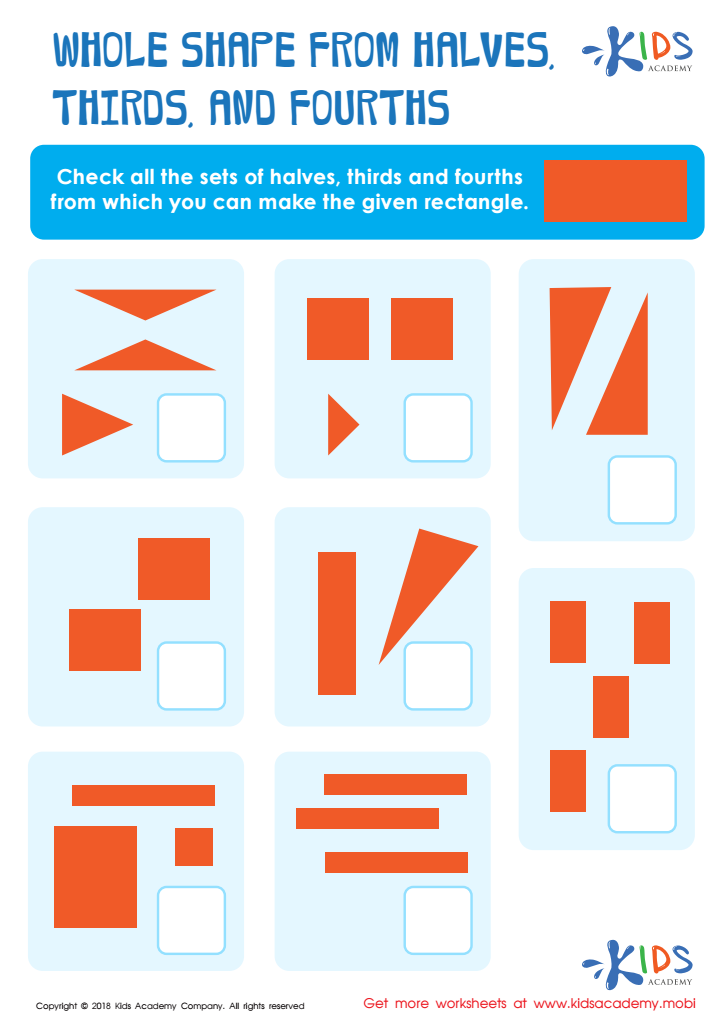
Whole Shape from Halves, Thirds and Fourths Worksheet








Shape recognition and understanding easy fractions of shapes are foundational skills for children aged 3-8 that significantly impact their overall mathematical development. Parents and teachers should care about these concepts as they are among the first mathematical ideas children encounter. Recognizing shapes helps young learners identify objects in their environment, which enhances spatial awareness and fosters critical thinking. For example, understanding shapes leads to better problem-solving skills, as children learn to categorize and analyze their surroundings.
Introducing easy fractions of shapes, such as halves and quarters, builds a strong foundation in understanding quantities and divisions. This skill is essential for later mathematical concepts, including addition, subtraction, and more advanced fraction work. Furthermore, such knowledge aids in the comprehension of everyday situations, like sharing food or grouping items equitably.
Moreover, shape recognition and fractions encourage creativity and engagement through hands-on activities like arts and crafts, which enhance fine motor skills and coordination. Overall, prioritizing these concepts in early education fosters a love for learning and helps develop a well-rounded understanding of mathematics, setting children on a path to academic success and lifelong learning.