Following instructions Easy Numbers Worksheets for Ages 3-8
5 filtered results
-
From - To
Welcome to our "Following Instructions Easy Numbers Worksheets" designed for children ages 3-8! These engaging worksheets combine foundational math skills with the essential ability to follow directions. Your child will enjoy practicing number recognition and counting while enhancing their listening and comprehension skills. Each activity encourages young learners to interpret directions, making learning fun and interactive. Ideal for home and classroom settings, our printable resources foster independence and confidence as children master numerical concepts. Explore our carefully crafted worksheets to support your child's educational journey and inspire a love for learning! Perfect for parents and educators alike.
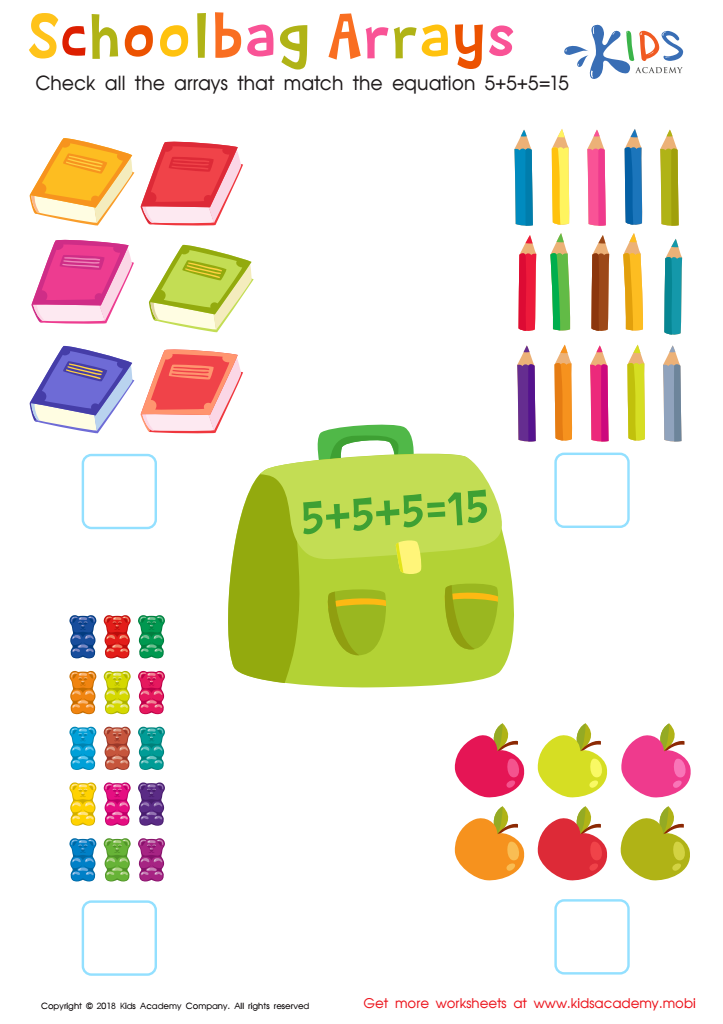
Schoolbag Arrays Worksheet
 Assign to My Students
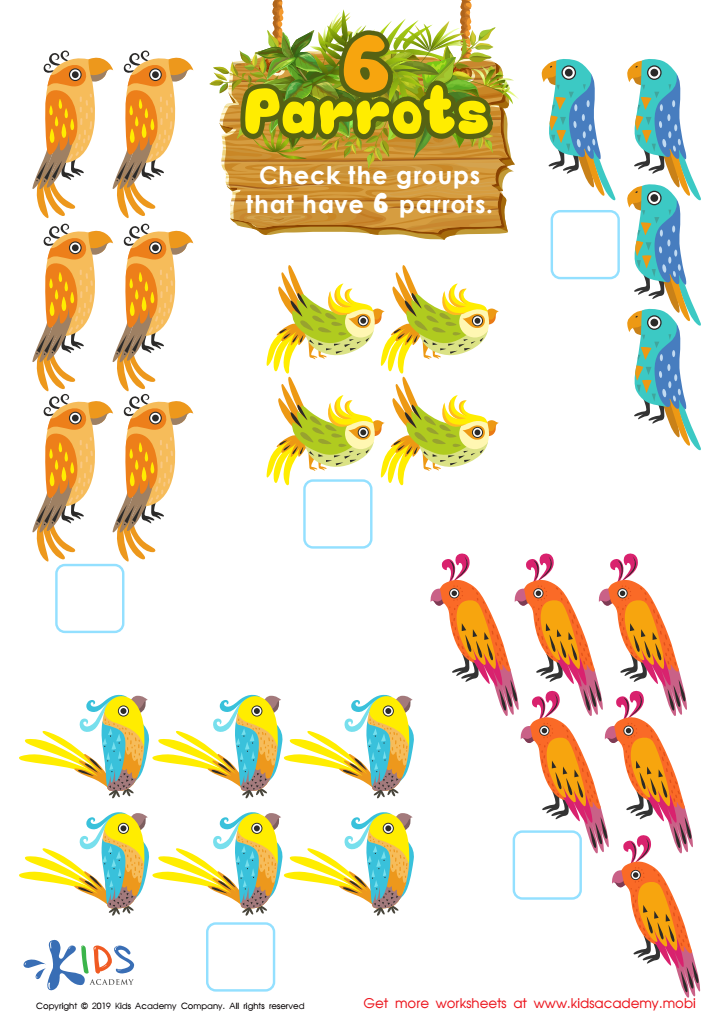
6 Parrots Worksheet
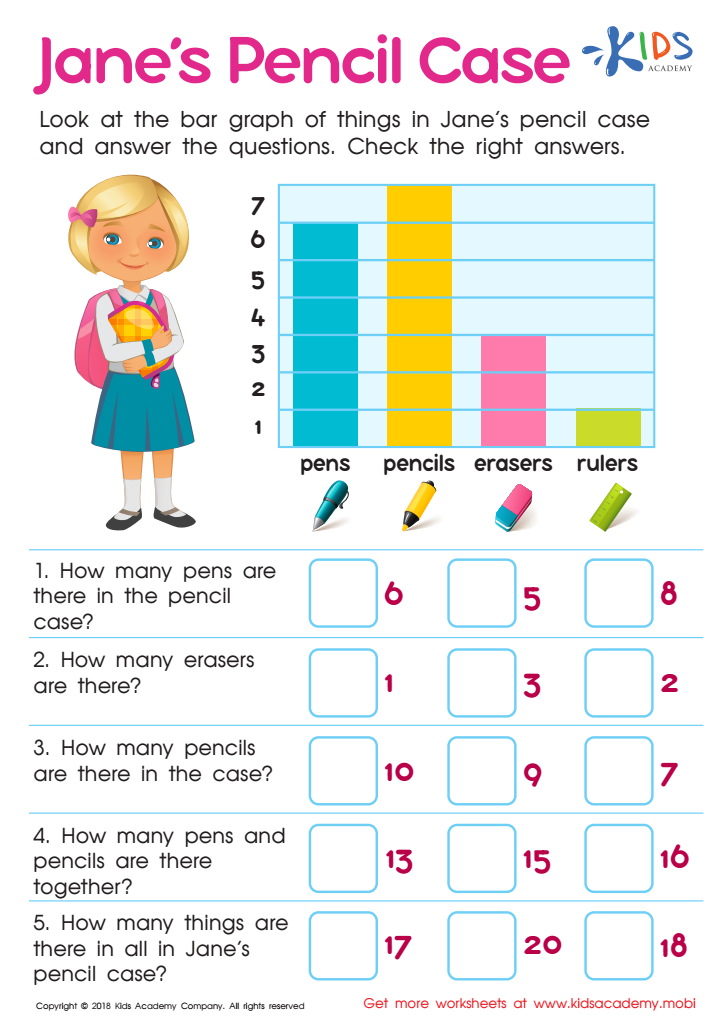
Jane's Pencil Case Worksheet
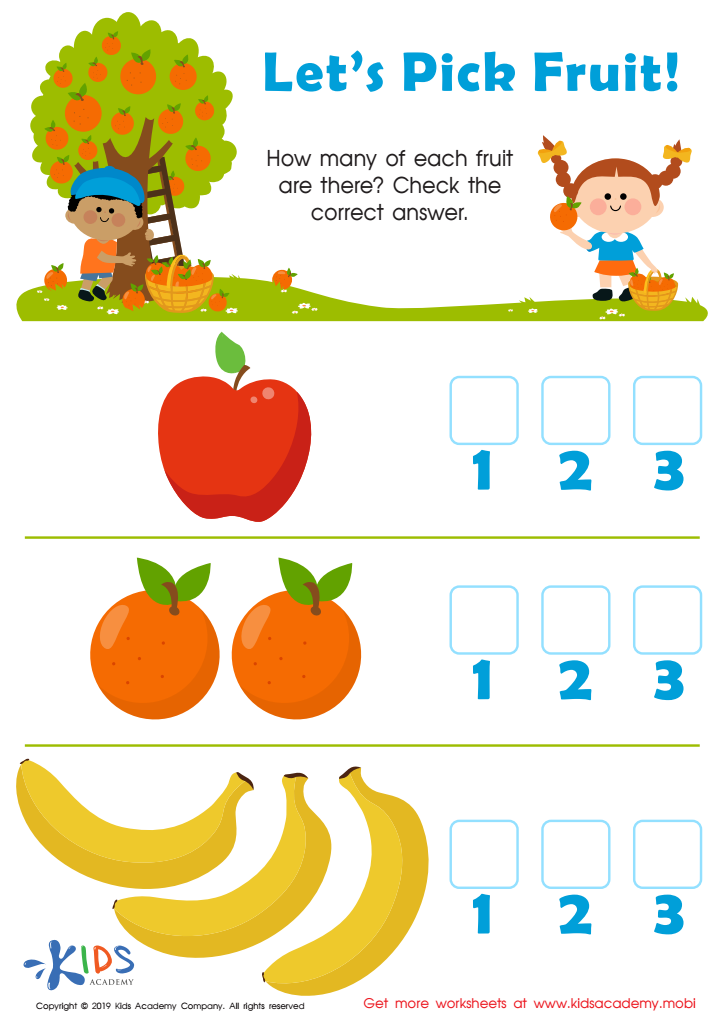
Let's Pick Fruit Worksheet
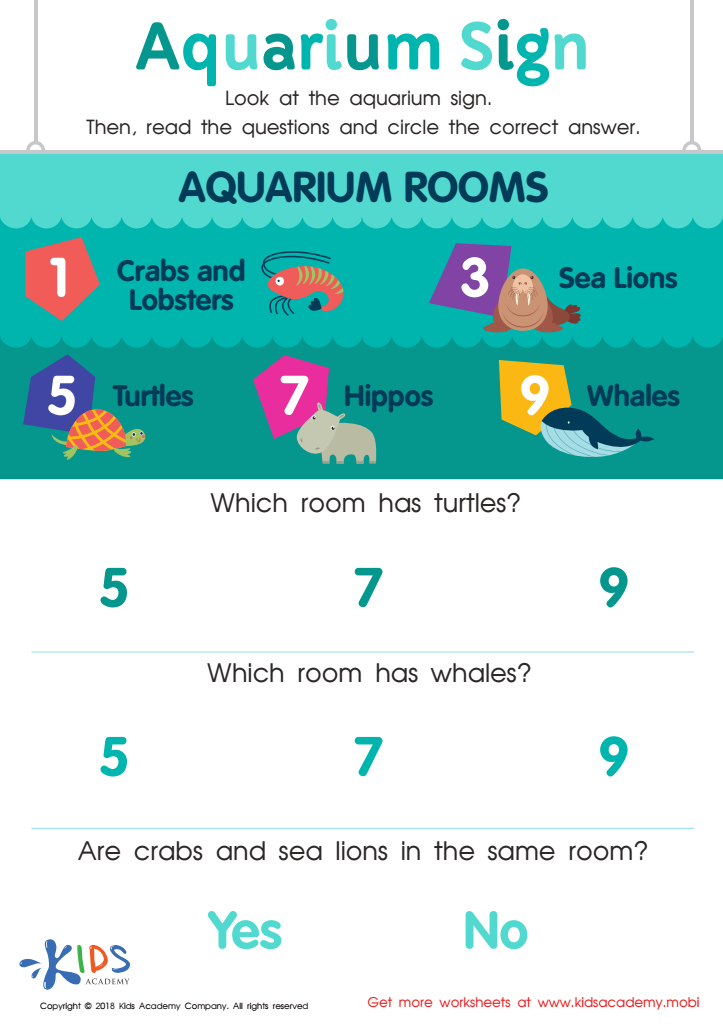
Assessment: Aquarium Sign Worksheet








Teaching young children to follow instructions, particularly regarding "Easy Numbers," is crucial for their development. For parents and teachers, this skill is foundational in helping children navigate not just their academic journey but also everyday life. When children learn to understand and follow simple numerical instructions, they enhance their cognitive abilities, including critical thinking, problem-solving, and decision-making skills.
From ages 3-8, children are in a rapid stage of mental development, making it an ideal time for introducing structured learning. By focusing on numbers, children gain familiarity with counting, basic arithmetic, and numeracy concepts. This early foundational math knowledge fosters confidence and lays the groundwork for more complex mathematical skills in the future.
Moreover, following instructions helps children develop listening skills and attention to detail, important qualities necessary for success in both academic and social settings. It also teaches them the importance of compliance and respect for authority, fostering better relationships with peers and adults alike.
In essence, caring about teaching kids to follow instructions with numbers ensures educators are not just imparting knowledge but also equipping children with critical life skills, ultimately promoting both independent and collaborative learning experiences. Thus, investing in this aspect contributes significantly to their overall growth and readiness for the future.








