
Basic counting skills Easy Math Worksheets for Ages 3-8
5 filtered results
Difficulty Level
Grade
Age
-
From - To
Subject
Activity
Standards
Discover engaging and fun Basic Counting Skills worksheets designed for ages 3-8! Our Easy Math Worksheets provide young learners with a solid foundation in counting through colorful visuals and interactive activities. These worksheets help improve number recognition, one-to-one correspondence, and basic addition and subtraction skills in a playful manner. Ideal for preschool and early elementary education, each worksheet is crafted to motivate children while supporting their cognitive development. Parents and educators can easily access these printable resources, making learning enjoyable both at home and in the classroom. Start your child's math journey today with our enjoyable and effective counting worksheets!
Favorites
With answer key
Interactive
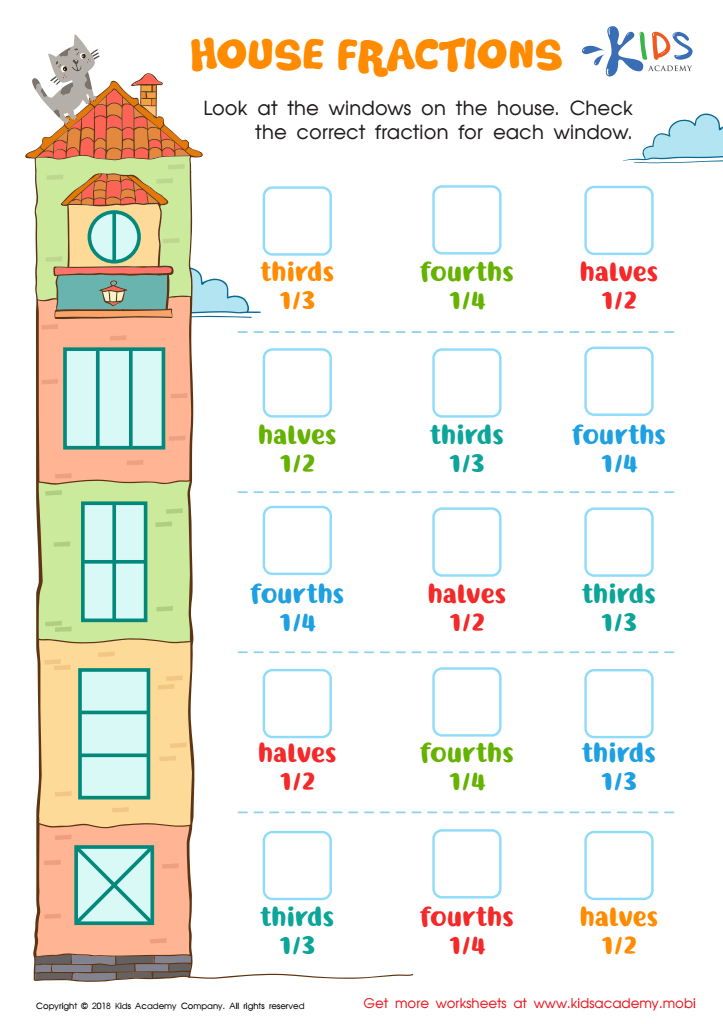
House Fractions Worksheet
Test your child's knowledge of fractions with this worksheet! Have them examine the windows of a house and select the correct fraction from the options given. This is a great way to see how much they understand about wholes, fractions, halves, one thirds, and one fourths.
 Assign to My Students
House Fractions Worksheet
Worksheet
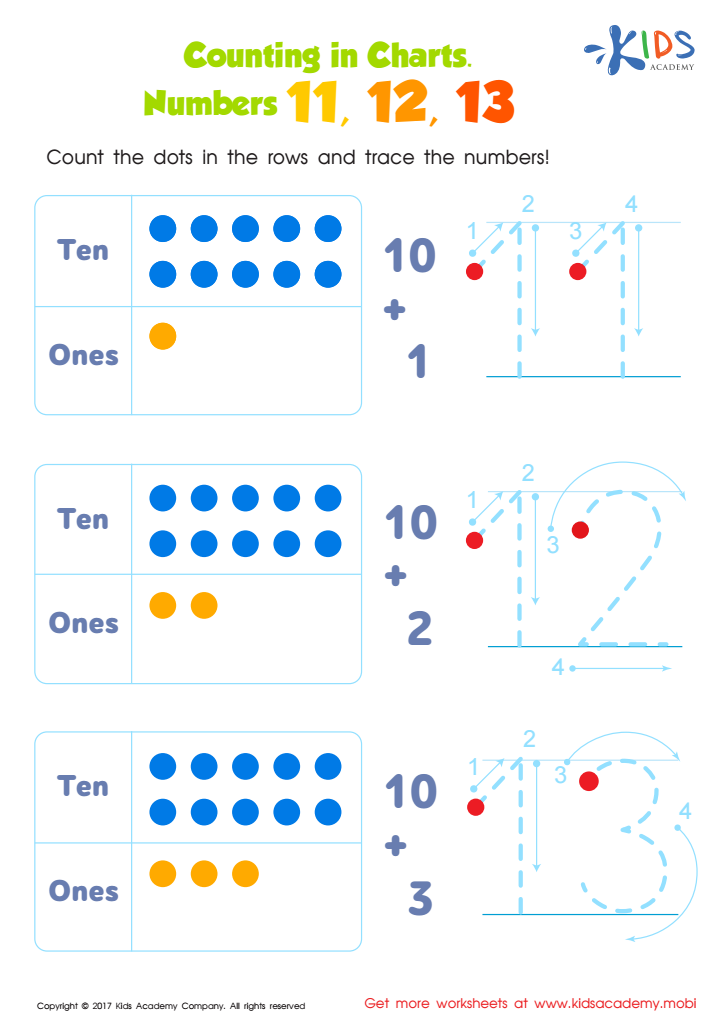
Number Tracing Worksheet For Kindergarten
Help your child develop addition skills and improve number recognition with this easy-to-use worksheet. Have them count the dots and add to solve each problem. Then, trace over the number to complete each row! It's a fun and simple way for kindergarteners to practice their math skills.
Number Tracing Worksheet For Kindergarten
Worksheet
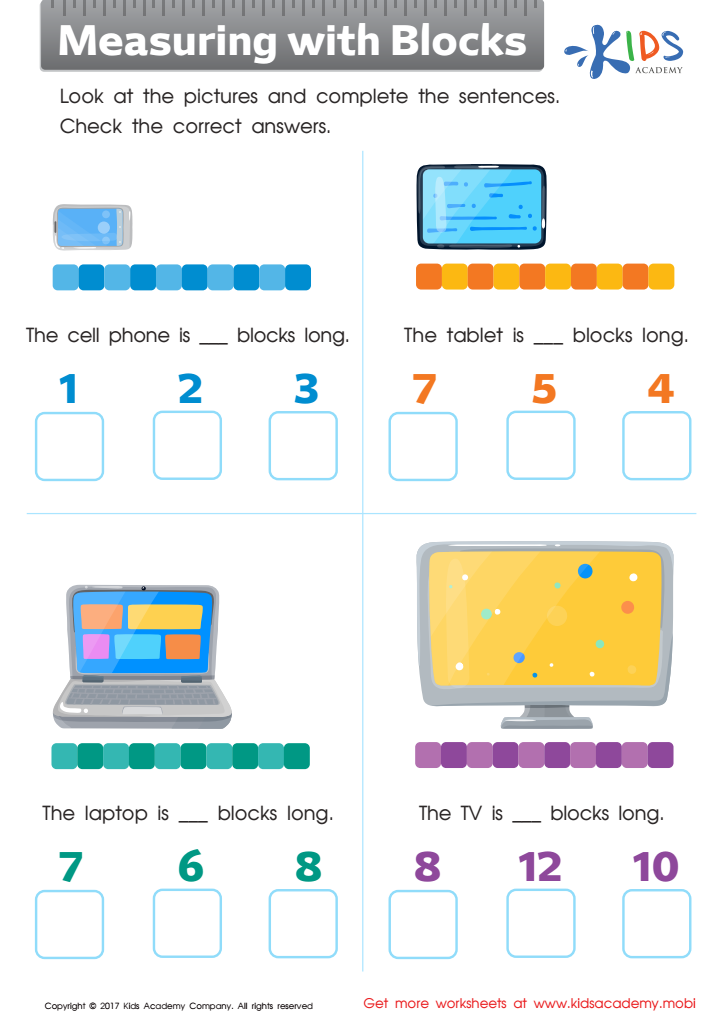
Measuring with Blocks Worksheet
Help your child get ready for math success with this Kids Academy worksheet. It provides colorful blocks to practice measuring objects. Coach them to count the boxes under each picture, then check the box with the right answer. It's a fun way to get acquainted with rulers!
Measuring with Blocks Worksheet
Worksheet
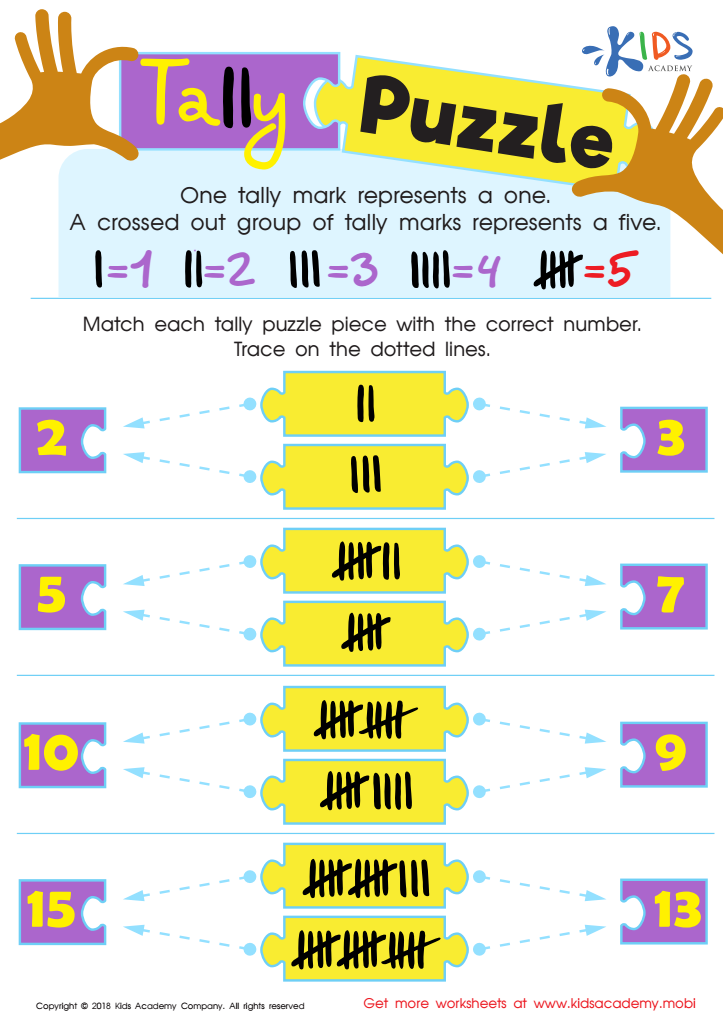
Tally Puzzle Worksheet
Kids love puzzles, and this bright worksheet will let them practice tallies and matching numbers. It teaches them to count and assign values, critical for doing math problems quickly and accurately later. It also leads to strategies like counting by 5s.
Tally Puzzle Worksheet
Worksheet
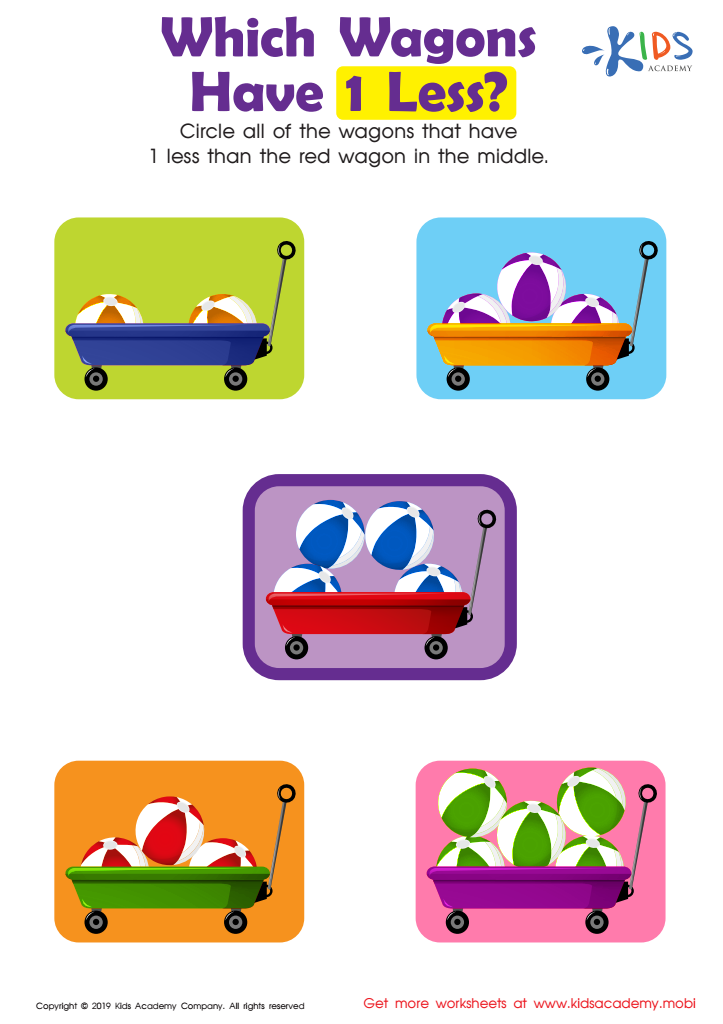
Which Wagons Have 1 Less? Worksheet
Test your kid's counting skills with a simple exercise. Ask them to count the balls in the five wagons shown and to circle the wagons with one less than the red wagon in the middle. This will give their brains a simple task that tests their knowledge of numbers.
Which Wagons Have 1 Less? Worksheet
Worksheet
Join Kids Academy for Free
Who is primarily going to use this learning content?








Basic counting skills form the foundation for all future math learning and are crucial for children ages 3-8. Parents and teachers should prioritize these skills because they foster cognitive development and problem-solving abilities. Early exposure to counting helps children understand numerical concepts, improve their logic and reasoning, and enhances their ability to recognize patterns.
Counting is not just about numbers; it also encourages fine motor skills and language development. As children engage in counting activities, they learn to express quantities verbally, which boosts their vocabulary and communication skills. Moreover, mastering basic counting assists children in everyday situations, such as sharing items or understanding concepts of more and less, establishing a sense of fairness and cooperation.
When children achieve proficiency in basic counting, they build confidence and a positive attitude toward math, reducing anxiety around the subject in future years. Additionally, a strong mathematical foundation encourages critical thinking as children begin exploring more complex math concepts later on.
Parent-teacher collaboration in promoting counting can create a supportive learning environment. Through engaging games and activities, children will not only develop counting skills but also foster a love for learning that will serve them throughout life. Investing in this foundational skill is critical for long-term academic success.








