Comparing lengths Easy Math Worksheets for Ages 3-8
6 filtered results
-
From - To
Discover fun and engaging "Comparing Lengths" worksheets designed for children ages 3-8! Our easy math worksheets provide a wonderful opportunity for young learners to explore the concept of length through colorfully illustrated activities. These worksheets include hands-on exercises that encourage children to compare, measure, and order different lengths, reinforcing their mathematical understanding while developing fine motor skills. Perfect for home or classroom use, these resources make learning exciting and interactive. Help your child build a solid foundation in math with our delightful comparing lengths worksheets, where learning becomes an enjoyable adventure. Start exploring today!
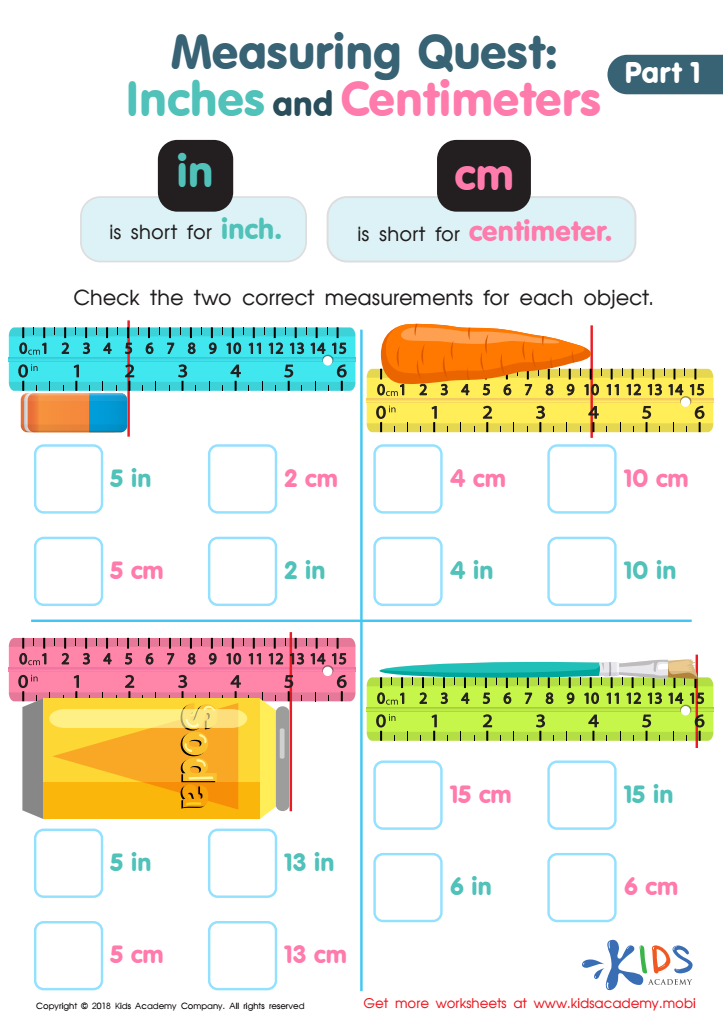
Measuring Quest: Inches and Centimeters Worksheet
 Assign to My Students
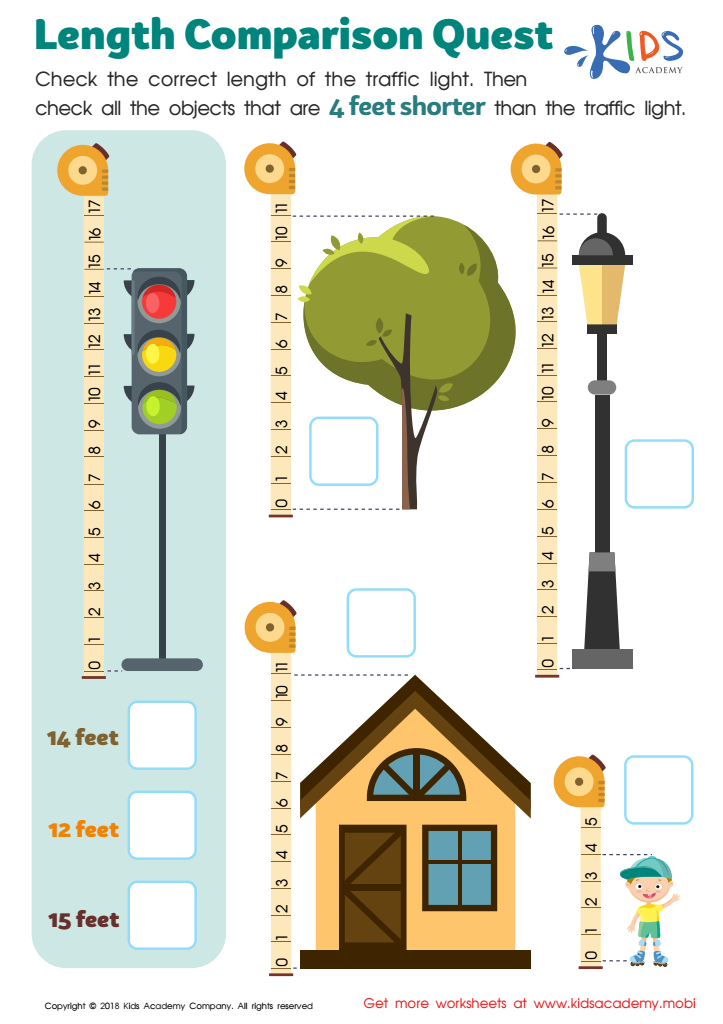
Length Comparison Quest Worksheet
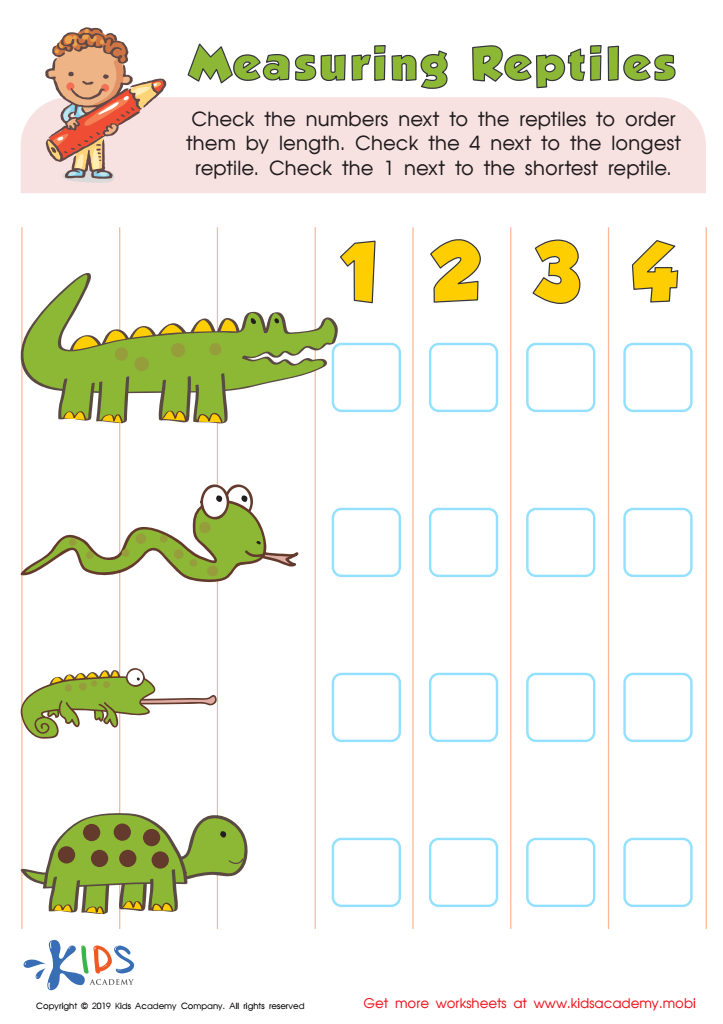
Measuring Reptiles Worksheet
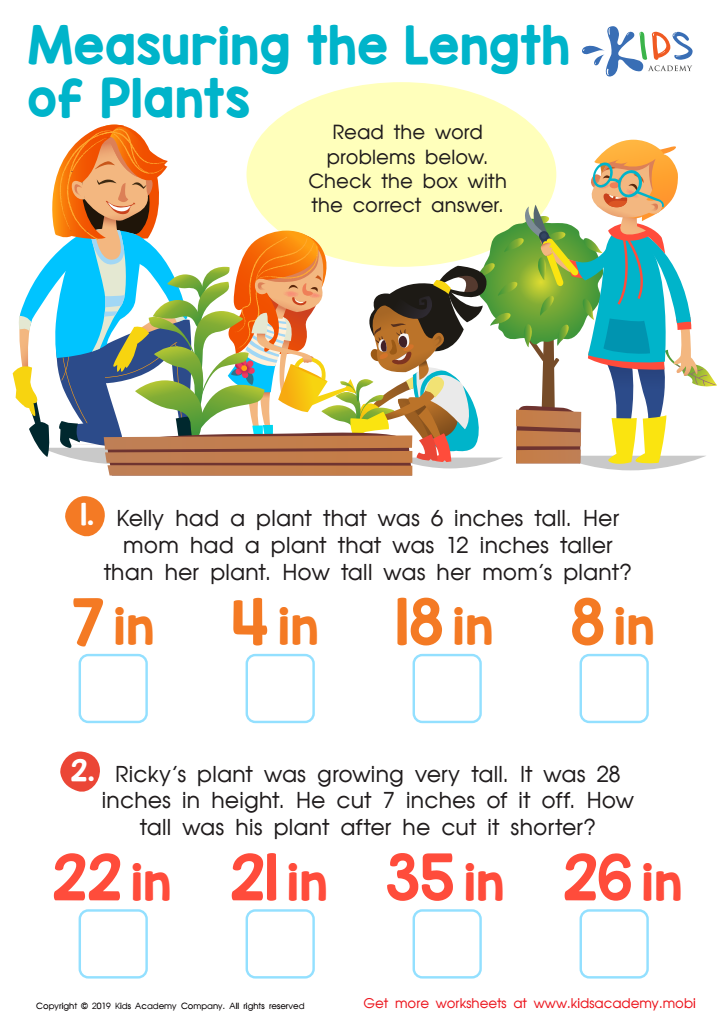
Measuring the Length of Plants Worksheet
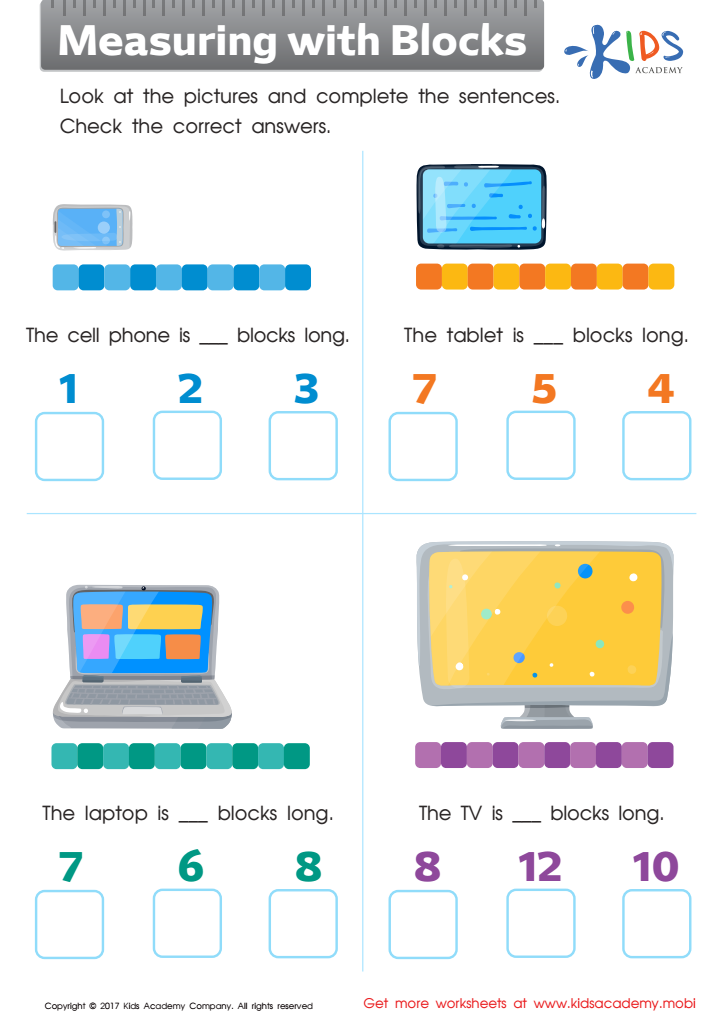
Measuring with Blocks Worksheet
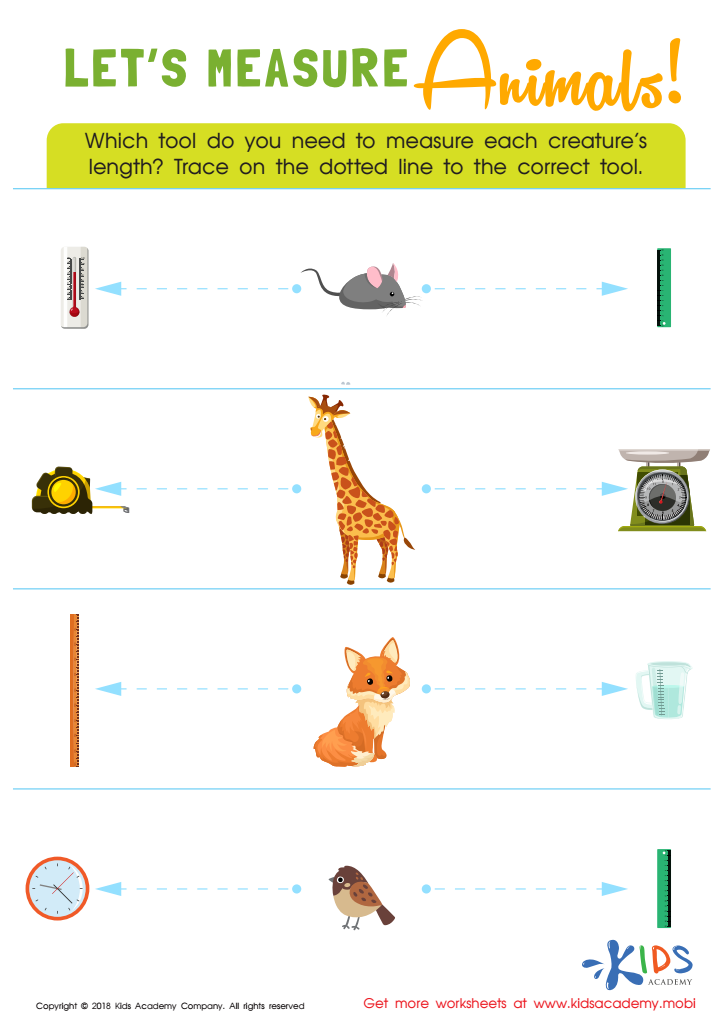
Let's Measure Animals! Worksheet








Comparing lengths is a foundational skill in early math education, crucial for children aged 3 to 8. Understanding length helps children develop their spatial awareness and basic reasoning skills. When parents and teachers emphasize this skill, they are fostering critical thinking and problem-solving abilities.
Learning to compare lengths introduces children to concepts of measurement, which is not only essential in math but also in everyday life. For instance, knowing which object is longer or shorter can enhance their understanding of size relationships, promoting deeper mathematical comprehension as they progress in school. Engaging physically with materials, like rulers or measuring tapes, helps young learners make tangible connections between abstract numbers and real-world applications.
Moreover, comparing lengths can boost language development. Children learn new vocabulary—like "longer" and "shorter"—and practice descriptive language as they articulate their observations. Teachers and parents can support this learning at home or in the classroom with hands-on activities and fun challenges related to measuring.
Encouraging children to compare lengths paves the way for more advanced math skills in later years, establishing a strong foundation for their academic journey and equipping them with essential life skills. Thus, measuring and comparing lengths should be a priority for both educators and caregivers.








