Interpreting data Easy Math Worksheets for Ages 3-8
3 filtered results
-
From - To
Searching for engaging and educational materials tailored for young minds? Check out our Interpreting Data Easy Math Worksheets for ages 3-8. With colorful and fun activities, these printable worksheets help children grasp early data interpretation skills, making learning enjoyable and effective. Each worksheet is designed to develop kids' ability to analyze, compare, and draw conclusions from simple data sets through age-appropriate challenges. Ideal for parents and teachers, these resources support foundational math skills and cognitive development. Visit Kids Academy and turn data into delightful learning experiences for your little learners today!
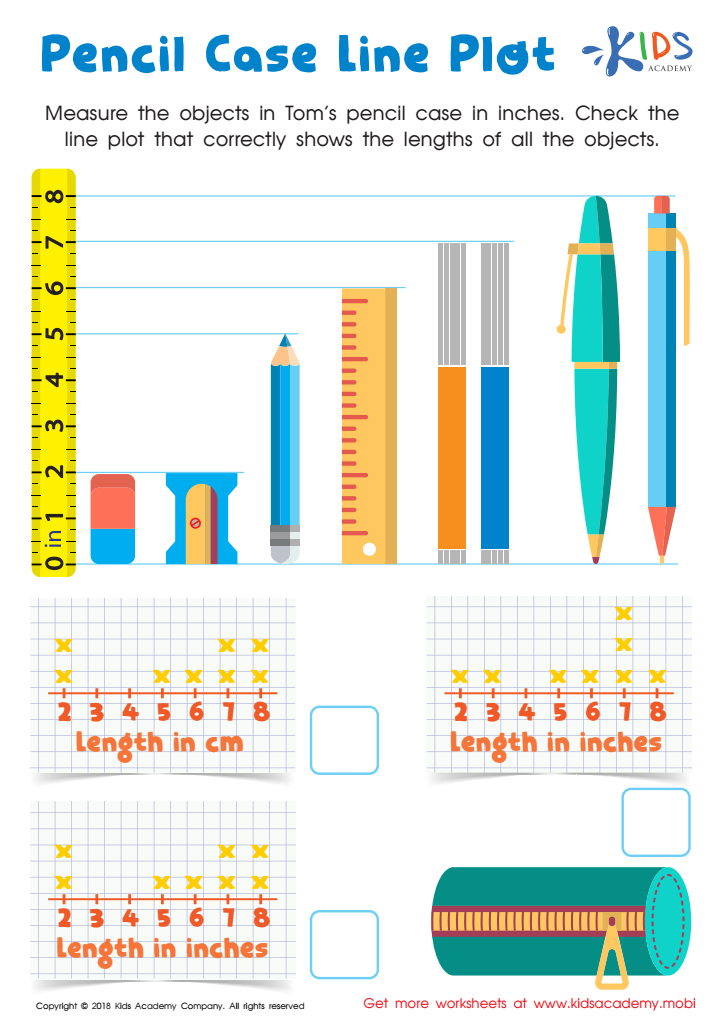
Pencil Case Line Plot Worksheet
 Assign to My Students
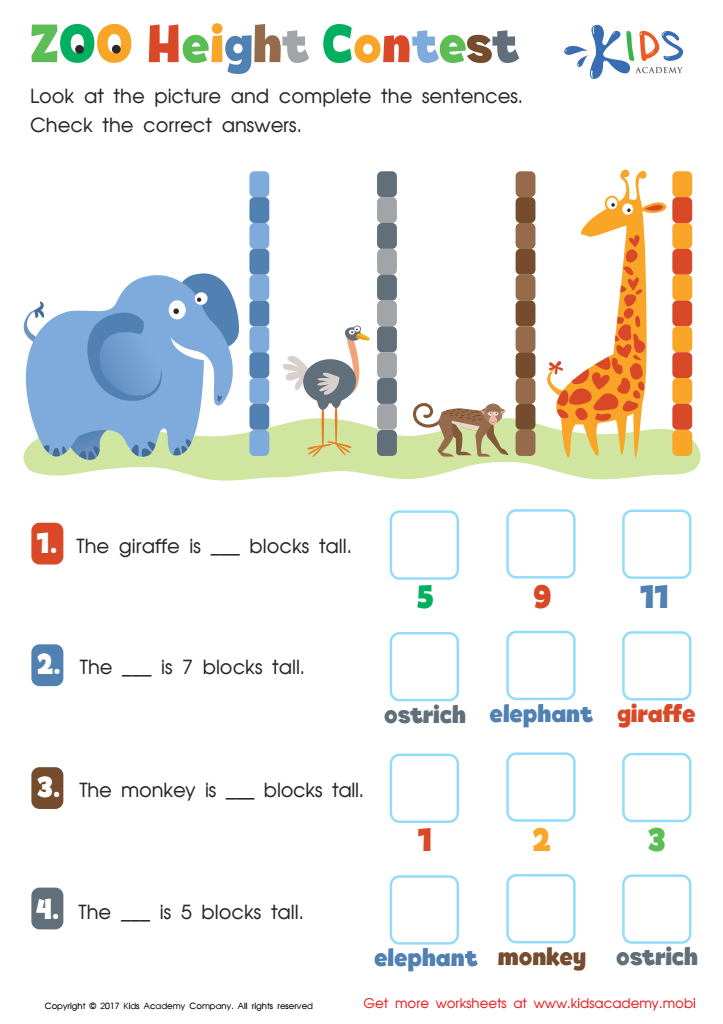
Zoo Height Contest Worksheet
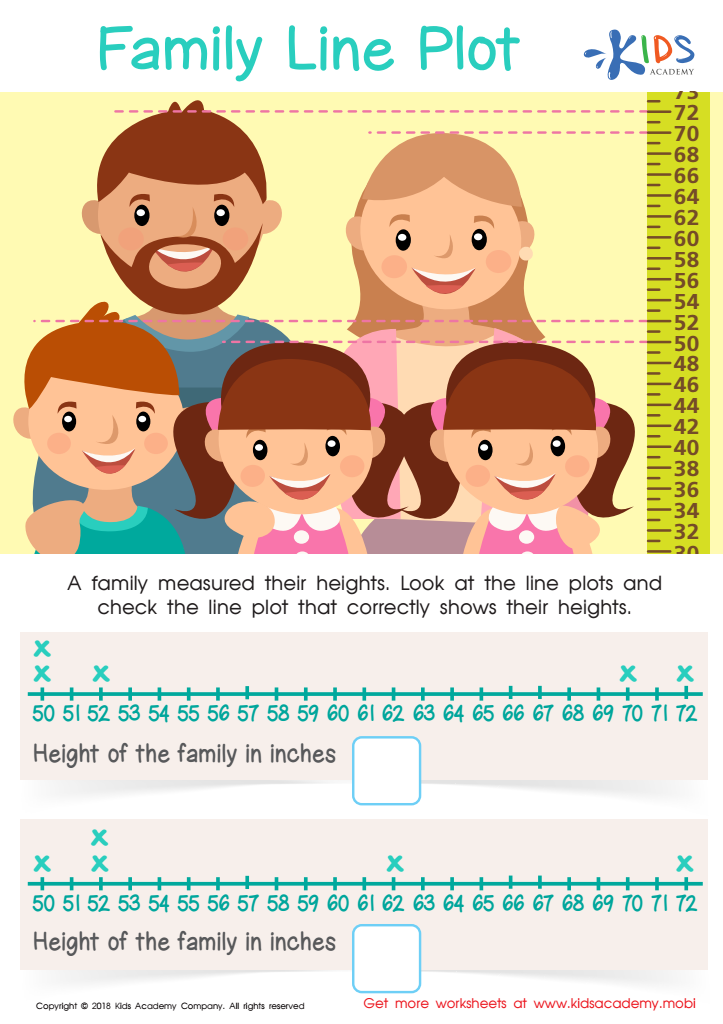
Family Line Plot Worksheet








Caring about interpreting data in early math education for children ages 3-8 is fundamental because it lays the groundwork for critical thinking, problem-solving, and advanced mathematical concepts. During these formative years, young minds are highly receptive and capable of absorbing basic data interpretation skills that include recognizing patterns, organizing information, and understanding quantities.
For parents and teachers, integrating data interpretation into early math provides practical benefits. Firstly, it enhances children's analytical skills, enabling them to make sense of the world around them. For instance, sorting objects by color or size, or counting group objects introduces them to categorization and numerical relationships. Secondly, proficiency in early math prepares children for future academic success. Children who grasp basic data concepts early on are more likely to excel in more complex mathematical tasks later.
Additionally, interpreting data supports cognitive development in broader educational contexts beyond mathematics. Skills like attention to detail, logical reasoning, and decision-making are fostered through these activities. By prioritizing interpreting data, parents and teachers encourage a natural curiosity and inquisitiveness in children about how things work, promoting lifelong learning.
In conclusion, focusing on simple data interpretation for young children is not about teaching complex statistics but about nurturing fundamental skills that apply across various aspects of life and learning.








