Visual learning reinforcement Easy Math Worksheets for Ages 3-8
3 filtered results
-
From - To
Discover the power of visual learning reinforcement with our Easy Math Worksheets specially designed for children ages 3-8. These engaging, colorful worksheets are tailored to enhance mathematical understanding through visual aids that captivate young learners. Our resources promote essential math skills, such as counting, addition, and subtraction, while making learning fun and interactive. Each worksheet is crafted to cater to various learning styles, ensuring that every child can thrive in their math journey. Embrace creative education and watch your child's confidence grow with our easy-to-use, printable worksheets that turn math into an enjoyable experience! Start exploring today for a brighter educational future.
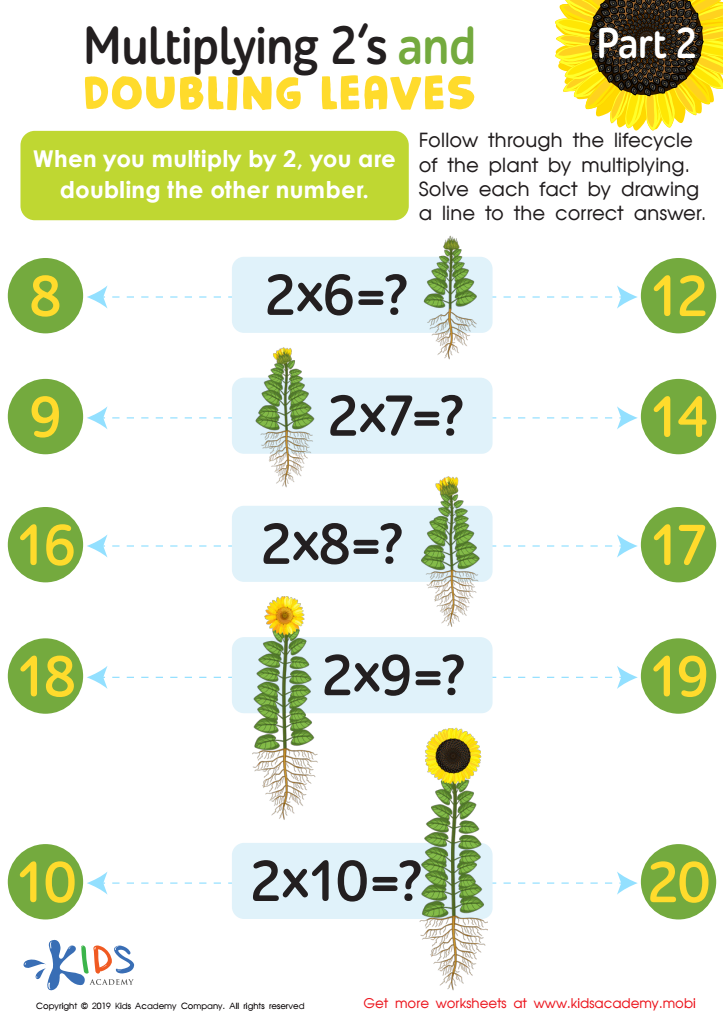
Multiplying 2’s and Doubling Leaves Part 2 Worksheet
 Assign to My Students
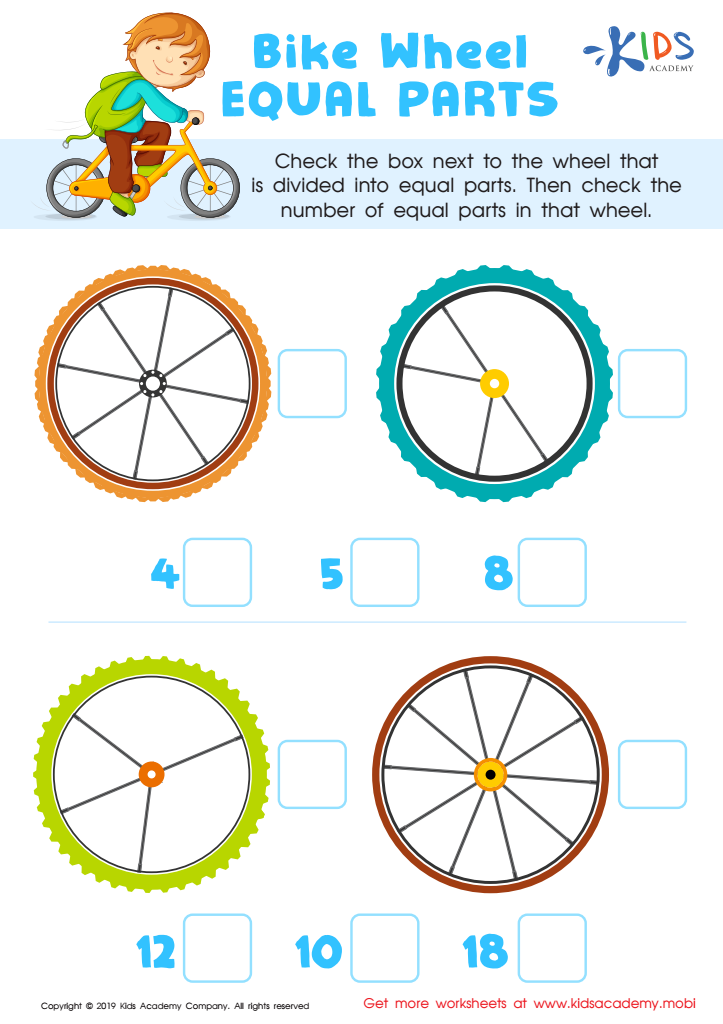
Bike Wheel Equal Parts Worksheet
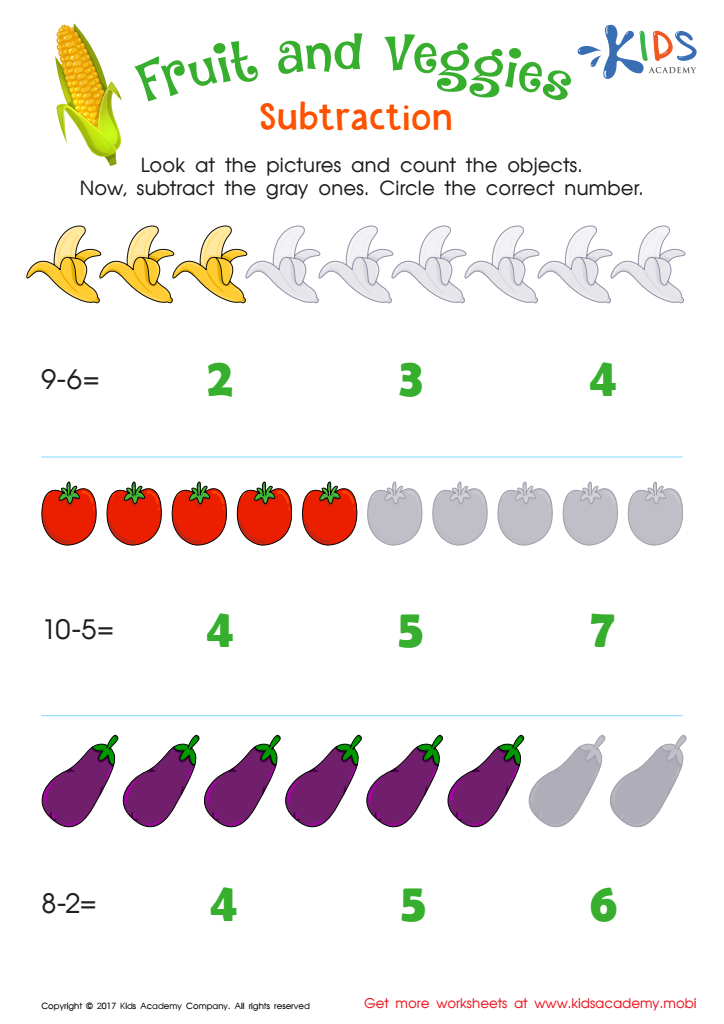
Fruit and Veggies Subtraction Worksheet








Parents and teachers should prioritize visual learning reinforcement in Easy Math for children aged 3-8 because early childhood is a critical period for cognitive development. This age group benefits immensely from visual aids, which often enhance understanding and retention of mathematical concepts. Visual learning strategies, such as using images, graphs, and physical objects, can make abstract math ideas more concrete.
Children at this stage are naturally curious and tend to be visual learners. Incorporating colorful visuals into math lessons not only captures their attention but also facilitates deeper comprehension. For instance, using manipulatives—like blocks or counters—can help children grasp fundamental operations like addition and subtraction through hands-on experiences.
Moreover, easy math concepts reinforced visually can lay the groundwork for future success in more advanced mathematics. By promoting engagement and enjoyment in learning, children are more likely to develop a positive attitude toward math that can last a lifetime.
Additionally, engaging visual learning reinforces problem-solving skills and encourages critical thinking. For teachers and parents, utilizing visual strategies fosters a supportive environment where young learners feel confident and motivated. In summary, supporting visual learning in math programming leads to more effective teaching outcomes and enriched educational experiences for young children.








