Understanding patterns Easy Times Tables Worksheets for Ages 3-8
3 filtered results
-
From - To
Discover the magic of mastering multiplication with Kids Academy’s "Understanding Patterns Easy Times Tables Worksheets" tailored for ages 3-8. These meticulously designed printables make learning times tables a breeze through engaging pattern-based activities. Ideal for early math learners, our worksheets blend fun and education seamlessly, ensuring young minds grasp complex concepts effortlessly. By emphasizing pattern recognition, children quickly develop a deeper understanding of multiplication, paving the way for confident math skills. Equip your child with the essential tools to succeed in mathematics and watch them flourish! Unlock the world of easy and enjoyable multiplication today with Kids Academy.
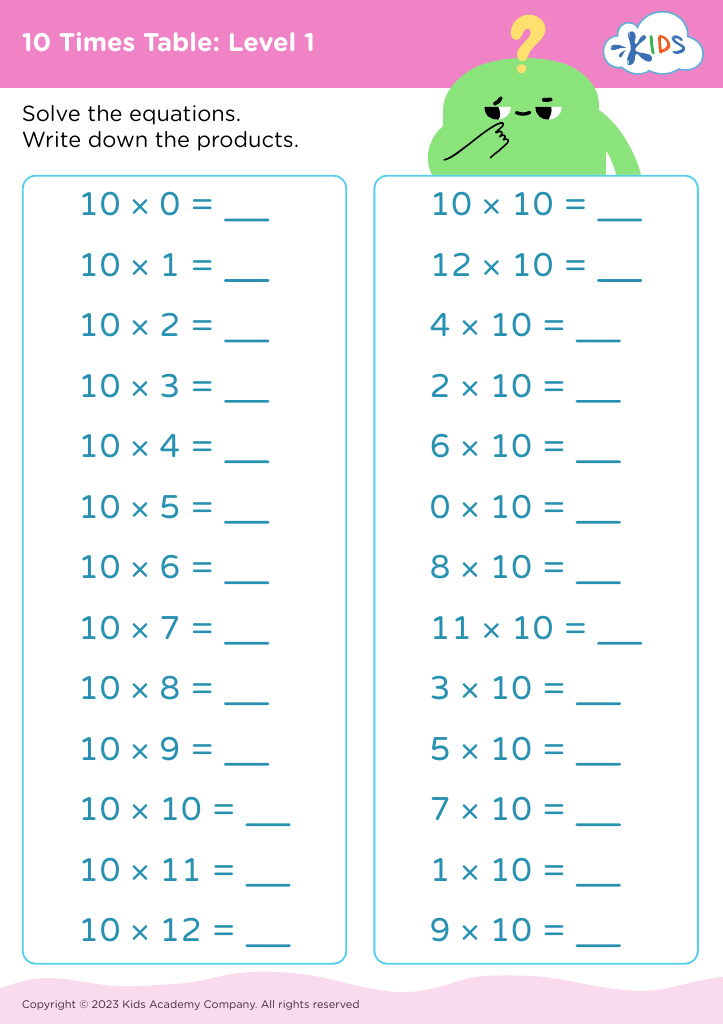
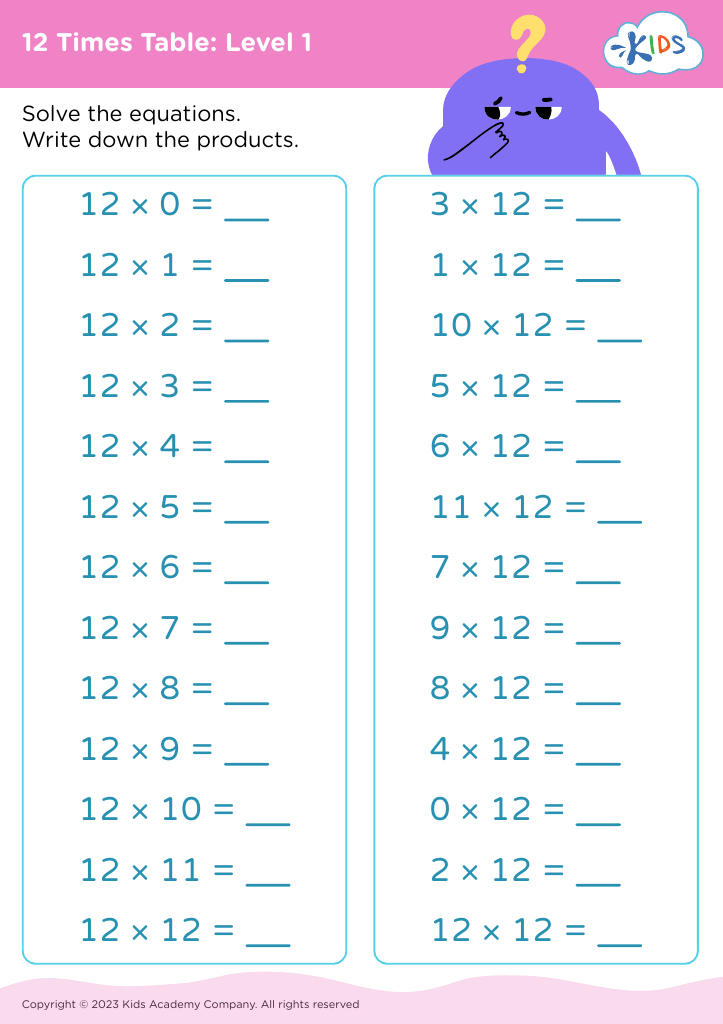
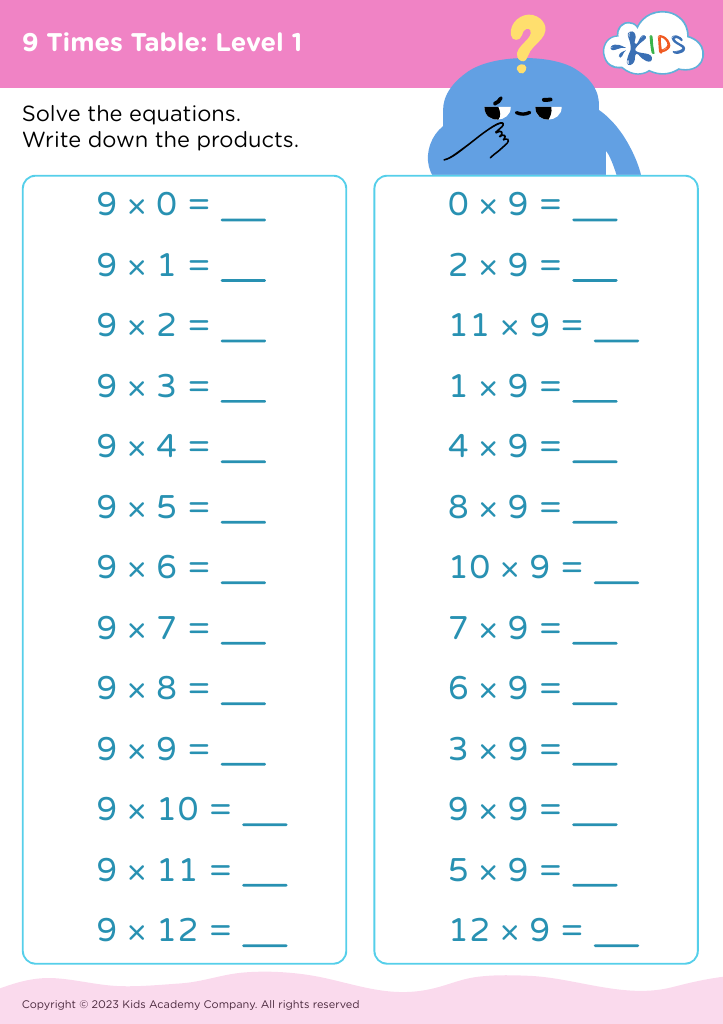





Understanding patterns in times tables is a crucial skill for young children between the ages of 3 and 8. Early learning of times tables not only lays a solid mathematical foundation but also promotes cognitive development. Recognizing and understanding patterns helps children in grasping concepts more easily and making connections between different mathematical ideas. This, in turn, enhances their problem-solving skills and mathematical reasoning.
Early exposure to times tables helps children develop a sense of number relationships and multiplication, which are fundamental for more advanced arithmetic operations. For instance, recognizing that 2 x 3 is the same as 2 + 2 + 2 fosters an understanding of multiplication as repeated addition. This foundational knowledge simplifies future learning of more complex concepts like division, fractions, and algebra.
For parents and teachers, encouraging pattern recognition in times tables can make learning more engaging and less intimidating. This often involves using games, songs, and visual aids to make the learning process enjoyable. Moreover, mastering times tables is linked to improved confidence and academic performance. When children understand and recall multiplication facts with ease, they can tackle math challenges more fearlessly, leading to a positive attitude towards math and learning in general. Investing in this foundational knowledge is, therefore, hugely beneficial for a child's ongoing academic journey.








