Sight word recognition Easy Building Vocabulary Worksheets for Ages 3-8
3 filtered results
-
From - To
Enhance your child's early reading skills with our Sight Word Recognition Easy Building Vocabulary Worksheets, tailored for ages 3-8. These engaging and educational worksheets from Kids Academy focus on key sight words, helping young learners recognize and remember common words effortlessly. Perfect for both classroom and home use, our expertly designed activities make vocabulary building fun and effective. Boost your child's confidence and literacy skills with these printable resources, offering a solid foundation for future reading success. Empower your little learner with the tools they need to become a fluent reader. Explore our collection today!
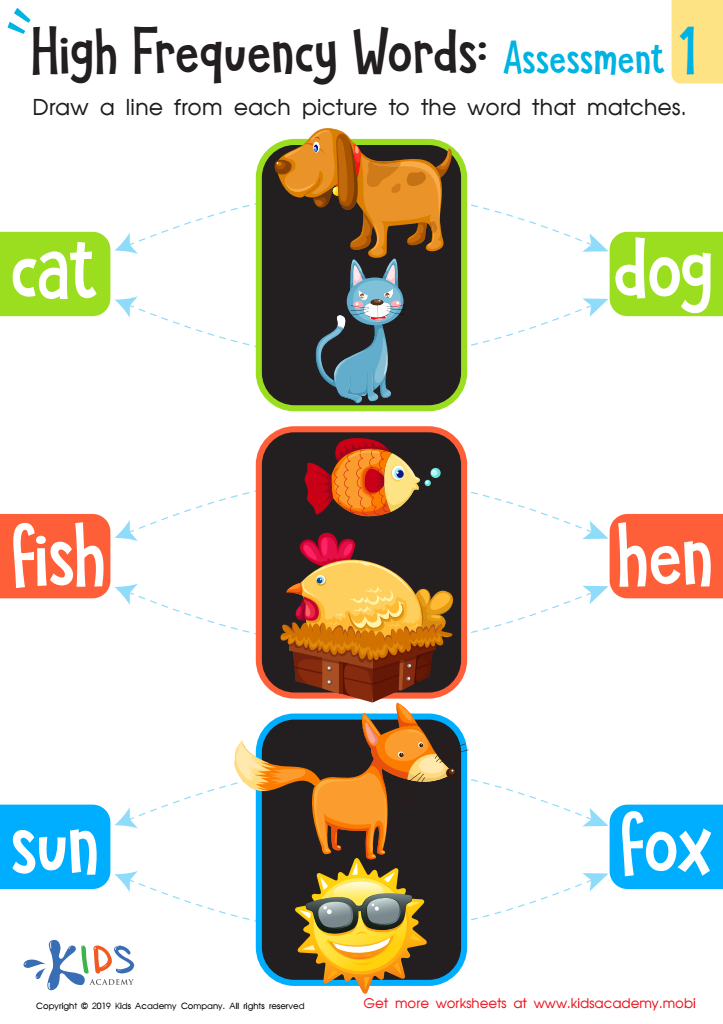
High Frequency Words: Assessment 1 Worksheet
 Assign to My Students











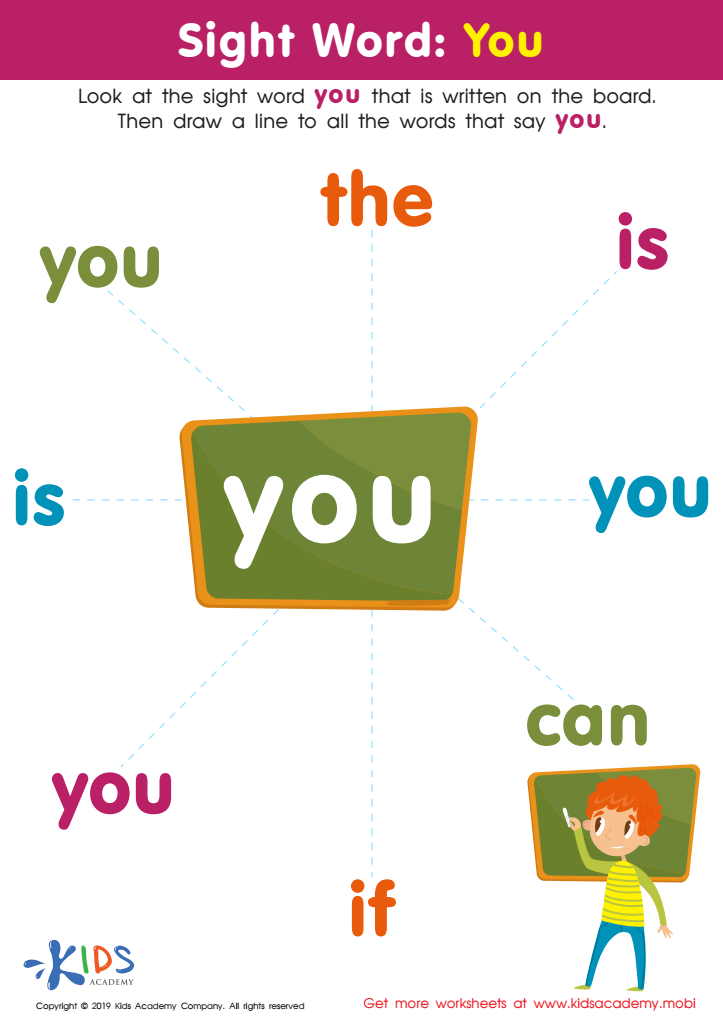
Sight Word You Worksheet
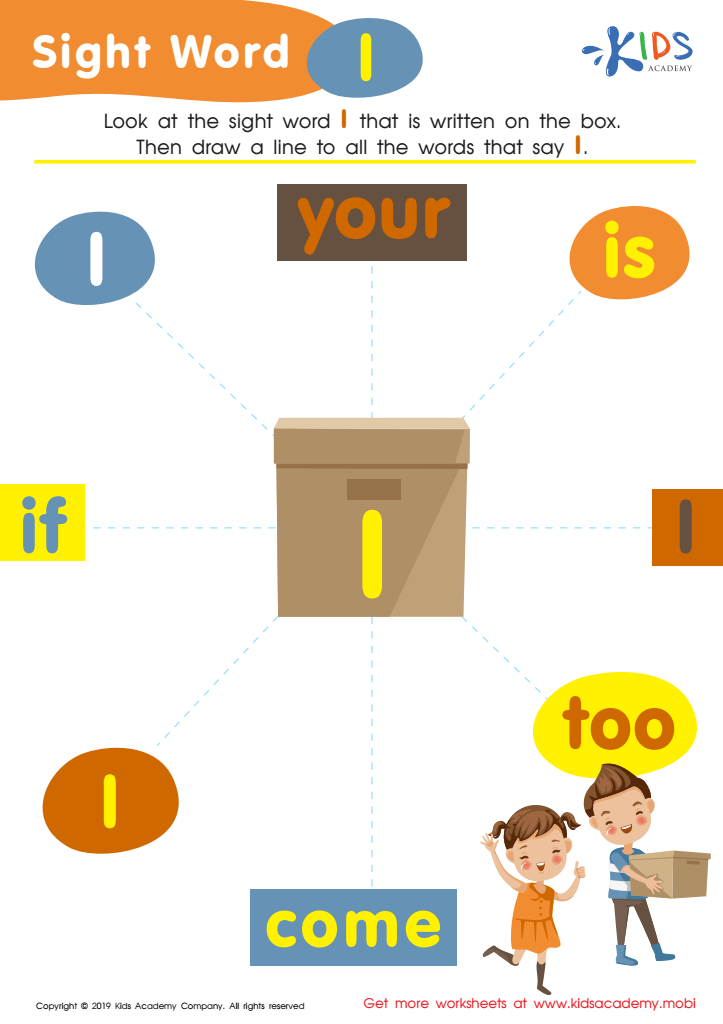
Sight Word I Worksheet





.jpg)


Sight word recognition is a foundational skill for early readers that greatly enhances literacy development between the ages of 3 and 8. Parents and teachers need to prioritize sight word recognition because it enables children to quickly identify common words, enhancing their reading fluency. Fluent readers expend less cognitive effort on decoding individual words, freeing up mental resources for comprehension, making reading a more enjoyable and less frustrating experience.
At this critical stage, a robust vocabulary serves as a platform for academic achievement across all subjects. Familiarity with high-frequency sight words can make reading new texts smoother and more accessible, building a child's confidence and promoting a love for learning. This is essential as students transition from "learning to read" to "reading to learn."
Moreover, early sight word recognition supports better communication skills. It equips children with the language tools necessary for effective interaction and expression. In a classroom setting, this competence allows students to participate more actively, ask questions, and engage in discussions, contributing to their overall academic growth.
In essence, fostering sight word recognition and building vocabulary sets the foundation for lifelong learning and provides children with the tools needed to succeed both academically and in everyday communication. Thus, investing efforts early on reaps long-term educational and developmental rewards.