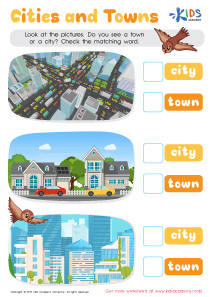
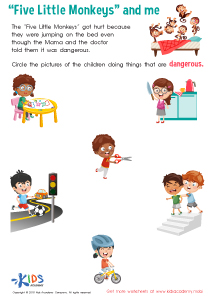
Shape Recognition Easy Reading Comprehension Worksheets for Ages 3-8
3 filtered results
-
From - To
Introduce your little learners to the colorful world of shapes with our "Shape Recognition Easy Reading Comprehension Worksheets," perfect for ages 3 to 8. Designed to engage young minds, these worksheets combine reading and shape recognition skills, fostering both literacy and visual understanding. Children will practice identifying basic shapes through fun stories and delightful illustrations that capture their imagination. Each worksheet includes simple questions to enhance comprehension, ensuring that kids not only learn to recognize shapes but also improve their reading skills. Perfect for classrooms or home learning, these resources are an essential tool for early childhood development and education.
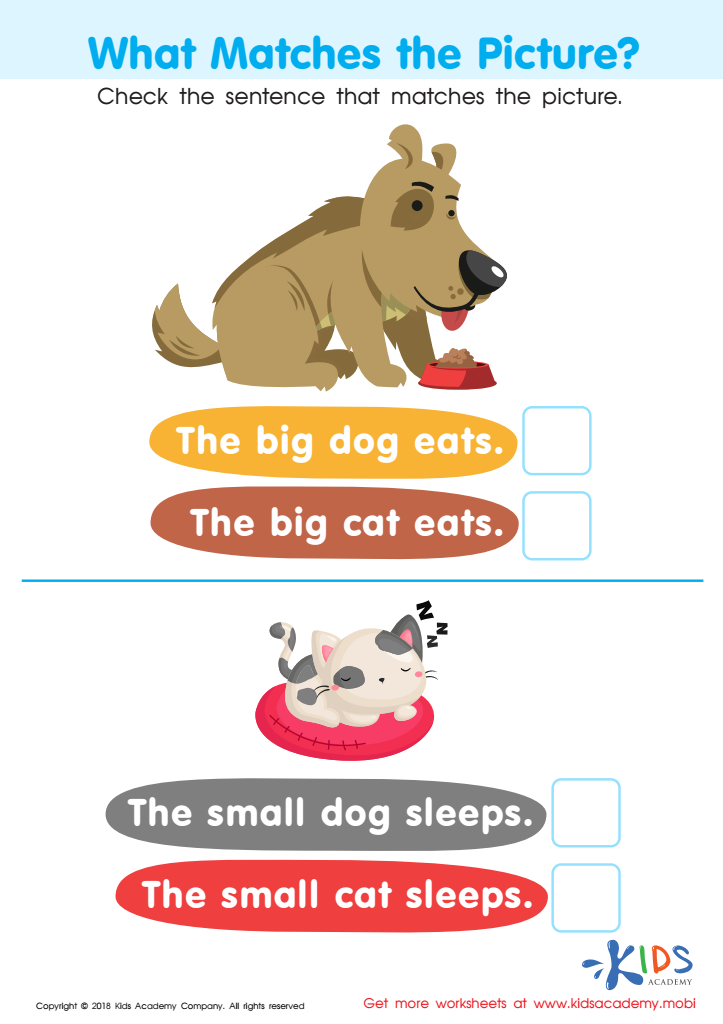
What Matches the Picture? Worksheet
 Assign to My Students
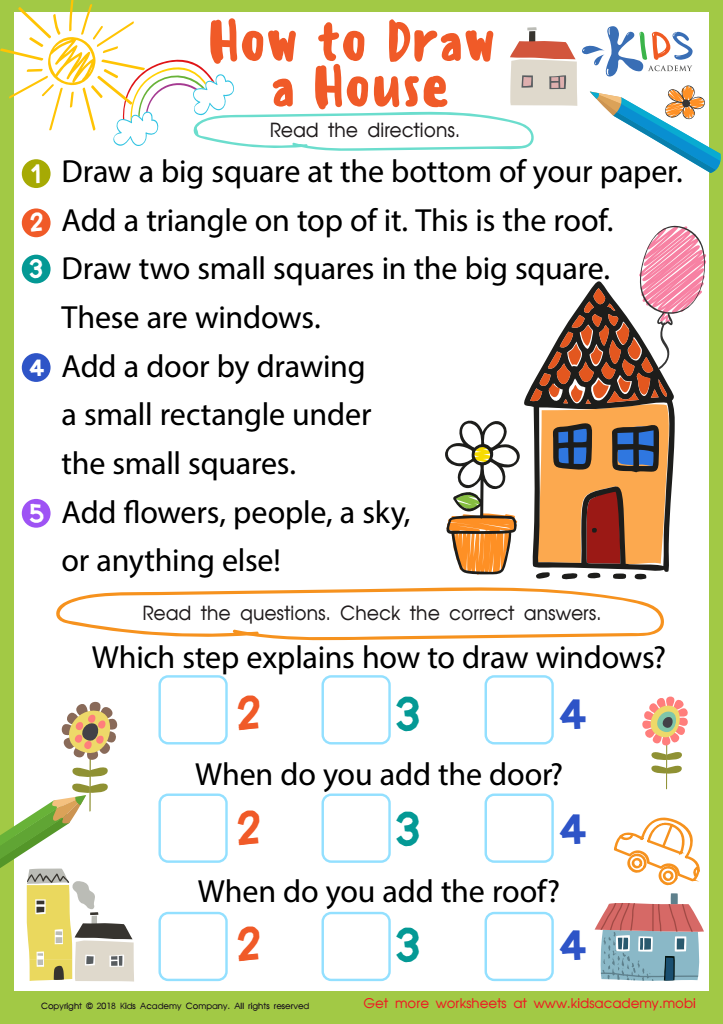
How to Draw House Worksheet
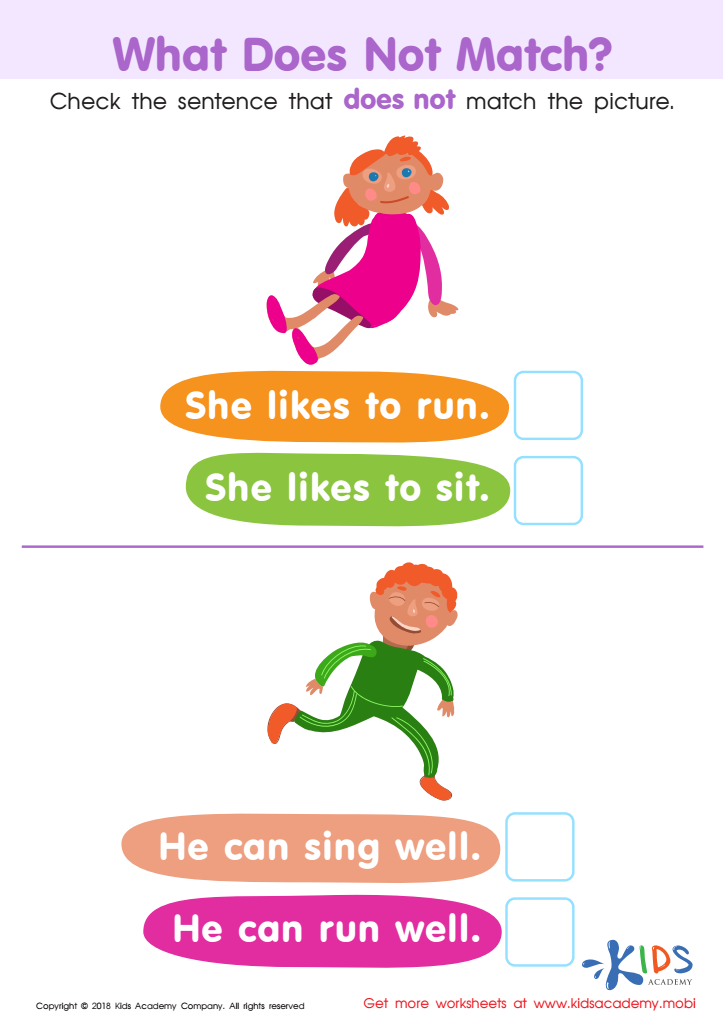
What Does Not Match? Worksheet








Shape recognition is fundamental for early cognitive development, making it crucial for parents and teachers to prioritize this skill in children ages 3-8. Firstly, shape recognition is a building block for mathematical understanding. By identifying geometric shapes, children develop spatial awareness, which is essential for problem-solving and later concepts like geometry.
Moreover, shape recognition enhances vocabulary and language skills. As children learn the names and characteristics of different shapes, they broaden their language use, improving communication skills. This early exposure to descriptive language fosters further literacy development.
Additionally, shape recognition aids in cognitive development areas such as memory and concentration. Activities focused on shapes require attention, which helps strengthen these important skills.
Socially, engaging in shape-based activities can be a cooperative learning experience, promoting teamwork, sharing, and communication among peers. Parents and teachers can facilitate interactive games and hands-on experiences that make learning about shapes enjoyable and meaningful.
Ultimately, investing time and resources into teaching shape recognition not only lays the groundwork for various academic skills but also nurtures a child’s overall development, making it an essential focus for young learners.