Story sequencing Easy Reading Comprehension Worksheets for Ages 3-8
3 filtered results
-
From - To
Explore our "Story Sequencing Easy Reading Comprehension Worksheets" designed for children aged 3-8! These engaging worksheets help young learners develop essential comprehension skills by enabling them to arrange stories in the correct order. Boost your child's reading skills as they practice identifying key events and enhance their critical thinking. Each worksheet features vibrant illustrations and age-appropriate narratives, making learning fun and interactive. Perfect for use at home or in the classroom, our story sequencing activities provide the perfect foundation for fostering a love of reading. Download your worksheets today and watch your child's understanding of story structure grow!
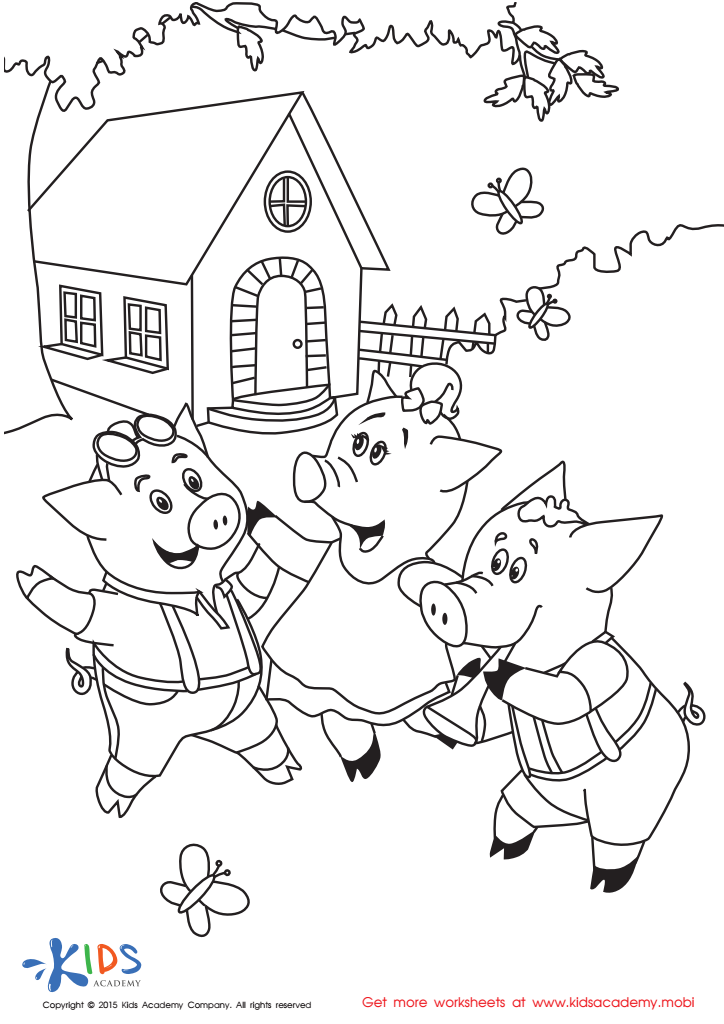
Folktales Printable PDF Worksheet: The 3 Little Pigs
 Assign to My Students
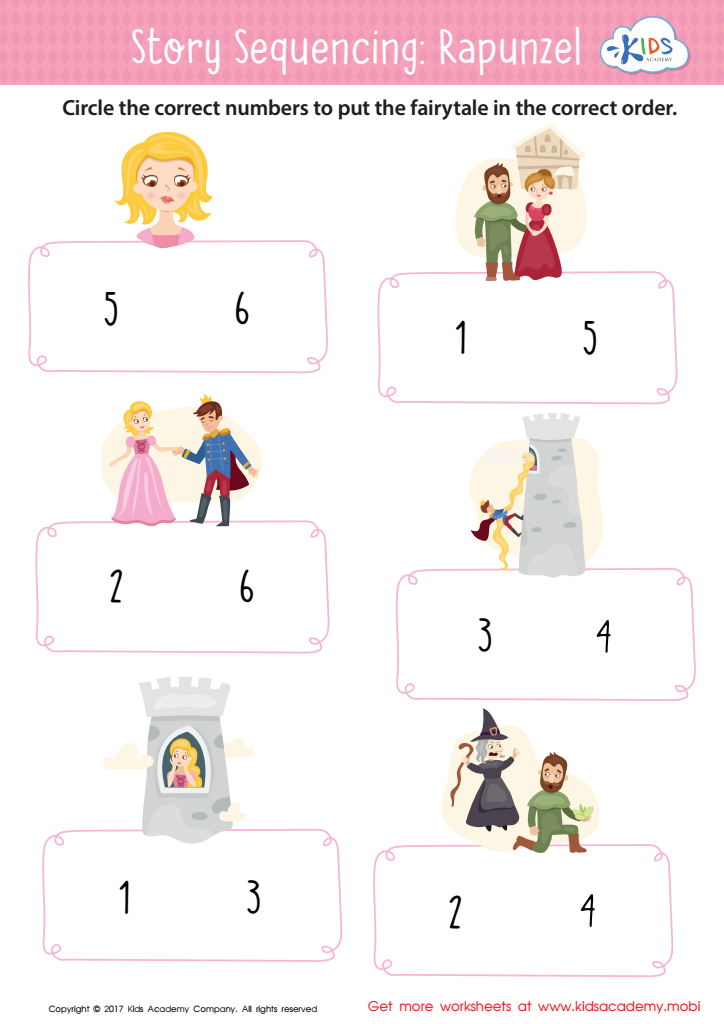
Rapunzel Story Sequencing Worksheet
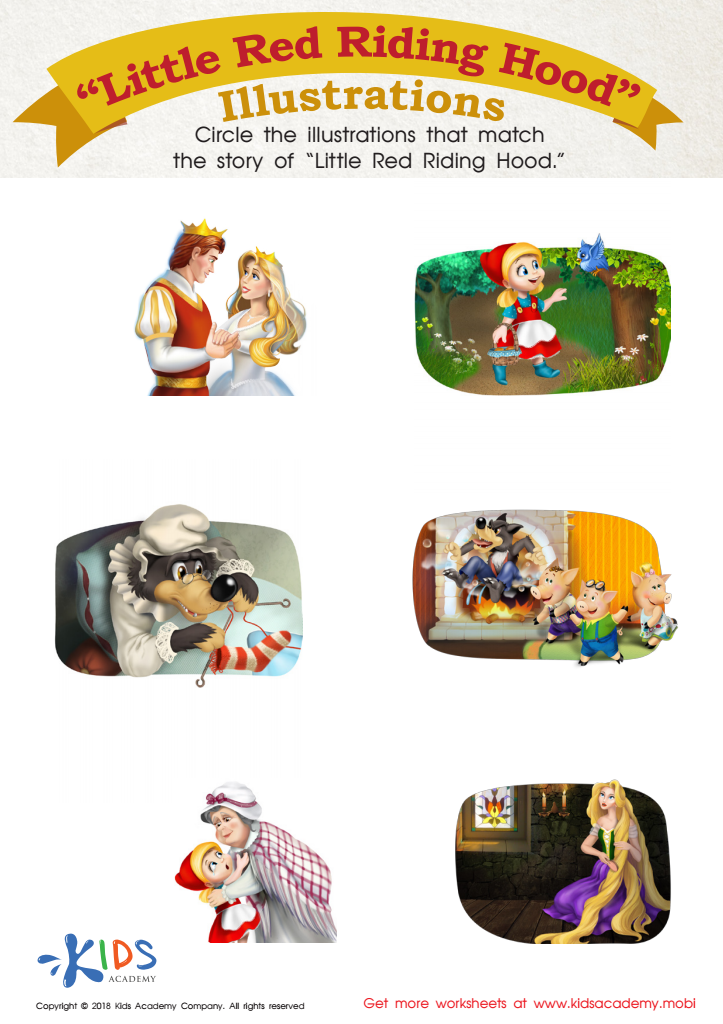
Little Red Riding Hood: Illustrations Worksheet






.jpg)

Story sequencing is a fundamental skill that plays a crucial role in the reading development of young children ages 3-8. For parents and teachers, fostering this skill is essential for several reasons.
Firstly, story sequencing helps children develop a strong understanding of narrative structure, which enhances their comprehension abilities. When children can identify beginning, middle, and end in a story, they improve their ability to summarize and retell stories, essential components of literacy.
Secondly, mastering story sequencing encourages critical thinking and cognitive development. Children learn to connect events, understand cause and effect, and predict outcomes, skills that extend beyond reading into all areas of learning.
Moreover, story sequencing activities promote language development. Discussing and arranging story parts enriches vocabulary and helps children better articulate their thoughts and ideas.
Lastly, engaging in story sequencing fosters a love for reading by making literature interactive and enjoyable. Parents and teachers can create fun activities, enhancing both reading comprehension and bonding moments with children.
Overall, supporting story sequencing in early education lays the groundwork for proficient reading skills, effective communication, and a lifelong appreciation of literature, making it a vital focus for educators and parents alike.