Understanding life cycles Easy Science Worksheets for Ages 3-8
4 filtered results
-
From - To
Discover the fascinating world of life cycles with our "Understanding Life Cycles Easy Science Worksheets" designed for children ages 3-8. These engaging worksheets offer a fun and interactive way for young learners to explore the growth and development of living creatures, such as butterflies, plants, and frogs. By incorporating vibrant illustrations and age-appropriate activities, these worksheets enhance critical thinking and promote hands-on learning. Perfect for home or classroom use, our resources help nurture curiosity about nature while developing essential skills. Dive into the wonders of life cycles and spark a lifelong passion for science in your little ones!
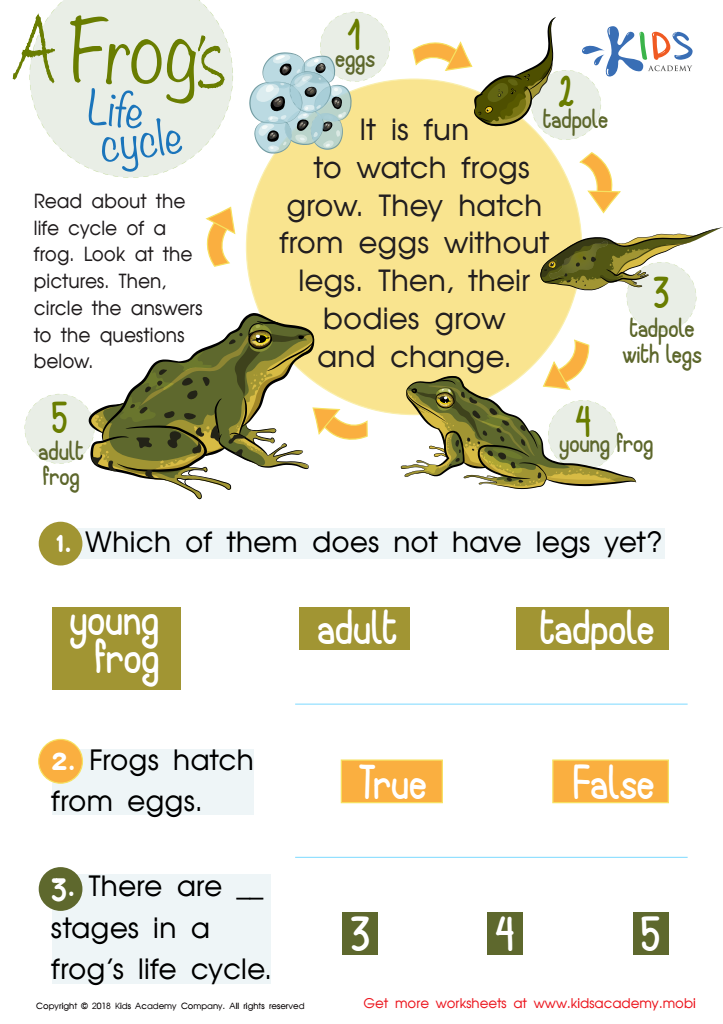
A Frog’s Life Cycle Worksheet
 Assign to My Students
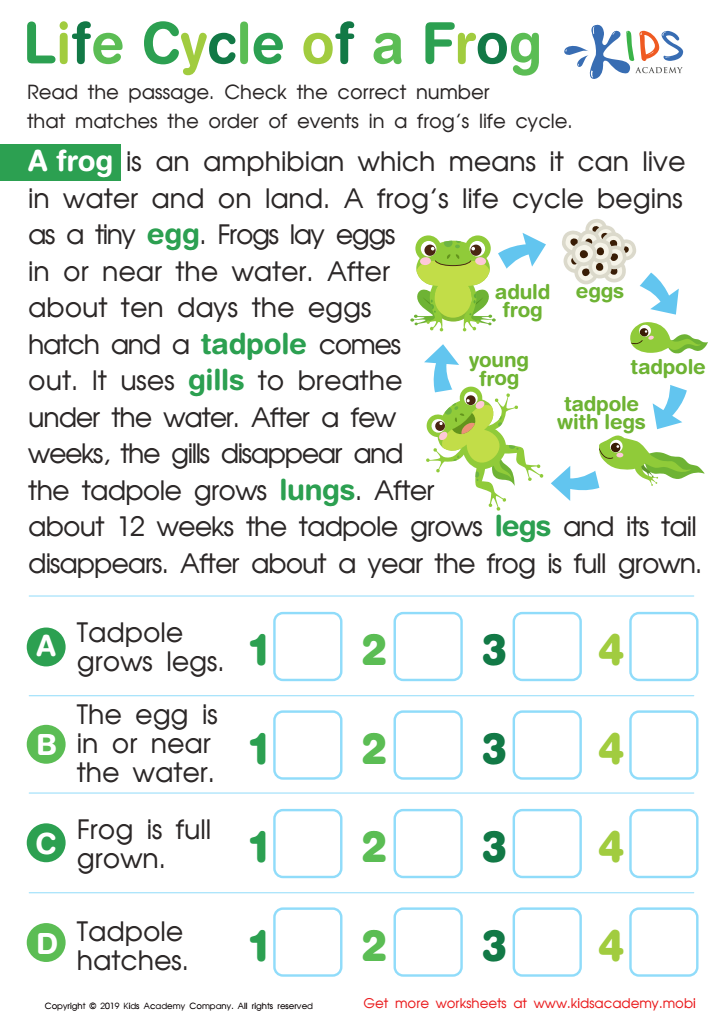
Life Cycle of a Frog Worksheet
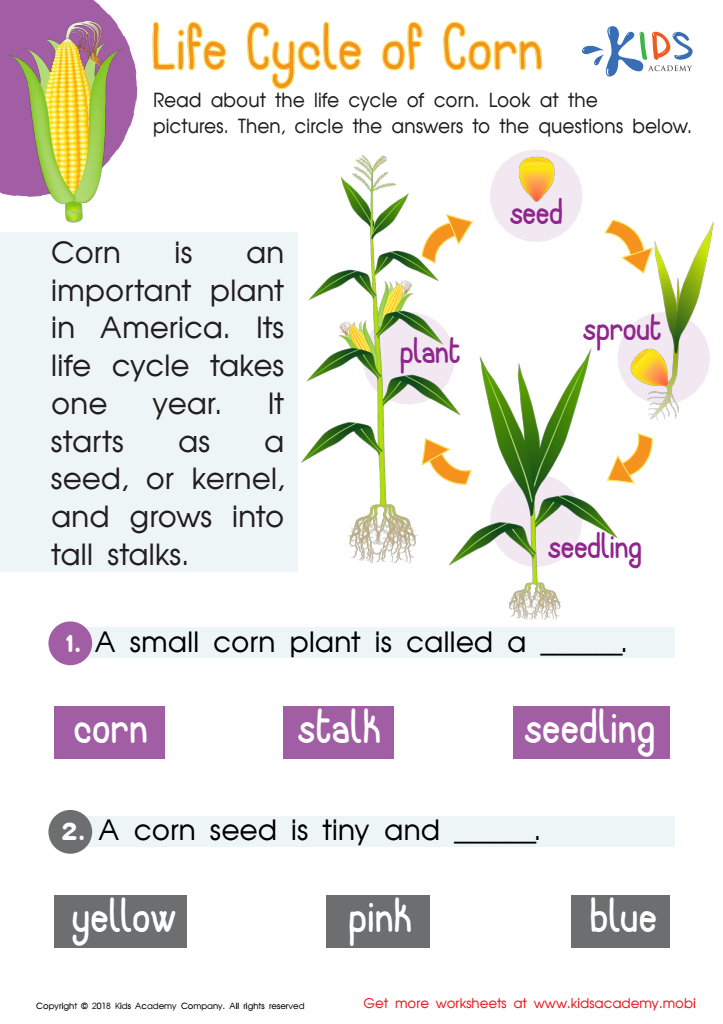
Life Cycle of Corn Worksheet
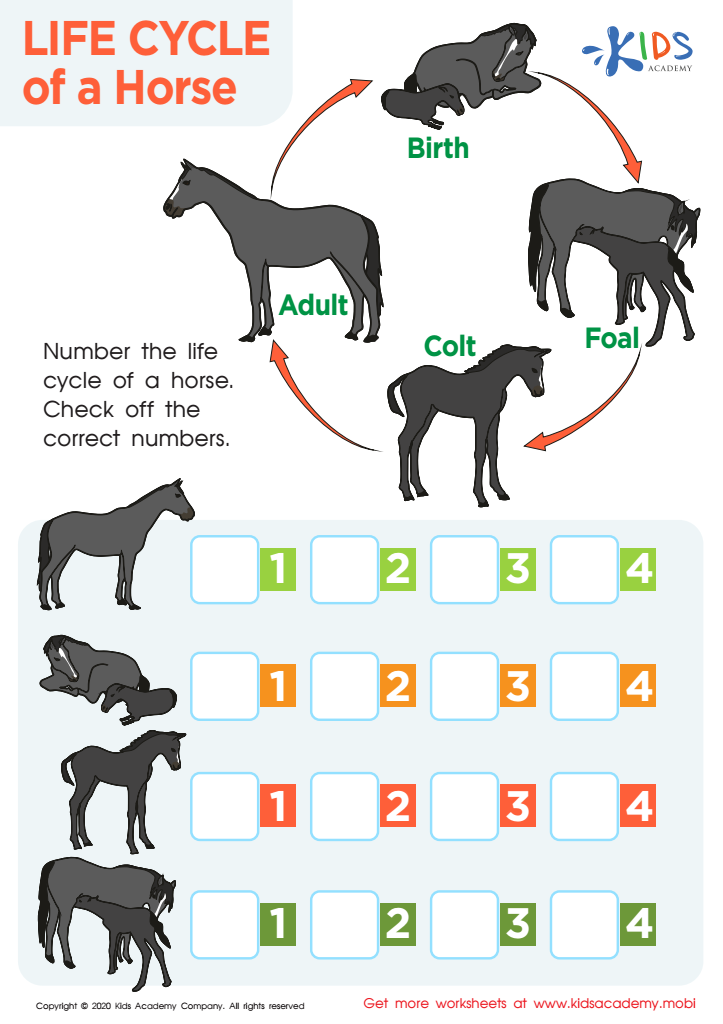
Life Cycle of a Horse Worksheet







Understanding life cycles is crucial for both parents and teachers as it lays the foundation for children's knowledge of biology and their appreciation for the natural world. For children aged 3-8, engaging with the concept of life cycles fosters curiosity, encourages observation skills, and enhances critical thinking.
By exploring life cycles, children learn about growth and change—from the metamorphosis of a butterfly to the stages of a plant’s development. These concepts help them understand that life is dynamic and interconnected, promoting a sense of wonder and respect for nature.
Moreover, lessons on life cycles can nurture environmental stewardship, as children begin to comprehend the importance of ecosystems and the roles different organisms play within them. This early awareness can inspire pro-environmental attitudes that last a lifetime.
In addition, discussing life cycles can be an excellent opportunity for integrating various subjects, such as art (drawing stages), literature (books about animals), and math (counting eggs). Thus, understanding life cycles not only provides significant academic value but also contributes to the emotional and social development of young children. Overall, parents and teachers should care about teaching life cycles, as it supports holistic learning and helps cultivate informed, empathetic future citizens.