Animal identification Easy Worksheets for Ages 3-9
5 filtered results
-
From - To
Discover our engaging "Animal Identification Easy Worksheets" designed for kids aged 3-9! These fun, printable activities help young learners recognize various animals while enhancing their observational and cognitive skills. With colorful illustrations and simple instructions, children will immerse themselves in a delightful world of wildlife. Our worksheets promote learning through play, making it easy for parents and educators to facilitate enjoyable educational experiences. Suitable for at-home learning, preschool, or early elementary school settings, these worksheets encourage kids to explore their curiosity about the animal kingdom. Download now and help your child embark on a fun-filled educational adventure today!
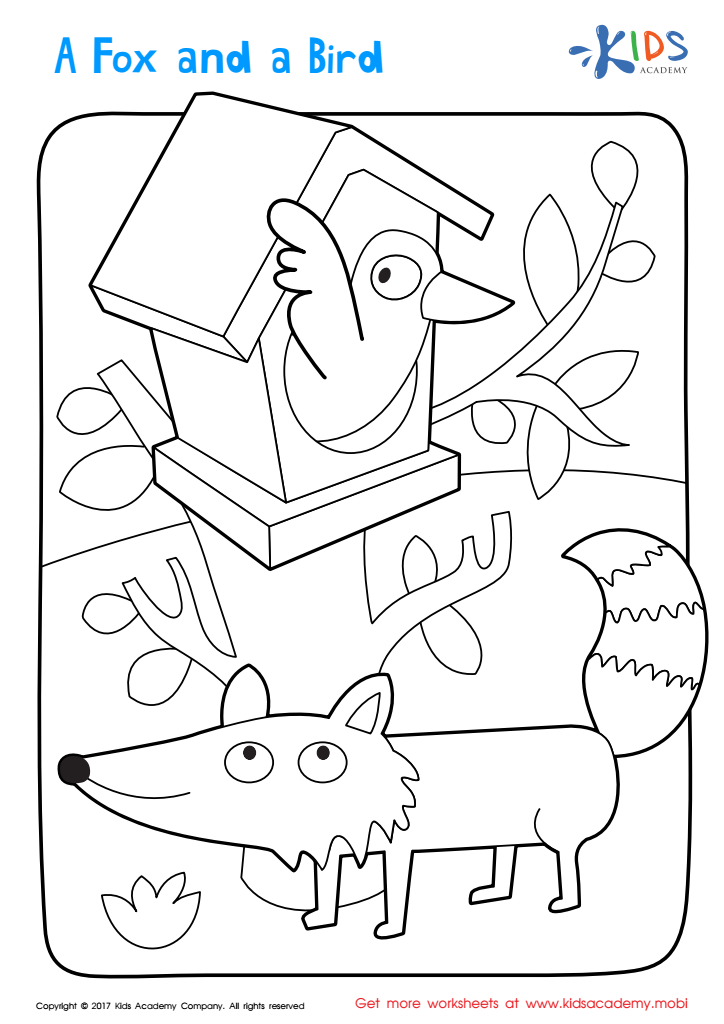
A Fox and Bird Coloring Page
 Assign to My Students
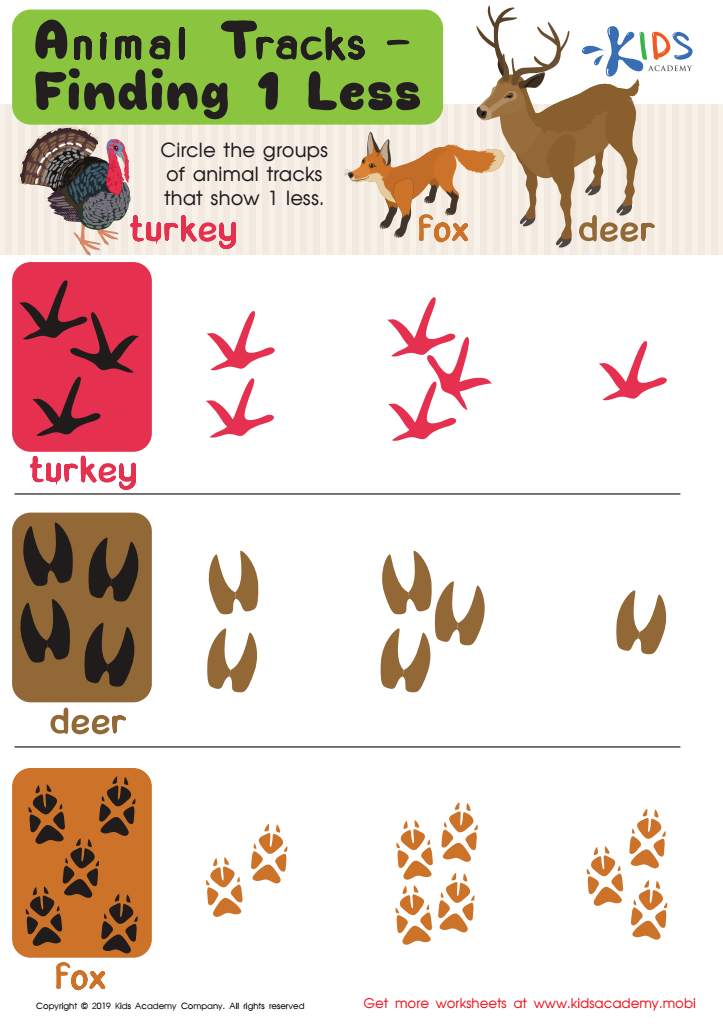
Animal Tracks: Find 1 Less Worksheet
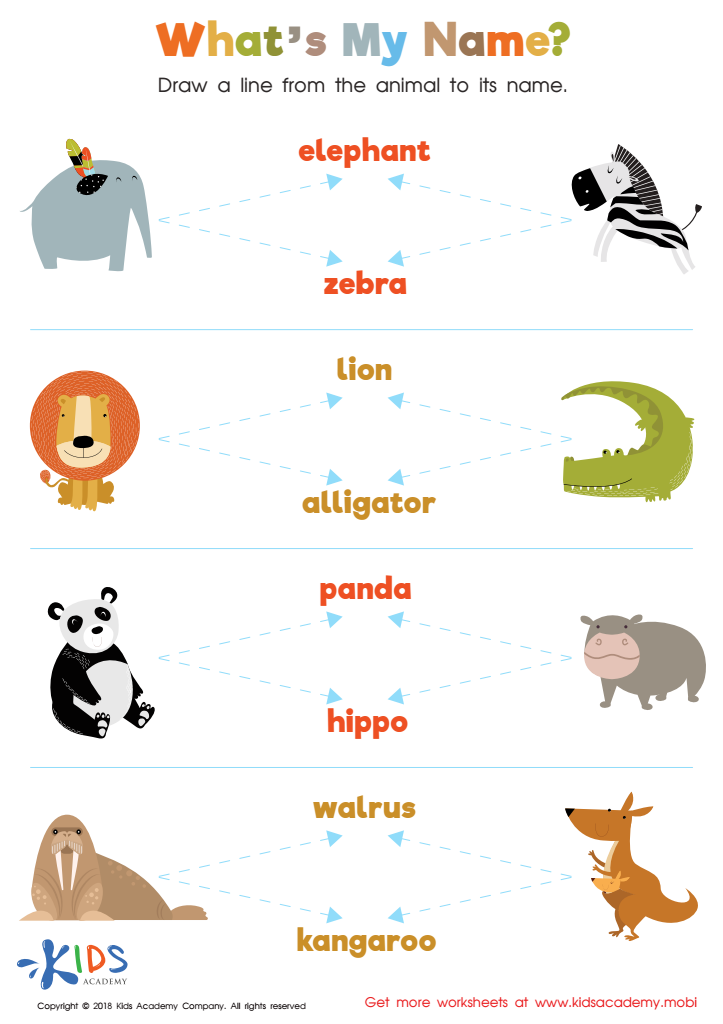
Animals and Their Names Worksheet
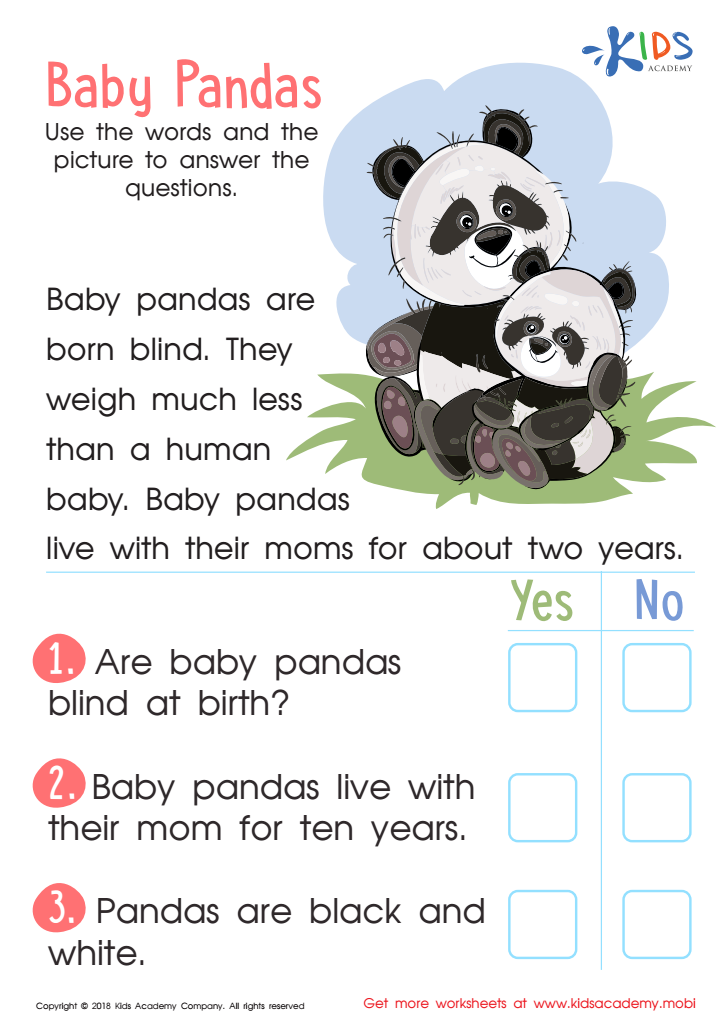
Baby Pandas Worksheet
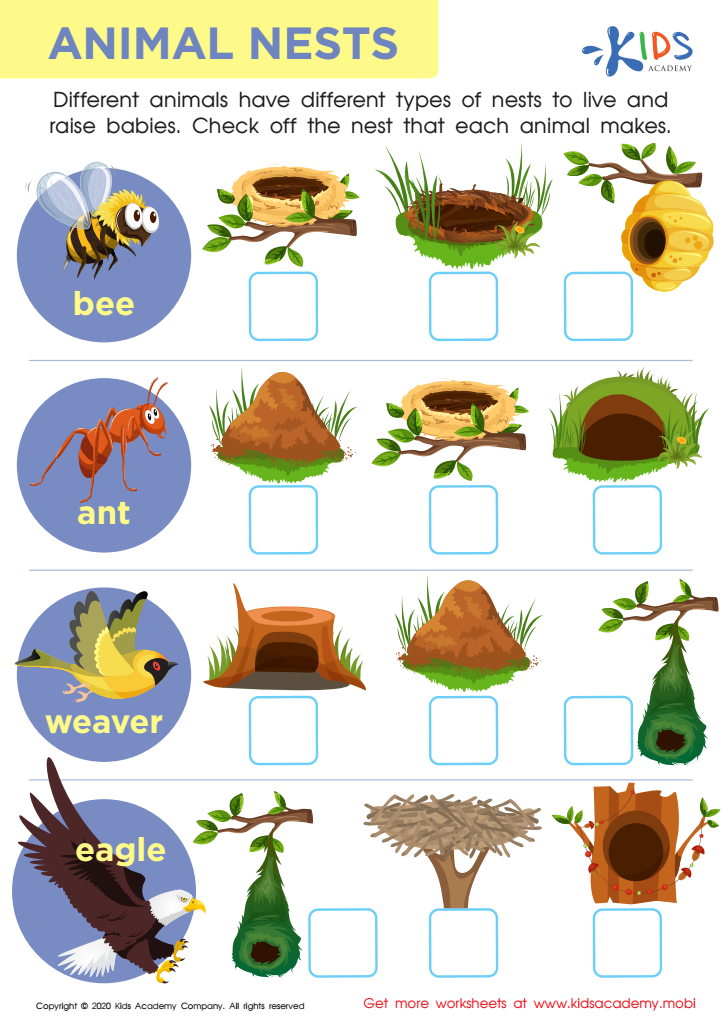
Animal Nests Worksheet








Animal identification is important for young children because it helps them learn about the world around them. When children can identify different animals, they become more curious and eager to explore nature. This knowledge improves their vocabulary and communication skills as they learn to describe the animals they see.
Understanding animals also teaches kids about diversity. Just like people, animals come in various shapes, sizes, and colors, and recognizing these differences fosters appreciation and respect for all living beings. It can help children develop empathy as they learn about how animals live, what they eat, and their habitats.
Moreover, learning about animals plays a crucial role in science education. Kids can enjoy hands-on experiences and become mini-scientists by observing animals, discovering their behaviors, and understanding ecosystems. This foundational knowledge not only enhances critical thinking but also lays the groundwork for future scientific learning.
Finally, identifying animals can introduce essential concepts like conservation. When children recognize various species, they also learn why it’s important to protect them. Encouraging this skill at an early age helps to create responsible, caring individuals who will advocate for the welfare of animals and the environment in the future.








