Understanding number patterns Easy Worksheets for Ages 3-9
3 filtered results
-
From - To
Welcome to our "Understanding Number Patterns" worksheets, designed specifically for children aged 3-9. These engaging and easy-to-use resources help young learners grasp the concept of number patterns through fun activities. Our worksheets encourage critical thinking and boost mathematical skills while promoting early number recognition. Perfect for home or classroom use, each worksheet is thoughtfully created to keep kids entertained while they learn. Your child will explore simple patterns through colorful visuals and playful exercises, making learning enjoyable and interactive. Instill a love for math early on with our diverse range of worksheets, perfect for developing lifelong learning skills!
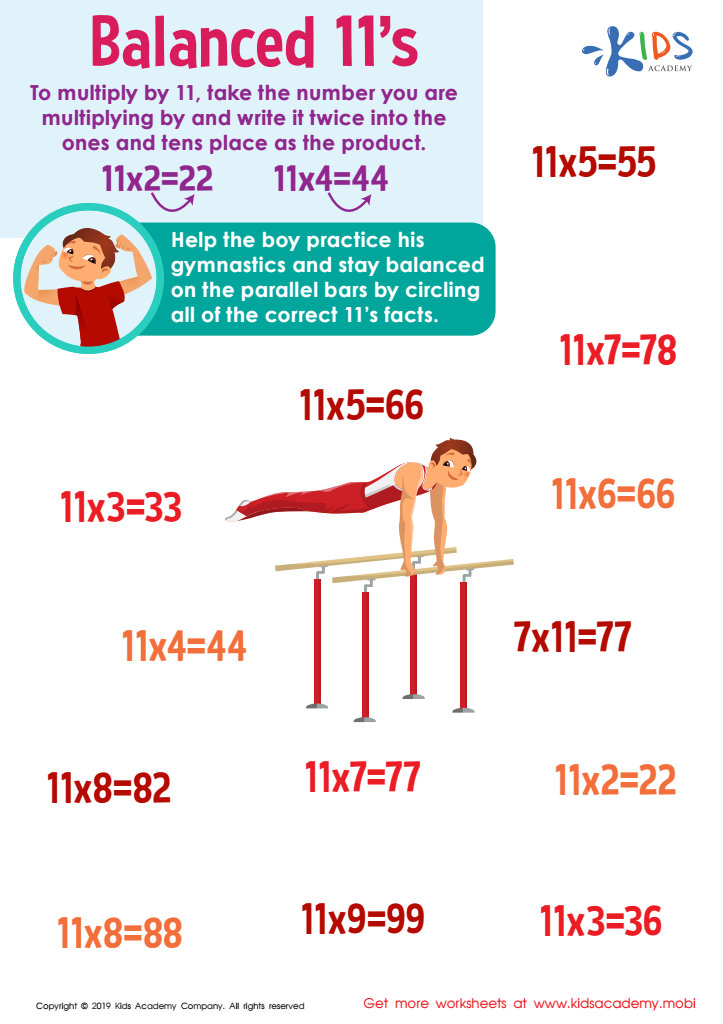
Balanced 11s Worksheet
 Assign to My Students
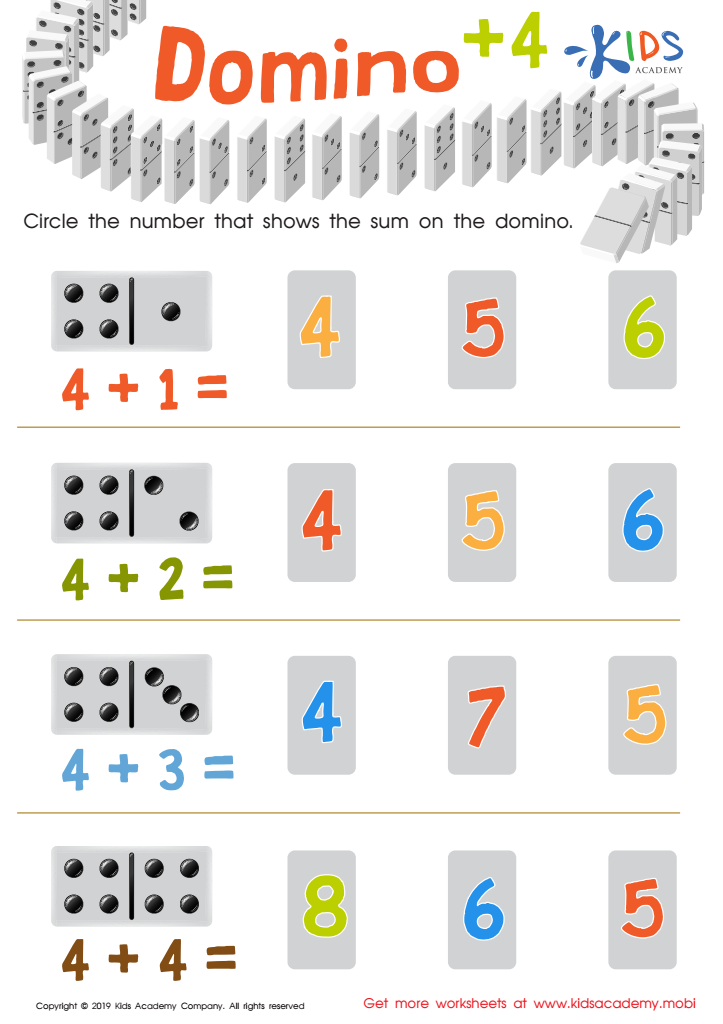
Domino +4 Worksheet
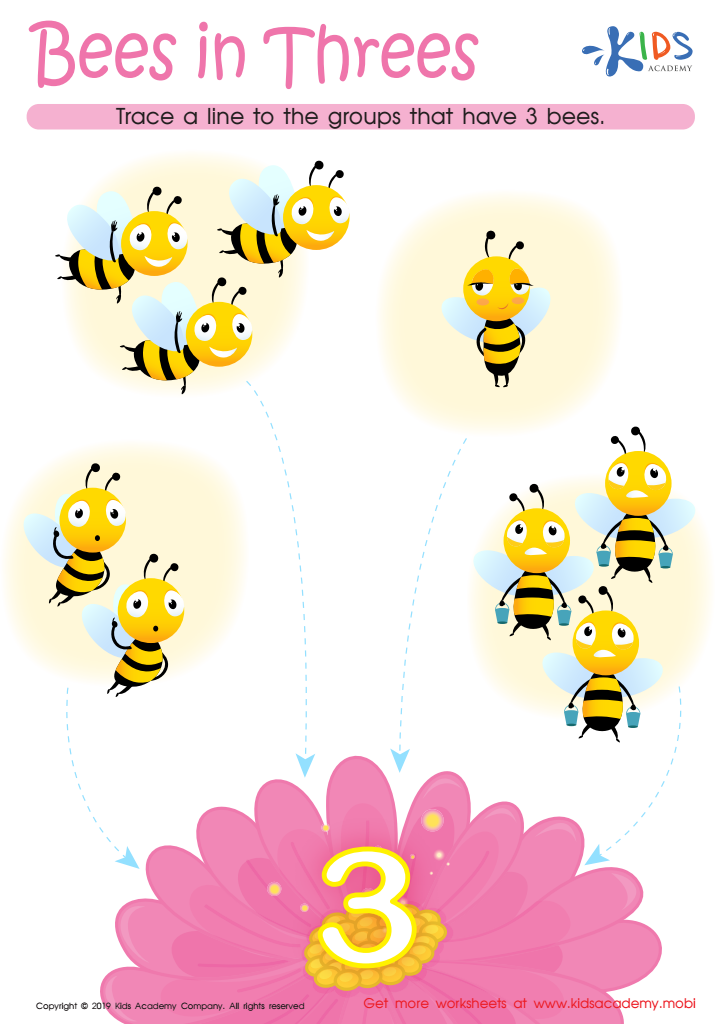
Bees in Threes Worksheet







Understanding number patterns is fundamental for young learners, as it lays the groundwork for essential mathematical concepts. For children aged 3-9, recognizing and analyzing patterns enhances critical thinking and problem-solving skills. These skills are not only vital for math, but also help develop logical reasoning, which is applicable across various subjects.
Parents and teachers should care about this because early exposure to patterns allows children to make connections and understand the world around them. For example, children learn to predict what comes next in a sequence, which fosters a sense of consistency and organization in their thinking. Engaging with number patterns also promotes numeracy skills, making future math learning more intuitive and less intimidating.
Moreover, patterns are often found in daily life, from nature to art and music. Encouraging children to explore and identify patterns promotes curiosity and creativity. Activities involving patterns—such as counting, sorting, or creating patterns with everyday objects—can be fun and interactive, making learning enjoyable.
Overall, nurturing an understanding of number patterns sets a strong foundation for academic success and fosters confidence in young learners as they navigate the world of mathematics and beyond.








