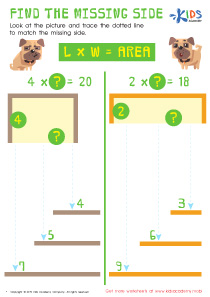
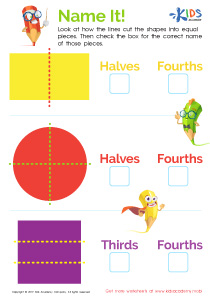
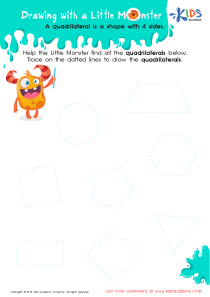
Shape Recognition Easy 2D Shapes Worksheets for Ages 3-9
9 filtered results
-
From - To
Introduce your child to the world of geometry with our "Shape Recognition Easy 2D Shapes Worksheets" designed for ages 3-9. These printable worksheets help children recognize and name basic shapes like circles, squares, triangles, and rectangles. Each activity is crafted to be both educational and fun, boosting their confidence in math and sharpens their cognitive and motor skills. Perfect for classroom settings or at-home learning, our worksheets make mastering shapes an enjoyable experience, laying a solid foundation for future math success. Download our easy-to-use materials today and watch your child's understanding of 2D shapes soar!
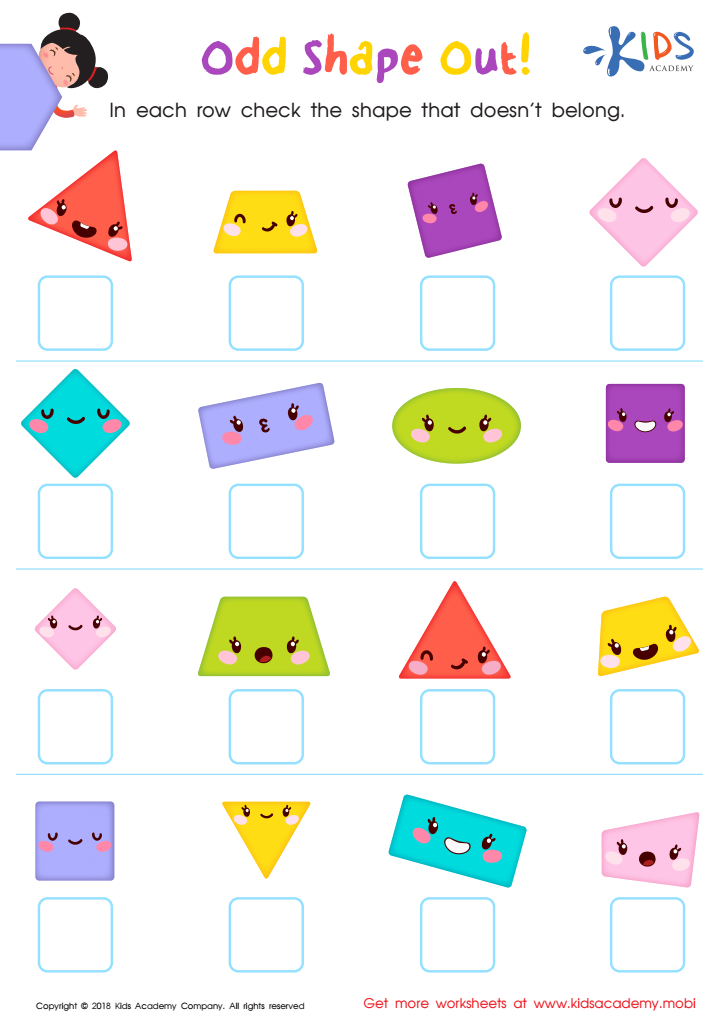
Odd Shape Out Worksheet for Grade 3
 Assign to My Students


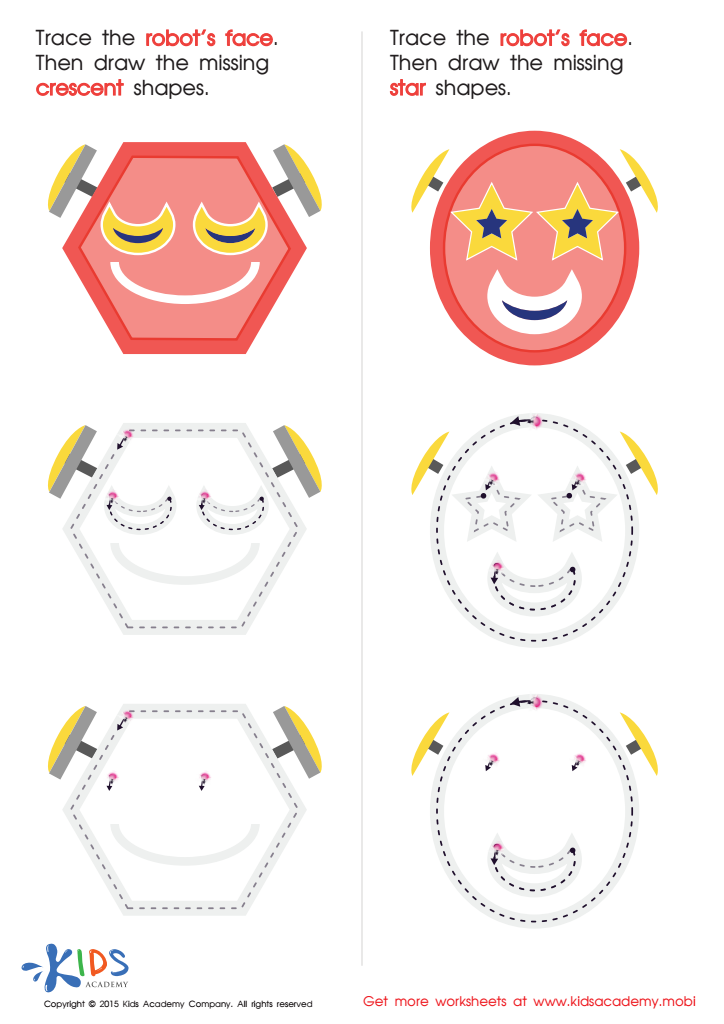
Composing a Robot's Face of Crescents And Stars Worksheet
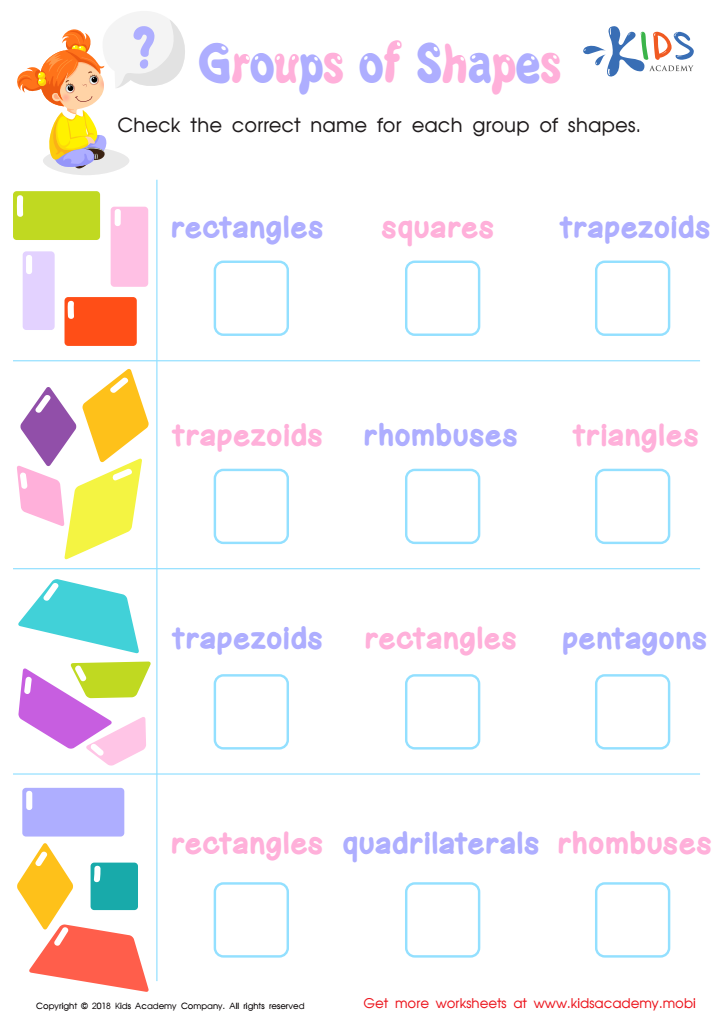
Groups of Shapes Worksheet
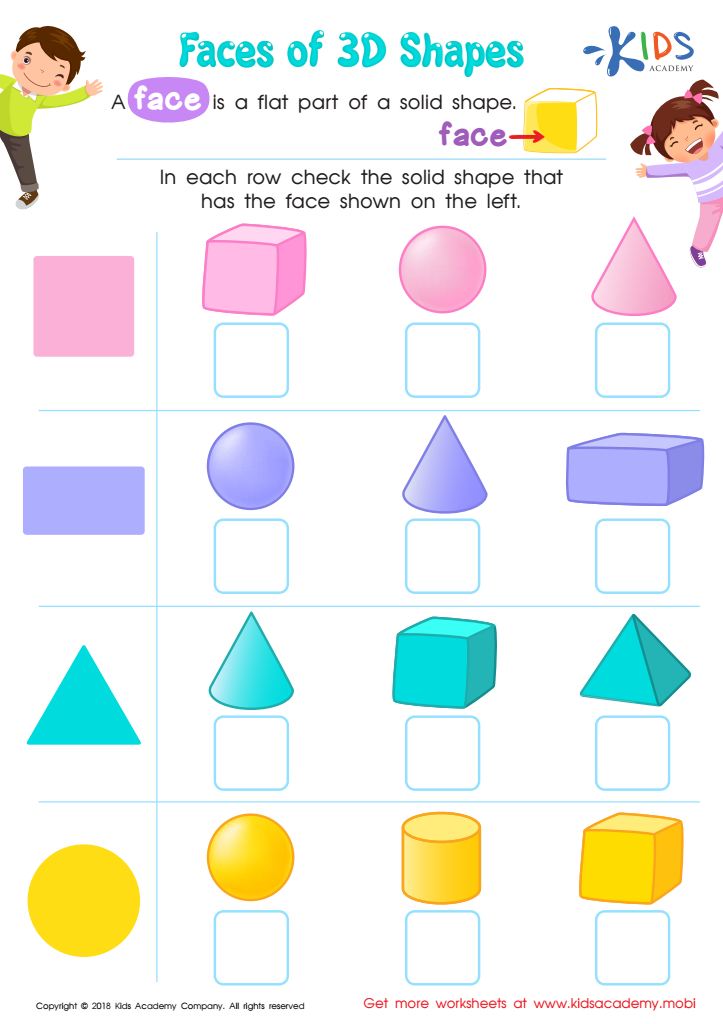
Faces of 3D Shapes Worksheet
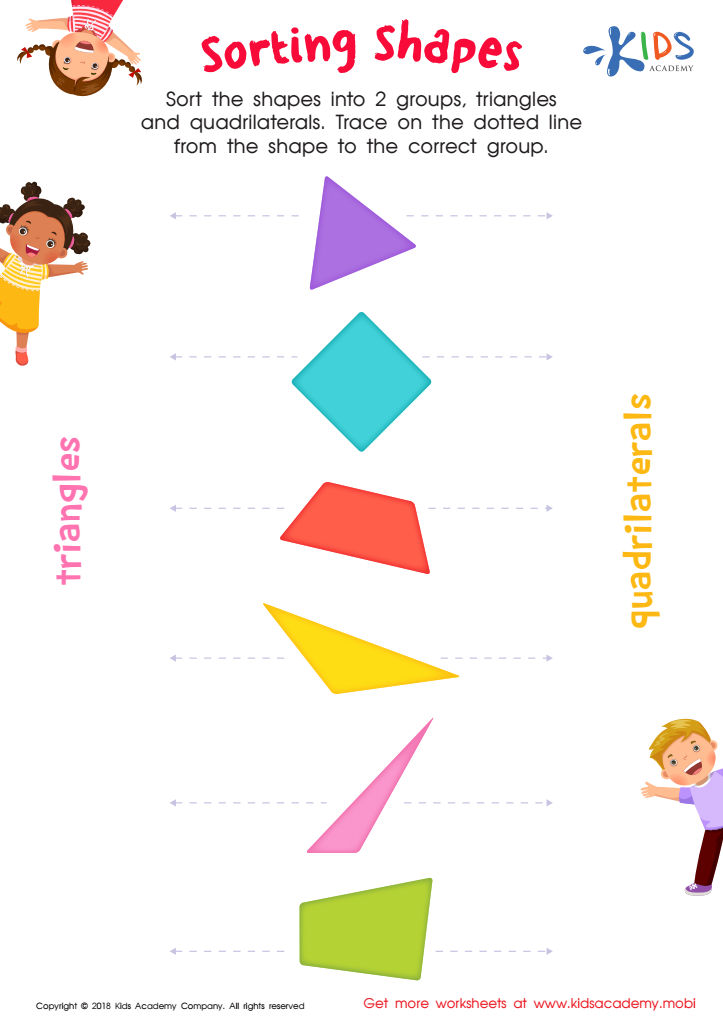
Sorting Shapes Worksheet
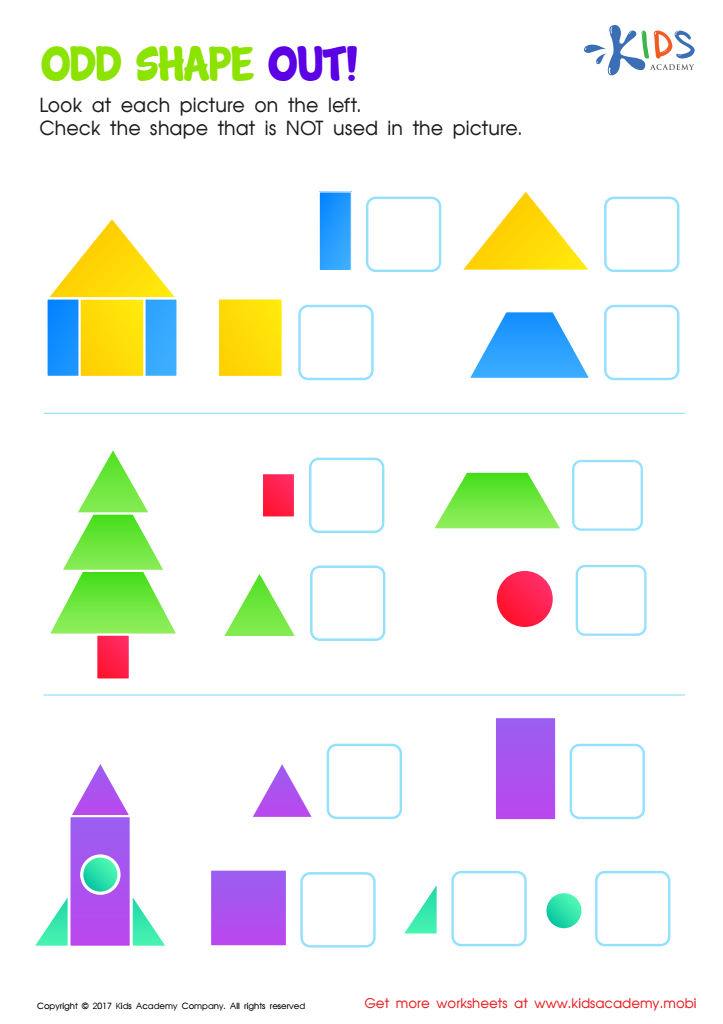
Odd Shape Out Worksheet for Grade 1
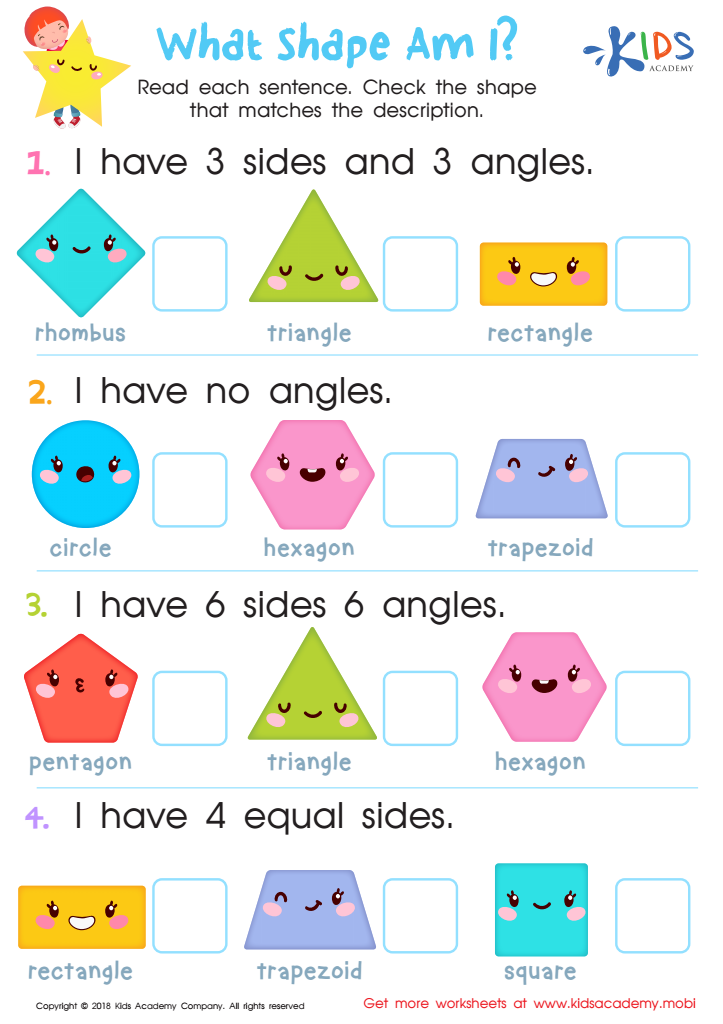
What Shape Am I? Worksheet
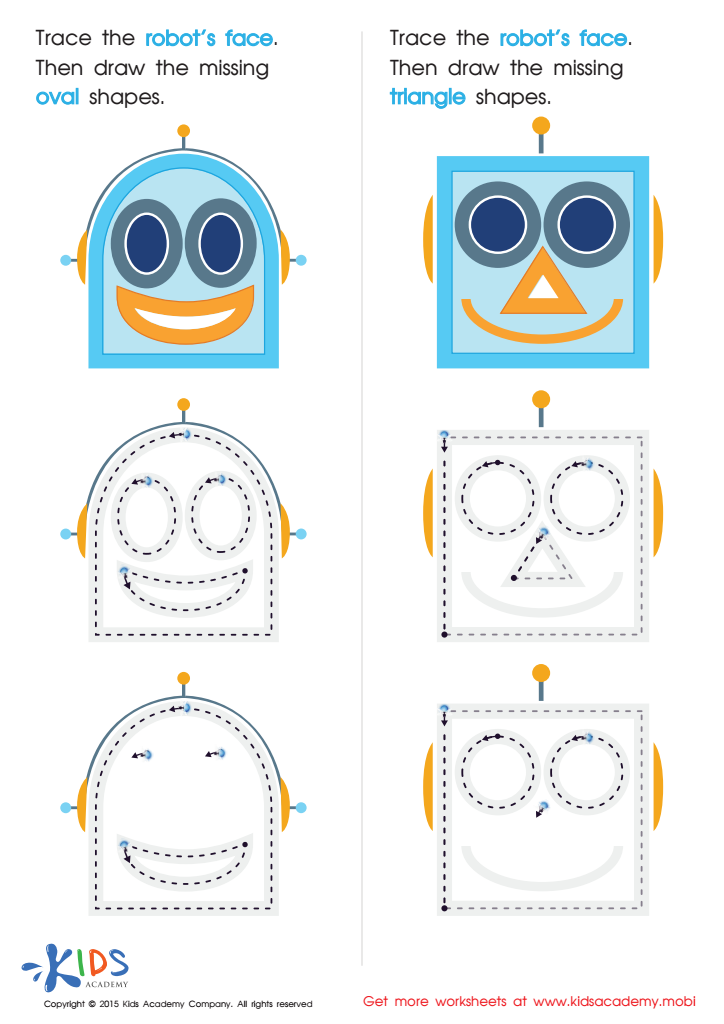
Drawing Ovals And Triangles with Fun Printable
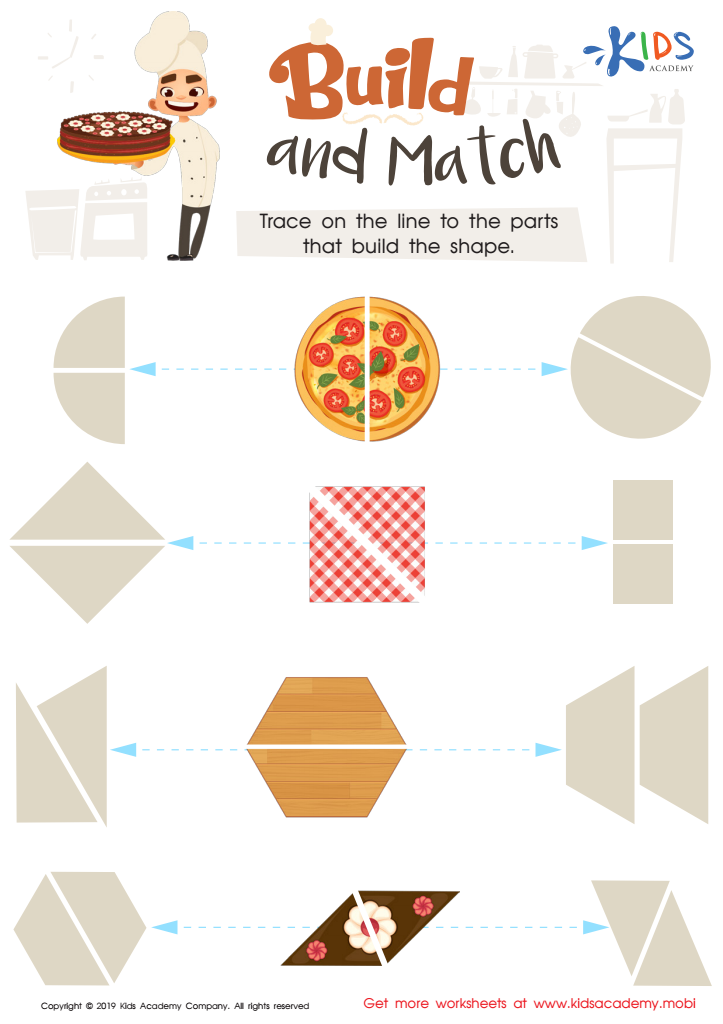
Build and Match Worksheet








Shape recognition is a foundational skill for children ages 3-9, forming an essential part of early math education and laying the groundwork for more complex concepts. Parents and teachers should prioritize this learning aspect for several compelling reasons.
First, recognizing and understanding basic 2D shapes like circles, squares, triangles, and rectangles helps children develop spatial awareness. This skill is crucial for navigating their environment and can positively impact their daily lives. For instance, understanding that a certain shape might not fit into a particular space due to its size or form helps kids make better decisions when interacting with objects.
Second, shape recognition aids in the development of visual discrimination skills—identifying similarities and differences—a critical component in both reading and math. Recognizing the shape of letters and numbers is vital for literacy and numerical comprehension.
Additionally, learning shapes introduces children to geometry's fundamental concepts, serving as a jumping-off point for future math skills. This form of early math knowledge is fundamental as it builds problem-solving and reasoning abilities, which are used in science, technology, engineering, and mathematics (STEM) fields.
Lastly, engaging with shapes through activities like drawing, puzzles, and sorting enhances fine motor skills and hand-eye coordination, essential for writing and other daily activities. Therefore, investing time in teaching shape recognition can lead to multifaceted developmental benefits for young learners.