Fine Motor Skills Easy Geometry Worksheets for Ages 3-9
9 filtered results
-
From - To
Discover a fun and engaging way to develop your child's fine motor skills with our "Easy Geometry Worksheets for Ages 3-9." These carefully designed sheets combine the foundational concepts of geometry with activities that promote hand-eye coordination, dexterity, and precise movements. Perfect for kids aged 3-9, each worksheet blends geometry lessons with exciting tasks such as tracing shapes, cutting, and coloring. Ideal for early learners, these worksheets not only enhance fine motor skills but also lay the groundwork for future mathematical understanding. Foster your child's growth and make learning enjoyable with these versatile and interactive printables!
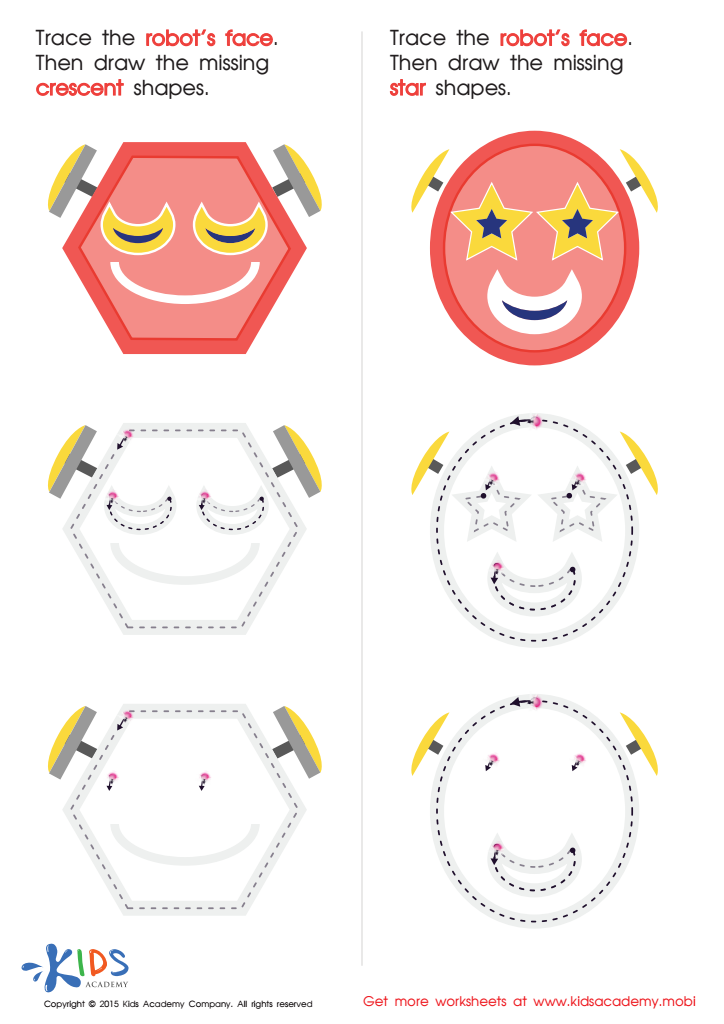
Composing a Robot's Face of Crescents And Stars Worksheet
 Assign to My Students











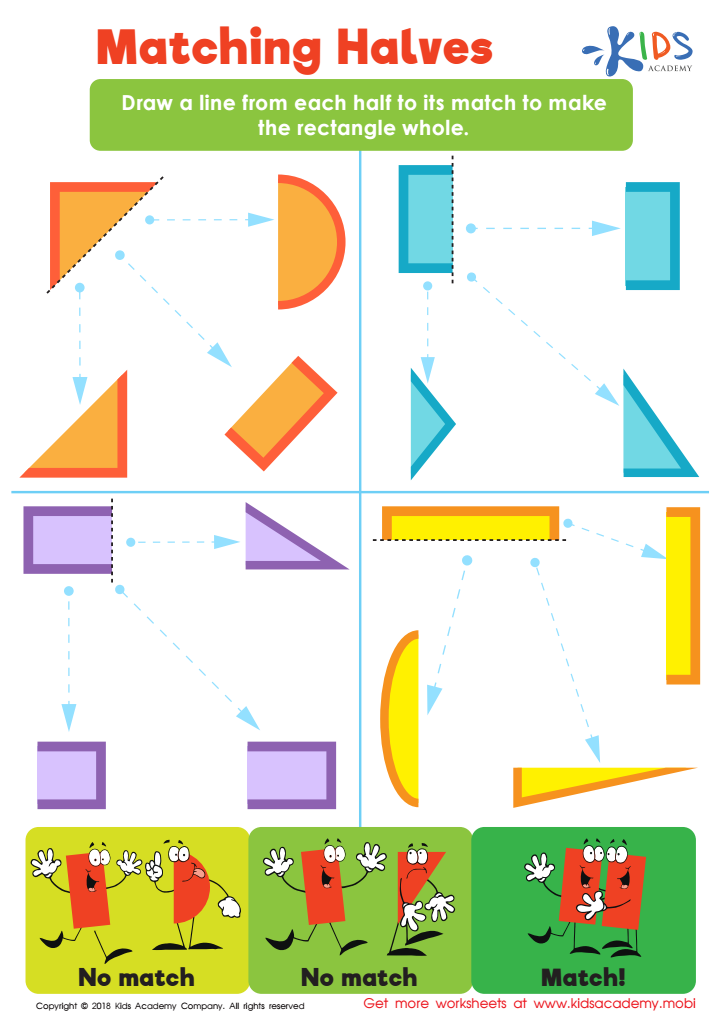
Matching Halves Worksheet
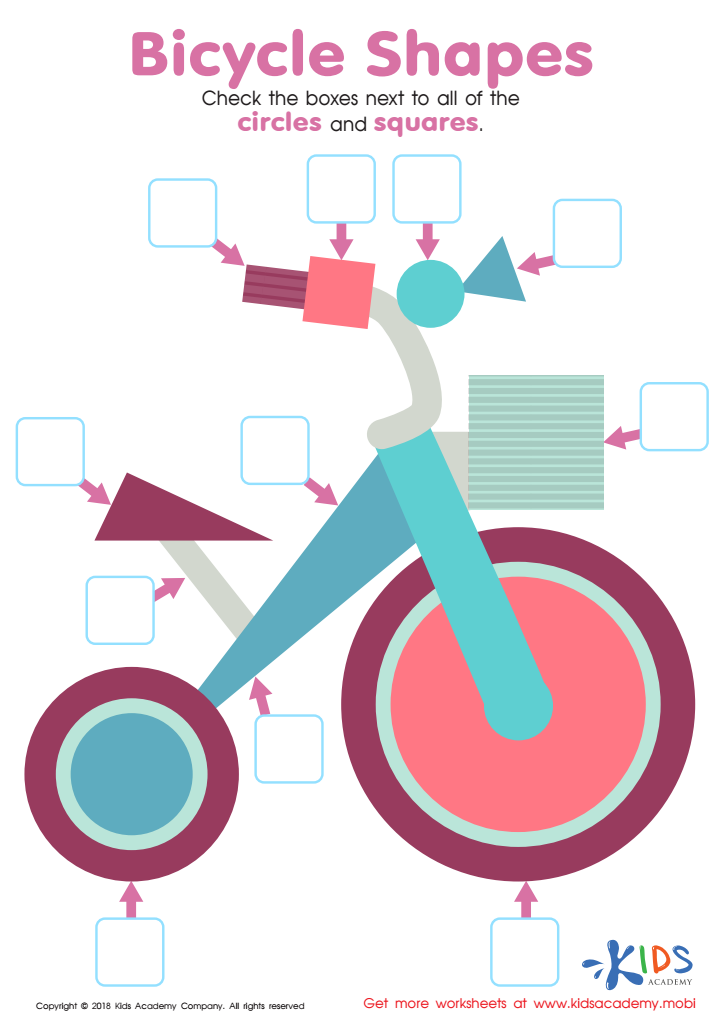
Bicycle Shapes Worksheet
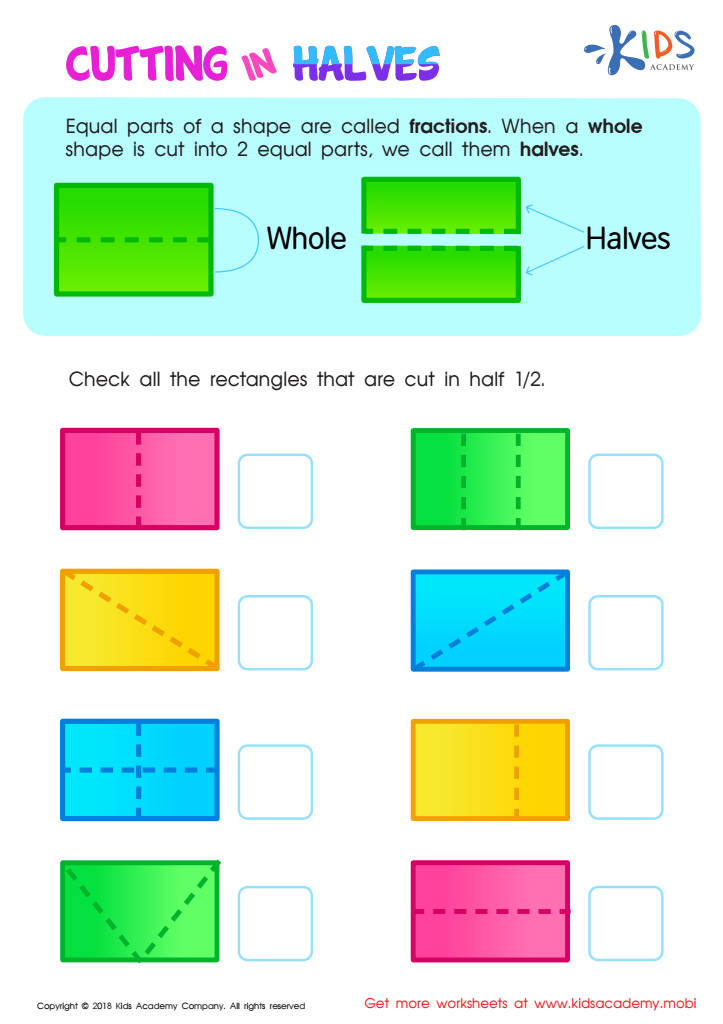
Cutting in Halves Worksheet
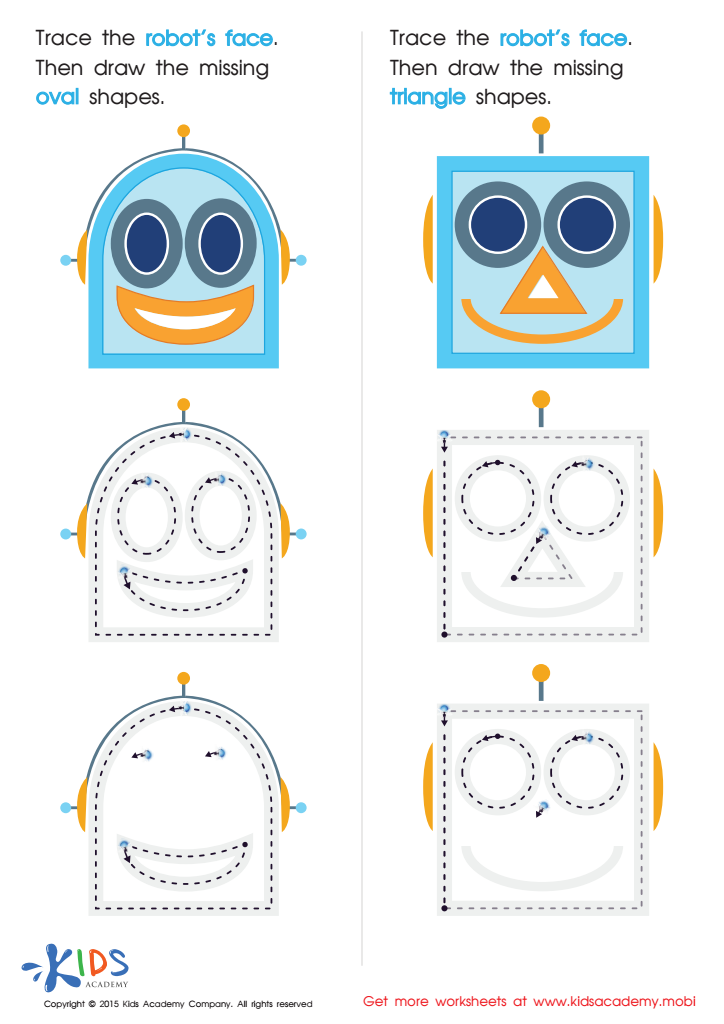
Drawing Ovals And Triangles with Fun Printable
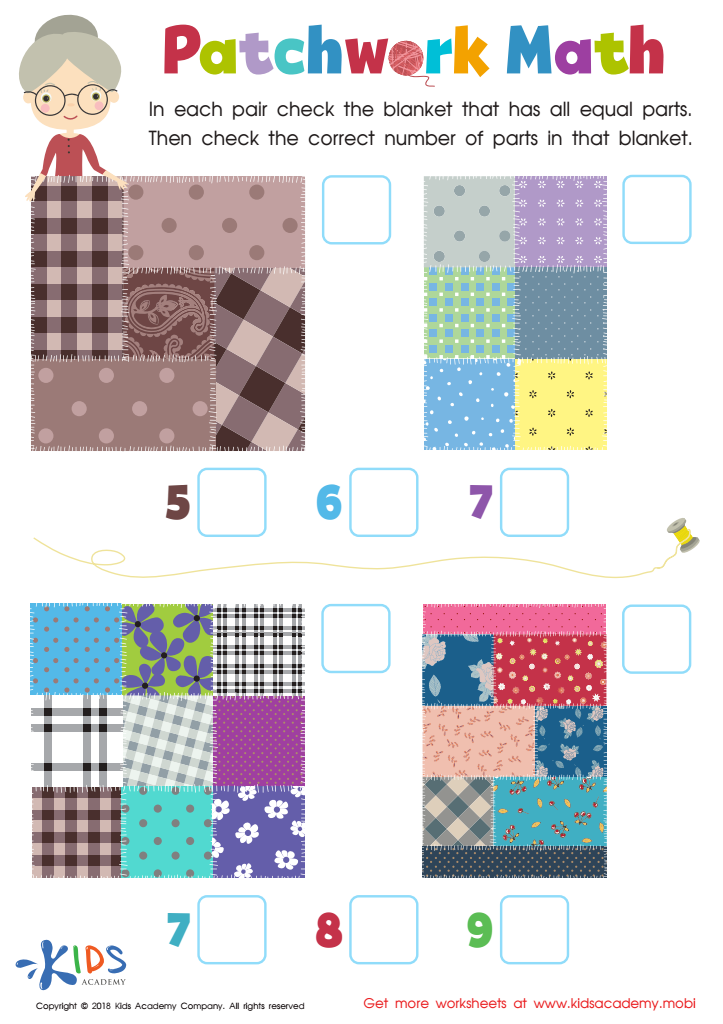
Patchwork Math Worksheet
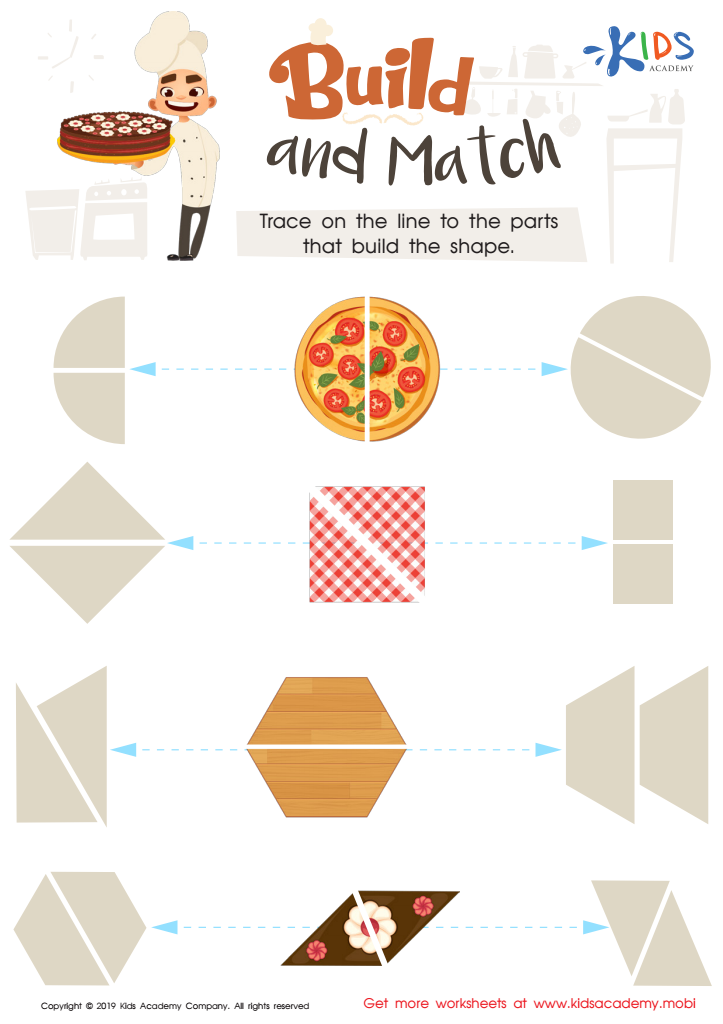
Build and Match Worksheet
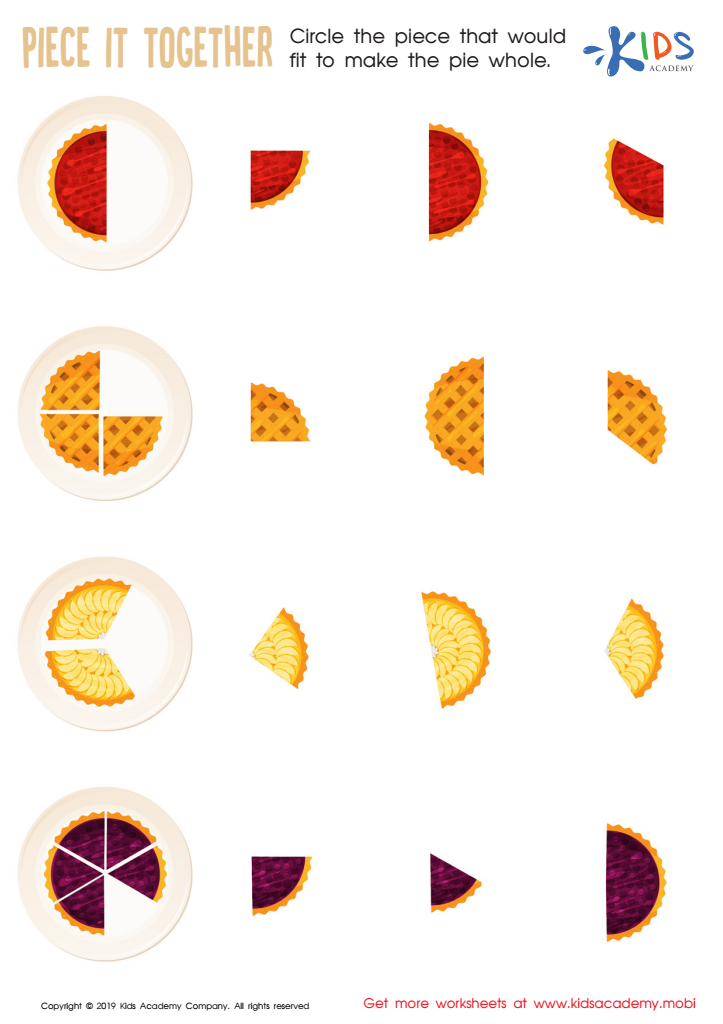
Piece it together Worksheet
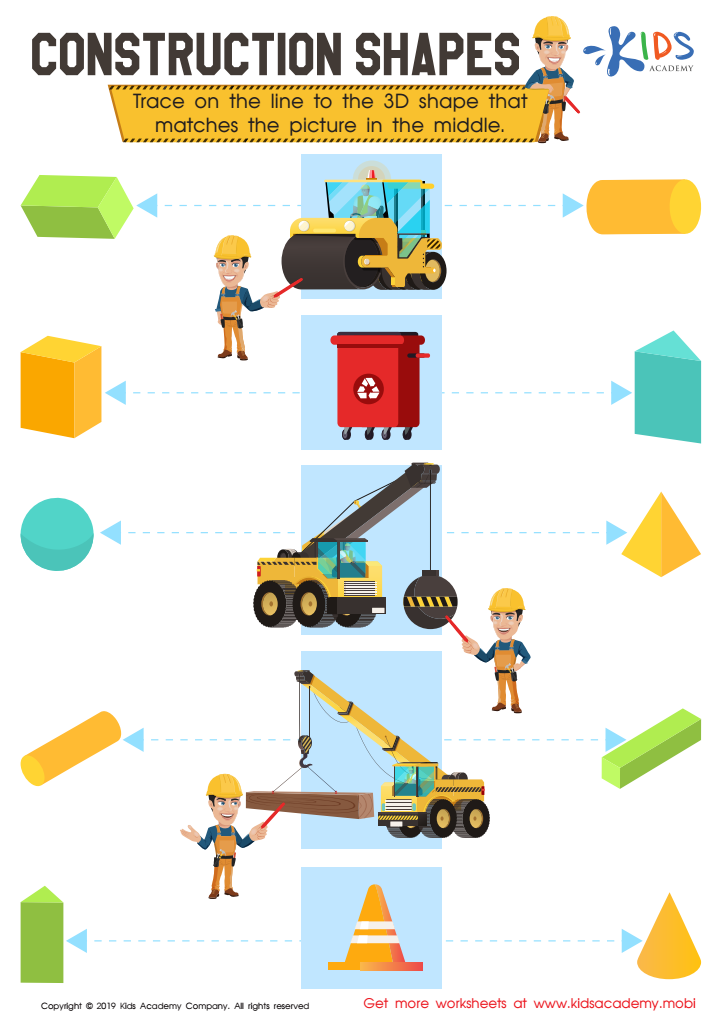
Construction Shapes Worksheet








Fine motor skills and easy geometry are critical components in the early development of children ages 3-9, and both parents and teachers should actively nurture these skills. Fine motor skills involve the use of small muscles in the hands and fingers, necessary for precise movements like grabbing a pencil, cutting shapes, or tying shoelaces. By engaging in activities that develop these skills, children enhance their ability to perform daily tasks and lay a foundation for academic success.
Easy geometry plays a complementary role by introducing basic shapes and spatial awareness, which are essential for cognitive development. Through age-appropriate geometry activities, children learn to recognize patterns, understand relationships between objects, and develop problem-solving skills. This early exposure supports their mathematical understanding and prepares them for more complex concepts later in their education.
Moreover, incorporating fine motor skills with easy geometry activities, such as tracing shapes or building models, integrates learning with fun, keeping young children engaged and motivated. This approach fosters a positive attitude toward learning and encourages curiosity. Ultimately, caring about these foundational skills and incorporating them into educational activities signifies a commitment to holistic development, ensuring children are equipped with the necessary tools for lifelong learning and successful academic and personal lives.








