Problem-Solving Skills Easy Geometry Worksheets for Ages 3-9
6 filtered results
-
From - To
Unlock the potential of your young learners with our "Problem-Solving Skills Easy Geometry Worksheets." Designed for children ages 3-9, these engaging resources foster critical thinking and enhance foundational geometry skills. Each worksheet encourages creativity and logical reasoning through fun, age-appropriate activities. From recognizing shapes to solving simple geometric puzzles, your child will build confidence and proficiency. With colorful visuals and interactive exercises, learning becomes a joyful experience. Plus, our worksheets can easily be printed for home or classroom use. Explore the world of geometry and help your child develop essential problem-solving skills in a playful way today!
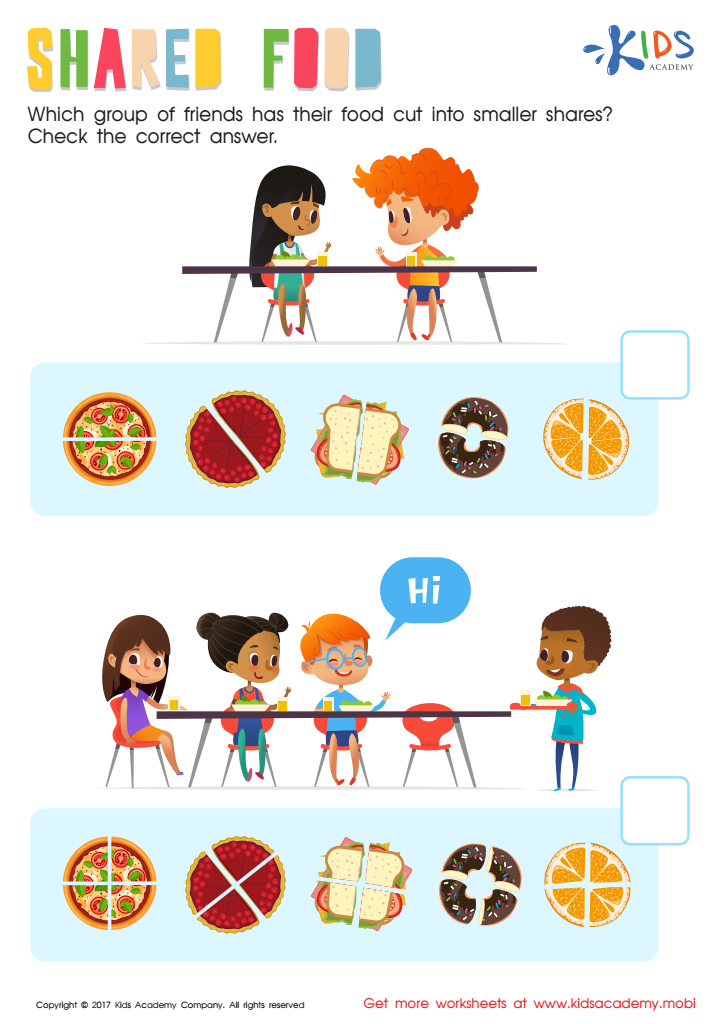
Shared Food Worksheet
 Assign to My Students











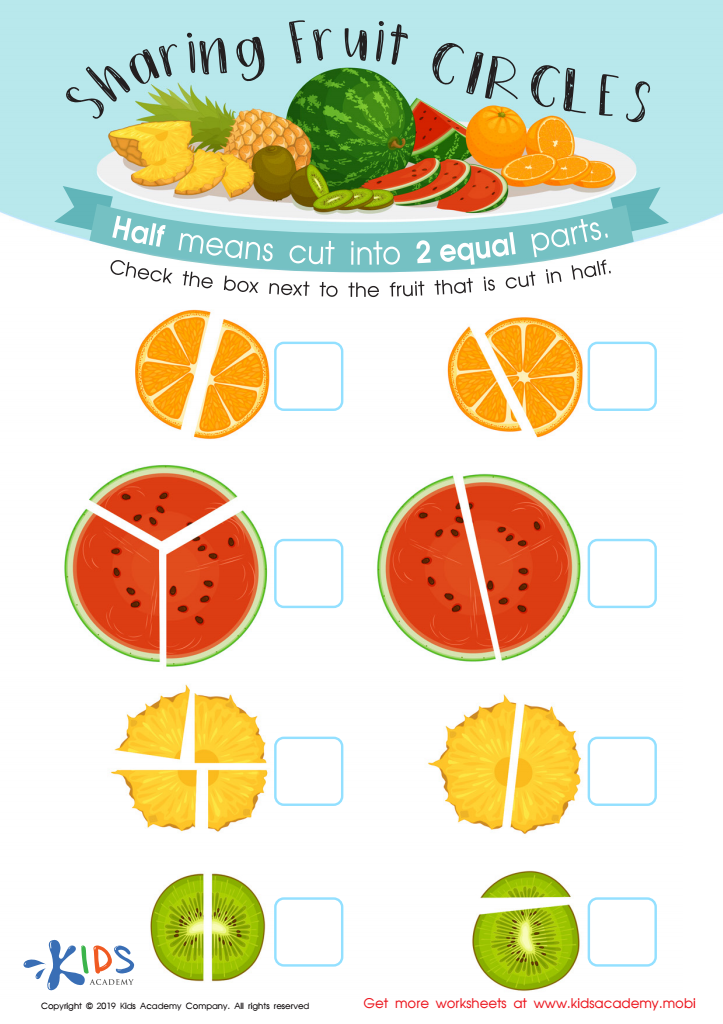
Sharing Fruit Circles Worksheet
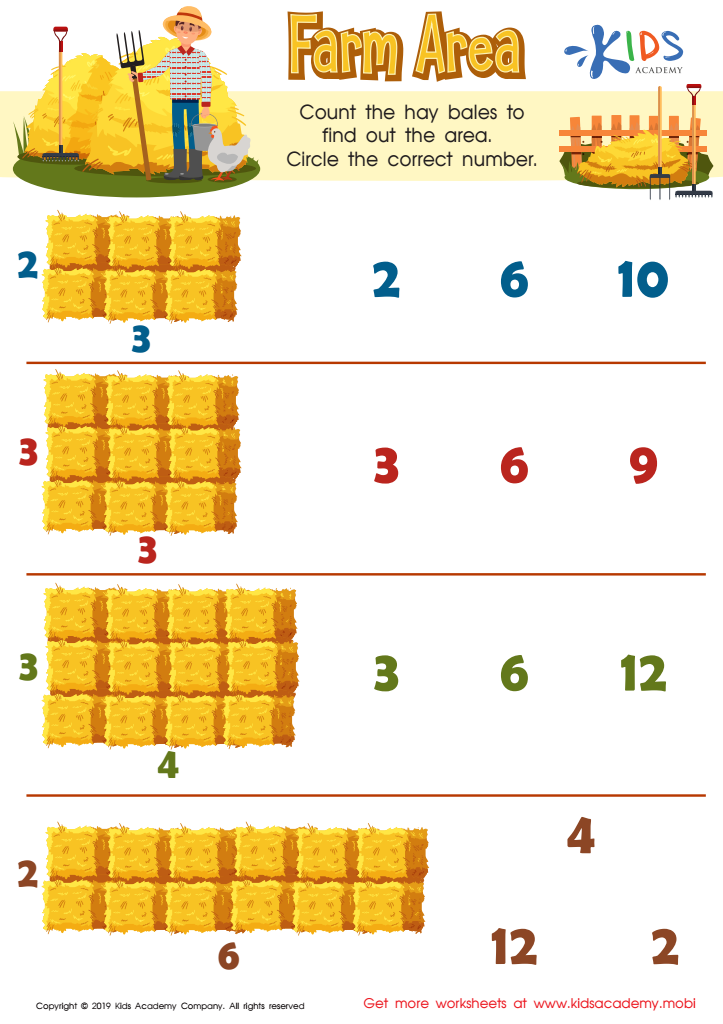
Farm Area Worksheet
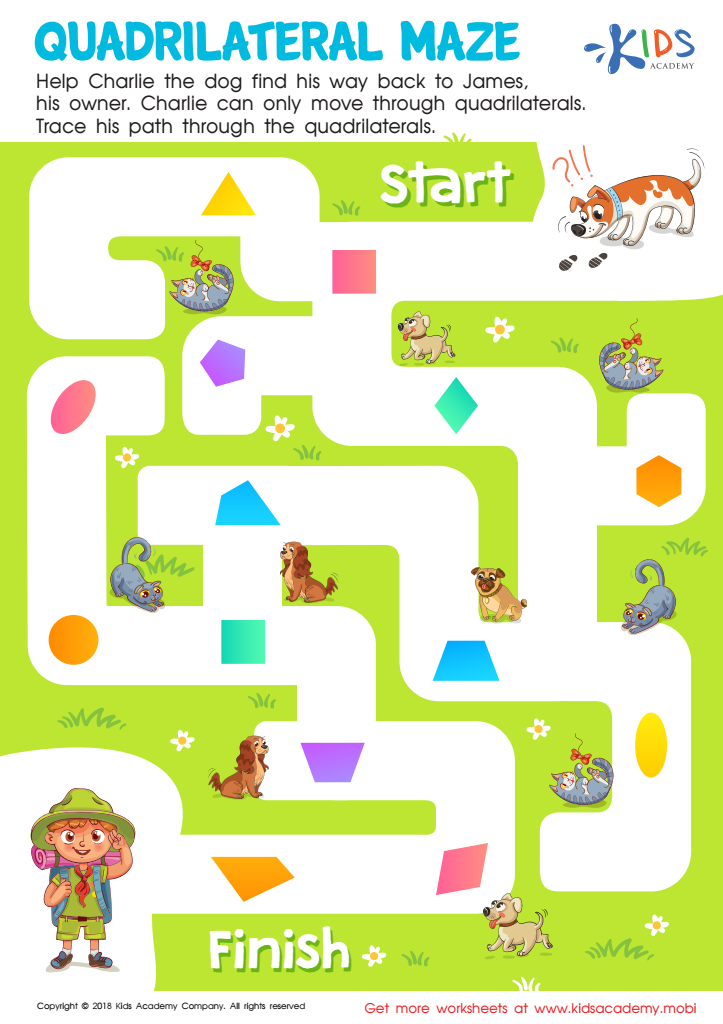
Quadrilateral Maze Worksheet
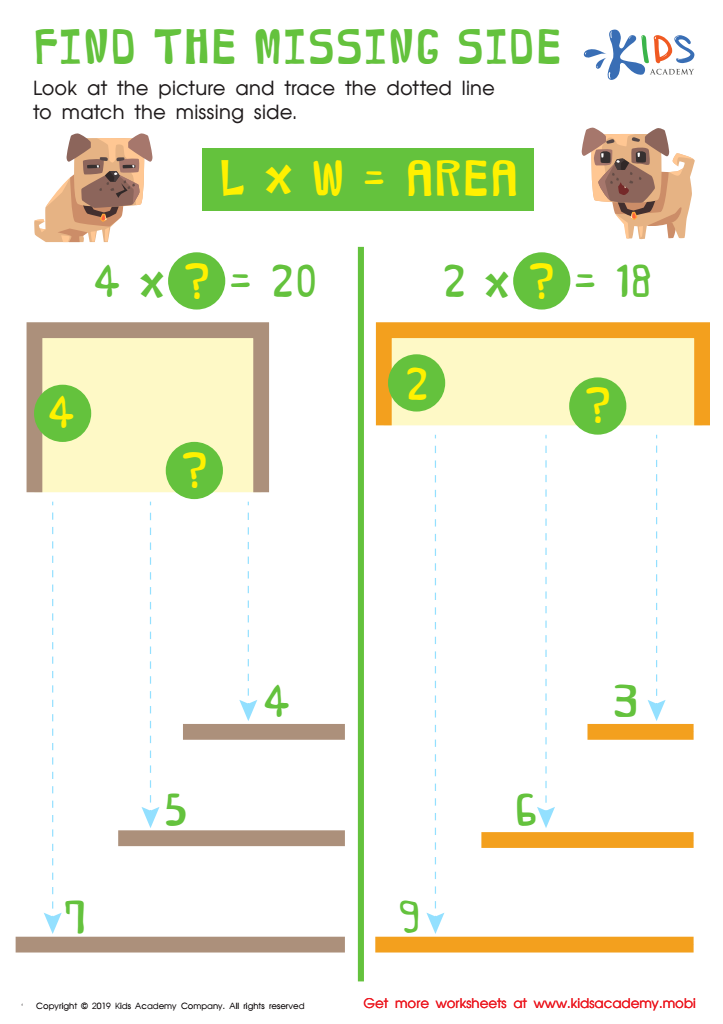
Find the Missing Side Worksheet
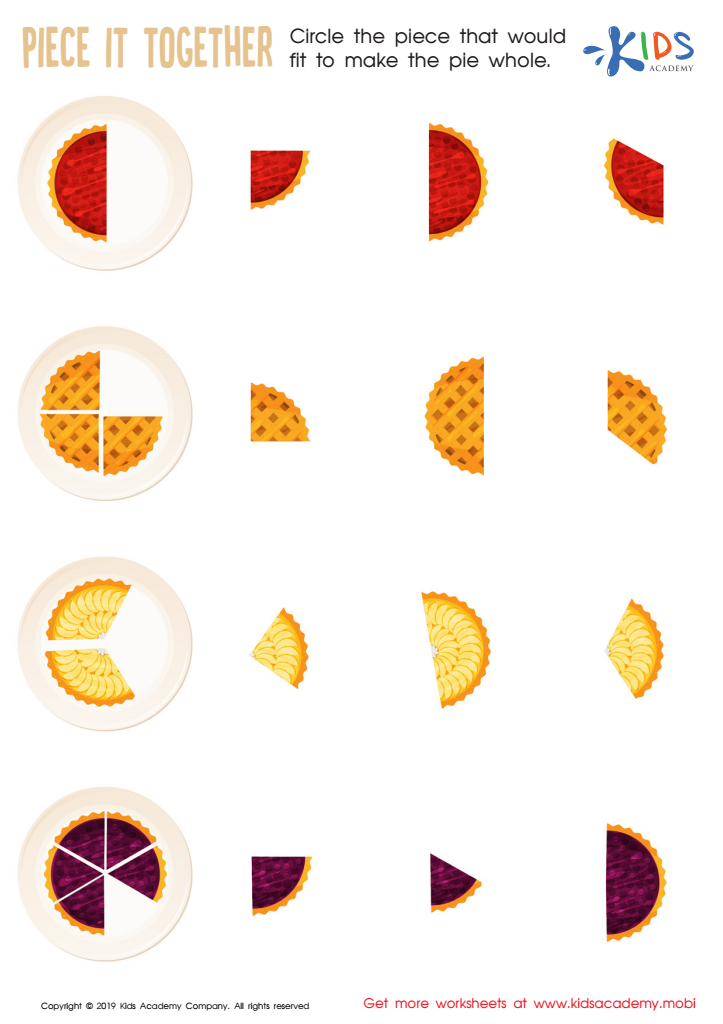
Piece it together Worksheet








Problem-solving skills in geometry for young children aged 3-9 are crucial for several reasons. First, these skills lay the foundational understanding of spatial reasoning, which is essential in math and everyday life. For parents and teachers, fostering this understanding enhances children's ability to visualize, manipulate, and understand shapes and spaces around them.
Engaging children with easy geometry integrates fun activities that keep them motivated and curious. Through puzzles, games, and hands-on exploration, children develop critical thinking abilities that can be applied across various subjects and situations. Additionally, early exposure to geometric concepts boosts mathematical readiness, paving the way for success as they progress through their education.
Moreover, nurturing problem-solving skills in geometry promotes perseverance and resilience. Children learn to tackle challenges, think creatively, and appreciate the learning process — vital traits for lifelong learning. For parents, supporting this development reinforces positive relationships between home and school. Ultimately, when parents and teachers prioritize easy geometry problem-solving, they contribute to building confident, capable learners who can navigate complexities in math and beyond, preparing them for future academic endeavors and real-world experiences.








