Data interpretation Easy Math Worksheets for Ages 3-9
11 filtered results
-
From - To
Discover our engaging "Data Interpretation Easy Math Worksheets" designed for children aged 3 to 9! These worksheets incorporate fun, interactive exercises that help young learners develop essential data interpretation skills. With vibrant visuals and age-appropriate scenarios, kids will explore concepts like gathering, organizing, and analyzing data through enjoyable activities. These worksheets enhance critical thinking and prepare students for future math challenges while fostering a love for learning. Ideal for classrooms or home learning, our resources are perfect for boosting confidence in math. Empower your child with the skills they need to interpret information effectively with our easy-to-use worksheets!
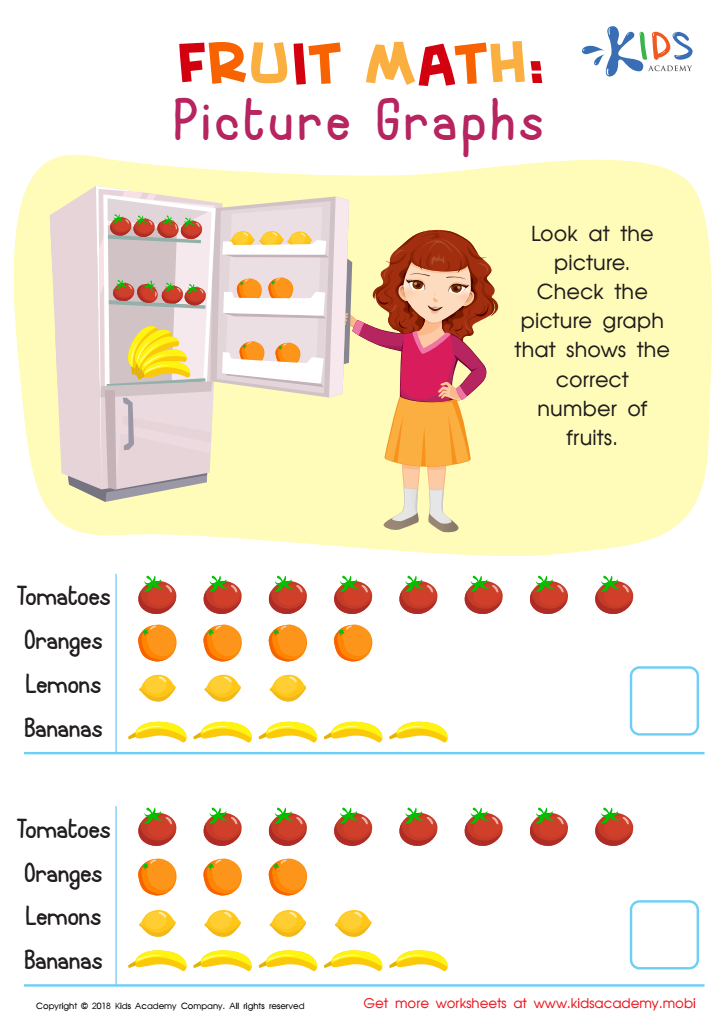
Fruit Math: Picture Graphs Worksheet
 Assign to My Students
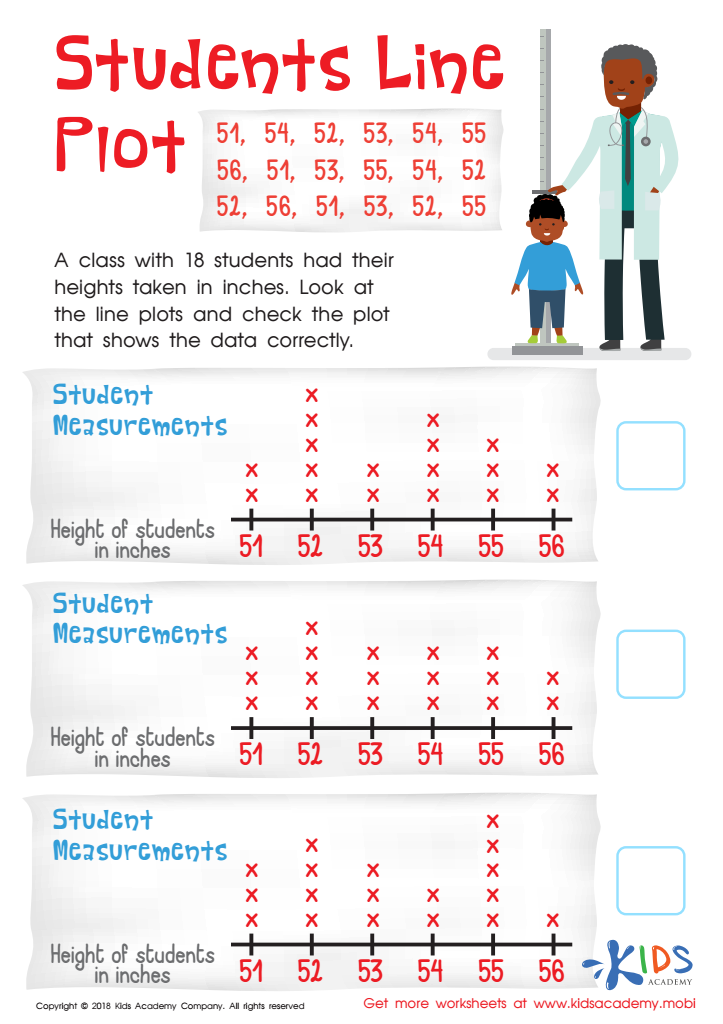
Students Line Plot Worksheet
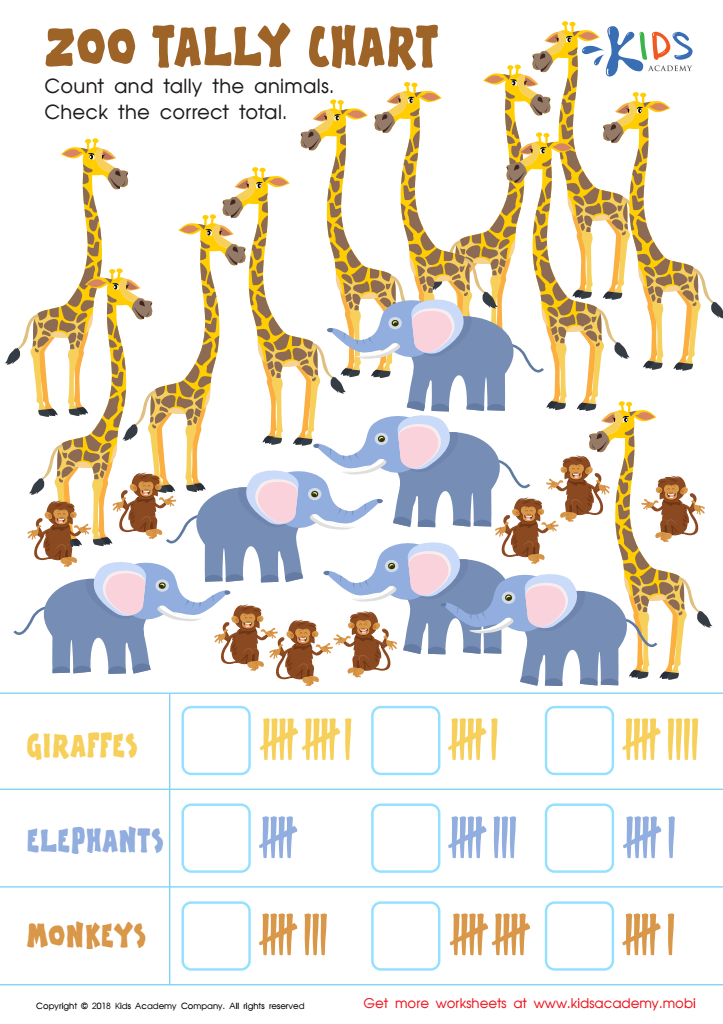
Zoo Tally Chart Worksheet
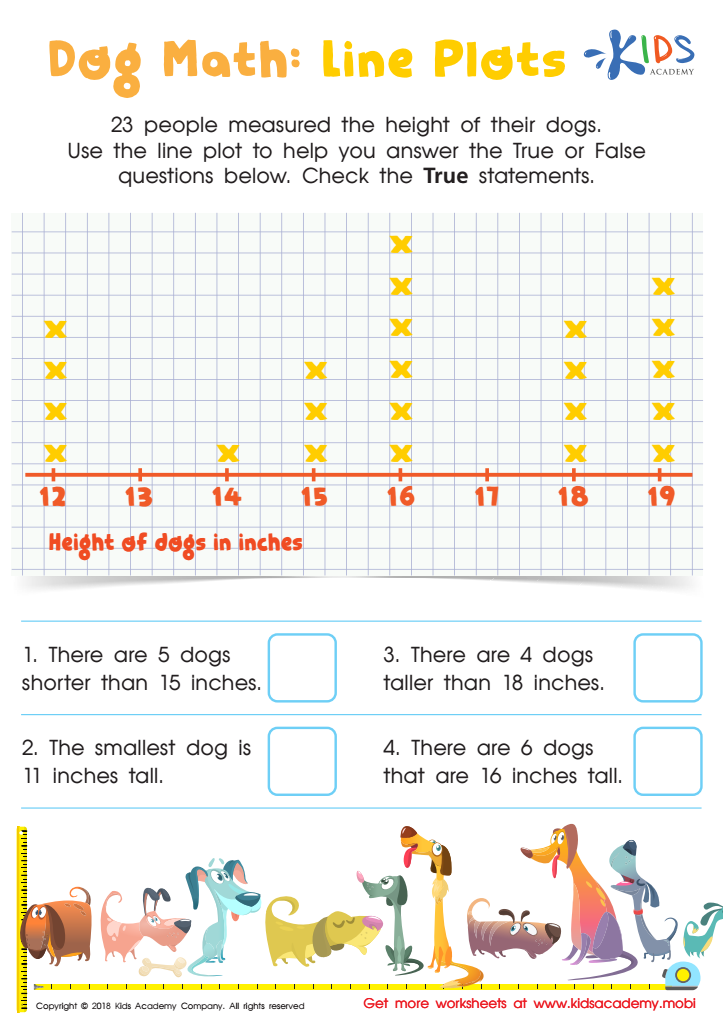
Dog Math: Line Plots Worksheet
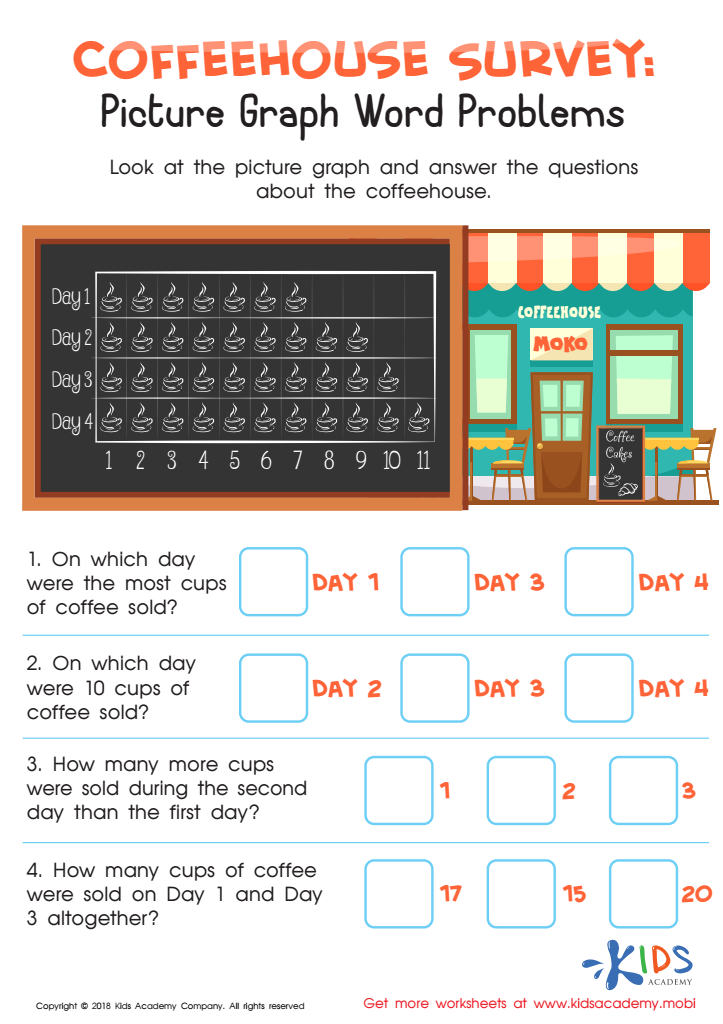
Coffeehouse Survey: Picture Graph Word Problems Worksheet

Pets Tally Chart Worksheet
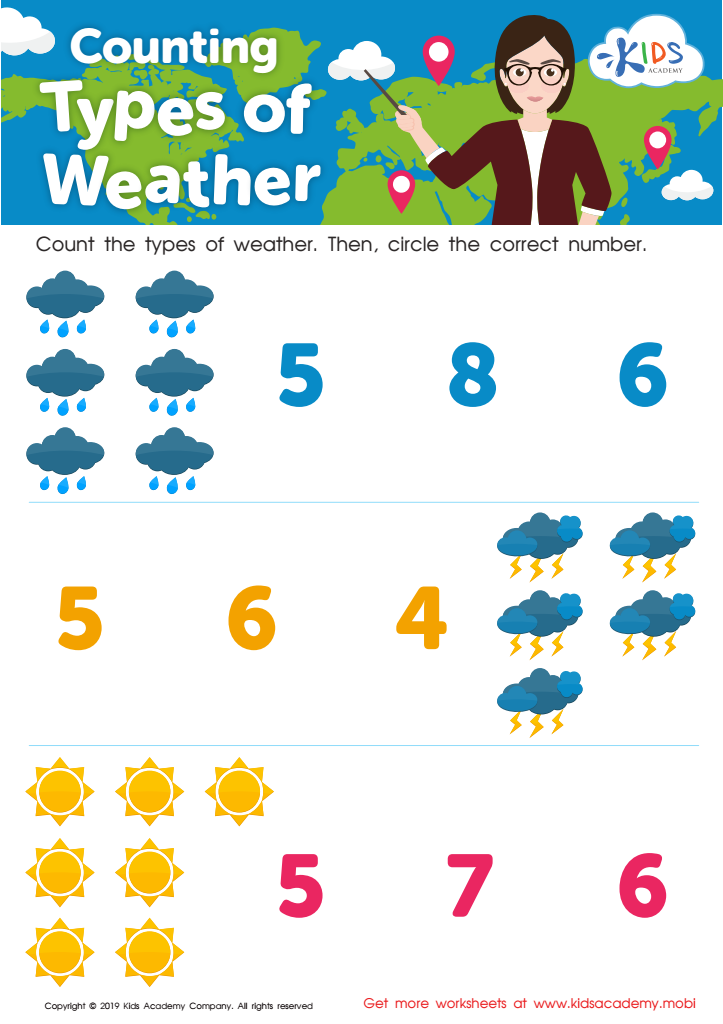
Counting Types of Weather Worksheet

Aircraft Carrier Picture Graphs Worksheet
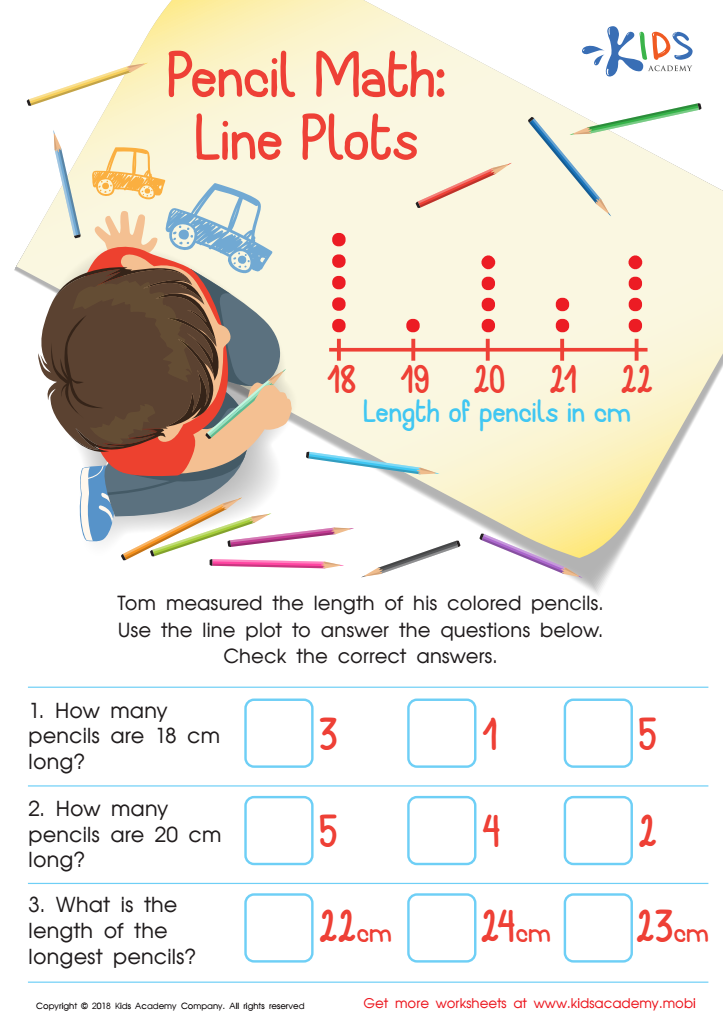
Pencil Math: Line Plots Worksheet
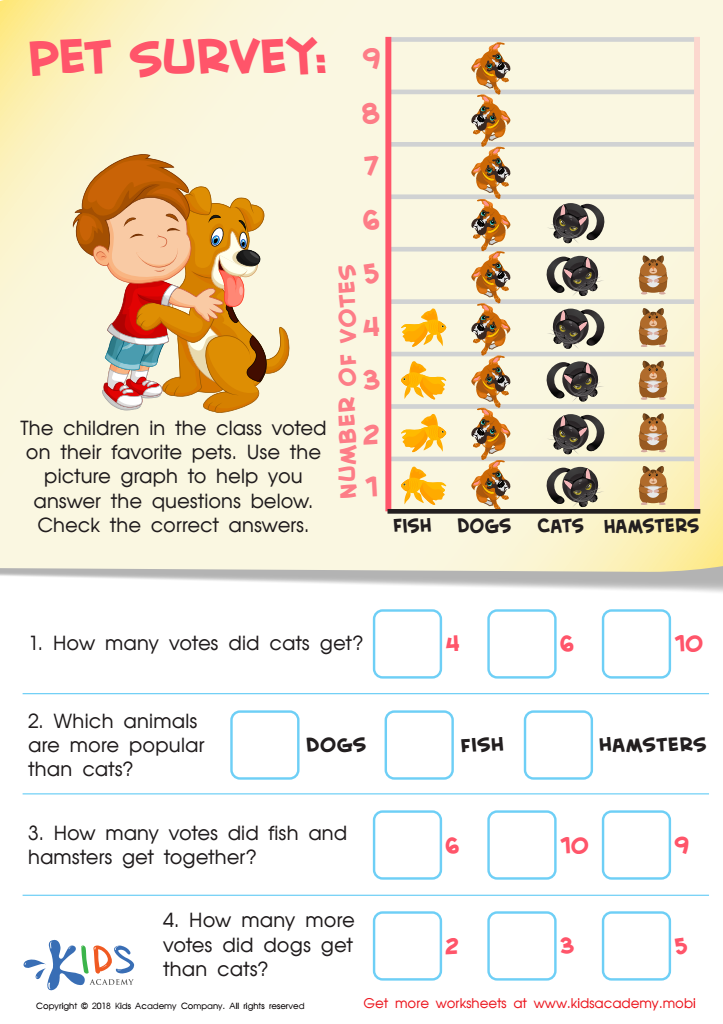
Pet Survey Worksheet
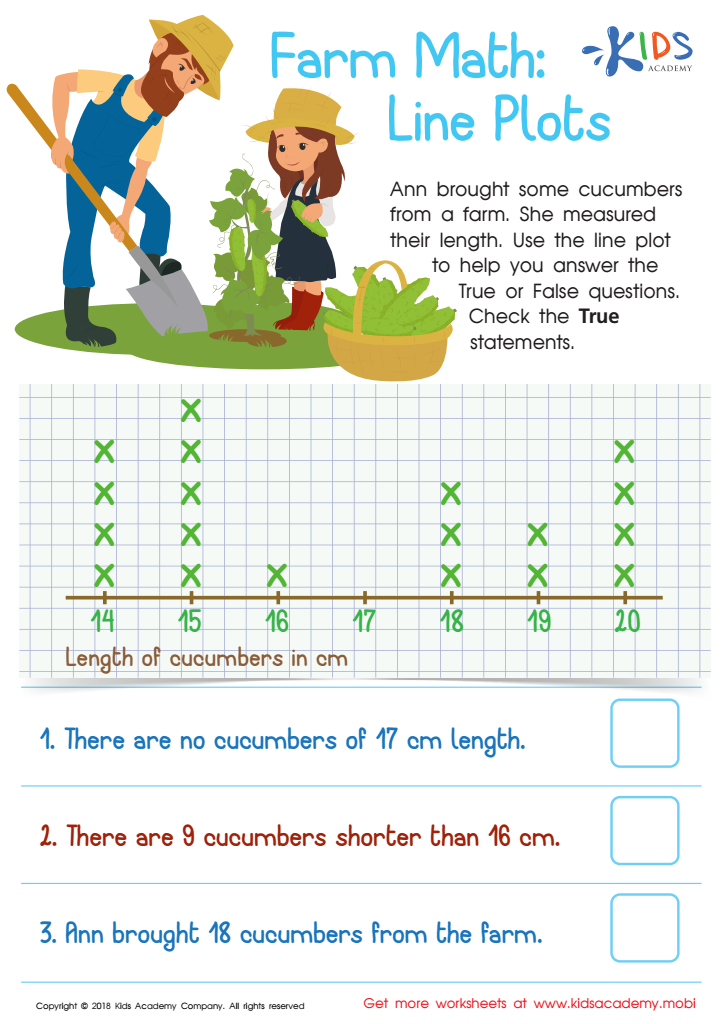
Farm Math: Line Plots Worksheet








Parents and teachers should care about data interpretation in early math education, particularly for children ages 3-9, because it lays the foundational skills necessary for critical thinking and problem-solving in daily life. Early exposure to data interpretation helps children develop the ability to analyze information, make informed decisions, and understand patterns in their surroundings. Learning to interpret data is not just about numbers; it fosters curiosity and enhances analytical skills.
Additionally, data interpretation paves the way for future academic success in subjects such as math, science, and social studies. By integrating concepts of sorting, classifying, and graphing in simple, relatable contexts, educators can engage young learners in meaningful discussions about statistics, comparisons, and trends. This makes learning relatable, encourages collaboration, and promotes communication skills.
Furthermore, cultivating these skills early can increase children’s confidence in their mathematical abilities. Engaged learners are more likely to embrace future challenges and develop a growth mindset. In an age increasingly dominated by data-driven decisions, equipping young learners with data interpretation skills ensures they can navigate and contribute to an increasingly complex world. Thus, prioritizing these learning experiences helps set the stage for lifelong learning and success.








