
Number Sequencing Easy Math Worksheets for Ages 3-9
6 filtered results
Difficulty Level
Grade
Age
-
From - To
Subject
Activity
Standards
Introduce your child to the fascinating world of numbers with our "Number Sequencing Easy Math Worksheets for Ages 3-9." Designed to build a strong foundation in early math skills, these worksheets help children understand and master number sequences through engaging activities. Perfect for both classroom and home learning, the fun exercises boost confidence and foster a love for math. Aligned with key curriculum standards, these resources aid in cognitive development, enhance problem-solving skills, and prepare young learners for future academic success. Help your child conquer number sequencing in an easy, enjoyable way with these thoughtfully crafted worksheets!
Favorites
With answer key
Interactive
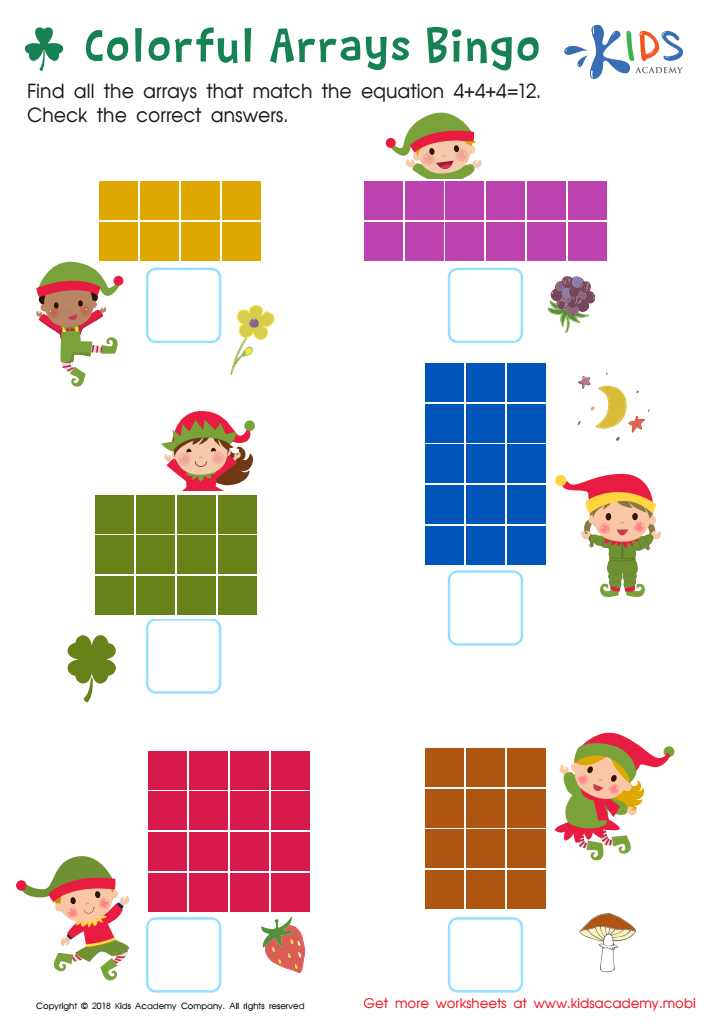
Colorful Arrays Bingo Worksheet
This worksheet stimulates thinking about arrays and how to represent them. Instruct students to count the 6 arrays and find which ones sum up to 12. Ask them to check the answers for accuracy.
 Assign to My Students
Colorful Arrays Bingo Worksheet
Worksheet
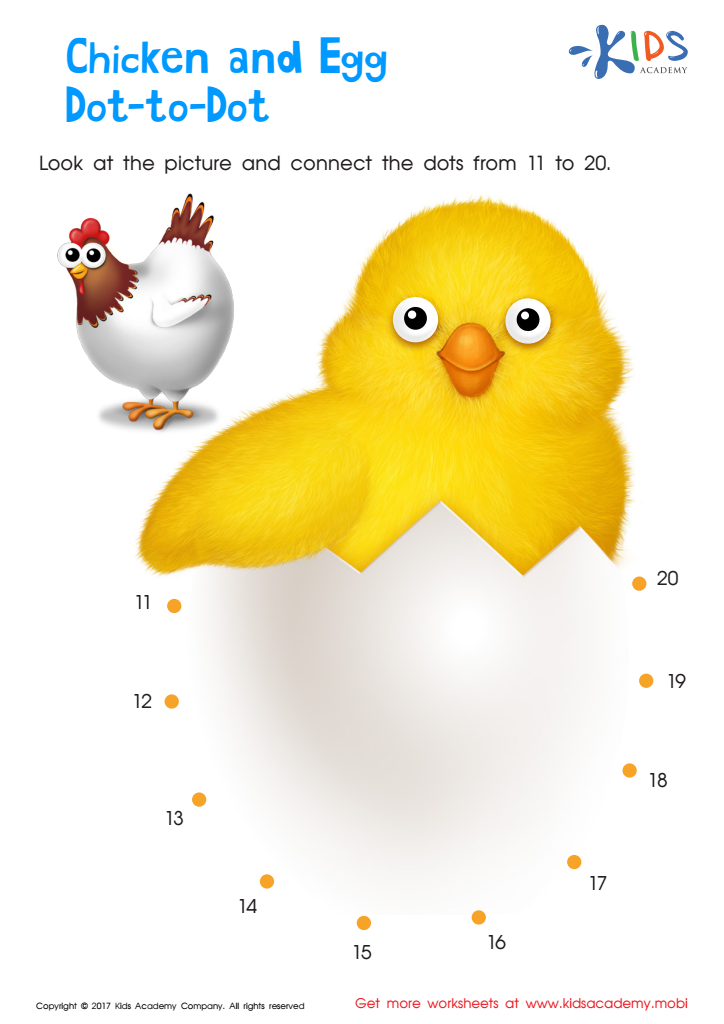
Ordering 11–20: Chicken & Egg Dot–to–dot Worksheet
Help your child hatch the chick and practice their counting skills with this dot to dot worksheet – the chicken came first! Connect the dots 11-20 to have fun and learn at the same time. Experience meaningful practice and gain confidence while drawing great pictures.
Ordering 11–20: Chicken & Egg Dot–to–dot Worksheet
Worksheet
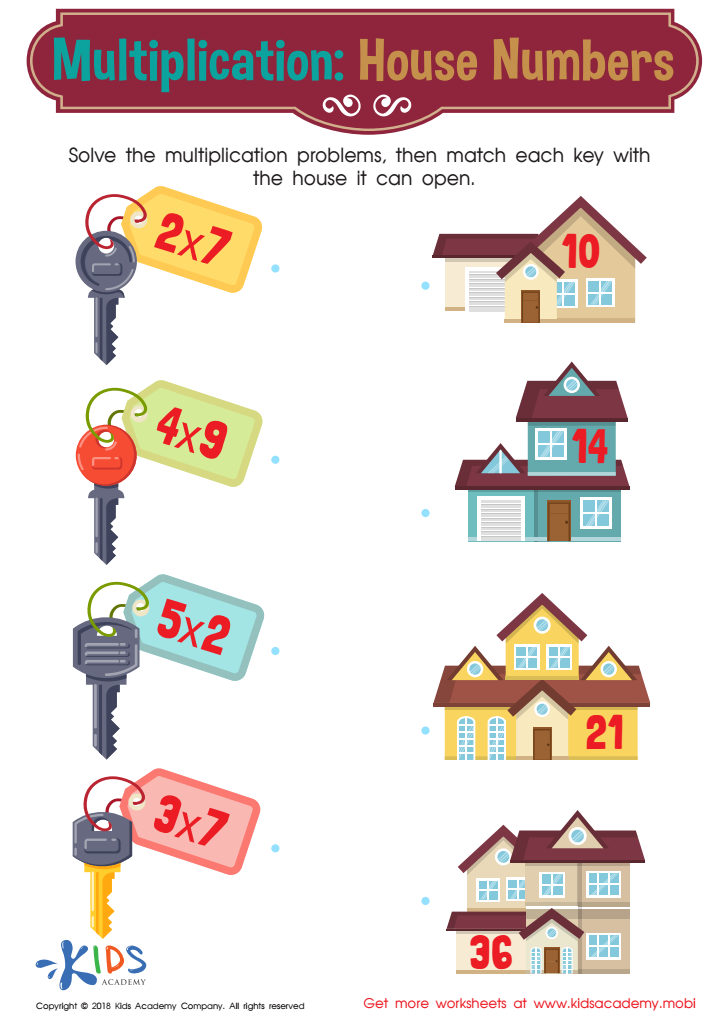
House Numbers Worksheet
This multiplication worksheet is perfect for grade 3 students to sharpen their math skills! Each problem unlocks the door to a house on the page - can they figure out which key fits which door? By solving each problem, they'll boost their multiplication skills and have fun along the way.
House Numbers Worksheet
Worksheet
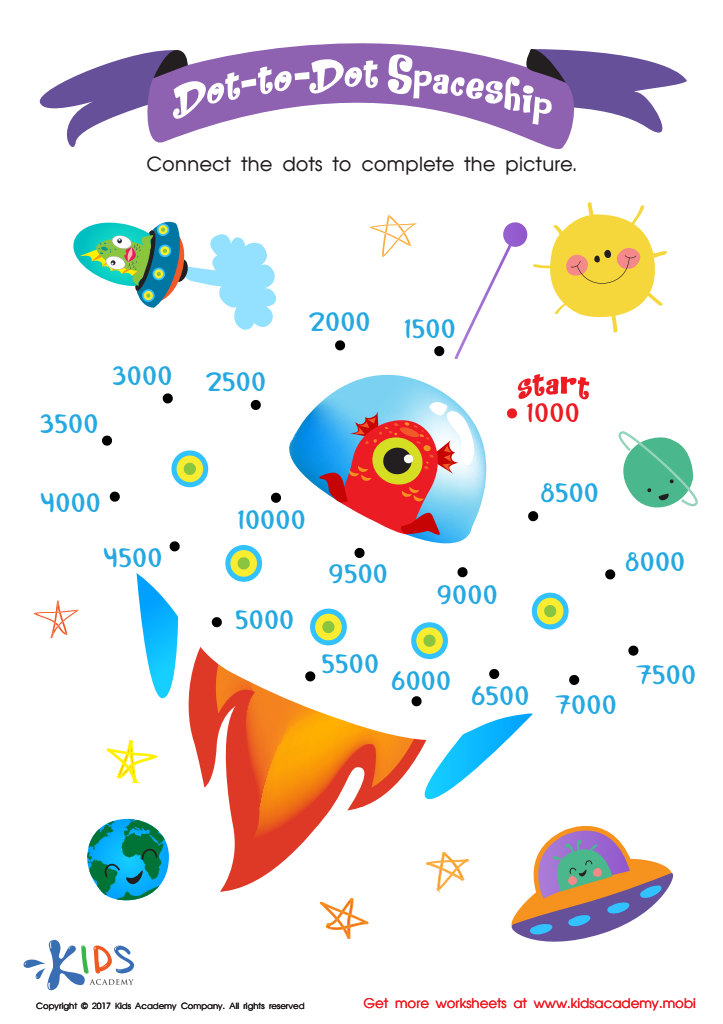
Dot to Dot Worksheet for 3rd Grade
Let your 3rd grader develop better number skills with this dot-to-dot worksheet! They can have fun outlining a spaceship as they skip count by 500 up to 10,000. It's a great way to boost their number sense and make learning more exciting.
Dot to Dot Worksheet for 3rd Grade
Worksheet
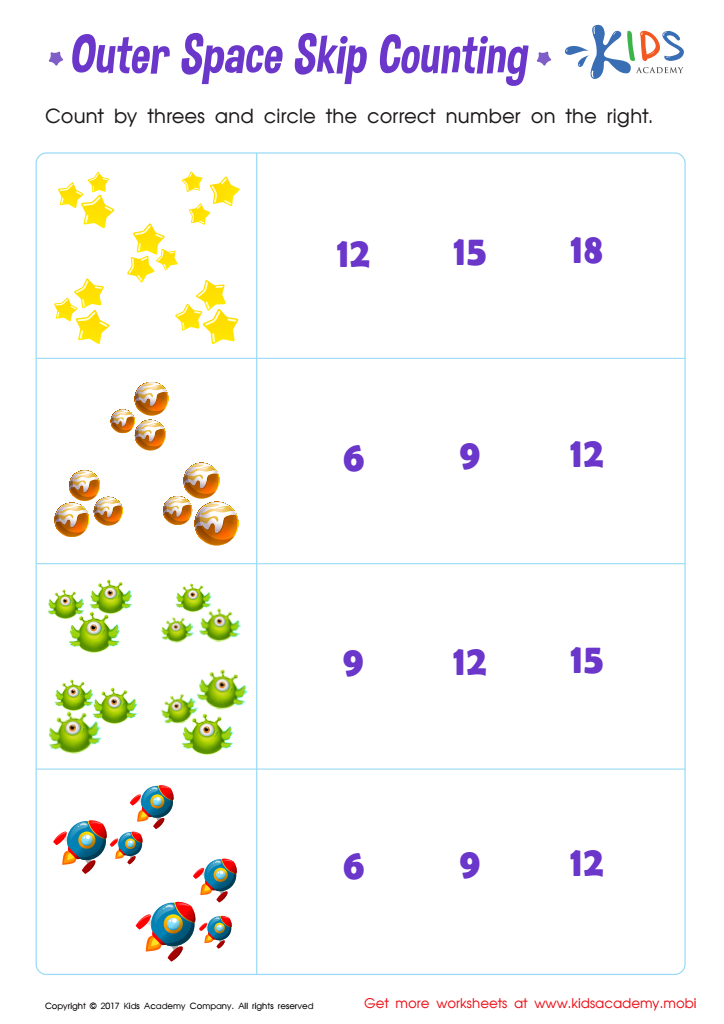
Skip Counting by 3s: Outer Space Skip Counting Printable
Want to set your child up for math success? Get them this printable worksheet that helps them practice counting in groups of 3’s, building a foundation for more advanced math skills. Skipping counting helps kids master logical reasoning and cognitive skills, making a connection between counting objects individually and in groups. The colorful images will keep them engaged and having fun - without realizing how hard they're working!
Skip Counting by 3s: Outer Space Skip Counting Printable
Worksheet
Join Kids Academy for Free
Who is primarily going to use this learning content?








Number sequencing is a fundamental mathematical skill that serves as a building block for more advanced math concepts, making it essential for children aged 3-9. Parents and teachers should prioritize number sequencing because it helps children develop a strong numerical foundation. Recognizing number patterns not only engages a child's cognitive abilities but also enhances their critical thinking and problem-solving skills. Mastery of number sequencing enables kids to understand and predict numerical order, which is crucial for tasks such as counting, addition, and subtraction.
For young children, number sequencing games and activities foster a stimulating learning environment that blends education with fun. These activities can help in honing fine motor skills and hand-eye coordination as well. By embedding these early math skills, children are better prepared to grasp more complex subjects like place value, multiplication, and division as they progress in school.
Additionally, early exposure to math in a positive and supportive context can foster a love for the subject, counteracting any future anxiety or aversion. This holistic approach ensures children build confidence in their abilities, setting a strong foundation for academic success not just in mathematics, but across all areas of their education. Therefore, focusing on number sequencing from an early age is a crucial step in fostering well-rounded, future-ready learners.








