Color recognition Easy Reading Comprehension Worksheets for Ages 3-9
4 filtered results
Difficulty Level
Grade
Age
-
From - To
Subject
Activity
Standards
Explore our engaging Color Recognition Easy Reading Comprehension Worksheets designed for children aged 3-9. These worksheets aim to enhance young learners' ability to identify and understand colors through fun and interactive reading activities. Each worksheet incorporates vibrant visuals and simple text, reinforcing color recognition while developing foundational reading skills. With a variety of exercises, kids will enjoy practicing their comprehension skills as they connect colors to objects and themes. Ideal for parents and educators, these resources are perfect for classroom or home use, promoting early literacy and cognitive development in a playful, enjoyable way. Start your child’s colorful learning journey today!
Favorites
With answer key
Interactive
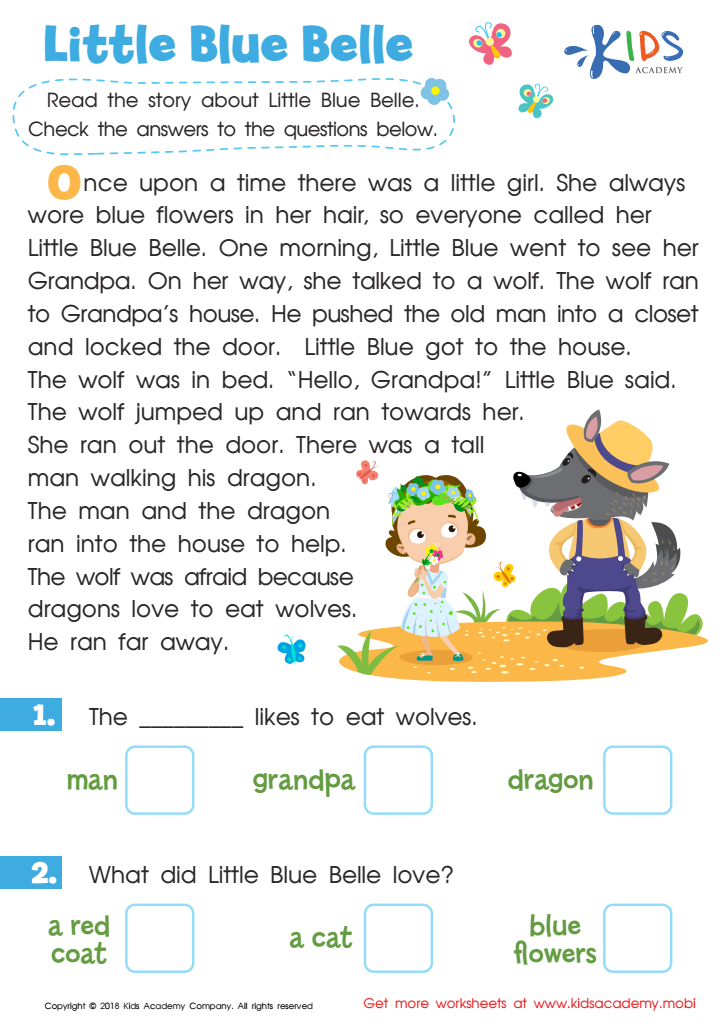
Little Blue Belle Worksheet
Check comprehension of fiction read in class by asking questions. Some students may struggle, so provide extra practice with a reading worksheet. Students read a story and answer questions at the bottom. A handy resource for reading classrooms!
Little Blue Belle Worksheet
Worksheet
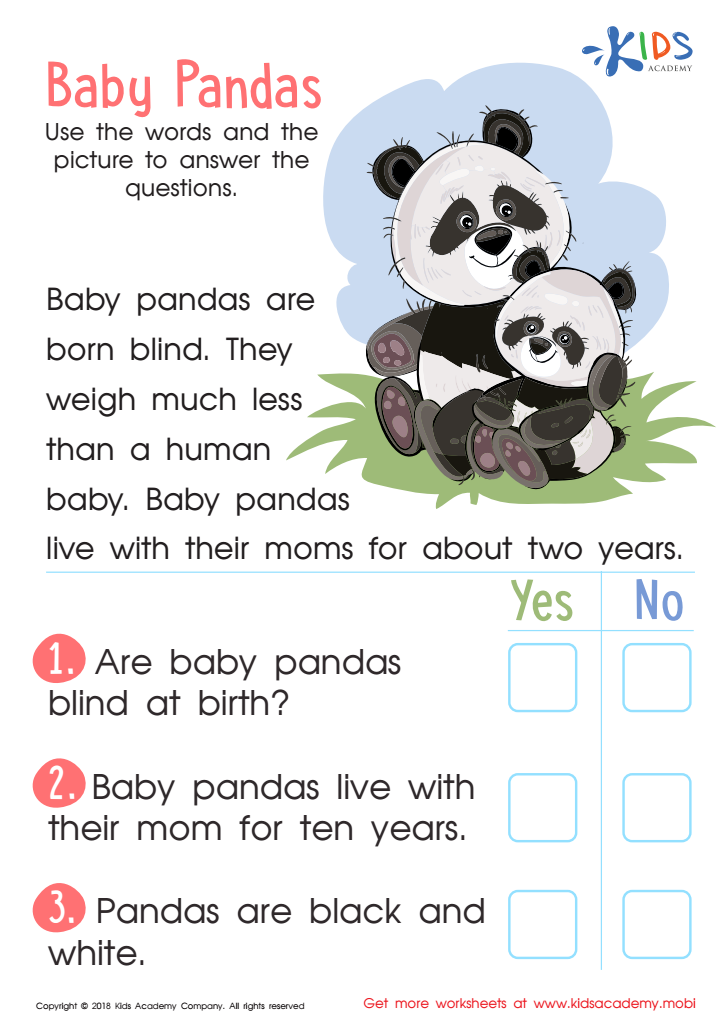
Baby Pandas Worksheet
Kids can't usually see pandas in person, but they can learn more about them with this fun worksheet! It includes a passage and picture, plus questions at the end to check kids' reading comprehension. Just ask them to read the text, check the "yes" and "no" boxes, and enjoy the fascinating facts about baby pandas!
Baby Pandas Worksheet
Worksheet
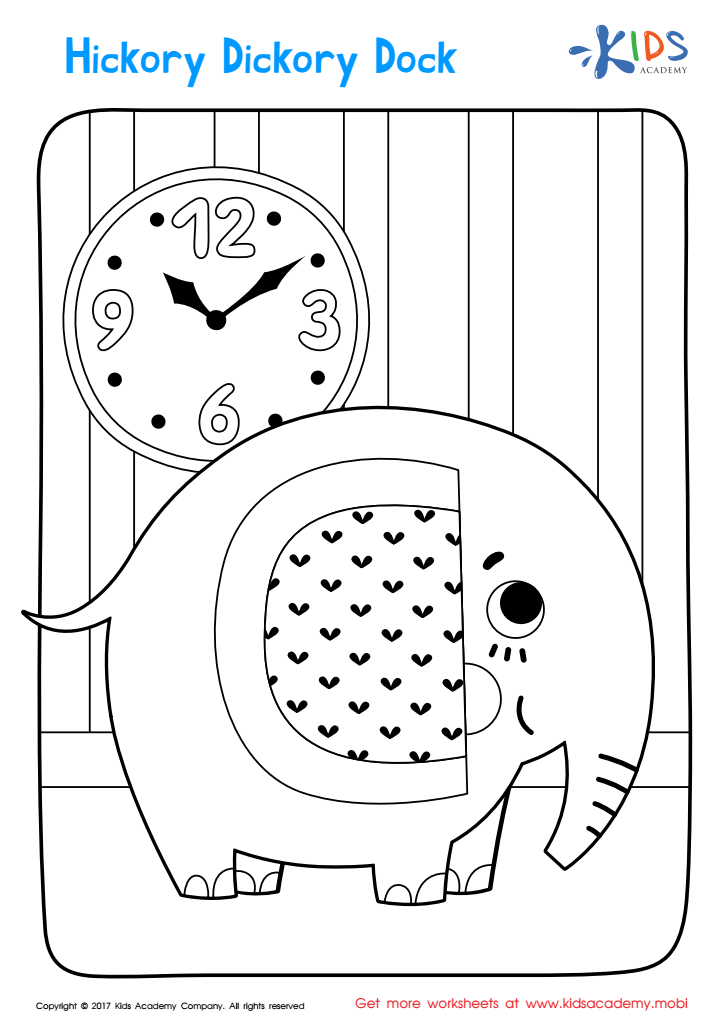
Hickory Dickory Dock Coloring Page
Sing and color with your child! Enjoy the classic nursery rhyme Hickory Dickory Dock as they color this fun printable. Watch the elephant climb and crash down the clock in the final part of the song. It's sure to bring smiles and giggles!
Download (PDF)
 Assign to My Students
Assign to My Students
Hickory Dickory Dock Coloring Page
Worksheet
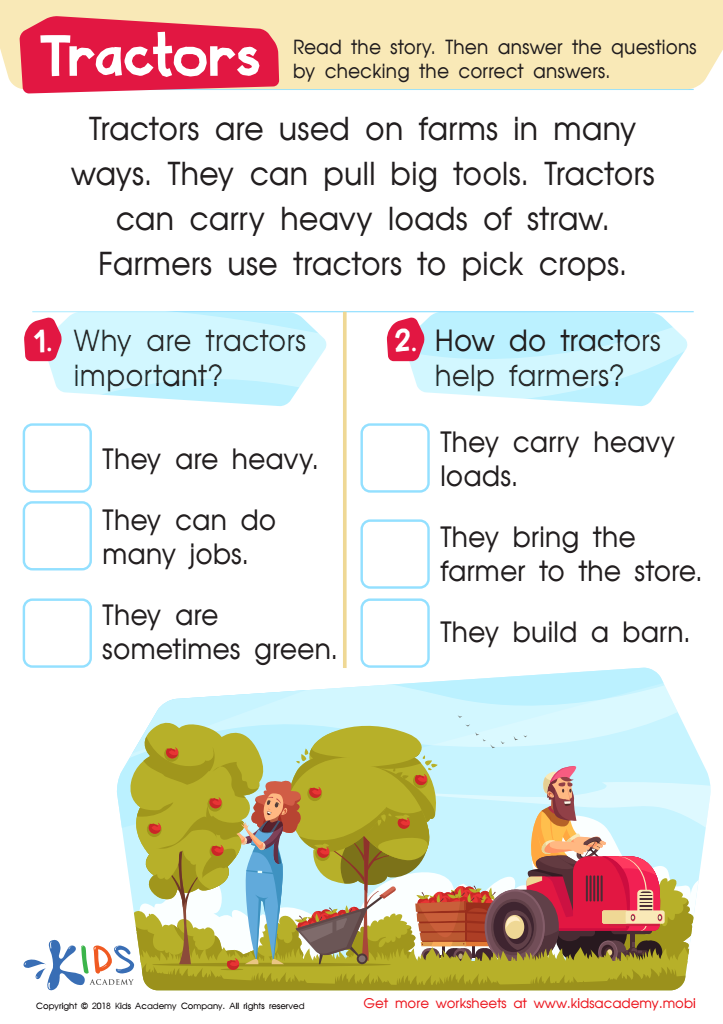
Tractors Worksheet
Kids love tractors! Let them read about what they do, what they use, and who uses them with this free worksheet. After reading, they can answer reading comprehension questions to test their knowledge; multiple choices make it easy! Little do they know, they're boosting their literacy skills along the way!
Tractors Worksheet
Worksheet
Join Kids Academy for Free
Who is primarily going to use this learning content?








Color recognition is a fundamental skill that plays a crucial role in early childhood development, making it important for both parents and teachers to focus on. For children aged 3-9, understanding colors enhances their ability to categorize objects and understand the world around them. This skill serves as a building block for more complex concepts in art, science, and math.
Notably, color recognition supports language development. As children learn to identify and name colors, they expand their vocabulary and communication skills. This early stage of learning also fosters cognitive development; recognizing colors helps children develop their memory and problem-solving skills by encouraging them to make connections between different objects and concepts.
Moreover, incorporating easy reading comprehension activities centered around colors engages children's imaginations and nurtures a love for reading. It aids in enhancing comprehension skills as they learn to follow along with stories or instructions that involve colors. For teachers and parents, this focus on color recognition can lead to exciting and creative teaching strategies, making learning both fun and educational. Ultimately, supporting color recognition opens up pathways for children's academic success and encourages their sensory exploration and creativity.