Writing practice Easy English for Beginners Worksheets for Ages 4-5
4 filtered results
Difficulty Level
Grade
Age
-
From - To
Subject
Activity
Standards
Nurture your child's writing skills with our "Writing Practice Easy English for Beginners Worksheets for Ages 4-5". Specially designed for young learners, these interactive worksheets make learning fun and engaging. Children will learn to form letters, develop fine motor skills, and build a solid foundation in English. Activities include tracing letters, matching exercises, and simple word formation, all tailored to capture the attention of early writers. These printable worksheets are a perfect blend of education and entertainment, ensuring that practicing writing becomes a delightful daily habit for your little one. Start your child’s writing journey today!
Favorites
With answer key
Interactive
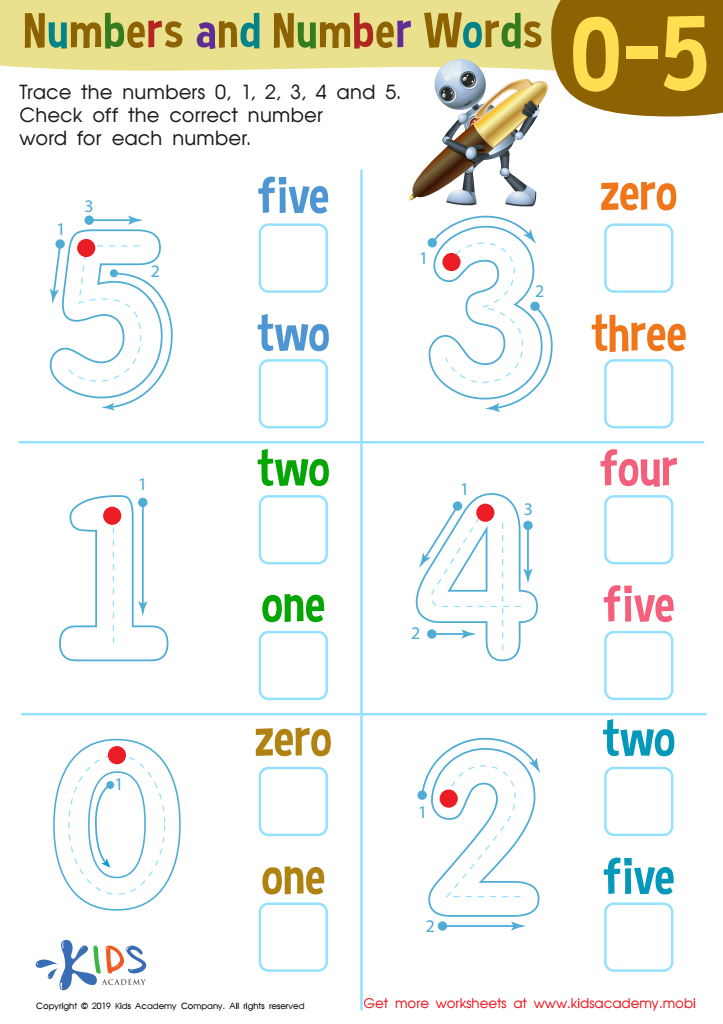
Numbers and Number Words Worksheet
Preschoolers can practice counting and recognizing numbers with this worksheet. Students trace the numbers zero through five and check the boxes next to each number to show the correct number word. Ideal for young kids, this printable helps them learn early math and number words.
Numbers and Number Words Worksheet
Worksheet
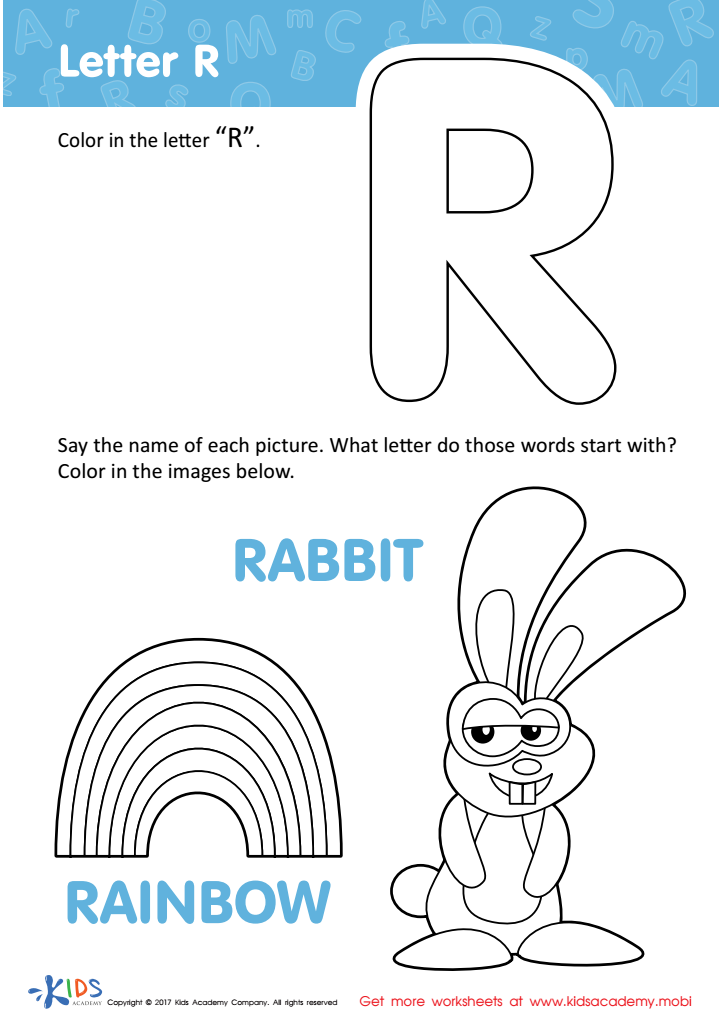
Letter R Coloring Sheet
Let your child explore the rainbow with this fun letter "R" coloring page! They can learn to recognize the letter and make connections to words, all while having fun! Make alphabet learning enjoyable with joyful coloring pages.
Download (PDF)
 Assign to My Students
Assign to My Students
Letter R Coloring Sheet
Worksheet
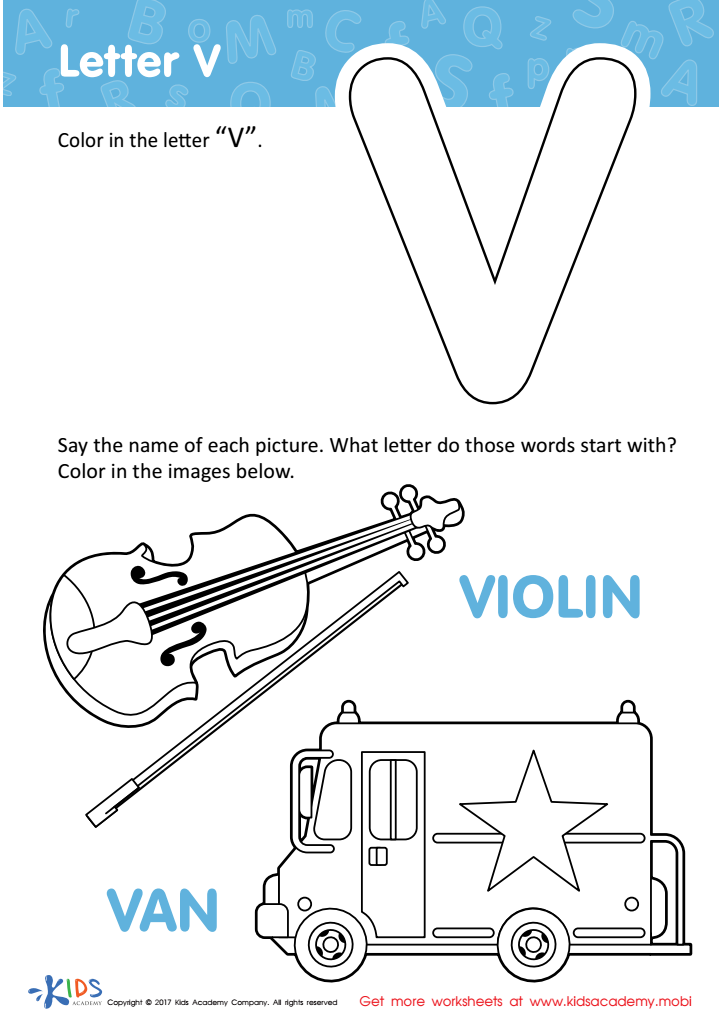
Letter V Coloring Sheet
This fun letter V coloring page can boost your child's knowledge of the letter "V" and its sound. Help them pronounce it correctly, too!
Download (PDF)
Assign to My Students
Assign to My Students
Letter V Coloring Sheet
Worksheet
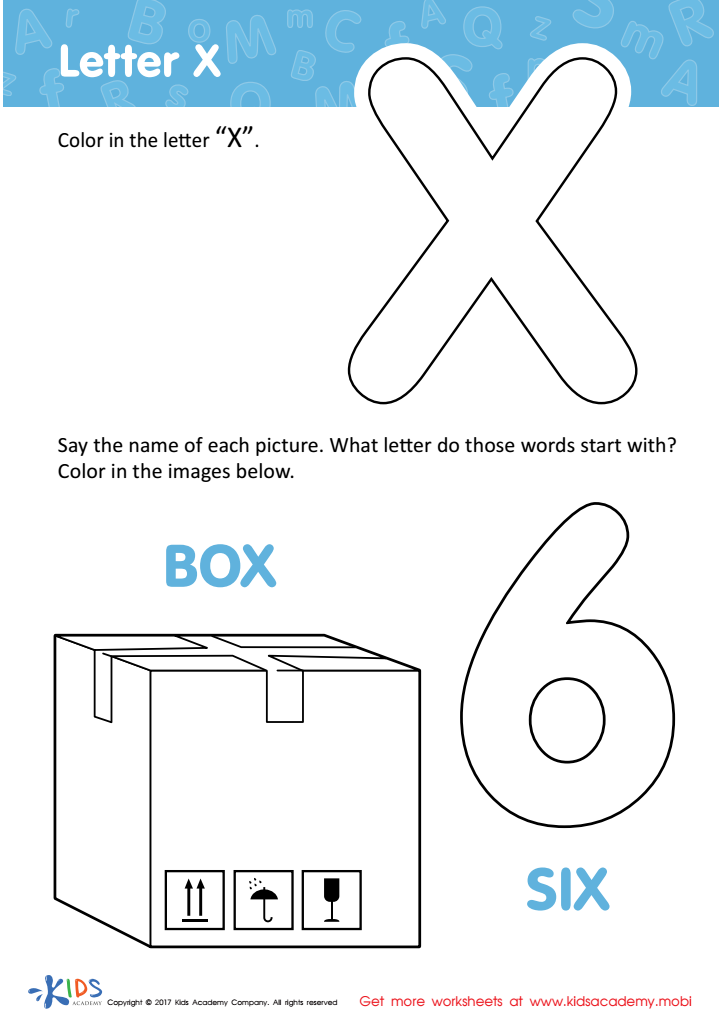
Letter X Coloring Sheet
Help your little learner find the letter "X" with this coloring page. Go over the sounds it makes and how to find it at the end of words. Unlock the mystery of this unique letter - it's one of the most challenging but rewarding letters to learn!
Download (PDF)
Assign to My Students
Assign to My Students
Letter X Coloring Sheet
Worksheet
Join Kids Academy for Free
Who is primarily going to use this learning content?




Writing practice is incredibly important for young children, particularly those aged 4-5 who are in the critical stages of cognitive and motor development. During these early years, engaging in writing activities helps build essential fine motor skills. When children grasp a crayon or pencil to form letters or shapes, they're strengthening the small muscles in their hands and fingers, honing their coordination, and establishing the physical foundation needed for more complex writing tasks later.
Moreover, writing contributes significantly to literacy development. Children begin to understand the relationship between spoken and written language, recognizing that squiggly lines on a page can represent sounds, syllables, and eventually words. This foundational knowledge lays the groundwork for reading proficiency. Writing also fosters creativity and self-expression, allowing young minds to convey their thoughts and stories in a new and exciting way.
For parents and teachers, prioritizing writing practice creates an opportunity to assess developmental milestones and customize learning approaches. Identifying struggles early on enables targeted interventions that can prevent future academic difficulties.
In conclusion, consistent writing practice for ages 4-5 offers substantial benefits—including enhanced motor skills, literacy foundations, and creative expression—providing children with crucial tools for lifelong learning. Parents and teachers who invest in this practice set their young learners on a path to academic and personal success.