Phonics recognition Easy Worksheets for Ages 4-5
4 filtered results
-
From - To
Discover our engaging "Phonics Recognition Easy Worksheets" designed specifically for children aged 4-5. These fun and interactive worksheets help young learners grasp the fundamental concepts of phonics, enhancing their reading and writing skills. Through a variety of activities, including letter discovery, sound matching, and word-building exercises, children can recognize letters and sounds in a playful manner. Perfect for home or classroom use, our worksheets encourage phonetic awareness and boost confidence in early literacy. Printable and user-friendly, these resources make learning enjoyable and effective. Spark your child's love for reading today with these essential phonics practice activities!
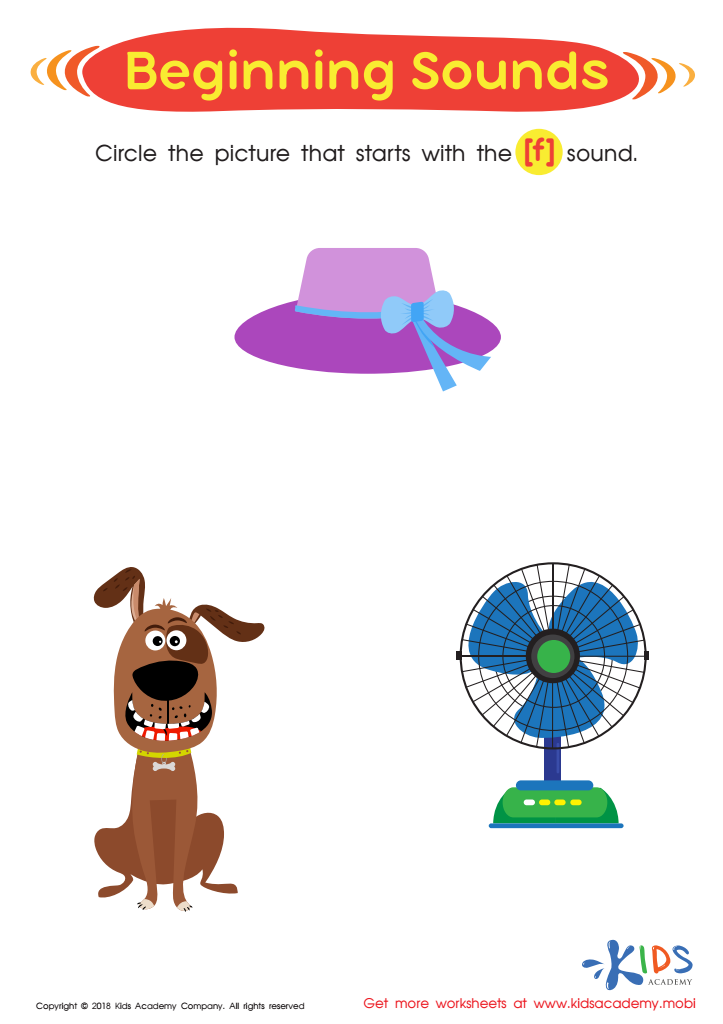
Beginning Sounds Assessment Printable
 Assign to My Students
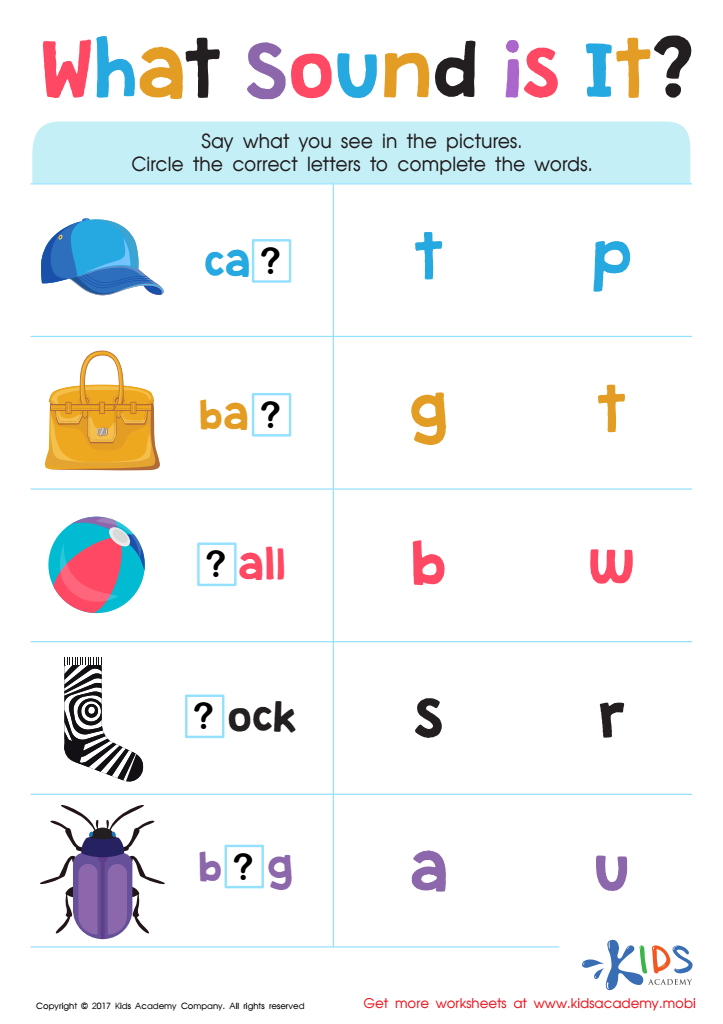
What Sound Is it? Worksheet
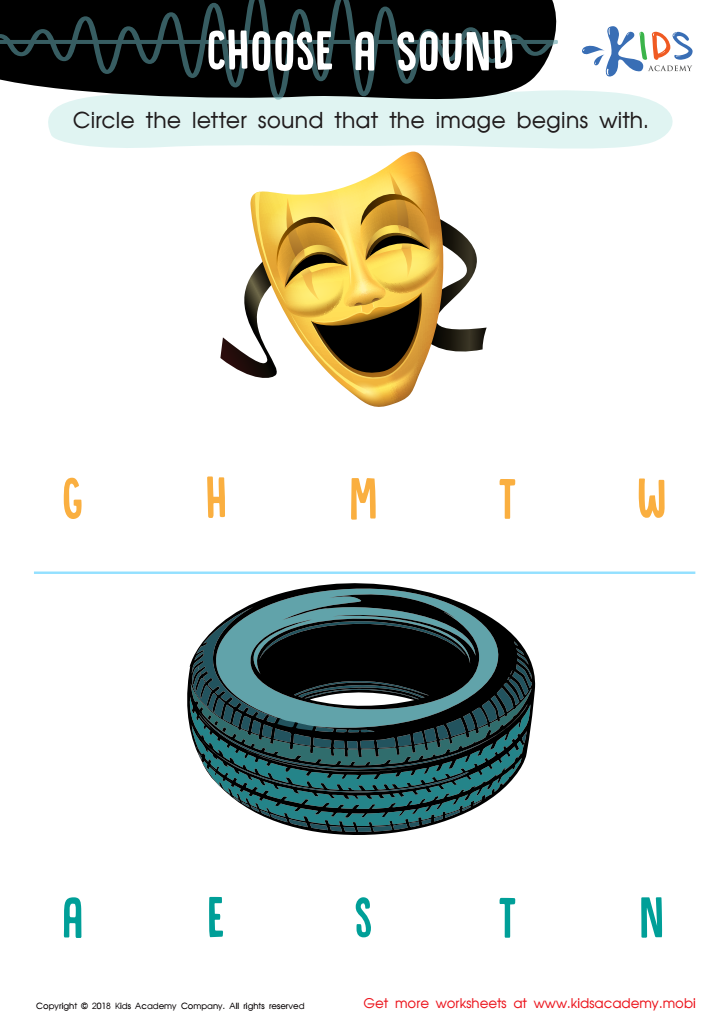
Choose a Sound Worksheet
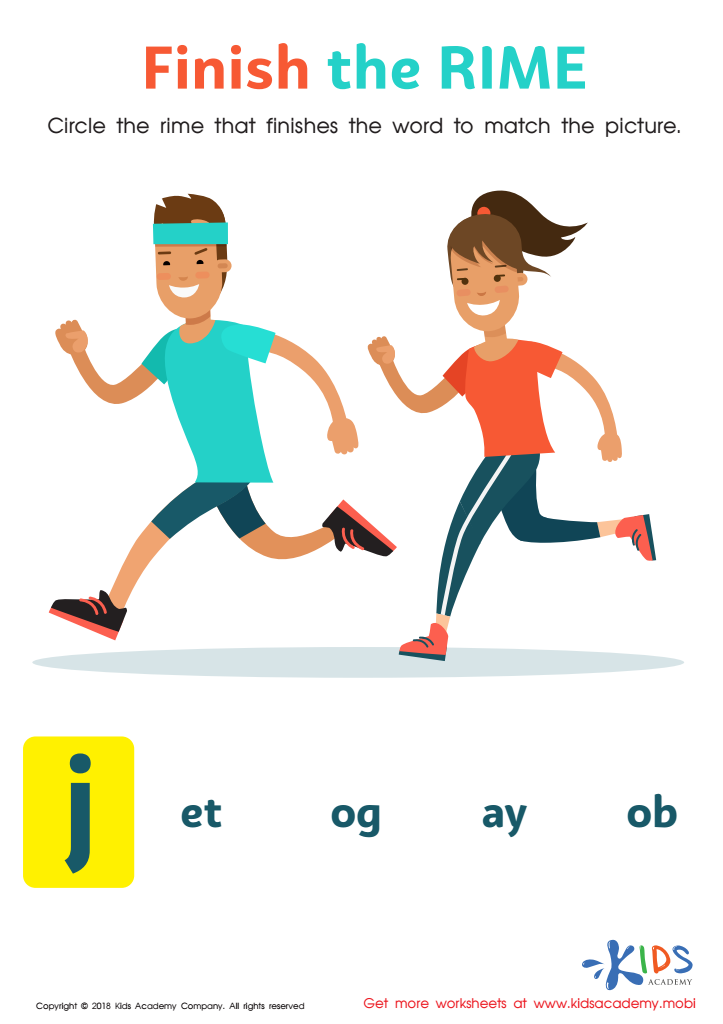
Finish the Rime Worksheet








Phonics recognition is crucial for children aged 4-5, as it lays the foundational skills needed for reading and writing. When parents and teachers prioritize phonics, they equip young learners with the ability to associate sounds with letters, which is essential for decoding words. This process not only fosters reading fluency but also enhances comprehension skills, allowing children to understand and engage with stories and information more effectively.
At this age, children are naturally curious and eager to learn. Introducing phonics in a playful and engaging manner helps harness this enthusiasm, making learning enjoyable. It supports vocabulary development, as they begin to recognize and spell simple words, broadening their ability to express themselves both in spoken and written forms.
Additionally, a strong foundation in phonics contributes to long-term academic success. Children who master phonics skills early are more likely to excel in later literacy development, reducing the risk of reading difficulties. Engaging in phonics activities together can also strengthen the bond between parents and children, enhancing communication and providing a shared learning experience. Therefore, nurturing phonics recognition in young children is a vital investment in their educational journey and overall confidence in literacy.








