Understanding opposites Easy Worksheets for Ages 4-5
4 filtered results
-
From - To
"Understanding Opposites Easy Worksheets for Ages 4-5" offer a fun and engaging way for young learners to grasp contrasting concepts. These worksheets are designed to develop critical thinking and language skills by presenting pairs of opposites in a clear and colorful format. Perfect for preschool and kindergarten kids, each worksheet encourages children to match or identify opposing words and images, fostering an early understanding of differences. These educational activities are an excellent resource for parents and teachers, helping little ones build foundational skills in a playful and effective manner. Enhance your child’s learning with these easy, insightful worksheets today!
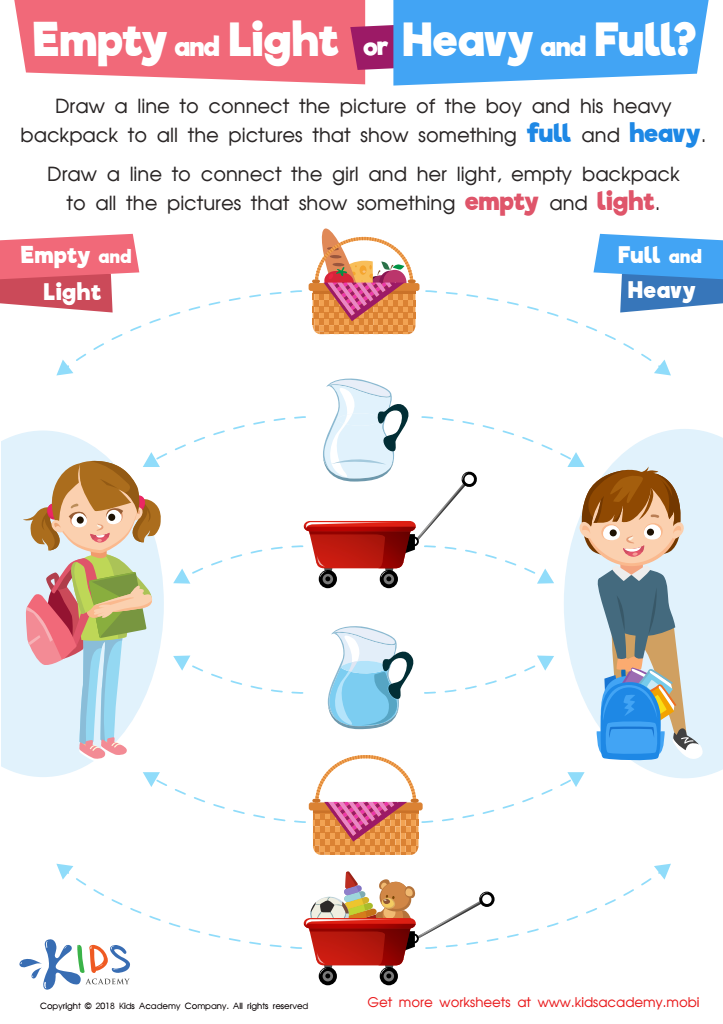
Empty and Light or Heavy and Full? Worksheet
 Assign to My Students
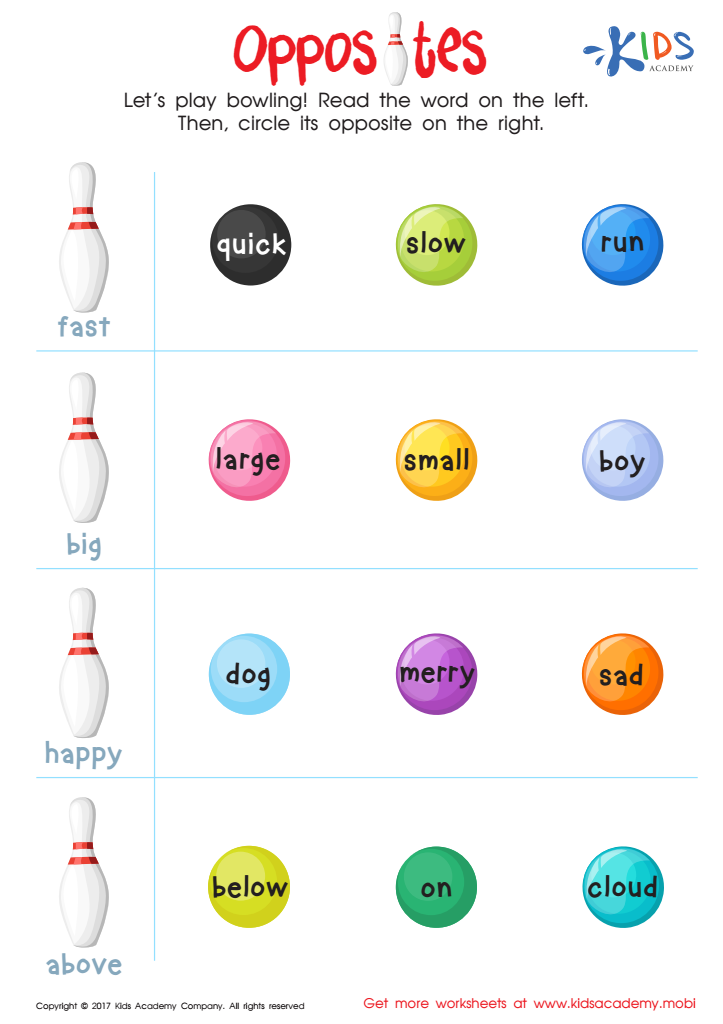
Opposites Worksheet
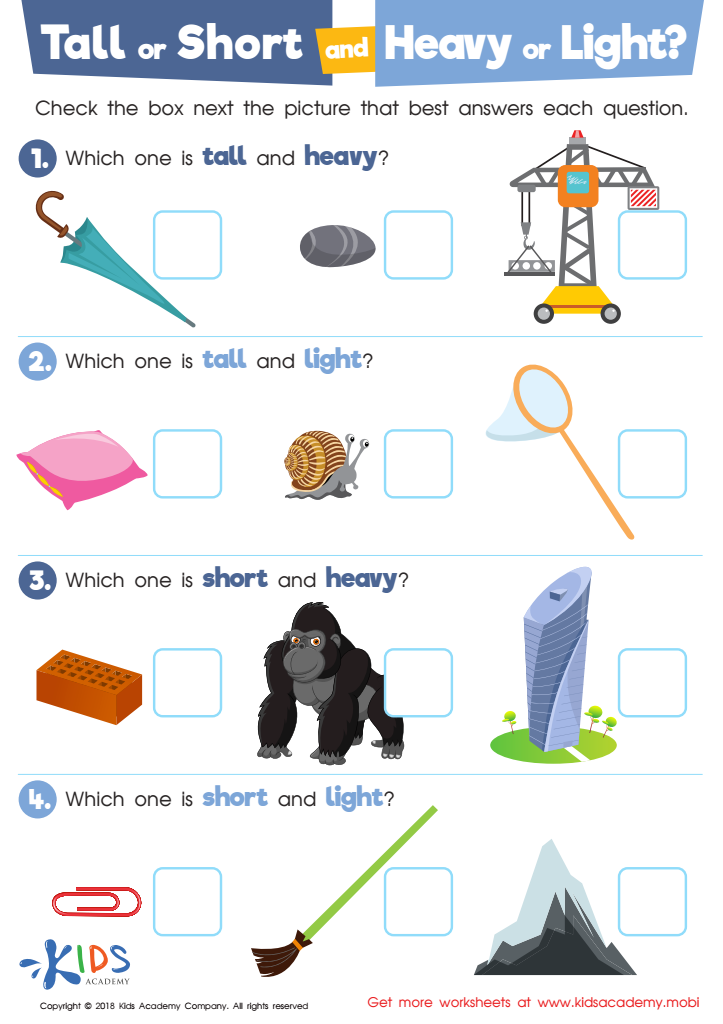
Tall or Short and Heavy or Light? Worksheet
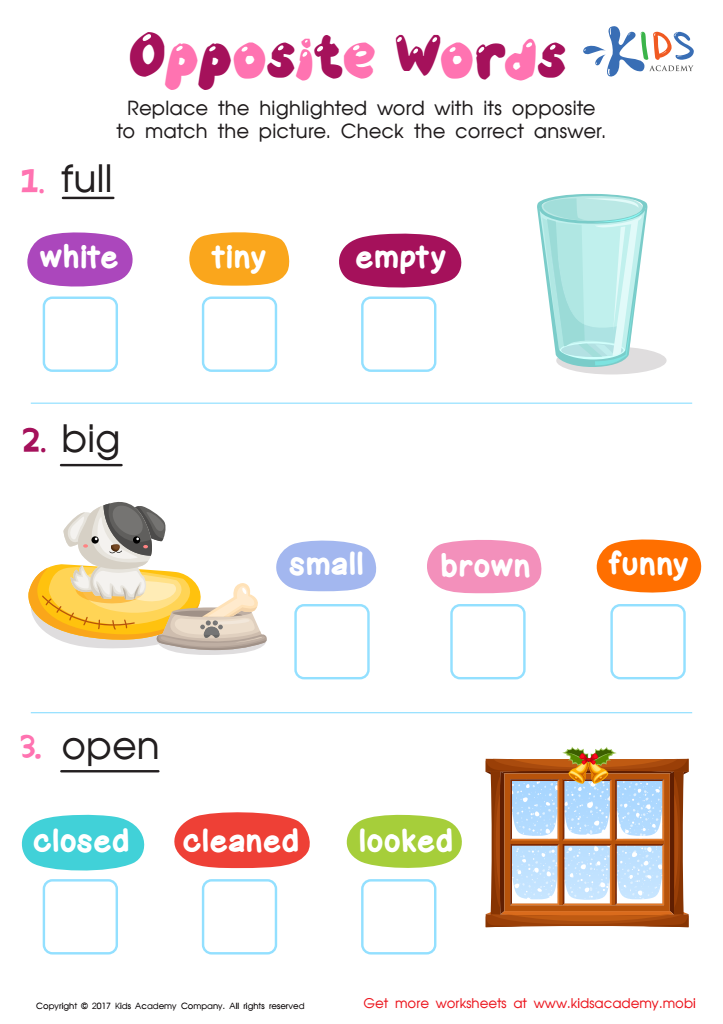
Opposite Words Worksheet






Understanding opposites is crucial for young children, aged 4-5, as it lays the foundation for essential cognitive and language development. At this age, children's brains are like sponges, rapidly absorbing information and making connections. Introducing opposites helps them grasp the concept of contrast, essential for critical thinking and problem-solving.
Learning about opposites also enhances children's vocabulary and comprehension skills. When children understand that "hot" is the opposite of "cold" or "big" is the opposite of "small," they can better describe their environment and articulate their thoughts and feelings. This expanded vocabulary allows them to communicate more effectively with peers and adults, fostering social and emotional growth.
Moreover, mastering opposites strengthens a child's ability to categorize and sort objects, a fundamental math skill. Recognizing that items can be grouped based on attributes like size, shape, or temperature aids in developing early computational skills and logical reasoning.
Teachers and parents can make learning opposites fun through interactive games, storybooks, and daily conversations, ensuring that the concepts are both understood and remembered. Investing time in teaching opposites eases future learning steps, supports holistic development, and prepares children for more complex subjects they will encounter in school. Understanding opposites is, therefore, a crucial step in a child's educational journey.








