Understanding Quantities Easy Worksheets for Ages 4-5 offer fun and engaging educational activities designed to introduce young learners to basic concepts of quantities and numbers. These carefully crafted worksheets enhance learning by using visually appealing images and simple exercises that help children recognize, compare, and understand quantities. Ideal for preschool and kindergarten levels, the worksheets foster critical thinking skills and lay a strong mathematical foundation. Parents and educators can enjoy watching their children build confidence and excitement as they journey through the world of numbers with these user-friendly and interactive learning tools.

Check out this FREE "Understanding Quantities" Trial Lesson for age 4-5!

Counting to 3

Favorites
With answer key
Interactive
  • 4-5
  • Understanding Quantities
  • Easy
Catch the Fish: +3 Worksheet

Catch the Fish: +3 Worksheet

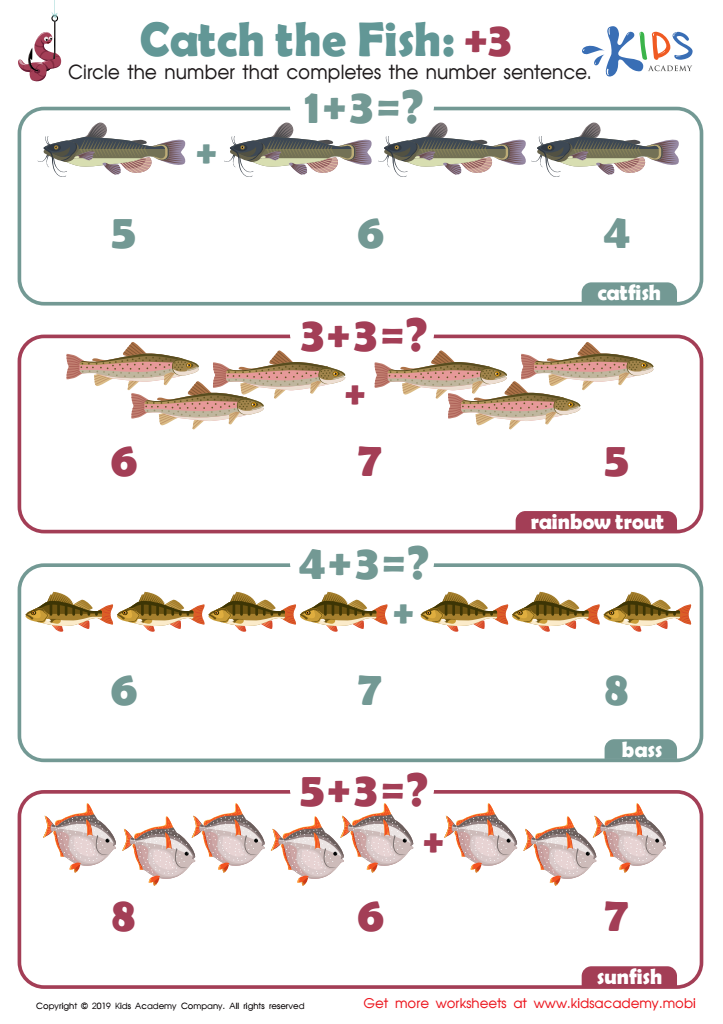
Math may be tricky for your child, with all the numbers and calculations. This worksheet can help them brush up. Ask them to identify the objects in the picture, then count them and help them circle the right number to complete the sentence. It's a simple and effective way to improve math skills.
Catch the Fish: +3 Worksheet
Worksheet
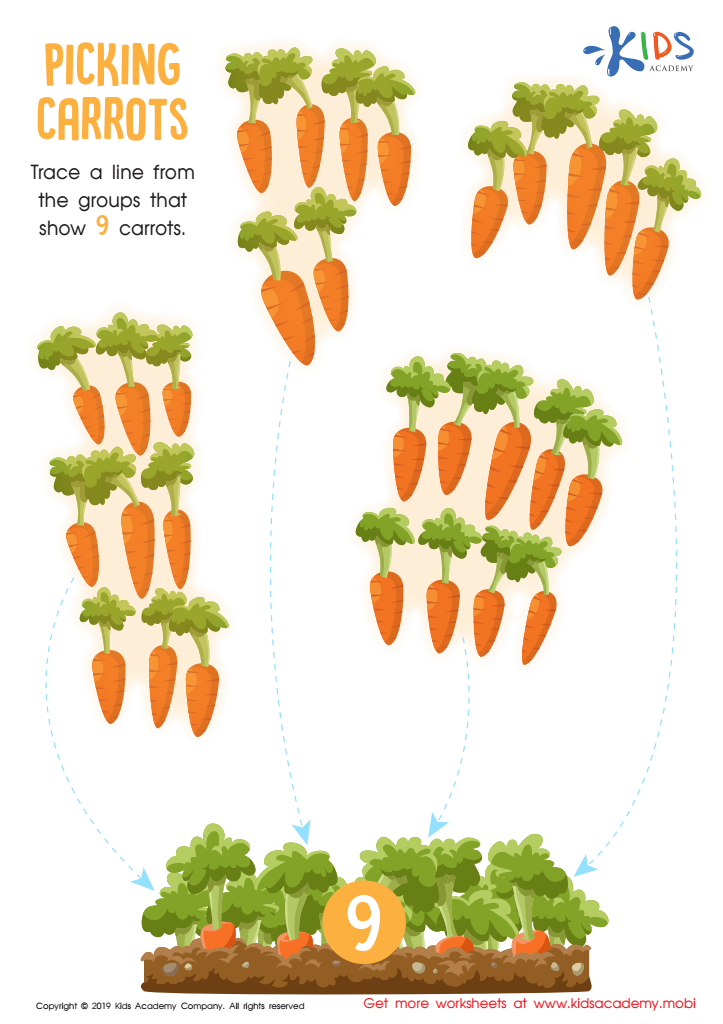
Picking Carrots Worksheet

Picking Carrots Worksheet

Do your kids know what carrots are? They're nutritious veggies we should eat. Look at the worksheet with them; can they spot the carrots? It's an exercise to practice counting. Show them how to count all the carrots in the groups and trace the line to the groups with 9 carrots.
Picking Carrots Worksheet
Worksheet
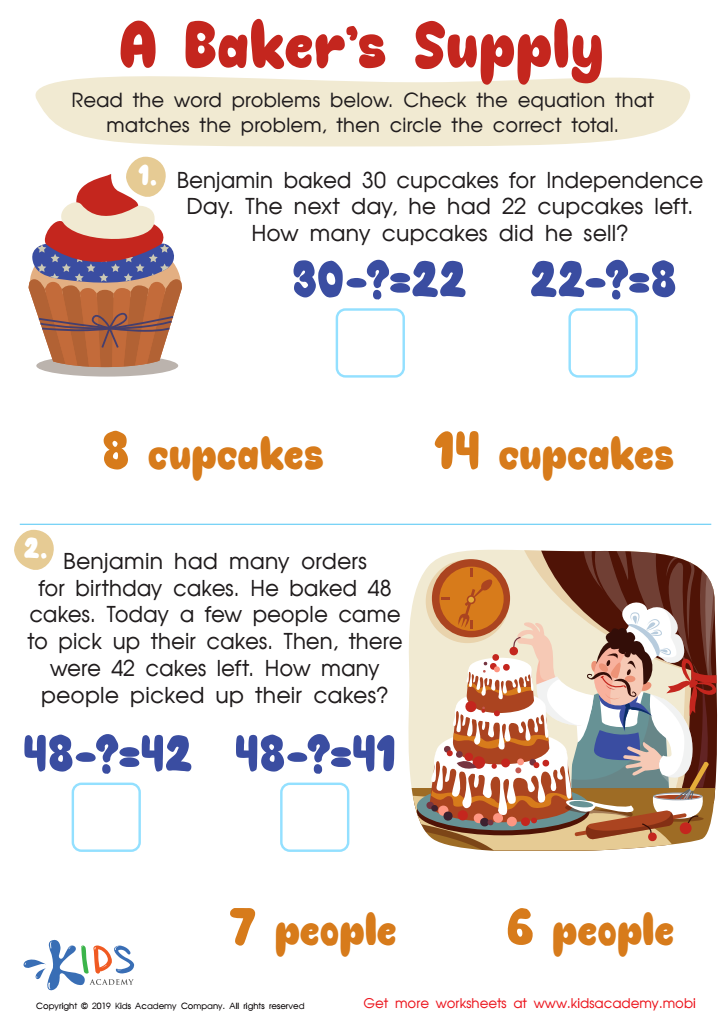
A Baker's Supply Worksheet

A Baker's Supply Worksheet

A visit to the baker's shop is thrilling! Your kids will love it! From scrumptious goodies to the mouthwatering aroma, it's a magical experience. Ask your kids what they're most eager to see and do. Now, read the word problems in this worksheet to them. Help them choose the correct answer for each problem and circle the correct total.
A Baker's Supply Worksheet
Worksheet
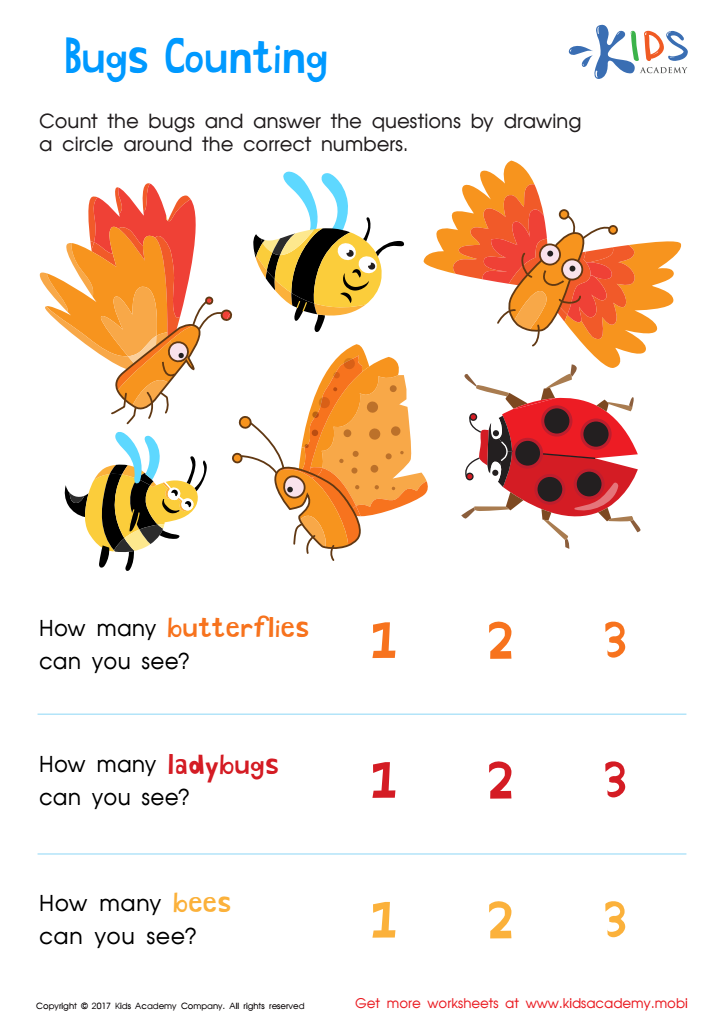
Bugs Counting Printable Worksheet

Bugs Counting Worksheet

Filled with bright reds, yellows, and oranges, your child will love solving these fun bug-related math problems.
Bugs Counting Worksheet
Worksheet
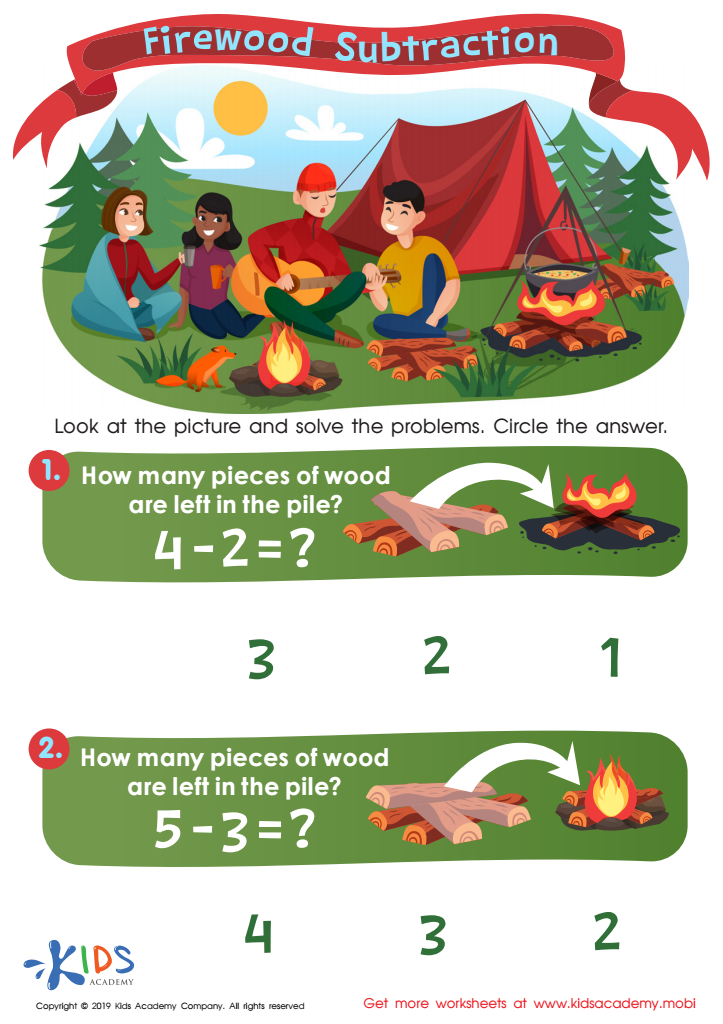
Firewood Subtraction Worksheet

Firewood Subtraction Worksheet

Guide your students to show that math can be fun! If your kindergartners need help with addition and subtraction, the simple problems in this worksheet are ideal. Ask them to look at the two pictures and find the correct answers. Help them check their work to build their confidence in math.
Firewood Subtraction Worksheet
Worksheet
Counting Big City Buildings Worksheet


Counting Big City Buildings Worksheet

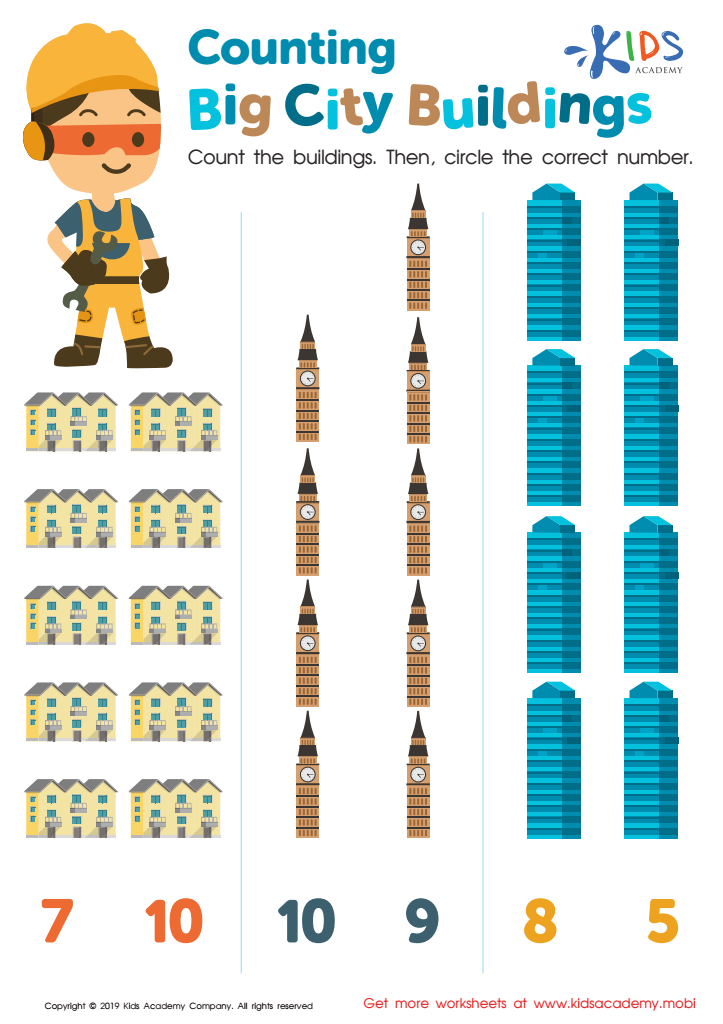
Test your child's counting skills! Ask them to count as high as they can and use the worksheet to brush up on any areas that need improvement. There are 3 sets of buildings in the picture; help your kids count them and circle the correct number. Mastering the art of counting is essential for advancing in math and solving equations, so take this opportunity to ensure your kids are ready!
Counting Big City Buildings Worksheet

Worksheet


Understanding quantities, often referred to as number sense, is crucial for young children ages 4-5, as it lays the groundwork for future mathematical learning. At this early stage, kids are naturally curious about the world around them, and recognizing quantities helps them connect numerals with actual objects. When children grasp that "3" means three apples or three toys, they begin to see the practical application of numbers in daily life.

Parents and teachers play vital roles in nurturing this understanding. By incorporating simple counting games or activities, adults can make learning about quantities both fun and relatable. Such foundational knowledge aids in the development of problem-solving skills, logical thinking, and spatial awareness. Activities like counting steps while walking or grouping similar items at home provide context to abstract concepts.

Furthermore, early exposure to these concepts eases the transition to formal schooling, where math becomes more structured. A solid grasp of quantities can boost children's confidence and interest in mathematics, setting a positive trajectory for their academic journey. Ultimately, investing time in helping young children understand quantities equips them with essential skills, fostering a lifetime of mathematical confidence and competency.