Visual discrimination Easy Worksheets for Ages 4-5
3 filtered results
-
From - To
Welcome to our Visual Discrimination Easy Worksheets for Ages 4-5! Designed specifically for young learners, these engaging and fun worksheets help children develop crucial visual discrimination skills that lay the foundation for early reading and learning. Our carefully crafted activities encourage kids to identify differences and similarities in pictures, shapes, and patterns. By honing these skills, children will boost their observational abilities and promote critical thinking. Each worksheet is age-appropriate and aims to make learning enjoyable. Download our free, printable worksheets today, and watch your little ones grow in confidence and readiness for their education journey! Perfect for home or classroom use!
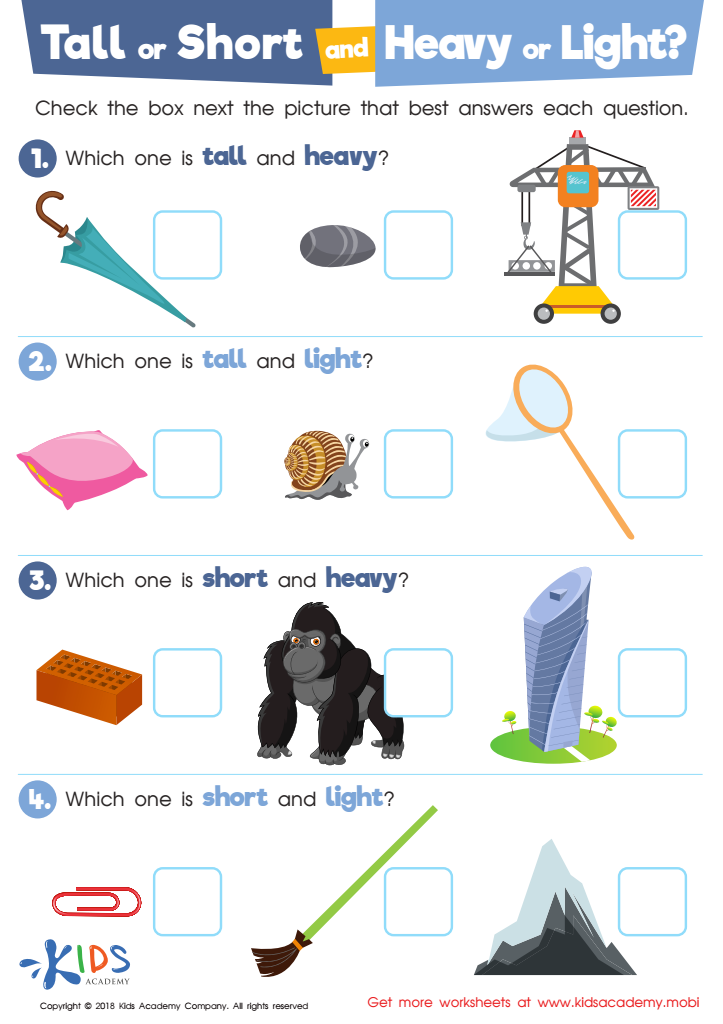
Tall or Short and Heavy or Light? Worksheet
 Assign to My Students
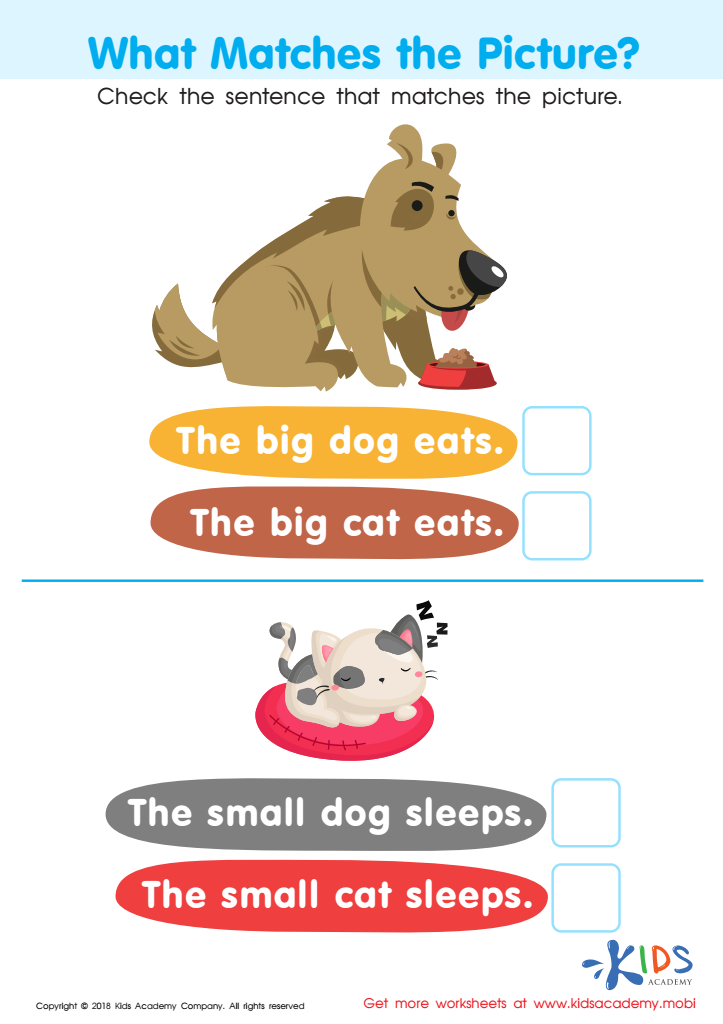
What Matches the Picture? Worksheet
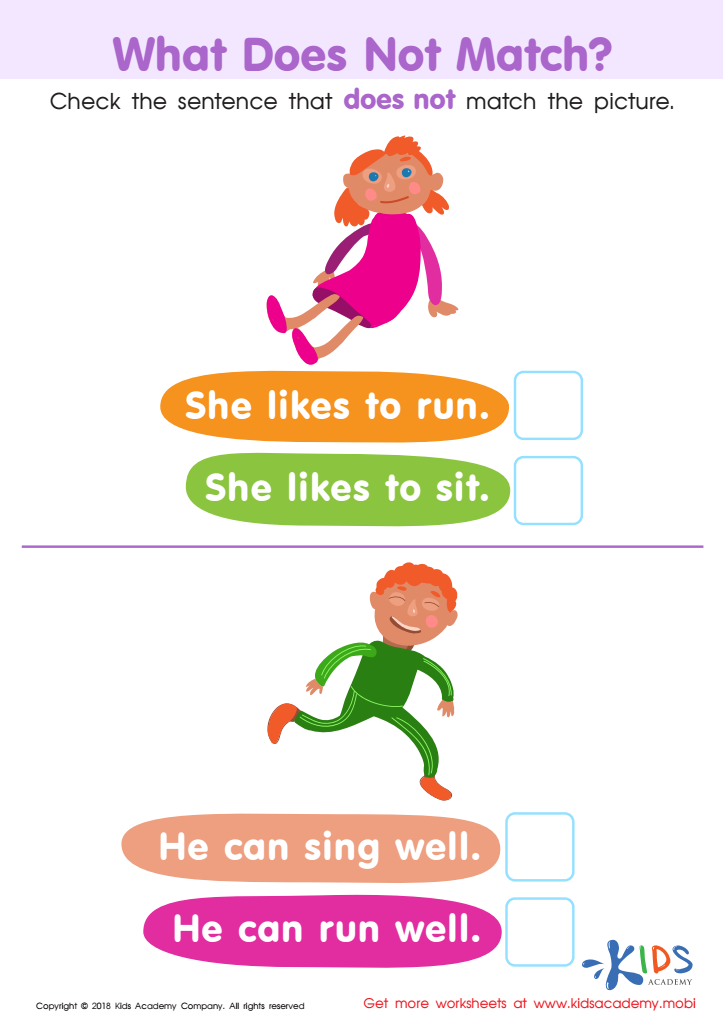
What Does Not Match? Worksheet







Visual discrimination is the ability to notice and compare the differences and similarities in shapes, sizes, colors, and patterns. For children ages 4-5, developing strong visual discrimination skills is crucial for several reasons. First, these skills form the foundation for early literacy. Recognizing letters, comparing sounds, and distinguishing between different words relies heavily on visual discrimination.
Moreover, visual discrimination plays a vital role in math readiness. Children learn to identify numbers and understand quantities when they can distinguish between various objects or patterns. This skill also enhances critical thinking, helping children solve problems and make connections in their learning.
Additionally, visual discrimination contributes to a child's confidence and independence. As children learn to identify and categorize objects or letters, they become more self-assured in their abilities, fostering a positive attitude towards learning.
For parents and teachers, supporting this development means creating a rich learning environment filled with activities that encourage observation and comparison. Simple games, like sorting colors or identifying shapes, can significantly boost a child's cognitive skills. Investing time in nurturing visual discrimination not only helps prepare children for academic success but also enhances their creativity and problem-solving abilities, essential for lifelong learning.








