Visual Learning Easy Addition and Subtraction Word Problems Worksheets for Ages 4-5
3 filtered results
-
From - To
Introducing our "Visual Learning Easy Addition and Subtraction Word Problems Worksheets" specially designed for children ages 4-5! These engaging worksheets combine colorful illustrations with simple addition and subtraction problems to make learning math fun and intuitive. Developed by educational experts at Kids Academy, these printables use visual aids to help young learners grasp basic arithmetic concepts effortlessly. Ideal for preschoolers and kindergarten kids, our worksheets enhance understanding, build problem-solving skills, and boost confidence in math through visual learning techniques. Start your child’s math journey today with these enjoyable and educational worksheets! Download now from Kids Academy.
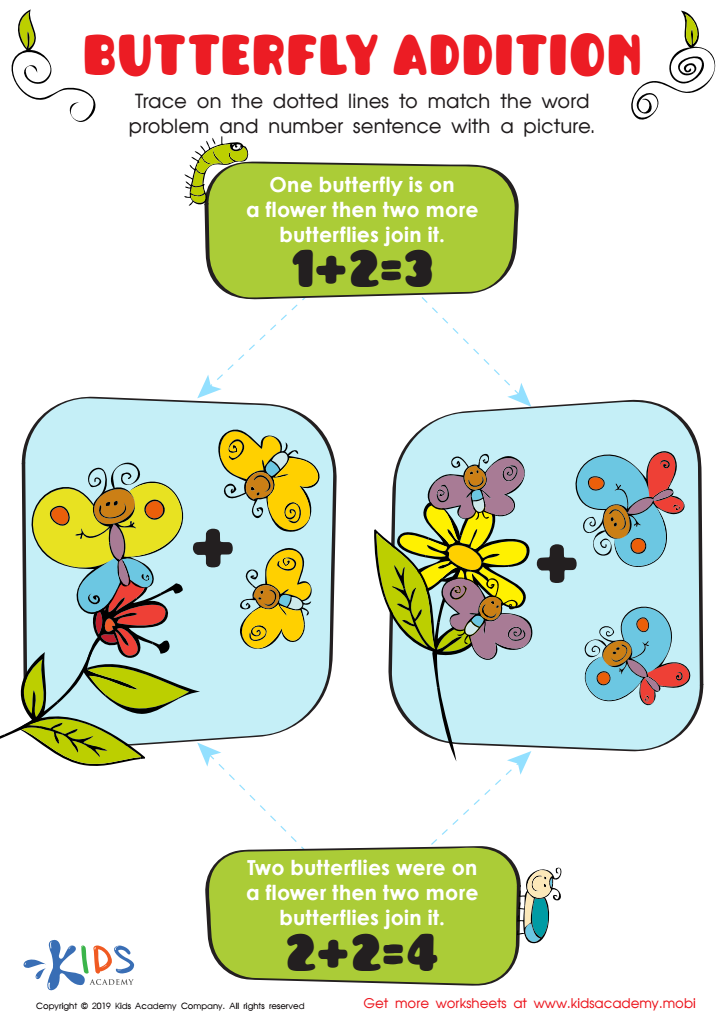
Butterfly Addition Worksheet
 Assign to My Students
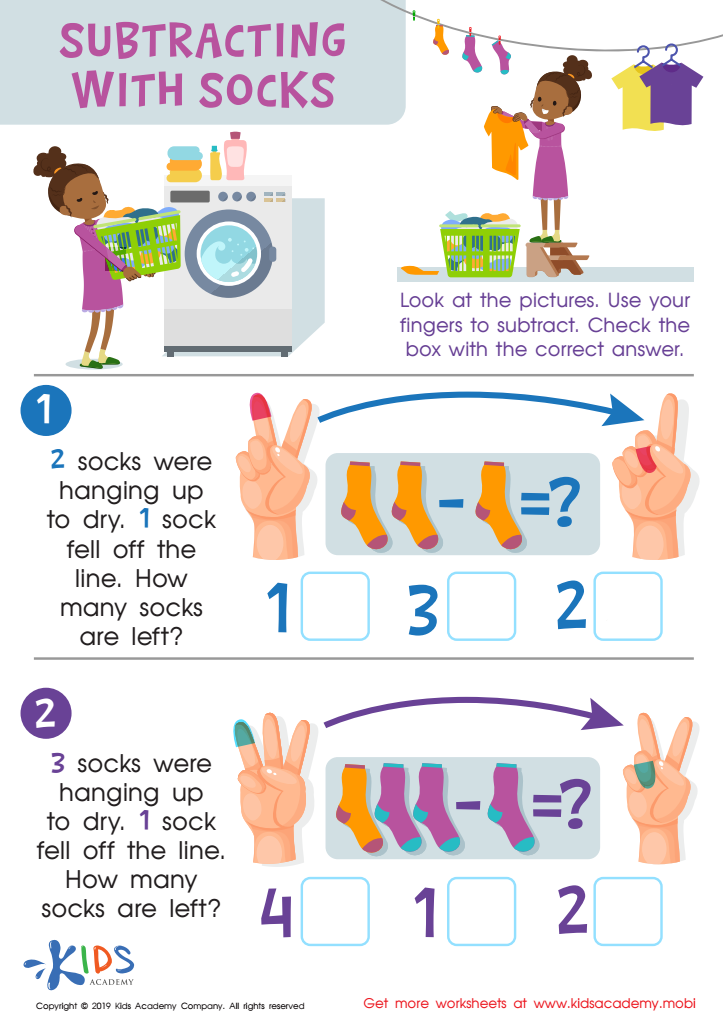
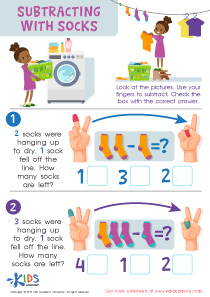
Subtracting Socks Worksheet
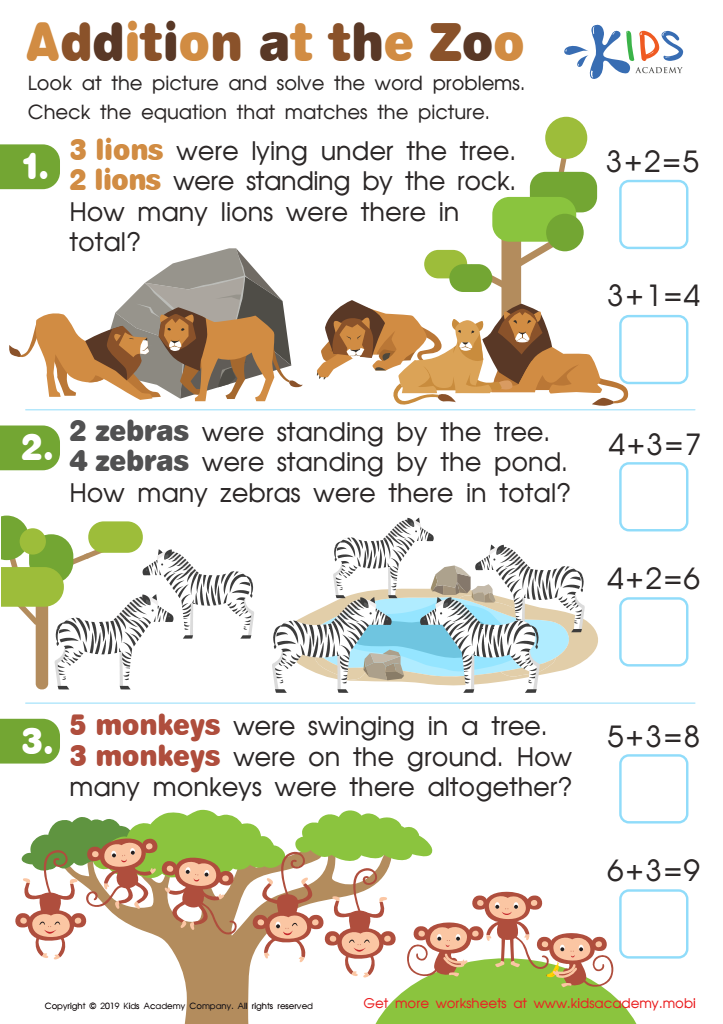
Addition at the Zoo Worksheet








Parents and teachers should care about Visual Learning Easy Addition and Subtraction Word Problems for children ages 4-5 because these critical skills lay the foundation for a lifetime of mathematical understanding. Visual learning helps young children grasp abstract concepts more concretely, making them more approachable and comprehensible. By using illustrations, objects, and visual aids, children can better understand the relationships between numbers and their real-world applications.
Engaging in word problems at these early ages promotes critical thinking, problem-solving, and logical reasoning. These activities teach children not just to perform rote arithmetic but to understand the ‘why’ and ‘how’ behind the operations. Also, incorporating literacy into math through word problems enhances reading comprehension skills and vocabulary.
Moreover, early exposure to addition and subtraction activities stimulates cognitive development and boosts confidence. When children successfully solve problems, they gain a sense of accomplishment and are more likely to enjoy learning. This foundational success paves the way for tackling more complex mathematical concepts in later grades.
Overall, visual learning for these early math problems makes learning interactive, enjoyable, and effective, setting the stage for academic success and a positive attitude towards math in the future.