Fine Motor Skills Easy Geometry Worksheets for Ages 4-5
3 filtered results
-
From - To
Discover our "Fine Motor Skills Easy Geometry Worksheets for Ages 4-5," designed to enhance young learners’ dexterity while exploring basic geometric shapes. These engaging worksheets seamlessly blend fun visuals with essential early math concepts, allowing children to trace, color, and manipulate shapes. Perfect for home or classroom use, each activity promotes fine motor development, ensuring children build the hand coordination necessary for writing and drawing. With varied exercises and colorful illustrations, these worksheets turn learning into an enjoyable experience, fostering creativity and critical thinking in your little learners. Elevate your teaching tools today with our targeted, age-appropriate geometry resources!
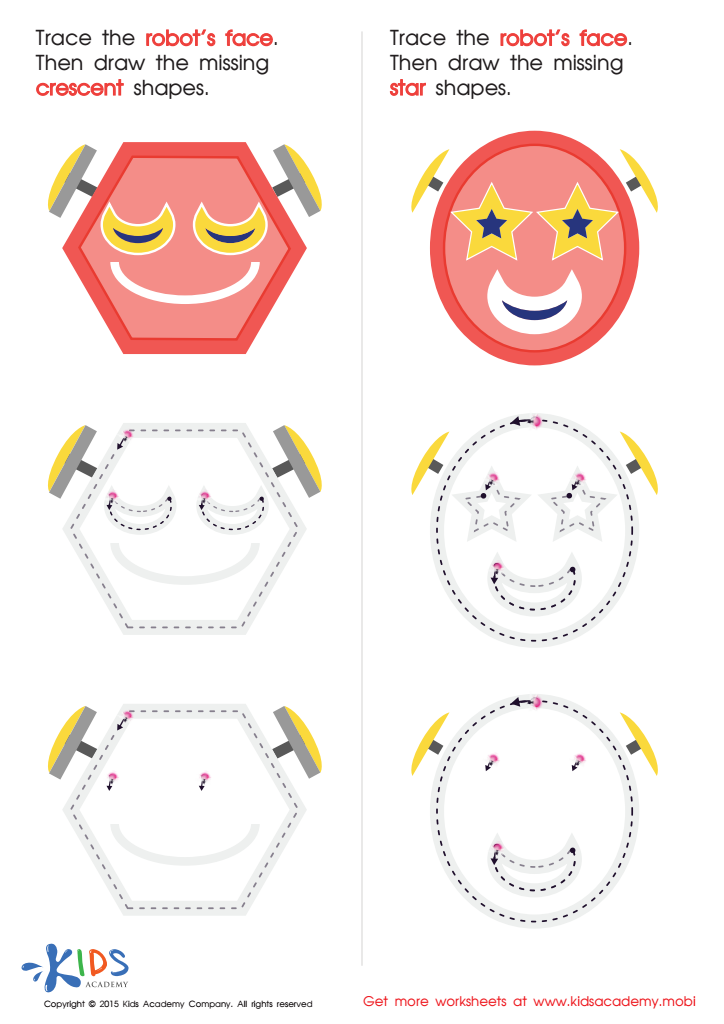
Composing a Robot's Face of Crescents And Stars Worksheet
 Assign to My Students











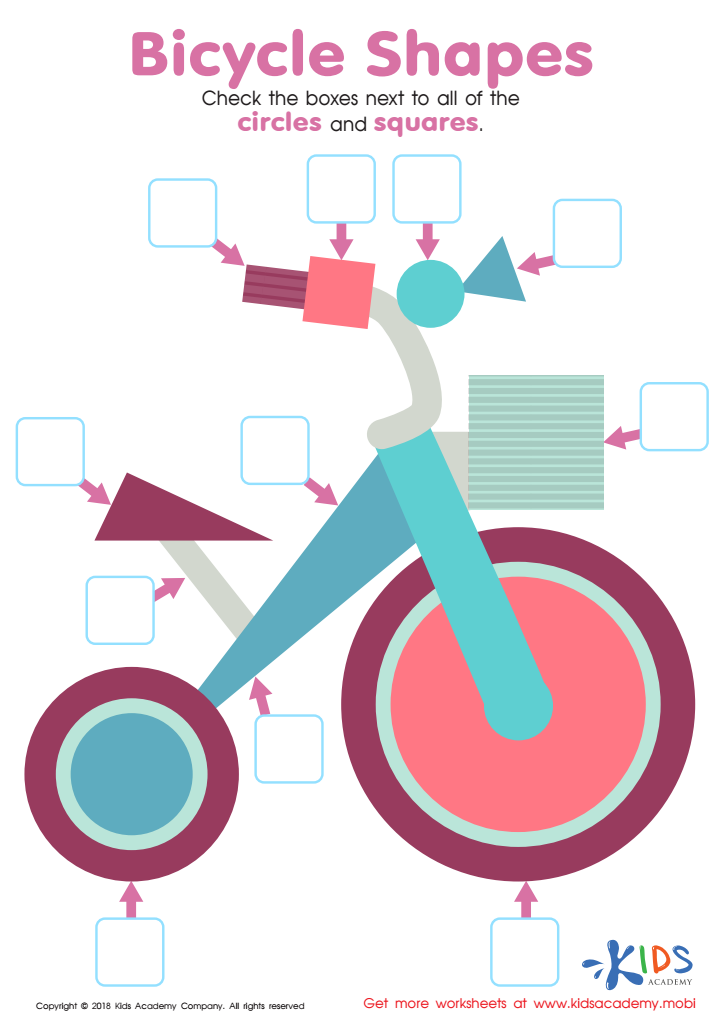
Bicycle Shapes Worksheet
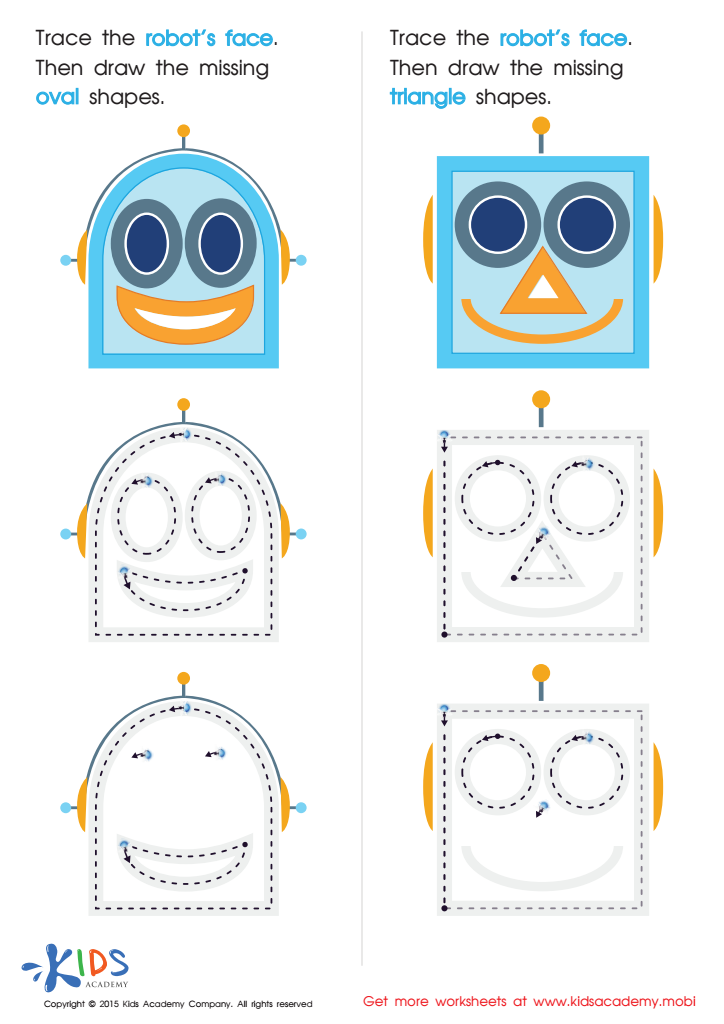
Drawing Ovals And Triangles with Fun Printable








Fine motor skills and early geometry are crucial developmental areas for children aged 4-5, and teachers and parents alike should prioritize them. Fine motor skills refer to the ability to use small muscles, particularly in the hands and fingers, for tasks like gripping, cutting, or drawing. These skills are fundamental for everyday activities, including writing and self-care, laying the groundwork for academic success and independence.
Integrating easy geometry into fine motor development introduces children to shapes, patterns, and spatial reasoning, which are essential components of early math education. Engaging children in activities like connecting dots to form shapes or using scissors to cut geometric patterns helps strengthen their hand-eye coordination while making learning enjoyable.
When parents or teachers focus on these areas, they enhance cognitive and physical development, promoting critical thinking, problem-solving capabilities, and increased confidence. Furthermore, these skills provide a framework for later academic learning in math and literacy. By fostering fine motor and geometric skills, adults ensure children build a solid foundation that enhances their overall educational journey, encouraging a love for learning. In summary, nurturing these skills is vital for preparing children for future challenges both inside and outside of the classroom.








