Reading comprehension Easy Word Problems Worksheets for Ages 4-5
3 filtered results
-
From - To
Discover our engaging "Reading Comprehension Easy Word Problems Worksheets" designed specifically for ages 4-5. These worksheets help young learners develop essential literacy skills while tackling simple math scenarios through vivid illustrations and relatable contexts. Each activity encourages problem-solving, critical thinking, and reading comprehension, ensuring a fun learning experience. Ideal for preschool and kindergarten classrooms or at-home learning, our worksheets empower children to connect language with math concepts, enhancing their understanding and confidence. Guided by vivid examples and gentle prompts, kids will joyfully practice reading and comprehending word problems, laying a strong foundation for future academic success. Start your journey today!
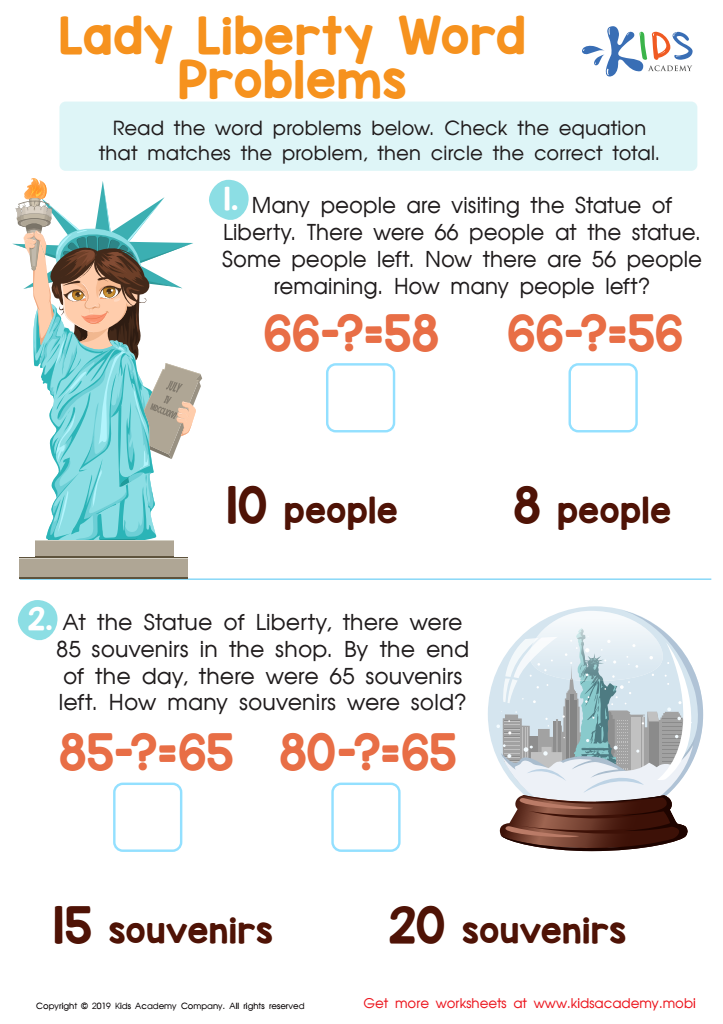
Lady Liberty Worksheet
 Assign to My Students
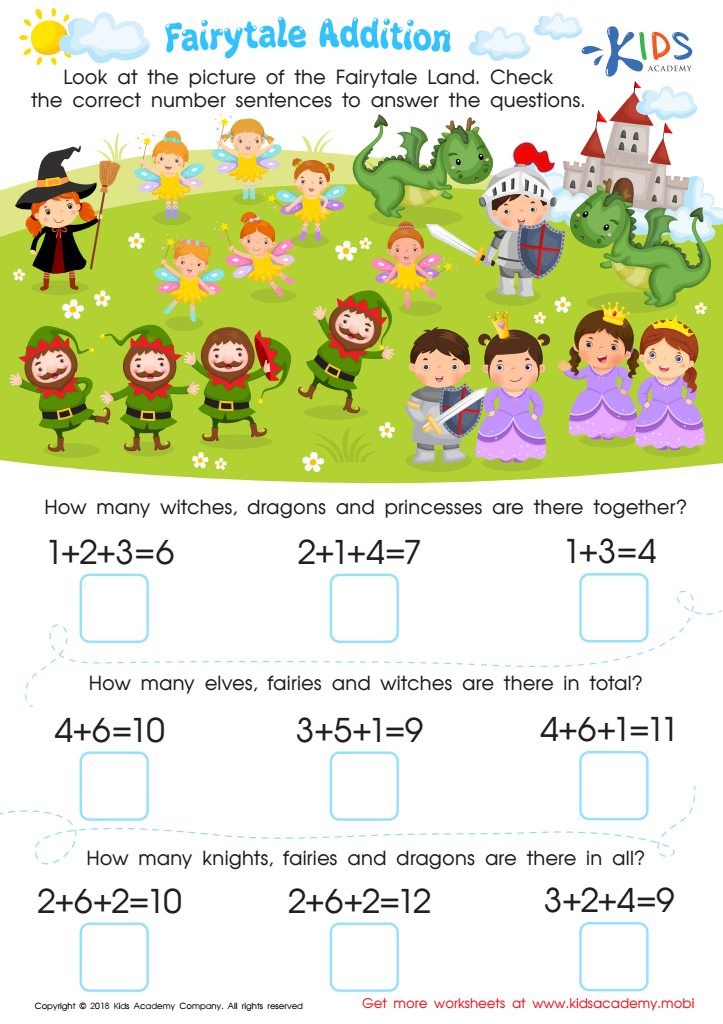
Fairytale Addition Worksheet
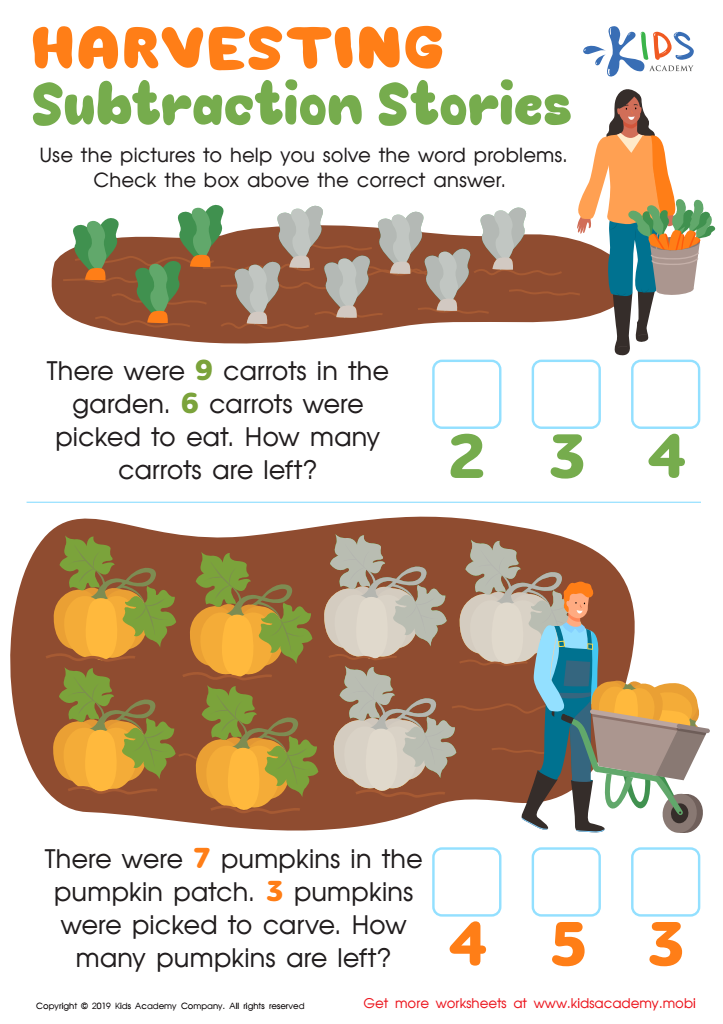
Harvesting Subtraction Stories Worksheet




.jpg)



Parents and teachers should prioritize reading comprehension and easy word problems for children ages 4-5 because these skills are fundamental to early learning and future academic success. At this developmental stage, kids are fiercely curious and eager to explore language and numbers. Engaging in activities that promote reading comprehension helps them make connections between words and their meanings, fostering vocabulary development and critical thinking. Understanding simple word problems enhances their problem-solving abilities and introduces mathematical concepts in a fun, accessible way.
Moreover, these foundational skills build a child’s confidence. Mastering reading comprehension boosts their ability to follow stories and instructions, while solving easy word problems encourages logical reasoning and nurtures a positive attitude toward learning. Early exposure lays the groundwork for more complex academic tasks in the future, including reading fluency and higher-level math problem-solving.
Additionally, research shows that children who are proficient in these areas early on tend to perform better in school and develop a lifelong love for learning. By focusing on reading comprehension and easy word problems, parents and teachers can actively contribute to a child’s holistic development, laying the foundation for academic achievement and critical as well as creative thinking later on.








