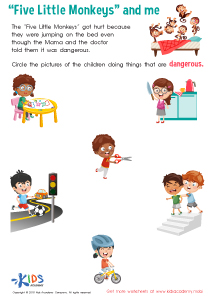
Color recognition Easy Building Vocabulary Worksheets for Ages 4-5
6 filtered results
-
From - To
Discover our engaging "Color Recognition Easy Building Vocabulary Worksheets" designed for children ages 4-5! These worksheets provide a fun way for young learners to explore and identify colors while building their vocabulary skills. Each activity encourages creativity and critical thinking, promoting color recognition in familiar contexts. By completing these worksheets, children will not only learn to name and differentiate colors, but also enhance their language abilities through interactive exercises. Ideal for at-home learning or classroom use, our resources foster a joyful learning environment. Dive into a colorful world of discovery and make learning unforgettable with our thoughtfully crafted worksheets!
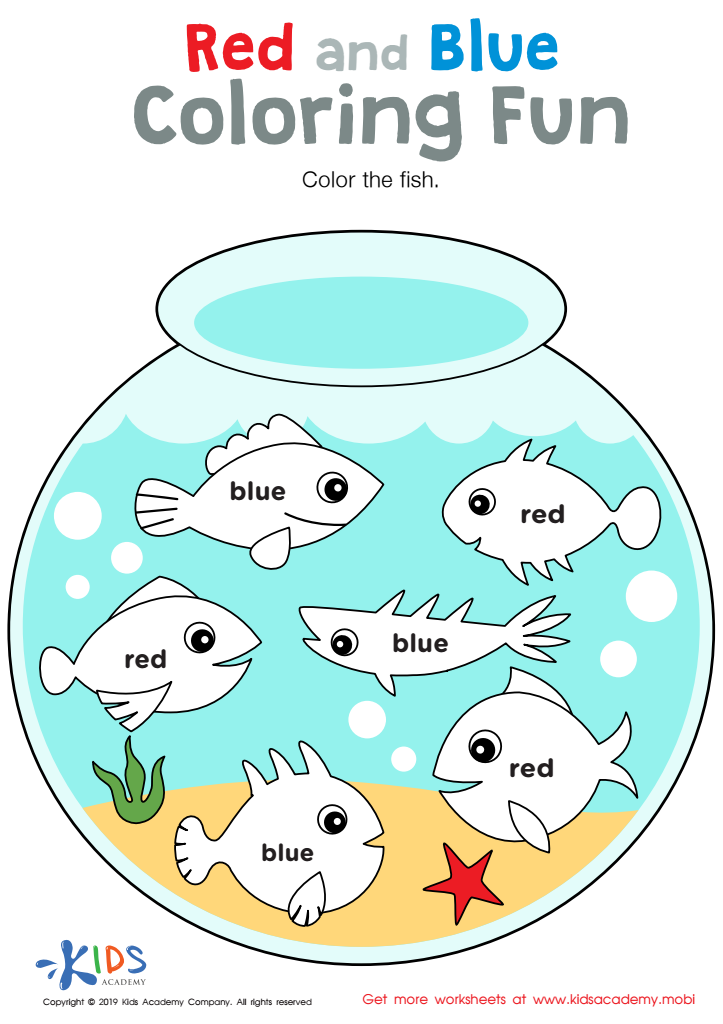
Red and Blue Coloring Fun Worksheet
 Assign to My Students











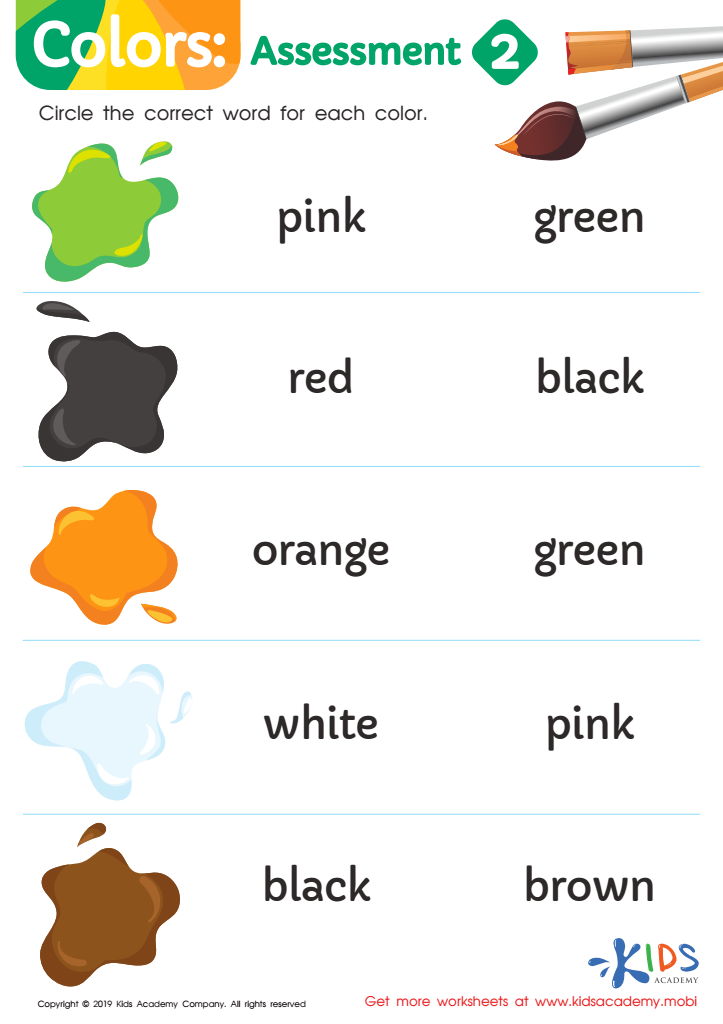
Colors: Assessment 2 Worksheet
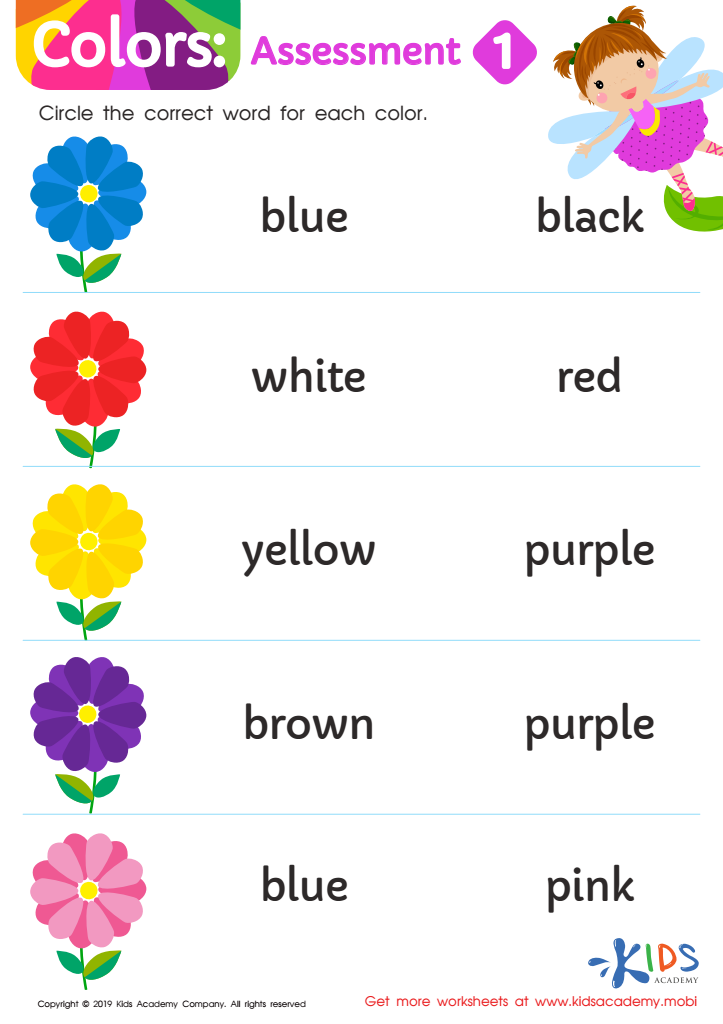
Colors: Assessment 1 Worksheet
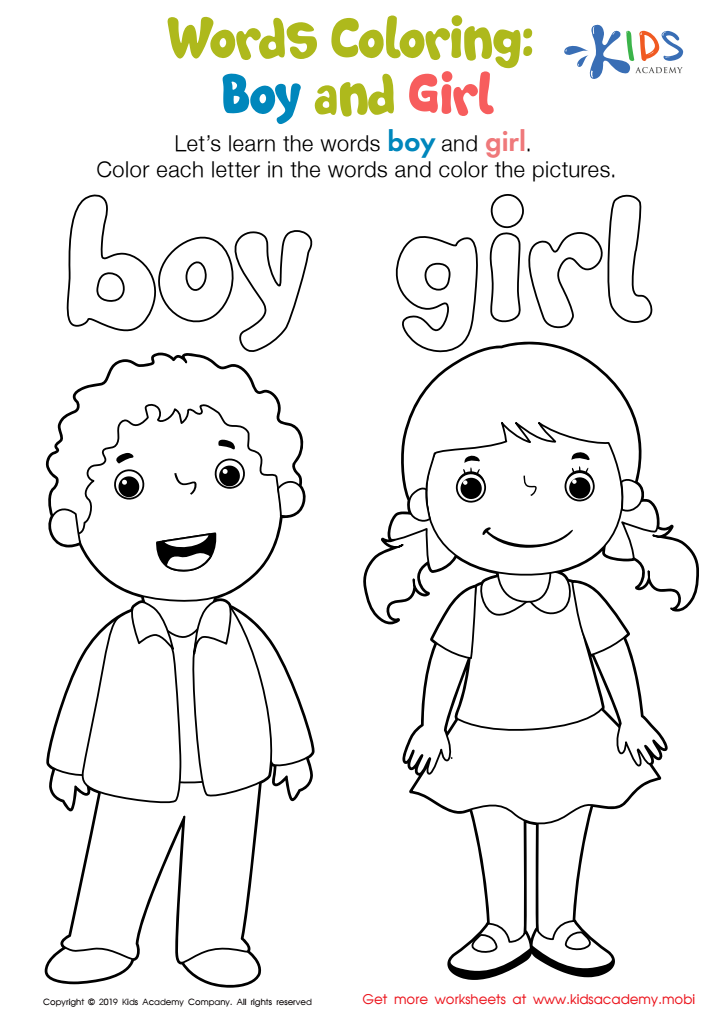
Boy and Girl Words Coloring Worksheet
Assign to My Students
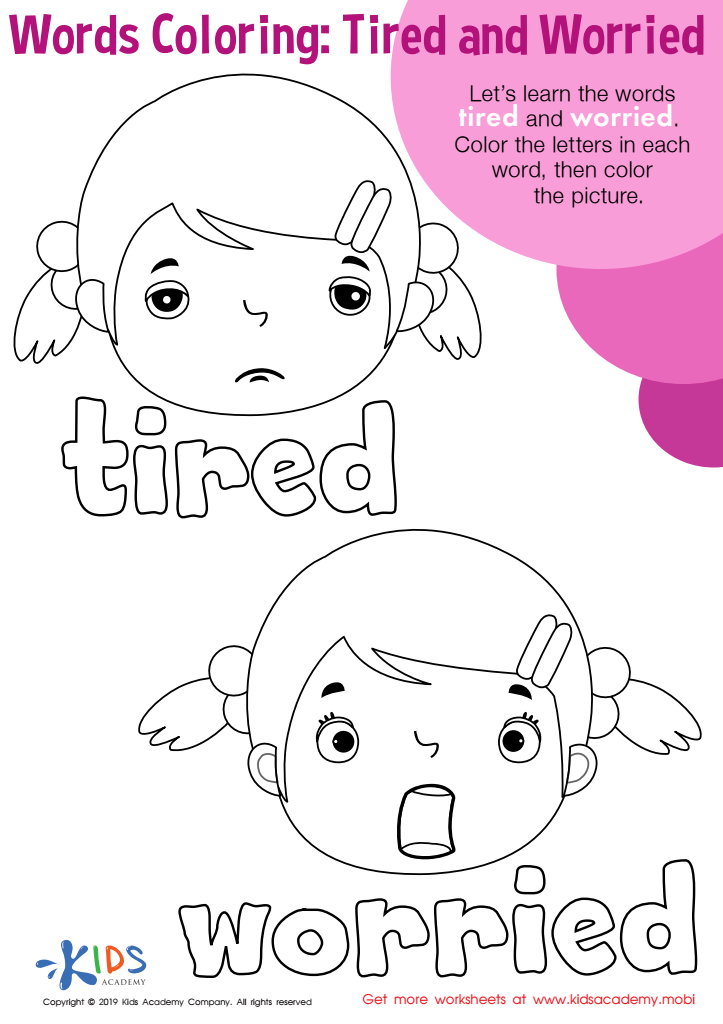
Tired and Worried Words Coloring Worksheet
Assign to My Students
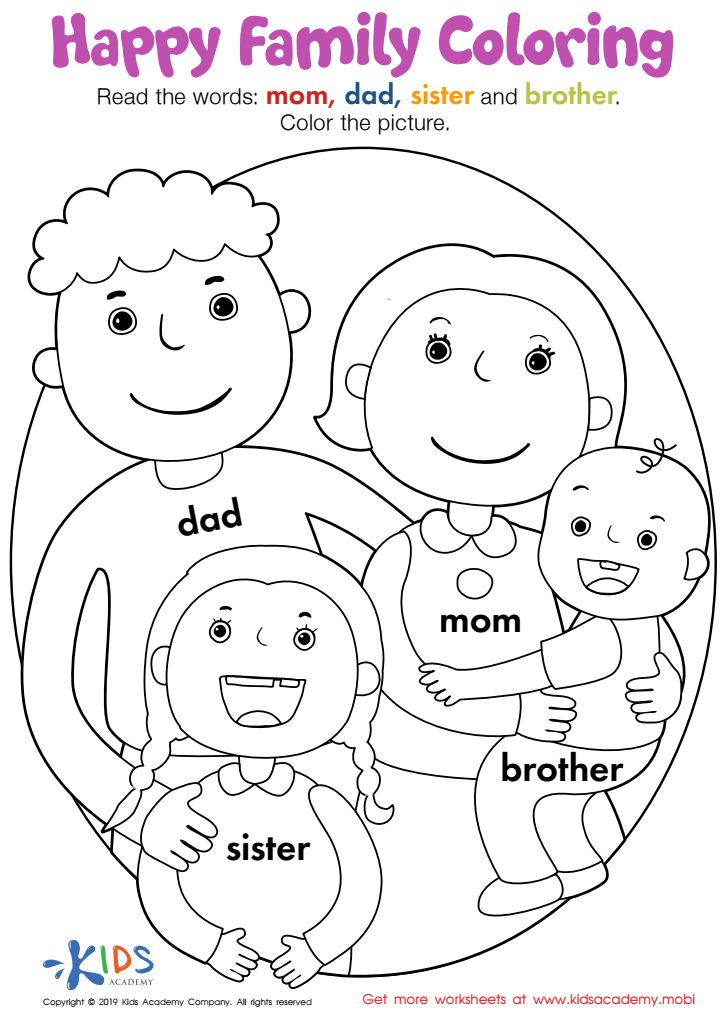
Happy Family Coloring Worksheet
Assign to My Students








Color recognition and vocabulary building are crucial components of early childhood education, especially for children ages 4-5. Understanding colors is a fundamental skill that helps shape a child's cognitive development. Recognizing colors enables children to identify and describe their environment, fostering observational skills and enhancing their ability to communicate effectively.
Moreover, developing a rich vocabulary at this age supports children's reading and language skills. When children learn color names along with creative language, such as "emerald green" or "sunshine yellow," they become more expressive thinkers and learners. This early exposure to language helps strengthen their literacy foundation, critical for academic success in later years.
Additionally, recognizing colors can serve as a fun, engaging activity that promotes social interaction and cooperative learning among peers. Parents and teachers can utilize various games, art projects, and outdoor activities to incorporate color recognition into daily routines, creating joyful learning experiences.
By supporting color recognition and vocabulary development, caregivers are not just teaching colors; they are fostering essential communication skills, creativity, and a lifelong love for learning in young children. Investing attention in these areas contributes to a well-rounded educational foundation that benefits children throughout their academic journey.