Comparing quantities Easy Worksheets for Ages 4-6
3 filtered results
-
From - To
Discover our engaging "Comparing Quantities Easy Worksheets" designed specifically for children aged 4-6! These worksheets are perfect for early learners to grasp fundamental math concepts while having fun. Kids will explore activities that promote understanding of more, less, and equal quantities through colorful visuals and interactive exercises. Each worksheet encourages hands-on learning, fostering critical thinking skills as young mathematicians differentiate between various quantities in enjoyable ways. Ideal for parents and educators, our resources support curriculum-aligned learning and enhance children's numeracy skills. Start your child’s math journey today and watch them enjoy mastering comparisons with confidence and creativity!
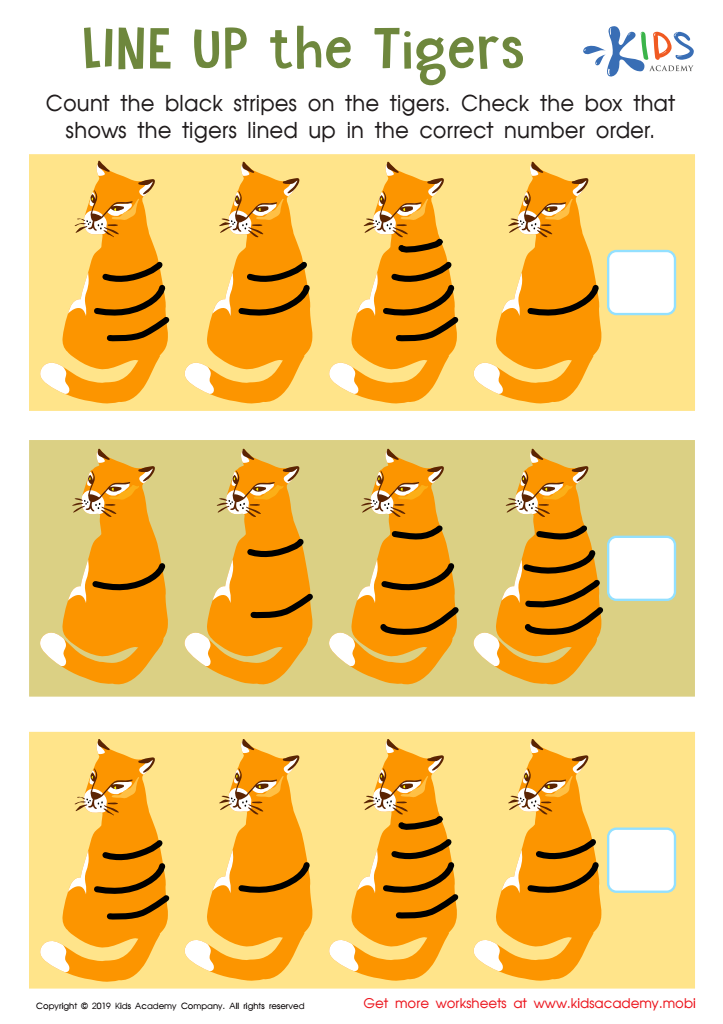
Line up the Tigers Worksheet
 Assign to My Students
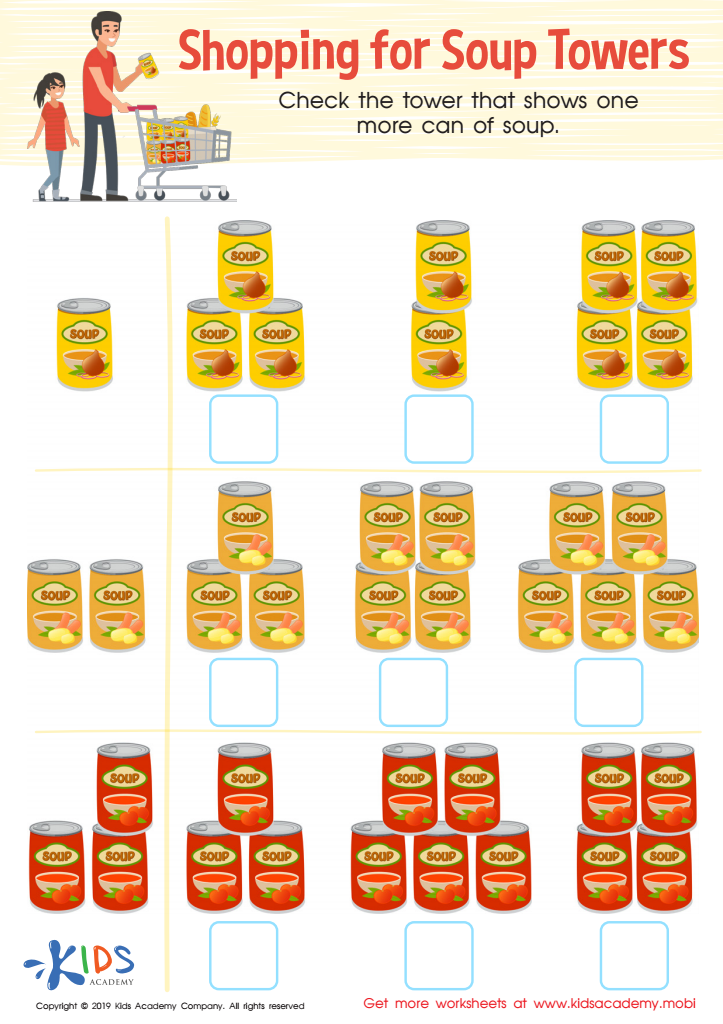
Soup Towers Worksheet
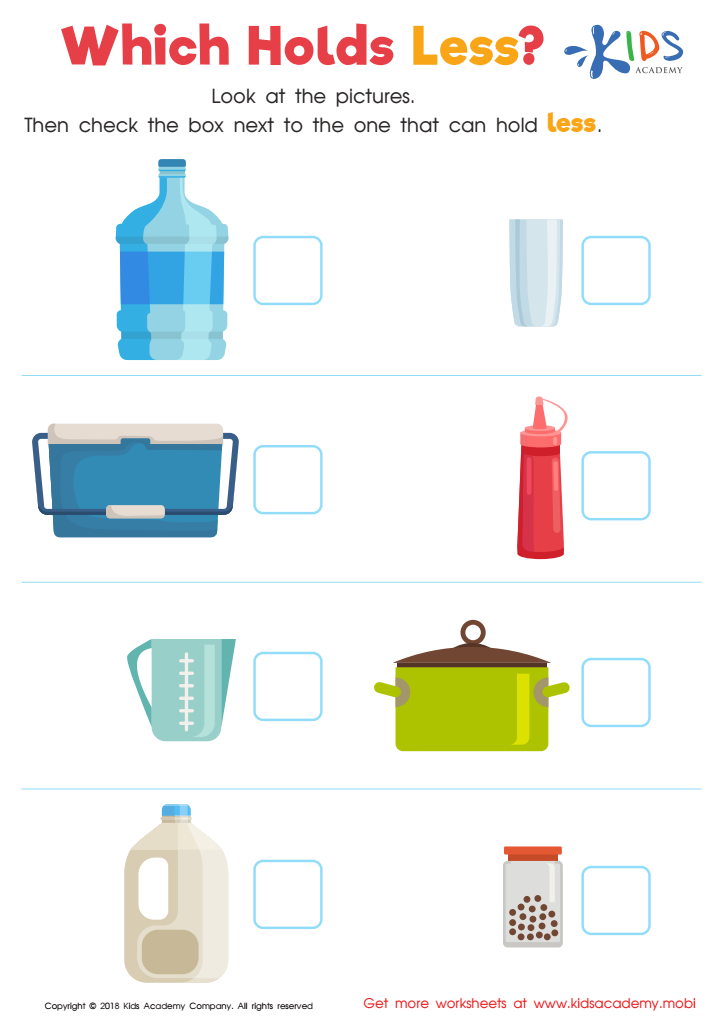
Which Holds Less? Worksheet







.jpg)
Comparing quantities is a fundamental mathematical skill that young children, aged 4-6, begin to develop. It involves understanding concepts like more, less, and equal, which are crucial for their cognitive growth and everyday decision-making. Parents and teachers should care about this concept for several reasons.
Firstly, mastering comparison lays the groundwork for more advanced mathematical understanding, facilitating future topics such as addition and subtraction. By learning to compare quantities, children refine their critical thinking skills as they assess relationships between numbers or groups.
Secondly, this skill enriches literacy and social development. For example, comparing quantities during play—such as who has more blocks or toys—encourages communication and vocabulary expansion as children articulate their observations and questions.
Finally, engaging children in activities that focus on comparison fosters a sense of curiosity and enjoyment about learning. Simple games, storytelling, or everyday situations can be used to introduce comparison, making learning fun and interactive.
By focusing on comparing quantities, educators and parents equip children with essential skills that enhance their overall development, promoting confidence in math and problem-solving abilities as they prepare for future learning challenges.








